2027 Best Career Training Programs With Scholarship Options

Co-Founder and Chief Data Scientist
Choosing career training is difficult when programs promise fast job preparation but differ sharply in cost, licensing value, and employer recognition. U.S. Bureau of Labor Statistics projections show that healthcare support occupations are expected to grow 15% from 2023 to 2033, faster than the average for all occupations.
This guide helps prospective students compare trade, healthcare, legal, and creative programs; find scholarship and tuition-assistance options; verify quality; and choose training that matches a specific career goal rather than simply the shortest program.
Key Things You Should Know
- Career training can range from a few weeks to two years; short noncredit programs may teach job skills, while credit-bearing certificates and associate degrees can be more transferable and may support financial-aid eligibility.
- Scholarships, workforce grants, employer tuition assistance, apprenticeships, and state workforce programs can reduce costs, but eligibility, award amounts, and covered expenses vary by provider and location.
- Before paying a deposit, confirm the program's approval for your intended license or certification exam, compare total costs beyond tuition, and review completion, placement, and licensure outcomes when available.
Top 10 Best Career Training Programs With Scholarship Options
Popular Trade School Programs
Trade schools commonly offer certificates, diplomas, apprenticeships, and associate degrees in electrical work, HVAC/R, welding, plumbing, automotive technology, construction, diesel technology, and industrial maintenance. Programs usually combine safety instruction with shop or field practice. A short certificate can support entry-level work, while apprenticeships often provide paid supervised training and lead toward journey-worker status.
Choose a program approved by the relevant state licensing authority when a trade is regulated. Students should also verify whether required tools, uniforms, exam fees, and licensing costs are included in the quoted price.
Healthcare Programs
Healthcare career training includes certificates for medical assisting, pharmacy technology, dental assisting, practical nursing, medical billing and coding, phlebotomy, and sterile processing, plus associate degrees in nursing, dental hygiene, and radiologic technology. Clinical programs require supervised in-person experiences even when coursework is online.
A school certificate is not the same as national certification or state licensure; many employers and states require a separate exam, background check, or board approval. Select programs with clinical-placement support and confirm that graduates are eligible for the credential required in the state where they plan to work.
Criminal Justice / Law Programs
Criminal justice and law-focused options include certificates or associate degrees in criminal justice, corrections, legal studies, paralegal studies, court reporting, cybersecurity, and public safety administration. These programs can develop knowledge of legal procedures, documentation, ethics, report writing, and evidence handling.
They do not automatically qualify graduates as police officers, attorneys, or licensed investigators; those roles may require academy training, examinations, background screening, or advanced degrees. Paralegal students should look for practical legal-research, writing, and software training and ask employers in their area whether they prefer an approved or accredited program.
Arts & Design Programs
Arts and design training can include certificates or associate degrees in graphic design, UX/UI design, digital media, photography, animation, web design, fashion design, interior design, and audio production. Portfolio quality often matters as much as the credential, so students should prioritize projects, critiques, current software, and opportunities to present work publicly.
A certificate may help career changers build foundational skills quickly, while an associate degree can provide broader design, communication, and general-education coursework. Ask whether students retain portfolio rights and whether the curriculum reflects tools currently used by local employers.
What types of career training programs offer scholarships and tuition assistance?
Many career training providers offer some form of scholarship or tuition help, but the best source depends on whether the program is college-based, employer-sponsored, nonprofit, or privately operated. A scholarship generally does not need to be repaid; tuition assistance may come from an employer, workforce agency, union, or training provider and can have work, attendance, or repayment conditions.
The following funding routes are worth comparing before borrowing:
- Community colleges and public technical colleges may offer institutional scholarships, state grants, federal aid for eligible credit-bearing programs, and workforce-development grants.
- Registered apprenticeships can pair paid employment with classroom instruction, making them especially attractive for electrical, plumbing, manufacturing, and construction pathways.
- Employers may reimburse approved education costs or directly fund training for roles with hiring shortages, particularly in healthcare, technology, logistics, and skilled trades.
- Workforce Innovation and Opportunity Act-funded local workforce offices may support eligible job seekers in approved training programs, subject to local rules and funding availability.
- Professional associations, unions, community foundations, and industry groups may award scholarships tied to a trade, geographic area, identity group, military affiliation, or career objective.
Funding should influence the choice, but not replace quality checks. Compare whether an award covers tuition only or also equipment, exams, transportation, clinical requirements, and living costs. If a program is noncredit, ask directly whether federal student aid applies; many noncredit programs are not eligible even when the school itself participates in federal aid programs.
How do online and campus-based career training programs compare for flexibility and outcomes?
Online training can be a strong choice for theory-heavy subjects such as medical billing, legal studies, IT support, bookkeeping, and design software. Campus, hybrid, and employer-site programs are usually stronger when learners need labs, clinical rotations, equipment access, supervised practice, or local employer connections. Flexible delivery is valuable only if it still meets licensing, certification, and skill-practice requirements.
This comparison helps students weigh schedule convenience against the practical experiences employers may expect.
| Format | Best fit | Main advantage | Key limitation to verify |
| Fully online | Administrative, technical, and digital-skills training | Flexible scheduling and reduced commuting | Whether proctored exams, internships, or certification eligibility are included |
| Hybrid | Programs requiring both theory and practical work | Combines online convenience with supervised practice | Frequency, location, and cost of required in-person sessions |
| Campus-based | Lab, clinical, shop, and equipment-intensive careers | Direct access to instructors, facilities, and peers | Commuting, schedule rigidity, and available lab hours |
| Apprenticeship or employer-site | Skilled trades and work-based occupations | Paid experience in a real work setting | Program registration, wage progression, and classroom requirements |
Self-directed learners may also compare accredited self-paced online courses when they need adaptable pacing. However, self-paced coursework is not a substitute for required clinical hours, supervised shop training, or state-mandated instructional hours.
What accreditation and licensing should you verify before enrolling in a career training program?
Accreditation evaluates an institution or program against defined standards; licensing authorizes a person to practice a regulated occupation. They are related but not interchangeable. Institutional accreditation can matter for credit transfer and federal aid eligibility, while programmatic approval is often the more urgent issue for nursing, dental hygiene, radiologic technology, cosmetology, truck driving, and other regulated paths.
Before enrolling, complete these checks in writing:
- Identify the license, registration, or employer certification needed for the exact job and state where you intend to work.
- Check the relevant state board or licensing agency to confirm that the specific program, not merely the school, meets educational requirements.
- Ask whether completion makes you eligible to take the required examination and whether additional clinical, apprenticeship, or experience hours are needed.
- Confirm the school's institutional accreditation status if you need federal aid, transfer credit, or a degree pathway.
- Request documentation of program approval, exam pass rates, and clinical-placement arrangements rather than relying on promotional statements.
A common mistake is assuming that a national online program automatically meets every state's rules. Licensure standards can change, and requirements may differ by state, so students should verify them directly before signing an enrollment agreement.
What admission requirements and application steps do career training programs typically have?
Admissions requirements depend on the provider and credential level. Noncredit workforce courses may require only age verification, identity documents, and payment arrangements.
Credit-bearing certificates and associate degrees generally use a college application and may request high school completion records or equivalent credentials. Selective healthcare programs can add prerequisite courses, entrance testing, immunizations, drug screening, background checks, CPR training, or health documentation.
Applicants can reduce delays by preparing the materials most often requested:
- Government-issued identification and proof of high school graduation, GED completion, or equivalent eligibility when required.
- Official transcripts for credit-bearing programs, especially when placement, prerequisite waivers, or transfer credit are relevant.
- Documentation for clinical or safety-sensitive settings, which may include vaccinations, physical exams, criminal-background reviews, and drug testing.
- A realistic schedule for classes, labs, clinical rotations, apprenticeships, and unpaid practicum hours.
- Financial-aid, scholarship, employer-reimbursement, or workforce-agency applications submitted before institutional deadlines.
Applicants seeking broader academic options should compare easy online degrees only if they want a degree-level credential rather than a short career program. An easier admission path does not necessarily meet occupational licensing or hands-on training requirements.
How long do career training programs take, and what total costs should students expect?
Completion time ranges from several weeks for focused training to about two years for a full-time associate degree. Duration is shaped by program intensity, prerequisites, clinical rotations, licensing hours, course availability, and whether the student attends full time. Accelerated formats can shorten classroom time but may leave little room for paid work or missed sessions.
Total cost is more useful than advertised tuition because career training often includes required expenses that appear later in the enrollment process.
| Cost category | What it may include | Why it affects value |
| Tuition and mandatory fees | Instruction, registration, technology, lab, and graduation charges | Forms the base price but may not represent the full bill |
| Equipment and supplies | Tools, kits, textbooks, software, scrubs, uniforms, and safety gear | Can be substantial in trade, healthcare, and creative programs |
| Credentialing expenses | Exam fees, licensing applications, background checks, and fingerprinting | May be necessary before employment or practice |
| Attendance costs | Transportation, parking, child care, housing, and lost work time | Often determine whether a schedule is financially workable |
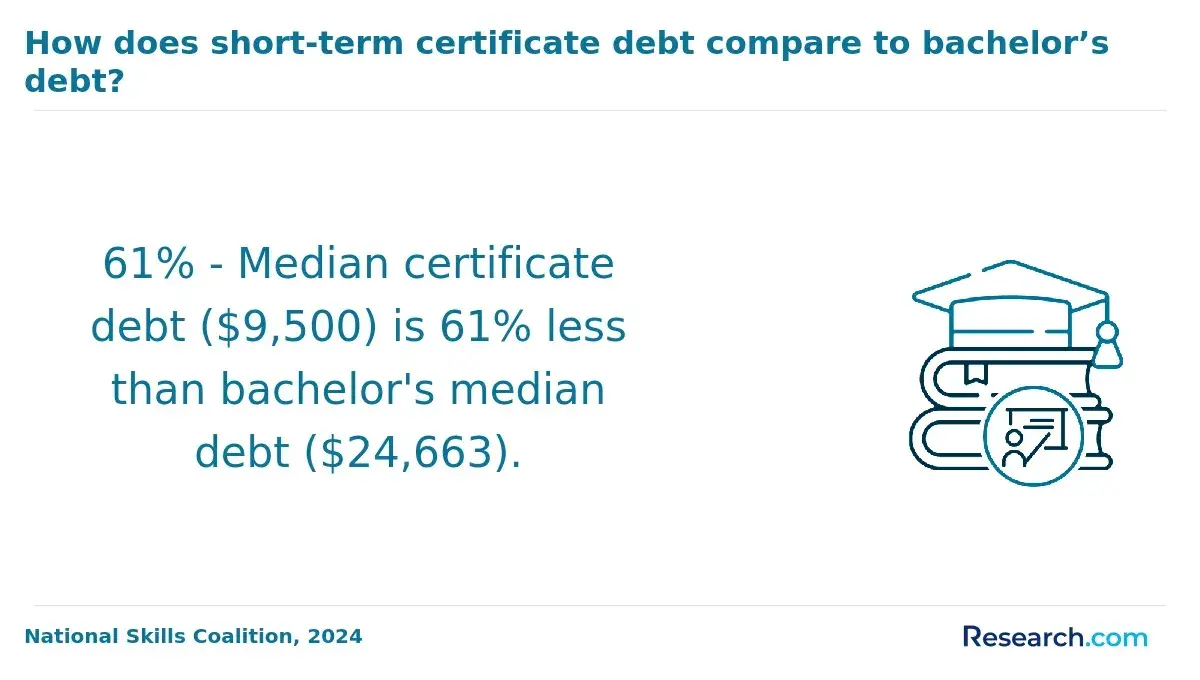
Ask for a written estimate covering every required charge and the payment schedule. Compare the net price after scholarships and grants, not simply the sticker price. A short program can be cost-effective when it meets the required credential standard; a low-cost program is poor value if it does not provide the hours, approval, or practical experience needed for the target role.
What curriculum and hands-on training do high-quality career programs usually include?
High-quality career programs teach both job-specific techniques and the workplace behaviors that make those skills usable. The curriculum should map clearly to an occupation, a recognized certification examination, an apprenticeship standard, or a licensing requirement where applicable. Programs that only provide recorded lectures or generic completion certificates may not offer enough practice for equipment-based or patient-facing work.
Strong hands-on training usually includes the following elements:
- Structured instruction in safety, ethics, documentation, communication, and the technical procedures used in the field.
- Practice in labs, simulations, studios, workshops, or supervised real-world settings before independent work is expected.
- Feedback from qualified instructors using observable skill standards, not attendance alone.
- Current equipment, software, tools, and procedures aligned with employer or regulatory expectations.
- Externships, clinical rotations, internships, apprenticeships, portfolio projects, or employer-sponsored projects where the occupation benefits from real-work exposure.
Ask how many hours are instructor-supervised, where practical placements occur, who secures them, and what happens if a placement is delayed. For digital careers, review student portfolios and project briefs. For healthcare and trades, inspect labs or training sites and ask whether every student has sufficient access to equipment.
Which careers and job roles can these training programs prepare you for?
Career training can prepare learners for entry-level roles, advancement within an existing occupation, or a pathway into further education. The right outcome depends on the credential's scope. For example, a medical assisting certificate may support entry-level clinical support work, while registered nursing requires an approved nursing education path and licensure. Likewise, a design certificate can strengthen a portfolio but does not replace experience in a competitive creative market.
The roles below illustrate how program type should connect to a realistic first job rather than a vague promise of "career readiness."
| Training area | Potential entry or related roles | Important qualification note |
| Electrical, HVAC/R, plumbing, welding | Apprentice, helper, installer, technician trainee, fabricator | Independent work may require apprenticeship completion and state or local licensing |
| Medical assisting, pharmacy technology, practical nursing | Medical assistant, pharmacy technician, practical nurse | Employer certification preferences and state rules vary by role and location |
| Legal studies and criminal justice | Paralegal assistant, legal administrative assistant, corrections officer, dispatcher | Law enforcement and investigatory roles can require separate academy training or background clearance |
| Graphic design and digital media | Junior designer, production artist, content creator, multimedia assistant | Portfolio quality, software proficiency, and experience strongly affect hiring prospects |
Students who ultimately want leadership, advanced clinical practice, or occupations requiring a bachelor's degree should evaluate stackable options. Reviewing best college degrees can help clarify whether a longer academic pathway is more appropriate for the intended role.
What salary ranges and earning potential can graduates of career training programs expect?
Occupational pay varies by location, experience, work schedule, union coverage, specialization, and employer. The figures below are U.S. Bureau of Labor Statistics national median annual wages for the occupations in May 2024, not guaranteed earnings for graduates of any particular program. They are useful for comparing labor-market potential after confirming that a chosen credential can actually lead to the role.
| Occupation | May 2024 median annual wage | Typical training consideration |
| Electricians | $62,350 | Usually learn through apprenticeship or technical training plus supervised experience; licensing rules vary |
| Heating, air conditioning, and refrigeration mechanics and installers | $59,810 | Postsecondary training is common; EPA refrigerant certification may be required for certain work |
| Licensed practical and licensed vocational nurses | $62,340 | Requires an approved practical-nursing program and state licensure |
| Paralegals and legal assistants | $61,010 | Employers may prefer a certificate or degree, but requirements vary |
| Graphic designers | $61,300 | Employers commonly evaluate a portfolio alongside education and experience |
Use local job postings and state wage tools alongside national medians. A higher median wage does not automatically make a program a better investment if local demand is limited, required licensing takes longer than expected, or the program's total cost is high. Learners seeking a faster advanced academic route may also consider a 6-month master's degree if they already hold the required bachelor's degree and their field values graduate-level study.
How can students evaluate and choose reputable career training programs with strong job outcomes?
A reputable career program is one that can demonstrate alignment with a real occupation, transparent costs, adequate supervised practice, and credible student support. Rankings and testimonials can be useful starting points, but they should not replace direct verification of approval status, outcomes, and employer relevance.
Use this decision process before accepting an offer:
- Define the exact job title, state, and credential needed, then identify whether the role requires a certificate, degree, apprenticeship, certification examination, or license.
- Compare at least three providers using the same measures: net price, schedule, completion time, required supplies, supervised hours, approval status, and refund policy.
- Request outcome information for the specific program, including completion, credential-exam, placement, and employment data when the school tracks it.
- Contact local employers, unions, licensing boards, or professional associations to ask whether they recognize the training provider and what applicants commonly need.
- Read the enrollment agreement carefully for cancellation rights, financing terms, arbitration clauses, placement disclaimers, and conditions attached to scholarships.
Red flags include pressure to enroll immediately, vague claims about "accreditation," refusal to disclose total costs, guaranteed-job language, unclear clinical placement policies, and no explanation of whether graduates qualify for a required license or exam. The best program is not always the fastest or cheapest; it is the one that meets the actual entry standard for your target occupation at a cost and schedule you can sustain.
Other Things You Should Know About
Yes. Options may include school scholarships, state workforce funding, community foundations, unions, professional associations, employer tuition assistance, and apprenticeship wages. Ask whether funding covers tuition only or also tools, exams, transportation, and other required costs.
No. A certificate is usually awarded by a school after completing a course of study. A professional certification is generally awarded by an industry or certifying organization after meeting its standards, often including an examination. Some training certificates prepare students for a separate certification exam.
Many administrative, technology, business, and design programs can be completed largely online. Programs involving clinical care, laboratories, machinery, driving, or regulated practical hours generally require in-person training, even if lectures are online.
A short program may be better when it directly meets entry requirements for a specific job and you need to start quickly. An associate degree may be a better choice when you want broader coursework, transfer options, or a credential required by the occupation. Compare the target role's requirements before deciding.
References
- Scholarships for Students Pursuing Career Education https://career.org/web/web/Multimedia/CER/Articles/Scholarships-for-Students-Pursuing-Career-Education.aspx
- Career Training - Central Scholarship https://central-scholarship.org/career-training
- Tuition Assistance for Job Training Programs https://www.fastweb.com/financial-aid/articles/tuition-assistance-for-job-training-programs
- A Comprehensive Guide to the Types of Scholarships Available https://www.sophia.org/blog/student-success/comprehensive-guide-to-the-types-of-scholarships-available/
- Scholarships for College - UNCF https://uncf.org/scholarships
- Scholarships & Giving (AGC of California) https://www.agc-ca.org/resources/workforce-development/scholarships-giving/
- Vocational programs and alternative pathways - Institute for Collaborative Education http://www.iceschoolnyc.org/vocational-programs-and-alternative-pathways
- Training and Education Scholarships | Gulf Coast... https://www.wrksolutions.com/job-seekers/career-development-and-training/training-and-education-scholarships
- Last-Dollar Scholarship https://workforce.iowa.gov/opportunities/grants/lds
- Competitive Skills Scholarship Program (CSSP) | Work Source Maine, Virtual Career Center https://www.myworksourcemaine.gov/pages/competitive-skills-scholarship-program-cssp