2027 Best Online Microcredentials for Remote Jobs

Co-Founder and Chief Data Scientist
Choosing a short online credential is difficult when employers want proof of skills, not just course completion. Remote work remains meaningful in the U.S.: Census Bureau data released in 2025 showed that 13.8% of workers primarily worked from home in 2023. This guide helps career changers, job seekers, and working professionals compare online microcredentials for remote roles.
Learn which credentials build credible portfolios, when a degree or certification is needed instead, how to check provider quality, and how to estimate the investment before enrolling.
Key Things You Should Know
- Choose a microcredential for a specific remote-job skill - such as data analysis, cloud support, project coordination, UX design, or digital marketing - not simply because it is fast; a portfolio and job-relevant tools matter most.
- Most online microcredentials are noncredit professional-learning credentials, not degrees and not professional certifications; completion can demonstrate training but does not automatically create licensure, certification eligibility, or a job offer.
- For salary context, the U.S. Bureau of Labor Statistics reported a 2024 median annual wage of $112,590 for software developers, but this occupation commonly requires a bachelor's degree; use occupational data to evaluate a target role, not as a promised outcome of a short credential.
Top 10 Best Online Microcredentials for Remote Jobs
Popular Trade School Programs
Remote-friendly trade training is usually concentrated in digital operations rather than hands-on construction or repair. Relevant certificate types include IT support, bookkeeping, medical billing and coding, digital marketing, web development, and computer-aided design fundamentals. An associate degree may fit learners who need broader general education, structured support, or credits toward a bachelor's degree. A short microcredential suits someone adding a defined software skill; it is less suitable for regulated trades that require supervised practical hours, an apprenticeship, or state licensing.
Healthcare Programs
Healthcare microcredentials can support remote-adjacent work in medical terminology, health information, billing, coding, telehealth operations, and healthcare project coordination. They do not qualify a learner to provide clinical care, diagnose patients, or hold a clinical license. Coding programs may prepare students for a separate industry certification exam, but exam eligibility and employer preferences vary. An associate degree in health information technology can be a stronger option for learners seeking a credit-bearing pathway or roles with more extensive employer requirements. Confirm whether practice software and certification-exam preparation are included.
Criminal Justice / Law Programs
Online certificates and associate degree programs in criminal justice, legal studies, paralegal studies, compliance, and cybersecurity can develop research, documentation, records-management, and policy skills useful in remote or hybrid settings. They do not replace requirements for becoming an attorney, police officer, investigator, or licensed private investigator. Paralegal employers may prefer approved programs or prior legal-office experience, and rules vary by employer and state. Choose a legal-support credential only after reviewing the job postings you want, especially their software, writing, confidentiality, and education expectations.
Arts & Design Programs
Remote arts and design credentials commonly cover graphic design, UX/UI design, content creation, animation, digital photography, and web design. For these fields, a demonstrable portfolio often carries more weight than the credential name alone. A short program can be useful when it produces case studies using current tools and includes feedback from working professionals. An associate degree may be better for beginners who need design foundations, sustained critique, and a larger portfolio. Avoid programs that promise design employment without requiring original project work.
What are online microcredentials for remote work and how do they differ from degrees?
An online microcredential is a focused learning credential that verifies completion of a short, defined set of courses, assessments, or skill activities. Universities, community colleges, professional associations, technology companies, and online learning platforms may issue them. For remote work, strong options typically teach tools, communication practices, documentation, digital collaboration, and job-specific outputs.
A microcredential is not automatically academic credit. Some college-issued credentials are credit-bearing and stack into a certificate or degree; many provider-issued badges and professional certificates are noncredit. Ask this before paying, especially if future transferability matters.
| Option | Primary purpose | Typical evidence earned | Best fit |
| Microcredential | Build a narrow, current skill | Digital badge, completion record, or certificate | Upskilling or targeted career exploration |
| Academic certificate | Complete a defined college curriculum | Institutional certificate; may carry credit | Structured pathway or possible degree stacking |
| Professional certification | Meet an external profession's standards | Certification after exam and/or experience requirements | Roles where employers recognize a certifying body |
| Degree | Develop broad and advanced academic preparation | Associate, bachelor's, or graduate degree | Occupations with degree expectations or advancement needs |
For broader comparisons of credit-bearing and career-oriented options, review best online certificate programs. A microcredential is worthwhile when its learning outcomes match job descriptions and it gives you work samples to show employers. It is a weaker choice when the target occupation requires a license, a degree, substantial experience, or a specific professional certification.
Which remote-friendly careers value online microcredentials most for hiring and advancement?
Remote-friendly employers tend to value microcredentials most when they verify a tool-based capability that can be demonstrated quickly. Examples include cloud-platform fundamentals, customer relationship management administration, analytics dashboards, cybersecurity basics, agile project practices, search marketing, bookkeeping software, and UX research.
The comparison below distinguishes roles where a focused credential can strengthen candidacy from roles where it is usually only one part of the qualification picture. Occupational wage figures are U.S. Bureau of Labor Statistics 2024 medians for the occupation, not pay outcomes for microcredential holders.
| Remote-capable field | Useful microcredential focus | 2024 occupation median wage | Important limitation |
| Project coordination | Agile methods, project software, reporting | $100,750 for project management specialists | Employers may still prefer related experience. |
| Data analysis | Spreadsheets, SQL, visualization, dashboards | $112,590 for data scientists | Data scientist roles commonly require advanced quantitative preparation. |
| Information security | Security fundamentals, risk, cloud security | $124,910 for information security analysts | Many jobs require prior IT experience and may prefer certifications. |
| Digital marketing | Analytics, paid search, content, CRM tools | $161,030 for marketing managers | Manager roles generally require substantial experience. |
Use the table as a direction-setting tool, not a salary forecast. Entry-level remote openings can be competitive, particularly in fields where employers can recruit nationally. The strongest applicants pair a credential with a portfolio, work history, freelance projects, volunteer work, internships, or documented results.
For fast skill-building options, compare 6 week certification programs online, but confirm that a short timeline still includes assessed work rather than video viewing alone.
How can students verify that an online microcredential is accredited and industry-recognized?
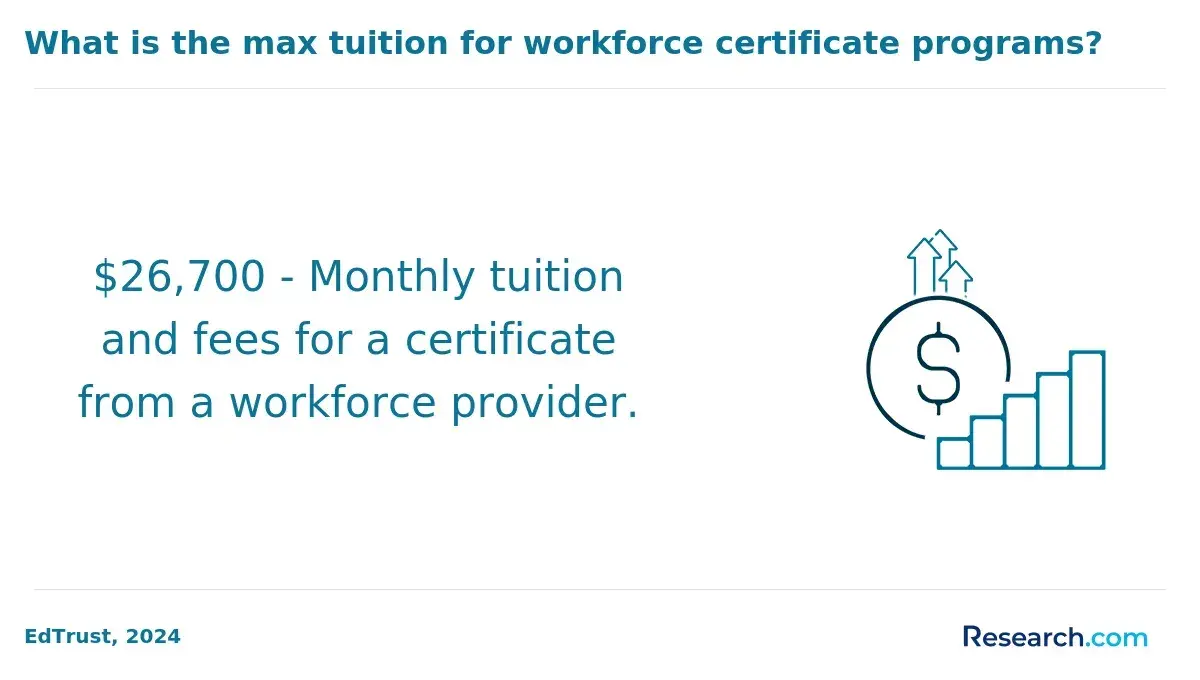
Accreditation applies primarily to institutions and certain academic programs; it does not automatically apply to every badge, course, or professional certificate. A noncredit microcredential may be legitimate without being accredited if a reputable provider issues it and employers recognize the skills. Conversely, an accredited college can offer a noncredit credential that does not transfer into a degree.
Before enrolling, verify quality through these checks:
- Confirm the issuing institution or organization on its official website and review the exact credential title.
- For a college provider, check institutional accreditation through the U.S. Department of Education or Council for Higher Education Accreditation directories.
- Read the curriculum, instructor qualifications, assessment method, total price, refund terms, and whether the credential is credit-bearing.
- Search target job postings for the named tools, certification exams, or provider recognition rather than assuming employers value the badge.
- Ask whether digital badges contain verifiable metadata showing issuer, criteria, and completion date.
Industry recognition is often more important than institutional accreditation for vendor-specific training. For example, a cloud or software credential should identify the relevant platform, skill level, and assessment standard. Be cautious when a provider uses vague phrases such as "globally accredited" without naming the accreditor or links recognition only to testimonials.
What admission requirements and prior experience do top remote-focused microcredential programs expect?
Admission requirements depend on the provider and credential type. Many noncredit online microcredentials have open enrollment: learners need an email address, payment method, reliable internet, and enough time to complete assignments. Academic microcredentials offered by colleges may require application materials, placement, prior coursework, or enrollment in a degree program. Advanced technical options can expect coding, statistics, or prior IT knowledge.
Match your starting point to the program level before paying. These questions clarify whether the program is realistically accessible:
- Does the curriculum state prerequisite knowledge, software, hardware, and expected weekly workload?
- Is the program beginner-level, intermediate, or designed for working professionals with prior experience?
- Will you receive instructor feedback, career support, or only automated grading?
- Are projects completed independently, and may you publish them in a portfolio?
- Does a related certification exam require separate work experience, identity verification, or an additional fee?
Do not assume GPA, standardized tests, or transfer credit are relevant to a platform-based microcredential. They may matter for a college program, but not for a short noncredit offering. Learners seeking a degree path can investigate whether an associate degree in 6 months online free is feasible for their transfer-credit situation; accelerated claims should always be checked against residency, transfer, and tuition rules.
How long do online microcredential programs for remote jobs take and what do they cost?
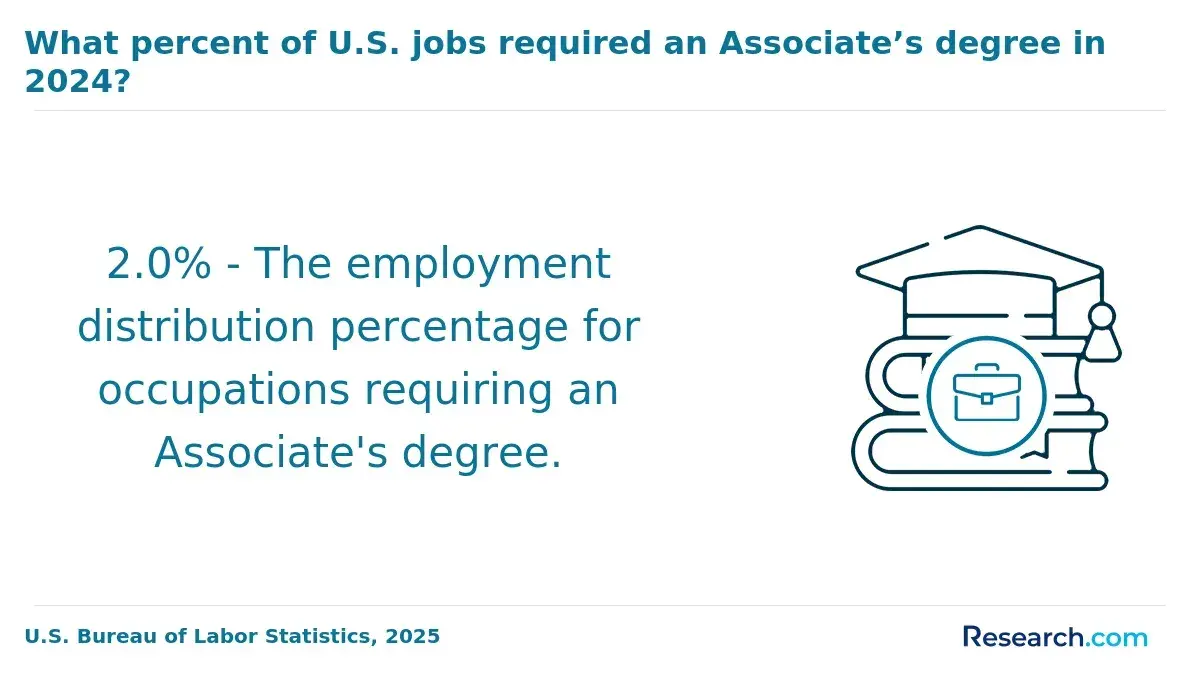
Online microcredentials can range from a few weeks to several months, depending on depth, pacing, feedback, and project requirements. Self-paced courses may be quicker for experienced learners, while instructor-led cohorts provide deadlines and peer interaction. The advertised price may exclude exam fees, textbooks, software subscriptions, required equipment, or renewal costs.
Instead of treating the lowest price as the best value, compare the total learning and job-search investment.
| Program format | Common time pattern | Cost considerations | Best for |
| Self-paced noncredit course | Days to months | Often lower upfront price; support may be limited | Independent learners refreshing a skill |
| Instructor-led professional certificate | Several weeks to months | Tuition may include feedback and projects | Career changers needing accountability |
| College credit microcredential | Usually one or more academic terms | Per-credit tuition and fees may apply | Learners who want stackable credit |
| Certification preparation program | Varies by prior knowledge | Training and exam fees are often separate | People targeting a recognized exam |
Federal student aid is not automatically available for short noncredit programs. Ask the provider about employer tuition assistance, payment plans, scholarships, and refund deadlines. If schedule control is your priority, compare self paced online colleges and confirm whether self-paced study still provides instructor access and a firm completion deadline.
What curriculum, projects, and assessments prepare learners for remote work in these programs?
The best remote-work microcredentials teach more than a software interface. They require learners to plan work independently, communicate progress in writing, collaborate asynchronously, manage files, protect sensitive information, and present decisions to people who are not in the same room. Those habits make the credential more useful in remote hiring conversations.
A credible curriculum generally includes applied evidence, not merely completion quizzes. Look for the following elements:
- Job-relevant tools and workflows aligned with current entry-level or advancement-oriented job postings.
- Realistic projects, such as a dashboard, campaign brief, security risk summary, sprint plan, customer-support knowledge base, or design case study.
- Rubrics, instructor feedback, peer review, or practical assessments that evaluate quality rather than attendance.
- Training in asynchronous communication, meeting etiquette, documentation, version control, and digital accessibility where relevant.
- A portfolio-ready capstone that explains the problem, process, tools, outcomes, and your individual contribution.
AI is changing this evaluation. Employers may expect candidates to use AI tools responsibly while still verifying outputs, protecting confidential data, citing sources when appropriate, and demonstrating their own judgment. Favor programs that explain acceptable AI use and assess foundational competence rather than treating AI-generated work as proof of mastery.
How do online microcredentials compare to campus-based certificates for flexibility and support?
Online microcredentials usually offer greater scheduling flexibility than campus-based certificates, especially when coursework is asynchronous. Campus programs can offer more direct access to labs, faculty, career offices, classmates, and local employer relationships. Neither format is automatically better; the right choice depends on whether your goal requires hands-on practice, networking, academic credit, or maximum schedule control.
This comparison highlights the practical trade-off between convenience and structured support.
| Factor | Online microcredential | Campus-based certificate |
| Schedule | Often asynchronous or cohort-based evenings | Usually fixed class and lab times |
| Location | Accessible from anywhere with required technology | May require commuting or local residence |
| Hands-on learning | Best for digital and knowledge-based skills | Often stronger for equipment-dependent training |
| Support | Ranges from automated platforms to live coaching | May provide in-person advising and facilities |
| Career signal | Depends heavily on issuer, assessment, and portfolio | May offer local employer familiarity and academic credit |
Choose campus or hybrid training if the occupation requires labs, clinical hours, supervised practice, or local licensure preparation. Choose online when the work itself is digital, the provider offers meaningful feedback, and you can create proof of skill without in-person facilities.
What salaries, promotion potential, and job security can microcredential holders expect in remote roles?
A microcredential can support a promotion or career transition, but it does not establish a standard salary. Pay depends on occupation, location, industry, experience, degree requirements, performance, and whether the role is fully remote, hybrid, or office-based. Remote work can expand the employer pool, but it can also increase applicant competition.
U.S. Bureau of Labor Statistics projections released in 2025 show that information security analyst employment is projected to grow 29% from 2024 to 2034, much faster than average. That indicates strong occupational demand, but many analyst roles still expect a bachelor's degree and related IT experience; an entry-level security microcredential is better viewed as a starting signal than a substitute for those requirements.
Promotion potential is strongest when a credential solves a business need in your current role. A customer-success specialist who earns analytics training and builds retention reports, for example, has clearer evidence than a learner who only adds a badge to a profile. For job security, build durable capabilities: writing, client communication, data judgment, security awareness, project execution, and the ability to learn changing tools.
How should learners choose a reputable online microcredential for remote jobs and avoid scams?
Start with the remote role you want, then work backward from real job descriptions. Identify recurring skills, software, degree expectations, certifications, and portfolio requests. A reputable program should clearly explain what learners will do, what credential they receive, who teaches it, and what it does not qualify them to do.
Use this decision process to reduce the risk of buying a credential with limited hiring value:
- Collect 15 to 20 job postings for your target role and note the skills that recur most often.
- Choose a credential whose curriculum maps directly to those skills and includes assessed projects.
- Calculate total cost, including technology, examination, subscription, and renewal expenses.
- Verify the issuer, accreditation where relevant, industry recognition, refund policy, and whether academic credit can transfer.
- Ask for examples of capstones, instructor access, completion requirements, and outcome information with definitions and dates.
- Complete a portfolio project and tailor your résumé and applications to the evidence you created.
Common red flags include guaranteed job-placement promises, pressure to enroll immediately, hidden fees, generic course descriptions, unverifiable "accreditation," and claims that a completion certificate is the same as a professional certification. Also avoid choosing solely by a low monthly payment; compare the final total and the quality of feedback, projects, and career relevance.
Other Things You Should Know About
They can be worthwhile when they teach a specific skill requested in target job postings and produce work samples you can show. They are less valuable when they are unassessed, unrelated to the role, or used as a substitute for a required degree, license, or professional certification.
It may help you demonstrate foundational skills, but it rarely replaces experience by itself. Build evidence through capstones, personal projects, volunteer work, internships, freelance tasks, or contributions that show you can work independently and communicate online.
Recognition varies by employer and field. Credentials from known universities, professional associations, and technology vendors can help, particularly when the curriculum matches required tools. Check job postings and ask recruiters or hiring managers in your target field which credentials they recognize.
Choose a microcredential for a fast, focused skill upgrade or career test. Choose an associate degree when you need broader foundations, college credit, a longer-term education pathway, or a credential commonly requested for the occupation you want.
References
- 4 Strategies to Develop Successful Micro-Credential Programs | Research Brief https://www.wgulabs.org/posts/4-strategies-to-develop-successful-micro-credential-programs
- Micro-credentials: The Key to Multiplying Your Job Opportunities https://certiprof.com/blogs/news/micro-credentials-the-key-to-multiplying-your-job-opportunities
- Remote Work Certifications That Are Worth It: Credentials That Can Strengthen Your Career https://fatumasvoice.org/328874/
- The Best Free Online Certificate Courses to Strengthen Your Resume and Stand Out https://www.virtualvocations.com/blog/telecommuting-job-search-help/the-best-free-online-certificate-courses-to-strengthen-your-resume-and-stand-out/
- How can micro-credentials help employee development? https://employmenthero.com/blog/micro-credentials-employee-development/
- Micro-Credentials | NEA https://www.nea.org/professional-excellence/professional-learning/micro-credentials
- Microcredentials in Higher Education: Why They're Reshaping Learning Paths https://moderncampus.com/blog/what-do-microcredentials-mean-for-the-modern-higher-education-institution.html
- CourseCareers https://coursecareers.com/blog-posts/best-online-courses-land-remote-job
- Microcredentials: Empowering Modern Learners & Employers https://evolllution.com/microcredentials-empowering-modern-learners-employers
- Course Completion Rate Benchmarks: Improve Yours (2026) | Ruzuku https://www.ruzuku.com/learn/articles/course-completion-rates