2027 Best Online Stackable Credentials for Career Advancement

Co-Founder and Chief Data Scientist
Choosing short online training is difficult when one credential may lead to another and another may be a dead end. Online stackable credentials combine smaller certificates, badges, or college credits into a larger qualification. The U.S. Bureau of Labor Statistics projects healthcare occupations to grow much faster than average from 2023 to 2033, making targeted upskilling especially relevant.
This guide helps working adults compare pathways, verify quality, estimate costs, and choose credentials that support a specific promotion, job change, degree, or industry certification goal.
Key Things You Should Know
- A strong stackable pathway documents how each credential builds toward a larger certificate, associate degree, professional certification, or defined job role; do not assume courses will transfer without written confirmation.
- Cost and speed vary widely: a noncredit industry course can take weeks, while a credit-bearing certificate sequence may take 6-18 months and require tuition, technology, exams, and clinical or lab fees.
- Use labor-market evidence carefully: BLS projects computer and information technology occupations to grow faster than average from 2023 to 2033, but a credential alone does not guarantee employment, certification, licensure, or a stated salary.
Top 10 Best Online Stackable Credentials for Career Advancement
Popular Trade School Programs
Stackable trade pathways commonly begin with an entry-level certificate and add specialized coursework, supervised hours, or manufacturer training. Examples include welding certificates leading to advanced pipe or structural welding coursework; HVAC certificates progressing to refrigeration and controls; electrical technician certificates leading toward apprenticeships; and industrial maintenance certificates adding programmable logic controller skills. Online study can cover theory, safety, codes, and estimating, but welding, electrical, HVAC, and maintenance programs usually require campus labs or employer-based practical training. Check state licensing and apprenticeship rules before enrolling.
Healthcare Programs
Healthcare stackable credentials may pair a medical billing certificate with coding training, or build from nursing assistant preparation to practical nursing and registered nursing education. Health information programs can stack academic credits toward an associate degree, while professional certifications may require separate exams and work experience. Fully online programs suit administrative subjects, including billing, coding theory, and health records. Direct-care programs need approved clinical experiences and may be regulated by state boards. Confirm whether a program is designed to meet eligibility requirements for a specific certification or license in your state.
Criminal Justice / Law Programs
Common pathways include criminal justice certificates that stack into an associate degree, legal studies certificates that add paralegal coursework, and public safety programs with courses in report writing, ethics, evidence, and emergency management. These credentials can strengthen preparation for support roles or advancement within an agency, but they do not automatically qualify a graduate as a police officer, lawyer, or licensed investigator. Hiring standards can include background checks, physical testing, academy training, or state-specific requirements. Students seeking paralegal work should verify employer expectations and program recognition.
Arts & Design Programs
Digital design pathways often stack short certificates in graphic design, user experience, web design, motion graphics, or digital marketing into a broader portfolio-focused certificate or associate degree. A noncredit microcredential can quickly teach a software tool, while credit-bearing coursework may be more useful when a learner intends to transfer. For creative roles, portfolio quality, project feedback, and current software skills often matter as much as the credential title. Choose programs that provide instructor critique, accessible software requirements, and work samples you can show employers.
What are online stackable credentials and how do they work for career advancement?
Online stackable credentials are smaller, connected learning awards that can accumulate toward a larger educational or career objective. They may be college certificates carrying academic credit, noncredit workforce certificates, digital badges, or industry training modules. "Stackable" should mean more than taking several courses: the provider should identify what the first credential leads to, which requirements it satisfies, and whether credits or competencies are accepted in the next step.
A typical pathway lets a learner gain a usable skill first, then continue only if the career goal still fits. For example, an entry-level data analytics certificate may lead to an advanced analytics certificate, selected college credits, or preparation for a separate vendor certification. The educational certificate and the vendor certification are different credentials; the latter is normally awarded by a certifying body after meeting its requirements.
The comparison below shows why the credential format matters before enrollment:
| Credential format | Usually provided by | Best use | Key limitation |
| Credit-bearing certificate | Accredited college or university | Building toward a degree or formal academic record | Transfer is not automatic outside the stated pathway |
| Noncredit workforce certificate | College, employer, or training provider | Rapid job-specific skill development | May not carry academic credit or qualify for aid |
| Professional certificate | University, platform, or industry partner | Structured skills and portfolio development | Employer recognition differs by field |
| Professional certification | Independent certifying organization | Demonstrating standards-based competence | May require an exam, renewal, or experience |
For career advancement, the strongest use case is a documented skill gap: a worker needs a credential to move from customer support to IT support, from bookkeeping to payroll, or from basic manufacturing work to maintenance technology. It is less suitable when the target occupation legally requires a degree, a state license, extensive supervised practice, or an apprenticeship.
How do online stackable credential programs compare to traditional degrees and certificates?
Stackable programs trade breadth for flexibility. A traditional associate or bachelor's degree follows a larger planned curriculum and may be the clearer choice for professions that screen applicants by degree level. A stackable route allows a learner to stop after an early milestone, test a field at lower initial cost, and continue later. Its value depends on whether the milestones are genuinely connected and recognized by employers or a receiving institution.
Readers who need a faster route to a full undergraduate credential can also compare a best 1 year bachelor degree online option but should verify whether prior credits, transfer rules, and a heavy course load are necessary to finish on that timeline.
This comparison can help match the format to the decision at hand:
| Option | When it makes sense | Main trade-off |
| Stackable credit pathway | You want an early exit point and may pursue a degree later | Each transfer point must be confirmed |
| Standalone academic certificate | You need focused college coursework without a full degree | May not include a next credential by design |
| Industry certification | An employer recognizes a specific standardized credential | Usually requires separate exam preparation and renewal |
| Associate or bachelor's degree | A role requires broad education or a degree for advancement | Higher total time and cost commitment |
Online delivery is a benefit when lectures, simulations, and assignments fit around work. It is not a substitute for required clinicals, laboratories, apprenticeships, proctored testing, or portfolio review. Ask whether live sessions are required and whether practical placements are available near you.
What accreditation and quality standards should online stackable credential programs meet?
Quality checks should match the credential type. For credit-bearing college certificates, verify that the institution is accredited by an agency recognized by the U.S. Department of Education or the Council for Higher Education Accreditation, then confirm that the specific credential appears in the catalog. Institutional accreditation supports credibility but does not by itself establish that every course will transfer.
For career training and professional certificates, look for transparent curriculum ownership, qualified instructors, assessed learning outcomes, current technology, refund policies, and employer or industry alignment. In regulated fields, programmatic approval can matter more than a general institutional claim. Nursing, allied health, teacher preparation, and certain technical programs may have state or profession-specific standards.
Before paying, obtain these answers in writing because marketing language such as "accredited" or "certification-ready" can be incomplete.
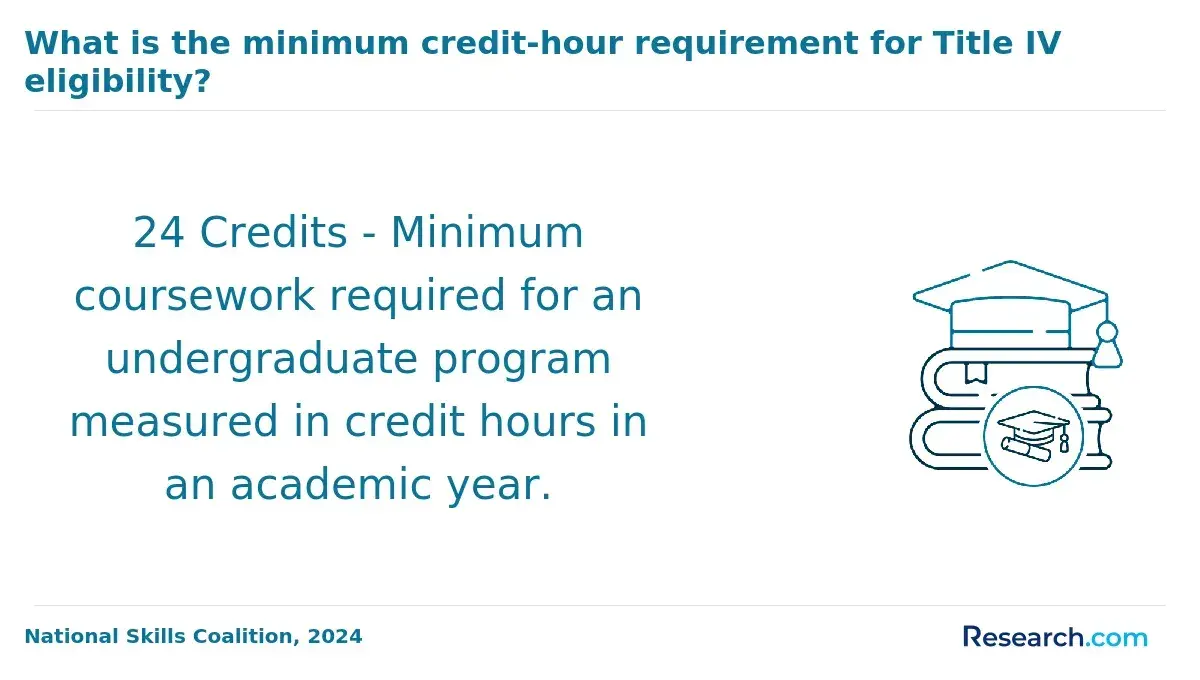
- Is the credential credit-bearing, and how many semester or quarter credits does it award?
- What exact certificate, degree, exam, license, or job pathway can the completed courses lead to?
- Which organization accredits, approves, or recognizes the program, and does that status apply to this location and format?
- Are externships, labs, exams, background checks, equipment, or travel required in addition to tuition?
A red flag is a provider that will not identify the awarding institution, gives vague transfer promises, or implies eligibility for a license without naming the applicable state requirement. Contact the licensing board directly when licensure is the goal.
Which career fields offer the strongest outcomes with online stackable credentials?
The best fields combine clearly defined skills, employer-recognized assessments, and work that can be learned partly online. Information technology, business operations, healthcare administration, project coordination, supply chain, manufacturing technology, and digital design are common fits. The BLS projects computer and information technology occupations to grow much faster than average between 2023 and 2033; this supports continued demand for relevant skills, not a guarantee that any short program leads to an IT job.
For people deciding among short professional pathways, this overview of the best certifications for jobs can help distinguish employer-recognized certifications from training certificates.
Use the target role, rather than a broad field name, to judge fit.
| Field | Potential stack | Online fit | Important caution |
| IT support and cloud operations | Fundamentals, networking, cloud, security | Strong for concepts and virtual labs | Build hands-on projects and verify exam requirements |
| Healthcare administration | Billing, coding, records, compliance | Strong for administrative coursework | Certification eligibility may require specific coursework or experience |
| Manufacturing maintenance | Safety, electrical basics, PLCs, maintenance | Hybrid is often best | Practical lab competence remains essential |
| Business operations | Spreadsheets, bookkeeping, payroll, project tools | Strong for working adults | Choose software and projects used in target jobs |
Fields with legal practice restrictions, direct patient care, or extensive physical skill requirements may require a hybrid route or a longer degree and supervised training. If an occupation requires licensure, start with that requirement and work backward to the credential.
What admission requirements, prerequisites, and prior learning are needed for these programs?
Requirements range from open enrollment for a short noncredit course to formal college admission for a credit-bearing certificate. Many entry-level online offerings require a high school diploma or equivalent, basic computer access, and readiness for the subject. Advanced stacks may require an earlier certificate, college credits, industry experience, placement testing, or a current professional license.
Do not assume GPA or standardized tests are required for every program. They are often irrelevant to noncredit training, but a college may use admissions, placement, or prerequisite rules for credit courses. Likewise, prior learning can be recognized through transfer credit, portfolio review, military training evaluation, challenge exams, or employer training, depending on institutional policy.
Take these steps before applying so you do not repeat coursework or enter at the wrong level:
- Write down the final role, degree, certification, or license you want—not just the first certificate.
- Request a course map showing prerequisites, credit values, and the next credential in the sequence.
- Submit transcripts and documented prior learning for evaluation before registering when possible.
- Confirm technical requirements, time-zone expectations, proctoring, and any in-person obligations.
- For regulated careers, compare the curriculum with the relevant state board or certifying body's eligibility rules.
A common mistake is enrolling in a beginner course because admissions are easy, then discovering it neither waives the next prerequisite nor transfers. Ask for the policy in writing before paying.
How long do online stackable credential pathways take and what do they cost?
Completion time depends on the credential level, prior learning, course sequence, and weekly availability. A single noncredit microcredential may take a few weeks; a sequence of college certificates can take 6-18 months part-time; and an associate-degree pathway generally takes longer. Accelerated pacing can reduce calendar time but does not reduce the amount of learning or practical experience required.
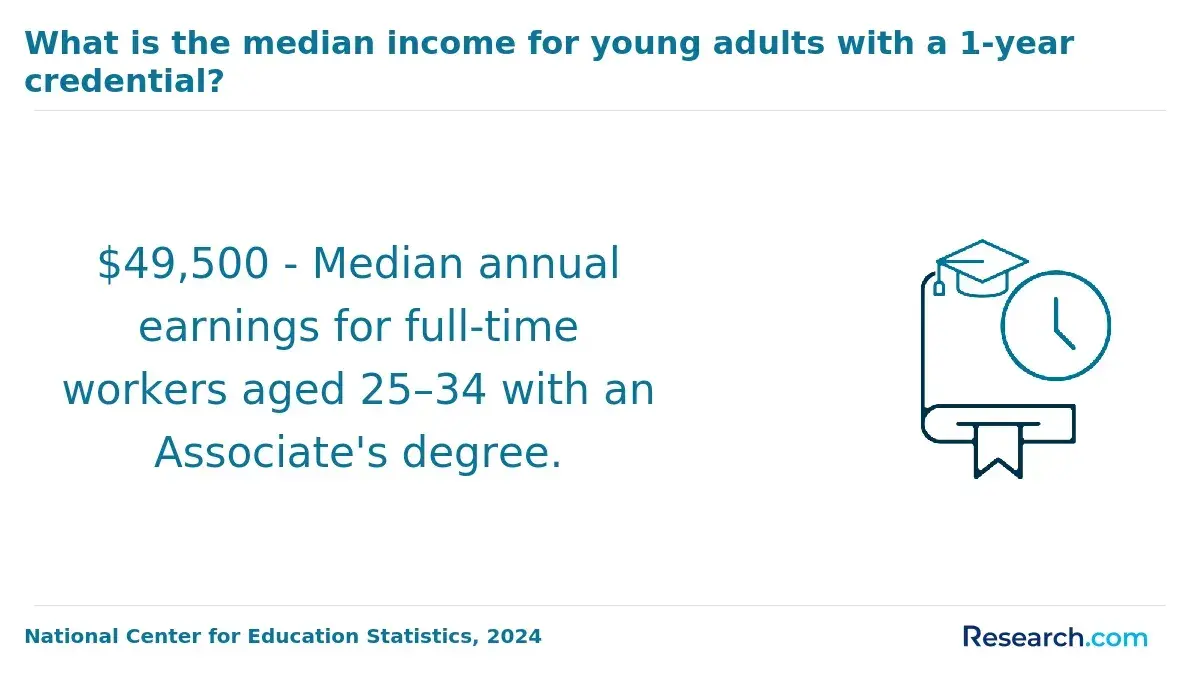
Cost must be evaluated as a total pathway expense, not an advertised monthly payment. The National Center for Education Statistics reported that average published tuition and fees for public two-year institutions were $3,990 in 2023-24. That national figure is a useful benchmark for comparison, but local tuition, residency rules, and certificate pricing can differ substantially.
People exploring lower-cost short options can review guides on "What certifications can I get online?" and compare the credential's recognition with its total price.
Budget for the items below before comparing providers:
- Tuition or subscription charges for every credential in the sequence
- Application, registration, exam, proctoring, and credential-issuance fees
- Books, software licenses, equipment, uniforms, tools, or home internet upgrades
- Travel, lodging, and lost work time for labs, clinicals, internships, or testing
- Renewal fees and continuing education for certifications that expire
Federal student aid may be available for eligible students in qualifying programs at eligible institutions, but many short noncredit credentials do not qualify. Ask about employer tuition assistance, workforce grants, payment plans, scholarships, and whether aid applies to the exact program rather than the institution generally.
What curriculum, courses, and competencies are typically included in stackable pathways?
A well-designed stack begins with foundational knowledge and produces evidence of competence at each stage. Early courses may cover workplace communication, digital literacy, safety, ethics, data handling, or introductory technical concepts. Later courses add role-specific tools, applied projects, simulations, supervised practice, or preparation for an external exam.
Look beyond course titles. "Introduction to cybersecurity" can be useful, but it is more meaningful when the syllabus identifies competencies such as access control, network monitoring, incident documentation, and risk communication. Likewise, an accounting stack should clarify whether it teaches bookkeeping software, payroll procedures, financial statements, or tax preparation—and at what depth.
The curriculum map should answer three practical questions: what can you do after each milestone, how will you demonstrate it, and what does the next credential accept? The following signals suggest a more coherent sequence.
| Curriculum feature | Why it matters |
| Published competency list | Lets you compare skills with job postings and certification blueprints |
| Assessed projects or simulations | Creates evidence beyond course completion |
| Mapped prerequisites | Prevents duplicate or missing coursework |
| Current tools and standards | Improves relevance in technology-changing fields |
| Capstone, lab, or supervised experience | Supports application of knowledge where practical skills matter |
Avoid programs that offer only completion badges without explaining assessment, instructor feedback, or what employers should infer from the award.
What salaries, promotion potential, and job growth can stackable credentials support?
Stackable credentials can strengthen an application, document a new skill, or help an incumbent employee qualify for internal training. They should not be treated as a direct salary formula. Pay depends on occupation, location, experience, education level, employer, performance, union status, licensure, and labor-market conditions.
For context, the BLS reported a 2023 median annual wage of $104,420 for computer and information technology occupations. This is occupational wage data across workers in that broad group, not the expected pay of someone who completes an online certificate. Entry-level roles may pay less, and some roles require degrees or experience beyond a credential.
Promotion potential is strongest when the credential fills a documented requirement: a new software system, compliance responsibility, supervisory skill, technical specialization, or eligibility to sit for a recognized certification exam. Ask your manager or target employers which credentials they recognize, then compare that answer with job postings and the provider's curriculum.
Use a simple return-on-investment check: estimate total out-of-pocket cost and time away from work, identify the specific role or responsibility the stack supports, and set a reasonable deadline to reassess results. If the credential does not create a clearer next step, a degree, apprenticeship, portfolio project, or direct exam preparation may be the better investment.
How can prospective students choose reputable online stackable credential providers?
Choose the provider after defining the destination. A reputable pathway explains who awards each credential, whether courses carry credit, what transfers, how learning is assessed, and what additional requirements apply. Community colleges and universities can be a strong choice for learners who need academic credit; industry providers may fit workers seeking a current, narrowly defined skill or certification preparation.
If your long-term goal requires a bachelor's degree, compare the stack with the easiest bachelor's degree option only after confirming that "easiest" still meets your career, accreditation, and learning needs. The least demanding path is not necessarily the most transferable or professionally useful one.
Use this screening process before committing funds:
- Search job postings for your intended role and note recurring skills, degree requirements, and named certifications.
- Match those requirements to a published program map, not promotional claims alone.
- Verify institutional accreditation, program approval, and licensing or exam eligibility where applicable.
- Request the full cost, completion schedule, withdrawal policy, and all practical requirements in writing.
- Ask whether prior courses transfer into the program and whether completed courses transfer to the stated next credential.
- Review learner support, instructor access, career services, accessibility, and technical support for online students.
Major red flags include guaranteed job or salary claims, pressure to enroll immediately, unclear tuition, unnamed accrediting bodies, no explanation of practical training, and vague statements that credits are "transferable everywhere." Choose a provider that gives specific, verifiable answers even when the answer is that transfer or licensure cannot be guaranteed.
Other Things You Should Know About
They can be worthwhile when each step leads to a clearly identified next credential, employer-recognized skill, or role requirement. They are less valuable when the provider cannot document transfer, recognition, or the practical competencies gained.
Some credit-bearing certificates can count toward a degree at the same institution, and sometimes at another institution. Noncredit certificates and digital badges usually do not automatically convert to college credit. Confirm the receiving school's policy in writing.
Many business, IT, administration, and design programs can be completed online. Programs involving clinical care, skilled trades, laboratories, or regulated practice may require in-person labs, supervised fieldwork, or proctored exams.
Not necessarily. A certificate is an educational award. Professional certification or licensure may require a separate examination, work experience, supervised hours, background checks, or state-board approval. Check the relevant certifying body or licensing board before enrolling.
References
- What Are Stackable Credentials and Why Do They Matter? https://www.pltw.org/blog/what-are-stackable-credentials
- Stackable Credentials Explained https://diplomasafe.com/stackable-credentials/
- Stackable Credentials | Learn & Work Ecosystem Library https://learnworkecosystemlibrary.com/topics/stackable-credentials/
- Making sure you're not a bot! https://www.iastatedigitalpress.com/jtmae/article/id/14484/
- A Research-Based Look at Stackable Credentials https://www.parchment.eu/blog/podcast-episode-9-a-research-based-look-at-stackable-credentials/
- Stackable credentials can open doors to new career opportunities | Brookings https://www.brookings.edu/articles/stackable-credentials-can-open-doors-to-new-career-opportunities/
- Stackable Credentials in Career Education at California Community Colleges https://www.ppic.org/publication/stackable-credentials-in-career-education-at-california-community-colleges/
- Building Stackable Credentials That Truly Deliver Value and Economic Mobility: 7 Steps for Success https://mcacs.talentfirst.net/building-stackable-credentials-that-truly-deliver-value/
- Stacked Credentials and Employment https://services.intead.com/blog/stacked-credentials-employment
- What Are Stackable Credentials? Clearly Explained | Certifier https://certifier.io/blog/stackable-credentials