2027 Fastest Short Certificate Programs

Co-Founder and Chief Data Scientist
Choosing the fastest certificate program is not simply about finishing first; it is about finding training that employers, licensing boards, or industry certifiers will recognize. Short programs can take weeks or months, while regulated careers often require clinical practice, examinations, or state approval.
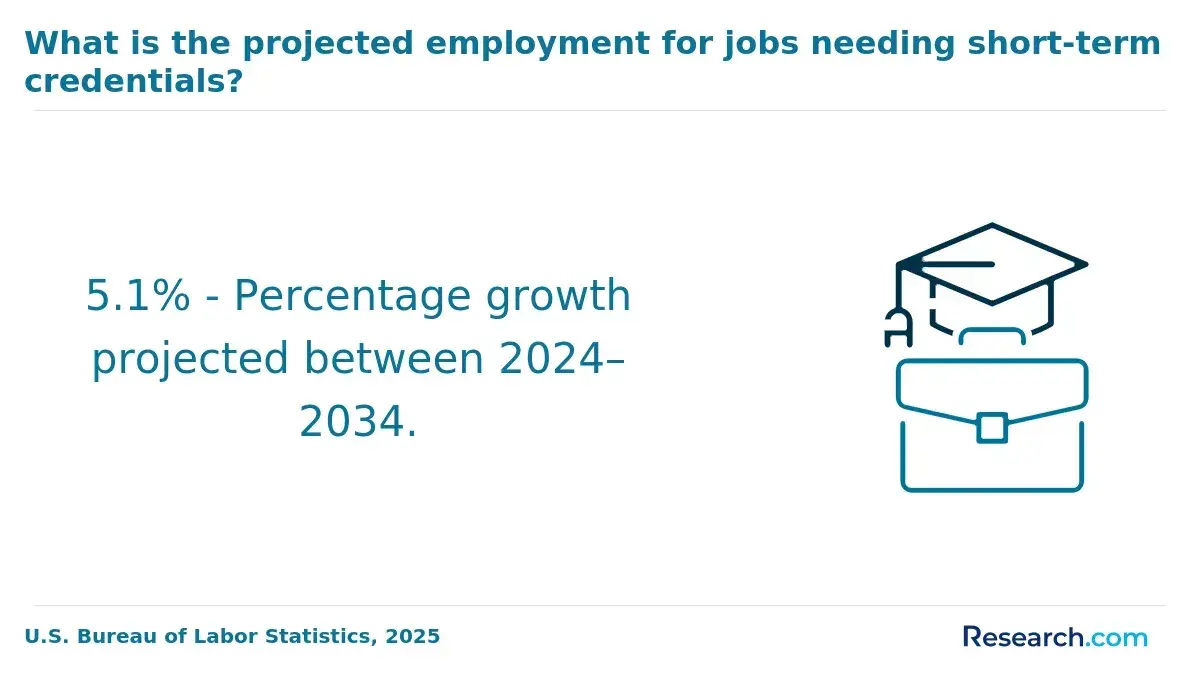
The U.S. Bureau of Labor Statistics projects healthcare support occupations to grow faster than average from 2024 to 2034. This guide compares fast certificate paths, realistic outcomes, costs, delivery formats, and the checks to make before paying tuition.
Key Things You Should Know
- Fastest options often take 4-16 weeks, but a short school certificate is not the same as a professional certification or occupational license.
- For regulated roles such as nursing assistant, phlebotomy technician, HVAC technician, and security guard, state rules, supervised training, background checks, or an external exam can extend the real time to employability.
- BLS 2024-34 projections show especially strong demand in healthcare support and skilled technical work, but occupational median pay reflects the job, not a guaranteed outcome of earning a certificate.
Top 10 Fastest Short Certificate Programs
Popular Trade School Programs
Fast trade certificates commonly include welding, HVAC/R, electrical helper, plumbing, commercial driver training, and industrial maintenance. A noncredit workforce certificate may take 4-24 weeks; credit-bearing technical certificates often take two semesters or longer.
Choose hands-on campus training when employers or licensing rules require lab hours. Online coursework can help with theory but rarely replaces shop practice. Apprenticeship is often the stronger route for electrician and plumber careers because independent work usually requires extensive supervised experience and state licensing. Ask whether tools, testing, and safety credentials are included.
Healthcare Programs
Common fast healthcare options include certified nursing assistant, phlebotomy technician, medical billing and coding, medical assistant, EKG technician, and sterile processing technician certificates. Completion may range from several weeks to about a year, depending on clinical requirements.
A school certificate documents training; a certification such as a national phlebotomy credential may require a separate exam. Verify that clinical placements are guaranteed and that the curriculum meets your state's rules. Medical coding can be online, but patient-care programs generally require in-person skills training and clinical experience.
Criminal Justice / Law Programs
Short options include paralegal studies, legal assistant, court reporting support, private security, corrections support, and emergency dispatch certificates. Security training can be brief, but licensing, fingerprinting, and firearm permissions vary sharply by state. Paralegal certificates can improve legal-office skills, yet employers may prefer candidates with an associate or bachelor's degree for more complex roles.
Dispatch and corrections programs may lead to employer-specific academy training after hiring. Confirm whether a program is academic, state-approved, or merely preparation for a private credential before enrolling.
Arts & Design Programs
Graphic design, digital marketing design, UX fundamentals, photography, video editing, animation, and web production certificates can often be completed in 8-24 weeks. These programs are usually portfolio-driven rather than license-driven, so the quality of projects, software access, and instructor feedback matter more than program length alone.
A short certificate can help a beginner build samples, but it does not replace a strong portfolio or professional experience. Consider a longer, credit-bearing certificate or associate degree if you need broad design foundations, internships, or transferable college credit.
What are the shortest high-demand certificate programs and how long do they take?
The shortest high-demand programs tend to prepare learners for support, technician, or entry-level operations roles rather than independently licensed professions. "Fast" should mean the shortest credible route to the specific job you want, including required examination and onboarding time.
This comparison shows typical training ranges and the main limitation to consider. Actual schedules vary by school, state, clinical availability, and whether study is full time:
| Program type | Typical training time | Best for | Important limitation |
| Commercial driver training | 3-8 weeks | Applicants seeking entry-level CDL preparation | Requires passing the applicable CDL skills and knowledge tests |
| Phlebotomy technician | 4-16 weeks | Entry-level specimen collection work | Clinical hours and employer certification preferences vary |
| Nursing assistant | 4-12 weeks | Direct-care support roles | State-approved training and competency evaluation are usually required |
| IT support certificate | 8-24 weeks | Help-desk or junior technical support preparation | Hiring depends heavily on skills, projects, and certifications |
| HVAC/R certificate | 6-12 months | Entry-level installation and service work | EPA Section 608 certification is needed for refrigerant work |
| Medical billing and coding | 4-12 months | Administrative healthcare work | Employers may prefer experience or an external coding certification |
Choose a very short program when it leads directly to a defined entry-level task and the provider can document employer recognition. Choose a longer certificate, apprenticeship, or associate degree when the occupation requires substantial lab work, clinical education, licensure, or advancement beyond assistant-level work.
How do online short certificate programs compare to campus-based options?
Online short certificate programs are usually best for knowledge-based subjects such as IT support, bookkeeping, project coordination, medical billing, and digital design. Campus-based or hybrid programs are generally safer for occupations requiring equipment practice, patient contact, safety demonstrations, or supervised clinical hours.
For learners who may later need broader academic credentials, compare whether a certificate is credit-bearing with options for an online bachelor degree. Noncredit programs can be quicker and less expensive, but their coursework usually does not transfer into a degree.
The format comparison below focuses on what each delivery model can realistically provide:
| Factor | Online | Campus or hybrid |
| Schedule flexibility | Usually strongest, especially for asynchronous theory courses | Fixed labs, clinicals, and shop sessions are common |
| Hands-on learning | Limited unless local practicum arrangements are included | Better access to equipment, instructors, and supervised practice |
| Licensure preparation | Appropriate only when the program meets state-specific requirements | Often easier to verify for clinical and technical programs |
| Networking | May require proactive virtual outreach | Often includes local employer relationships and career events |
| Best fit | Self-directed learners in nonregulated fields | Learners needing practice, structure, or local placement support |
A common mistake is assuming "fully online" means available everywhere. Before enrolling, ask whether students in your state can participate, complete required placements, and qualify for any exam or license connected to the program.
What admission requirements do fast short certificate programs typically have?
Admissions requirements depend on the provider and credential type. Community-college certificates may use an application, high school completion documentation, placement steps, and prerequisite courses. Private career schools may have simpler entry requirements but can still require interviews, aptitude assessments, immunizations, drug screening, or background checks for clinical and safety-sensitive programs.
Applicants should distinguish an academic admission process from eligibility for a later license or certification. A program may admit you even if an outside certifying body, employer, or state board has additional requirements.
Before applying, gather the following information from the school and any relevant licensing board:
- Confirm the exact credential awarded: academic certificate, noncredit completion certificate, or exam-preparation course.
- Ask for the full-time and part-time calendar, including labs, clinicals, externships, and make-up policies.
- Verify prerequisites, required background screening, health documentation, physical requirements, and minimum age rules.
- Request the program's state authorization or approval status when the field is regulated.
- Determine whether credits transfer or stack into a longer certificate, associate degree, or bachelor's program.
No-GPA or open-enrollment marketing does not mean a program has no standards. It may simply mean the provider does not use conventional college admissions criteria.
Which industries offer strong career paths for short certificate program graduates?
Short certificates are most useful in industries where employers can assess a specific, job-ready skill quickly and where entry-level work has a defined training pathway. Healthcare, transportation, construction, information technology, manufacturing, and business operations all offer possibilities, although requirements differ substantially by role.
BLS employment projections for 2024-34 identify healthcare support occupations as a faster-than-average-growth occupational group. That broad outlook makes targeted healthcare training worth investigating, but it does not remove the need to check local employer demand, shift schedules, and state rules.
The following comparison can help match a certificate to the type of work it supports:
| Industry | Potential short-program entry point | Career-path consideration |
| Healthcare | Nursing assistant, phlebotomy, medical office support | Direct-care roles may require state approval and often involve shift work |
| Skilled trades | Welding, HVAC/R, electrical helper training | Apprenticeship and experience are central to advancement |
| Transportation | Commercial driver training, logistics support | Medical qualifications, driving records, and scheduling affect eligibility |
| Information technology | Help desk, cybersecurity fundamentals, cloud support | Portfolios and vendor certifications can matter alongside coursework |
| Business operations | Bookkeeping, payroll, project support | Software proficiency and prior office experience influence hiring |
Service members and veterans should also compare programs that recognize military training, accept education benefits, and offer flexible schedules; military friendly universities online can be a useful starting point for evaluating those institutional features.
What salaries can you earn with fast short certificate programs?
Pay depends on the occupation, location, experience, schedule, employer, and credentials required, not on the certificate alone. Use occupational wage data as a benchmark for the role you are pursuing, then ask local employers whether they hire entry-level applicants with the specific program credential.
The U.S. Bureau of Labor Statistics reported these national median annual wages for selected occupations in May 2024. They are not starting-pay guarantees and may include workers with more experience or education than a new certificate holder:
| Occupation | Median annual wage, May 2024 | Certificate relevance |
| Nursing assistants | $39,530 | State-approved nursing assistant training is commonly required |
| Phlebotomists | $43,660 | Certificate training may help; certification preferences vary by employer and state |
| Medical assistants | $44,200 | Employers often seek formal training; certification may be preferred |
| Welders, cutters, solderers, and brazers | $51,000 | Skills testing and industry credentials can be important |
| Computer user support specialists | $60,340 | Certificates can build foundations, but employers assess technical ability |
Compare likely entry-level local postings with tuition, required equipment, exam fees, commuting, and income lost while studying. A low-cost program with a clear hiring pipeline can offer better value than a longer program with vague placement claims.
How is accreditation verified for short certificate programs and schools?
Accreditation is a quality-review process for institutions or specific programs; it is not the same as a certificate, certification, approval, or license. It matters most when you need federal student aid, transferable credit, institutional credibility, or eligibility for a regulated occupation.
Start by checking whether a college is institutionally accredited by an accreditor recognized by the U.S. Department of Education or the Council for Higher Education Accreditation.
For career schools, also verify state authorization. Then check programmatic approval where it applies, such as nursing assistant training approved by a state agency or a medical-assisting program recognized by an appropriate field-specific accreditor.
Use this verification sequence before submitting money:
- Find the school's legal name, campus location, and credential title in writing.
- Check institutional accreditation and state authorization through official directories or state higher-education agencies.
- Contact the relevant licensing board or certifying organization to confirm the program meets eligibility rules.
- Ask whether the exact online or hybrid format has the same approval as the campus format.
- Save written confirmation of policies on completion, refunds, clinical placement, and credential eligibility.
Red flags include claims of "accredited" without naming the accreditor, pressure to enroll immediately, unclear total charges, and promises that a short course automatically qualifies every graduate for a license.
What licensing or professional certification may be required after these programs?
Many fast programs prepare students for a separate requirement rather than awarding the final professional credential themselves.
For example, HVAC/R workers who handle refrigerants need EPA Section 608 certification; commercial drivers must meet CDL testing requirements; and nursing assistants typically need state-approved training plus a competency evaluation. Requirements are set by governments, boards, or certifying organizations, not by a school's marketing materials.
Before enrolling, identify the end requirement for your target role:
- Ask whether completion makes you eligible for a licensing, registry, or certification exam.
- Confirm examination fees, application steps, renewal periods, and continuing-education obligations.
- Check whether your state accepts online theory instruction, out-of-state training, or supervised hours completed elsewhere.
- Determine whether a background check, drug test, immunization record, driving record, or minimum age requirement can affect eligibility.
Do not confuse exam preparation with guaranteed exam eligibility. The organization that awards the certification or license has the final authority.
How much do short certificate programs cost and what financial aid is available?
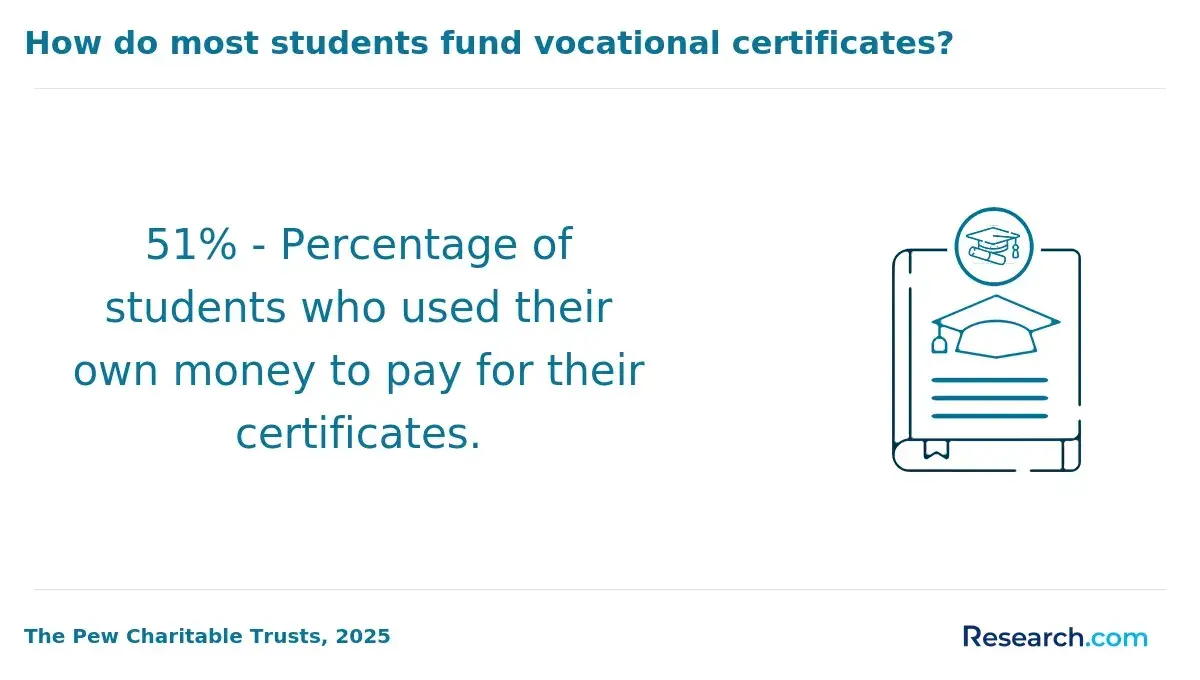
Costs range widely because short certificates may be offered by public colleges, private career schools, employers, unions, nonprofits, or online learning providers. Tuition alone is not the total price: clinical supplies, tools, uniforms, software, testing, licensing, transportation, and lost work hours can materially change the investment.
Common cost categories to request in a written estimate include:
- Tuition and mandatory institutional fees.
- Books, software subscriptions, tools, uniforms, and safety equipment.
- Clinical, laboratory, background-check, drug-screening, and immunization costs.
- Certification examination, licensing, fingerprinting, and renewal fees.
- Transportation, childcare, and unpaid practicum time.
Credit-bearing certificates at eligible institutions may qualify for federal aid when the program meets federal requirements; many noncredit courses do not.
Ask the financial-aid office about grants, loans, payment plans, workforce grants, employer tuition assistance, and veterans' education benefits before borrowing. If application costs are a barrier while comparing credit-bearing options, review online colleges with free applications.
A short program can be economical, but avoid judging value by advertised weekly payment. Compare the complete price against documented completion requirements, local job postings, and the cost of the next credential you may need.
How can you choose a reputable short certificate program that fits your goals?
A reputable fast certificate program has a transparent curriculum, a verifiable provider, realistic time estimates, and a clear connection to the role you want. The best choice is not always the shortest course; it is the shortest credible route that meets your employer, certification, licensing, or transfer goal.
Use this decision process to compare finalists:
- Start with three to five local job postings and note required credentials, schedules, experience, and software or equipment skills.
- Match each posting to a specific program outcome rather than enrolling in a broad course with an unclear job target.
- Verify accreditation, state approval, clinical or lab access, and exam eligibility directly with the relevant authority.
- Request a complete cost sheet and compare it with equipment, exam, transportation, and repeat-course costs.
- Ask for completion, placement, and licensure-exam information in writing, including how each measure is calculated.
- Choose a stackable, credit-bearing option if you may need an associate or bachelor's degree later.
Consider a degree instead when your target occupation routinely requires one, when you need broad career mobility, or when employers screen heavily for academic credentials. Professionals aiming for advanced leadership or research roles may ultimately need a longer path, such as one of the cheapest online doctoral programs, rather than a short certificate.
The biggest mistake is treating speed as proof of value. Treat program length as one comparison factor alongside approval status, hands-on training, total cost, and the credential required at the point of hire.
Other Things You Should Know About
Programs such as nursing assistant, phlebotomy, commercial driver training, and security training may take weeks rather than years. The fastest credible choice depends on your state, required exams, background-check eligibility, and local hiring demand.
Online certificates can be useful for IT, bookkeeping, design, and administrative skills. They are less suitable by themselves for careers requiring clinical practice, equipment training, or state-approved supervised hours.
They can be worthwhile when the credential matches a specific job requirement, the total cost is manageable, and the provider is recognized by employers or regulators. They are less useful when the field requires a degree, apprenticeship, or license that the program does not provide.
Some do, especially when the certificate verifies a practical skill or prepares you for a respected industry certification. Ask local employers whether they recognize the provider and whether they require a separate exam, portfolio, license, or prior experience.
References
- Best Business Certification Programs for Career Growth https://skillsmatrixacademy.com/best-business-certification-programs/
- Short-Term Certificates | Columbus State Community College https://www.cscc.edu/academics/certificates.shtml
- General Education Short Certificate - Southern Union State Community College https://www.suscc.edu/programs/general-edu-certificate
- The Value of Certificates vs. Degrees: What's Right for You? https://www.calmu.edu/the-value-of-certificates-vs.-degrees-whats-right-for-you
- Why an Industry Certification Might Be a Smarter Choice Than a Four-Year Degree | Fast Forward https://fastforwardva.org/why-an-industry-certification-might-be-a-smarter-choice-than-a-four-year-degree/
- Orange Technical College - Career Certificate Programs Home https://www.orangetechcollege.net/career-certificate-programs
- What You Should Know About Short-Term Certification Programs https://www.learnhowtobecome.org/career-resource-center/short-term-certifications/
- What is an accelerated certificate program - and who should consider one? https://www.studyusa.com/en/article/what-is-an-accelerated-certificate-program-and-who-should-consider-one
- Best Project Management Certifications in Virginia | PMTI https://www.4pmti.com/learn/best-certification-programs-virginia/
- Fast Track Job Training https://ccitraining.edu/fast-track-careers/