2027 Best Non-Degree Programs With No SAT or ACT Requirement

Co-Founder and Chief Data Scientist
If you want career-focused training without submitting SAT or ACT scores, non-degree programs can offer a faster, more targeted route than a traditional degree. These options include college certificates, workforce training, apprenticeships, and industry preparation programs.
The Bureau of Labor Statistics projects medical assistant employment to grow 12% from 2024 to 2034, illustrating why short healthcare training remains popular. This guide helps prospective students compare program types, delivery formats, costs, licensing rules, and realistic career paths before enrolling.
Key Things You Should Know
- Most non-degree programs do not use SAT or ACT scores; applicants commonly need a high school diploma, GED, placement assessment, background check, or prerequisite coursework instead.
- A certificate is an educational credential from a school or training provider, while a certification is a professional credential usually earned through an industry examination or qualifying process.
- Career value depends on the occupation: BLS projects 2024-2034 growth of 12% for medical assistants and 9% for electricians, but many regulated roles require state-approved training, examinations, or licenses beyond a certificate.
Top 10 Best Non-Degree Programs With No SAT or ACT Requirement
Popular Trade School Programs
Trade programs commonly include electrical technician, HVAC, welding, automotive technology, plumbing, construction, diesel technology, and industrial maintenance certificates. They are suited to hands-on learners seeking entry-level technical work, apprenticeship preparation, or employer-recognized skills. Many programs require a diploma or GED but not SAT or ACT scores. Completion may take several months to two years, depending on lab hours and whether the credential is a certificate or associate degree. For licensed trades, confirm that coursework meets state apprenticeship, examination, or licensing requirements before paying tuition.
Healthcare Programs
Common no-test healthcare pathways include medical assisting, phlebotomy, pharmacy technician, dental assisting, nursing assistant, sterile processing, medical billing and coding, and patient care technician training. Admission often involves immunization records, drug screening, CPR training, background checks, and clinical-placement requirements rather than SAT or ACT scores. A school certificate may prepare students for a separate certification examination, but it does not automatically confer professional certification or state licensure. Clinical programs are often campus-based or hybrid because supervised skills practice and patient-contact hours cannot usually be completed fully online.
Criminal Justice / Law Programs
Non-degree legal and public-safety options include paralegal certificates, legal assistant training, court reporting foundations, private security training, corrections certificates, and emergency dispatch preparation. These programs can help learners build vocabulary, documentation, communication, records-management, and procedural skills. SAT and ACT scores are rarely relevant, although some college certificate programs may require placement testing or prior college credits. A paralegal certificate does not authorize someone to practice law, and security, dispatch, corrections, and law-enforcement roles may require separate employer testing, background review, physical standards, or state-specific licensing.
Arts & Design Programs
Arts and design certificates may focus on graphic design, digital illustration, UX design, photography, video production, animation, web design, fashion, or interior design fundamentals. These programs usually evaluate readiness through basic eligibility requirements rather than SAT or ACT scores. A portfolio may be required for advanced study, but entry-level programs often teach students how to create one. Online study works well for software-based work, while campus access can matter for studios, cameras, fabrication tools, and instructor critique. Employers often weigh portfolio quality, technical skills, and relevant experience more heavily than the certificate title alone.
What are non-degree certificate programs and how do they work?
A non-degree certificate program is a structured course of study that awards a certificate after learners complete required classes, training hours, or assessments. It may be offered by a community college, university continuing-education unit, trade school, employer, union, nonprofit, or private training provider. Unlike an associate or bachelor's degree, it generally has a narrower focus and fewer general-education requirements.
The credential's meaning depends on its provider and design. The comparison below helps students avoid treating all short programs as interchangeable.
| Program type | Typical purpose | Credit status | Key consideration |
| College certificate | Academic or career preparation in a defined subject | May be credit-bearing or noncredit | Ask whether credits apply toward a degree |
| Career-training program | Job-specific practical skills | Usually noncredit | Verify employer recognition and required equipment costs |
| Professional certificate | Skill development in a professional field | Often noncredit | Check prerequisites and portfolio or project requirements |
| Certification-prep program | Preparation for an outside certification exam | Varies | Confirm exam eligibility and pass-rate disclosures |
A short course can be useful for exploring a field or adding a discrete skill, particularly through 6 week online courses with certificates. However, short duration alone does not establish quality, transferability, or eligibility for a regulated occupation.
How do admission requirements work for programs with no SAT or ACT?
"No SAT or ACT requirement" usually means a program does not use college entrance-test scores in its admission decision. It does not mean there are no admission standards. Workforce and noncredit programs may use open enrollment, while credit-bearing college certificates may review prior education, English or math placement, and course prerequisites.
Applicants should expect requirements that match the work environment rather than a four-year college application. Healthcare programs, for example, may require clinical clearance; technical programs may require basic math readiness; and public-safety programs can require background review.
Before applying, ask admissions staff whether requirements include the following:
- A high school diploma, GED, or minimum age requirement
- Placement testing, prerequisite classes, or proof of math and English readiness
- Criminal background checks, drug screening, immunizations, physical examinations, or CPR training
- Technology, software, tools, uniforms, textbooks, examination fees, or clinical fees not included in tuition
- Deadline rules for cohort-based programs with limited lab or clinical spaces
If a school advertises "no test required," get the full admission checklist in writing. This prevents a surprise delay after tuition has been paid.
How can students compare online vs campus-based non-degree programs?
Online and campus-based programs can both be worthwhile, but the best format depends on the skills being taught and any required clinical, laboratory, studio, or licensing hours. Online learning is strongest when coursework relies on software, reading, video instruction, simulations, and independent projects. Campus or hybrid delivery is usually more appropriate for equipment-intensive and patient-facing training.
This comparison highlights the trade-off between flexibility and supervised practice.
| Factor | Online or mostly online | Campus or hybrid |
| Best fit | IT, business, coding, design, billing, project-based skills | Healthcare, welding, HVAC, automotive, laboratory, studio work |
| Scheduling | Often asynchronous and flexible | Usually fixed lab, studio, or clinical times |
| Hands-on training | May require local externships or home equipment | Typically includes supervised facilities and equipment |
| Student support | Requires proactive use of virtual advising and tutoring | Provides more in-person access to instructors and peers |
| Main risk | Assuming online instruction satisfies licensing requirements | Underestimating commuting and schedule constraints |
Learners managing variable work schedules may also compare online self paced colleges and courses. Confirm whether "self-paced" applies to every component; clinicals, proctored exams, group projects, and externships often have fixed deadlines.
Which industries offer strong career paths through non-degree programs?
Non-degree training can be a practical entry point in industries where employers value demonstrable technical skills, required safety training, portfolios, or recognized certifications. It is less suitable when a job legally requires a degree, a professional license tied to degree-level education, or extensive supervised experience.
The following fields offer different reasons to consider a focused credential rather than immediately pursuing a longer degree.
| Industry | Examples of non-degree preparation | Career-path consideration |
| Skilled trades | Electrical, HVAC, welding, construction, industrial maintenance | Apprenticeship and licensing can be as important as school training |
| Healthcare support | Medical assisting, phlebotomy, coding, sterile processing | Certification and clinical requirements vary by role and state |
| Technology | IT support, cybersecurity foundations, data analytics, web development | Projects, certifications, and current tools can influence hiring |
| Business operations | Bookkeeping, payroll, project coordination, customer support | Entry roles may be accessible, but advancement can favor experience or degrees |
| Creative services | Graphic design, video editing, UX foundations, digital marketing | A strong portfolio often matters more than course completion alone |
If your target role increasingly requires a degree for advancement, a short credential can still be a lower-risk first step before considering accelerated online degrees. Review job postings in your local market to see whether employers request a license, certification, portfolio, degree, or prior experience.
What accreditation and licensing should non-degree programs in the U.S. meet?
Accreditation and licensing are not universal requirements for non-degree programs, but they matter greatly in fields connected to public safety, health care, federal aid, academic credit, and regulated employment. Institutional accreditation evaluates a college as a whole. Programmatic accreditation evaluates a specific program against field standards. Neither is automatically necessary for every noncredit course.
Students should match the type of oversight to their intended outcome. For example, a school certificate in medical assisting may need programmatic approval or recognized accreditation to support eligibility for a voluntary certification exam, while a state licensing board may set separate education requirements for a trade.
Use this verification sequence before enrolling:
- Identify the exact job title and the state where you plan to work.
- Check the relevant licensing board, employer, or certification organization for required education and examination eligibility.
- Ask the provider whether the program is credit-bearing, institutionally accredited, programmatically accredited, approved, or merely aligned with industry standards.
- Request written confirmation that online, hybrid, externship, and clinical components meet applicable requirements.
- Verify whether the credential transfers, stacks into a degree, or is accepted by local employers before relying on those claims.
A major red flag is a provider that promises licensure, certification, or employment without identifying the agency, examination, state rule, or eligibility standard involved.
How long do non-degree programs take and what do they typically cost?
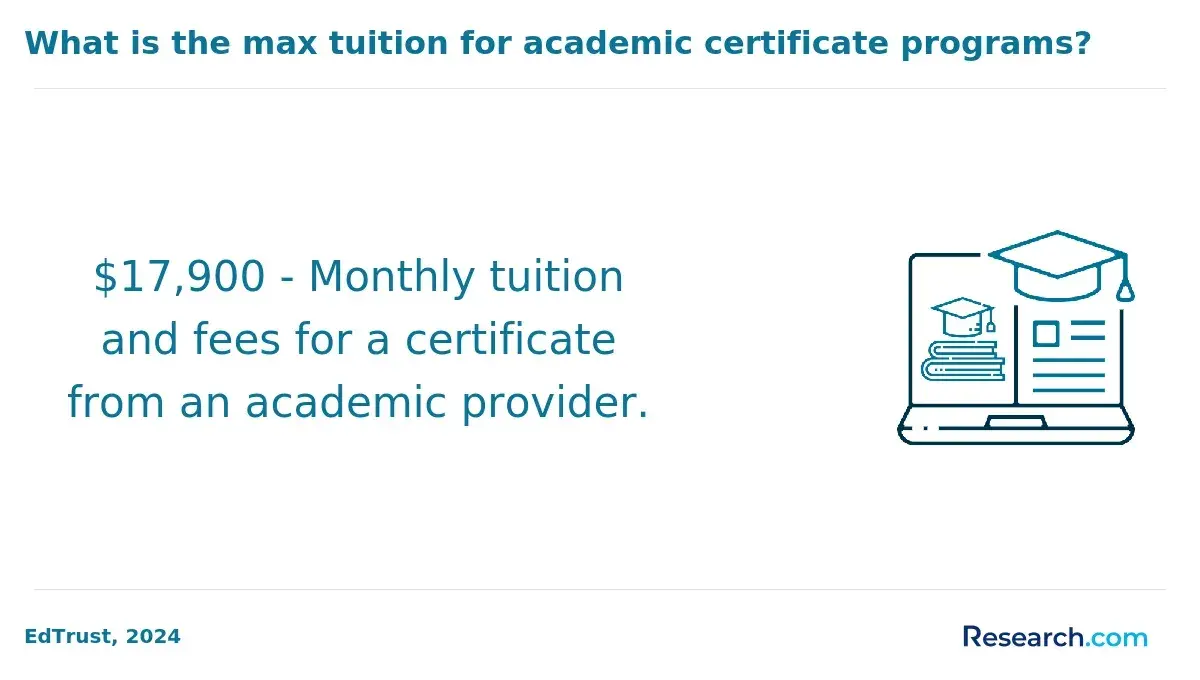
Completion time ranges from a few weeks for a narrow skills course to roughly one or two years for an associate degree. Costs vary even more because public colleges, private career schools, online providers, clinical placements, tools, examination fees, and transportation are priced differently. Compare the total amount you will pay, not tuition alone.
This cost framework helps students identify expenses that can change the program's real return on investment.
| Cost category | Why it matters | What to verify |
| Tuition and mandatory fees | Base enrollment cost | Per-credit, per-term, or total-program billing |
| Books, software, and supplies | Can be substantial in technical and creative fields | Required editions, subscriptions, tools, and replacement costs |
| Clinical, lab, and externship costs | Common in healthcare and hands-on programs | Uniforms, tests, vaccinations, travel, and liability fees |
| Certification or licensing expenses | Often separate from instruction | Exam fee, application fee, background check, and renewal costs |
| Lost work time | Affects affordability for working adults | Required daytime labs, clinicals, and attendance policies |
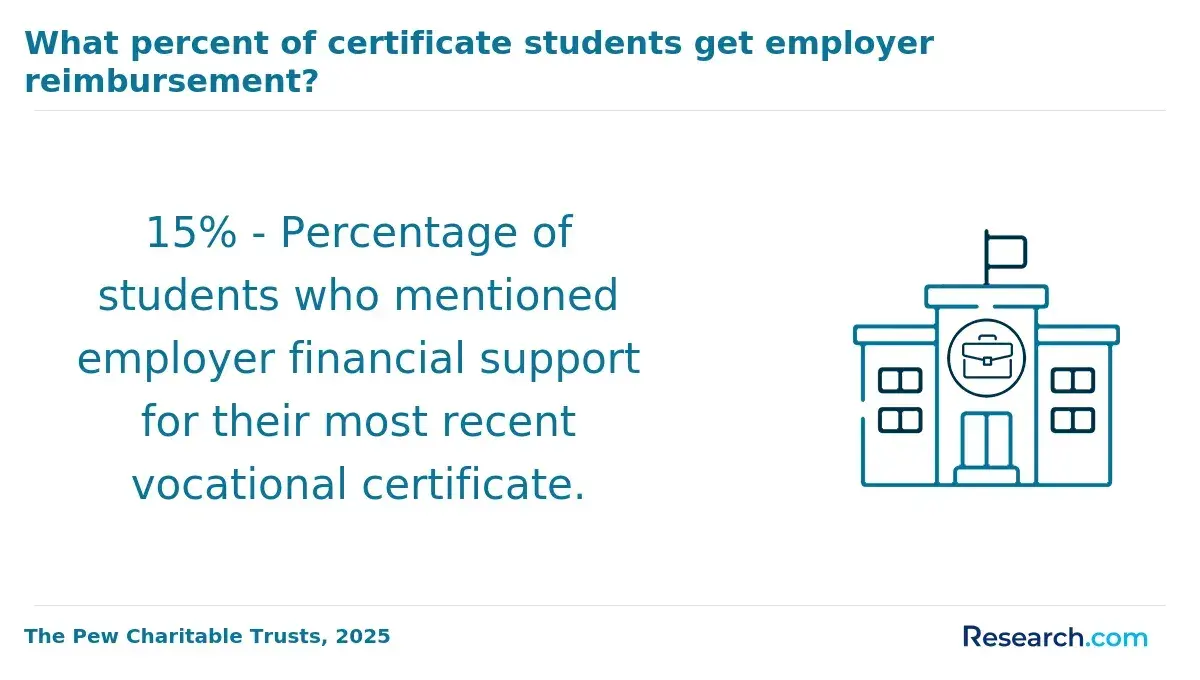
Credit-bearing programs at eligible schools may offer federal aid to qualifying students, while many noncredit programs do not. Students seeking aid-eligible online options can review online schools that accept FAFSA, then confirm whether the specific certificate itself qualifies for aid. Employer tuition assistance, workforce grants, apprenticeships, and payment plans may also reduce out-of-pocket cost.
What coursework and skills are taught in leading non-degree certificate programs?
Leading non-degree programs teach a focused mix of occupational knowledge, practical tasks, professional behavior, and job-search readiness. The exact curriculum should mirror the work students expect to perform, not simply provide broad introductory content.
Strong programs commonly build the following categories of skills:
- Technical fundamentals, such as electrical systems, medical terminology, coding languages, drafting tools, or design software
- Hands-on practice through labs, simulations, projects, clinicals, studio work, or supervised field experiences
- Workplace skills, including communication, documentation, teamwork, customer service, time management, and problem-solving
- Safety, privacy, ethics, and compliance practices relevant to the occupation
- Career evidence, such as a portfolio, capstone project, résumé, interview practice, or certification-exam preparation
AI tools are changing many office, technology, and creative workflows, so look for training that teaches students to evaluate outputs, protect confidential information, document work accurately, and use field-specific software responsibly. Programs that only teach one tool without transferable fundamentals can age quickly.
What jobs, salaries, and advancement opportunities follow non-degree programs?
Non-degree programs can support entry-level employment, career changes, promotions, or preparation for apprenticeships and professional certification. They do not produce the same outcome for every learner because hiring depends on location, experience, employer standards, licenses, work samples, and local demand.
BLS occupational data is useful for comparing roles, not for assuming every certificate holder will earn a particular amount. For example, BLS projects electrician employment to grow 9% from 2024 to 2034; electricians typically develop through apprenticeships and may need state licensure, so a pre-apprenticeship certificate alone is not the full qualification.
Consider the likely progression rather than only the first job:
- Entry level: assistant, trainee, technician, apprentice, support specialist, or junior production role
- Next step: industry certification, supervised hours, expanded technical responsibility, or a stronger portfolio
- Advancement: lead technician, specialist, supervisor, licensed practitioner, business owner, or degree completion where the occupation rewards it
Before enrolling, compare local job advertisements with the program curriculum. If postings consistently require a credential the program does not provide, plan for the additional exam, apprenticeship, experience, or degree needed.
How can students choose a reputable non-degree program with no test requirement?
A reputable no-SAT or ACT program should be easy to verify: it clearly states what students earn, what the program costs, how instruction works, and what additional requirements apply. "No test requirement" is a convenience feature, not proof that a program is affordable, recognized, or aligned with your goal.
Use the following steps to make a more defensible choice:
- Start with one target job and identify its required training, license, certification, or experience in your state.
- Compare at least three providers on total cost, completion time, schedule, equipment access, and required in-person hours.
- Ask whether the credential is credit-bearing, stackable, transferable, or solely a noncredit completion certificate.
- Request current outcome information, including completion support, externship arrangements, certification-exam preparation, and career services.
- Read enrollment agreements carefully and understand withdrawal, refund, financing, and complaint procedures before signing.
Common mistakes include choosing the lowest tuition without pricing supplies and exams, assuming a fully online program meets licensure rules, confusing a school certificate with professional certification, and enrolling based on salary marketing alone. The best choice is the least expensive credible program that meets the actual requirements for your intended next step.
Other Things You Should Know About
Usually not. Many non-degree, workforce, and certificate programs use open enrollment or review a diploma, GED, prerequisites, placement results, or job-specific clearance requirements instead. Individual colleges and programs set their own rules.
Sometimes. Eligibility depends on the school, the program's credit status, program length, and federal-aid rules. Many short noncredit courses are not eligible for federal aid, but workforce grants, employer support, payment plans, and scholarships may be available.
No. A certificate is typically awarded by an education provider after completing training. A professional certification is awarded by a certifying organization after meeting its standards, often through an examination and sometimes experience requirements.
They can be when the provider is credible and the program teaches skills employers need. For regulated or hands-on occupations, verify required clinical, lab, licensing, and certification standards. In design and technology, projects, portfolios, and demonstrated skills can be especially important.
References
- Which Colleges Require All ACT Scores Sent? · PrepScholar https://blog.prepscholar.com/which-colleges-require-all-act-scores-sent
- How Do Test-Optional or Test-Flexible Policies Affect Access and Opportunity? - Ithaka S+R https://sr.ithaka.org/blog/how-do-test-optional-or-test-flexible-policies-affect-access-and-opportunity/
- Non-Degree Pathways: A DC Insider's Perspective https://www.jff.org/idea/nondegree-pathways/
- Colleges that Allow Self-Reporting of SAT and ACT Scores https://www.compassprep.com/self-reporting-test-scores/
- Find Test-Optional Colleges - No SAT/ACT Requirement https://www.accreditedschoolsonline.org/online-colleges/no-sat-or-act/
- Beyond Degrees: Exploring Non-College Postsecondary Education https://www.onegoal.org/about/blog/beyond-degrees-exploring-non-college-postsecondary-education/
- What We've Learned about Test-Optional and Test-Required Admissions https://www.applerouth.com/blog/what-weve-learned-about-test-optional-and-test-required-admissions
- 35 Test Optional Schools | 2025 Test Optional Colleges List https://www.collegeadvisor.com/resources/test-optional-schools/
- Colleges That Do Not Require SAT Scores https://www.accessandequity.org/colleges-that-do-not-require-sat-scores/
- Colleges That Do Not Consider Standardized Test Scores https://www.collegexpress.com/lists/list/colleges-that-do-not-consider-standardized-test-scores/2083/