2027 Best Online Certifications for Low Student Debt

Co-Founder and Chief Data Scientist
Choosing a short online credential can reduce time out of the workforce, but low tuition does not automatically mean low debt or strong job value. This guide is for career changers, recent graduates, and working adults comparing online certificates, industry certifications, and associate-level pathways. U.S. Bureau of Labor Statistics data for 2024 show that several certificate-aligned occupations, including electricians, medical records specialists, and computer support specialists, offer median annual pay above $50,000. Learn how to compare total cost, accreditation, licensing rules, formats, and realistic career outcomes before enrolling.
Key Things You Should Know
- Prioritize short, job-specific programs with transparent total costs, required equipment fees, and a direct connection to an employer-recognized certification, license, or entry-level role.
- For context, the Bureau of Labor Statistics reported a 2024 median annual wage of $50,250 for medical records specialists; a certificate may help prepare for this field, but employers set hiring requirements.
- Borrow only after comparing grants, employer tuition aid, payment plans, and lower-cost public options; noncredit programs may be inexpensive but usually do not qualify for federal student aid or transfer credit.
Top 10 Best Online Certifications for Low Student Debt
Popular Trade School Programs
Online trade certificates commonly cover construction estimating, HVAC theory, electrical theory, welding fundamentals, CAD, and OSHA safety. They work best for learners who need flexible classroom instruction before completing local labs, apprenticeships, or supervised field hours. A fully online program generally cannot replace hands-on training required for electrician, HVAC, plumbing, or welding employment. Choose a credit-bearing community-college certificate when you may later pursue an associate degree; choose focused career training when the provider clearly identifies the industry exam, tools, and local practical requirements.
Healthcare Programs
Low-debt online healthcare options include medical billing and coding, health information technology coursework, pharmacy technician preparation, and medical terminology certificates. These are usually academic certificates or career-training programs, not professional certifications. Coding programs may prepare students for an optional certification examination offered by an industry organization. Clinical occupations such as practical nursing, dental assisting, sonography, and medical assisting require in-person labs or externships and may have state-specific rules. Confirm that an online program arranges eligible clinical placements before paying a deposit.
Criminal Justice / Law Programs
Arts & Design Programs
Online certificates in graphic design, UX design, digital marketing, web design, animation, and photography can be economical when they produce a strong portfolio. These programs suit self-directed learners who can complete project-based work and seek feedback. A certificate alone rarely substitutes for demonstrated technical ability, client work, or a portfolio. Before enrolling, review whether software subscriptions, hardware, portfolio hosting, and live critiques add to the advertised price. Credit-bearing design certificates can be useful if they stack into an associate or bachelor's degree later.
What types of online certifications offer strong career value with minimal student debt?
Online certifications with strong career value and minimal debt are usually industry-recognized credentials tied to defined skills, or low-cost academic certificates that prepare learners for a clearly identified role. A certificate is awarded after completing education; a certification is awarded by a professional body after meeting its standards, often through an exam. The distinction matters because employers may request one, the other, or both.
The strongest low-borrowing choices typically align training length with the job's entry requirements rather than buying a broad program with unclear outcomes. Readers exploring faster credential routes can also compare best online degrees when a degree is more commonly requested by employers.
This comparison shows where online study is most useful and where additional in-person training is usually unavoidable.
| Credential path | Best for | Online fit | Important limitation |
| Industry certification preparation | IT support, project coordination, cloud, bookkeeping, coding | Often fully online | Exam fees and renewal requirements may be separate |
| Community-college academic certificate | Medical coding, accounting, CAD, business, legal studies | Often online or hybrid | May require placement testing or prerequisites |
| Short noncredit career program | Entry-level digital skills or career exploration | Usually fully online | Often does not carry academic credit or federal aid eligibility |
| Licensed-trade or clinical pathway | Electrical, HVAC, nursing-related, allied health roles | Hybrid at most | Labs, clinicals, apprenticeships, or state approval may be required |
Choose an industry certification path when job postings explicitly name the credential and you already have the needed foundational skills. Choose a credit-bearing certificate when you want a lower-cost starting point that may stack into an associate degree. Avoid any provider that promises employment, licensing, or examination eligibility without explaining the requirements.
How do online certification costs compare to campus programs for similar career outcomes?
Online certificates can cost less than campus programs because learners may avoid commuting, housing, and some campus fees. However, tuition is only one part of the decision. Online learners may still need proctored exams, software, textbooks, tools, background checks, immunizations, certification examinations, or travel for labs and clinicals.
The comparison below helps separate a lower sticker price from a lower total cost. Campus study can be the better value when a program includes required equipment, intensive lab access, or structured employer connections that an online option does not provide.
| Cost or outcome factor | Online certificate | Campus certificate or associate pathway |
| Tuition structure | May charge per course, subscription, or term | Often charges per credit plus institutional fees |
| Living and commuting costs | Can be lower for students studying from home | May include transportation, parking, or relocation costs |
| Hands-on instruction | May require separate local arrangements | Often incorporated into scheduled labs |
| Academic credit | Varies; many career programs are noncredit | More commonly credit-bearing and stackable |
| Career outcome comparison | Best when credential matches a specific employer need | Best when a degree, lab training, or clinical placement is expected |
Before assuming an online option is cheaper, request a written estimate of all required charges and compare it with a public community college. If your target occupation normally requires an associate or bachelor's degree, a short certificate may be useful preparation but not an equivalent substitute. For longer-term comparisons, review highest paying bachelor degrees before committing to a nondegree route.
Which accredited institutions provide low-cost, high-quality online certificate programs?
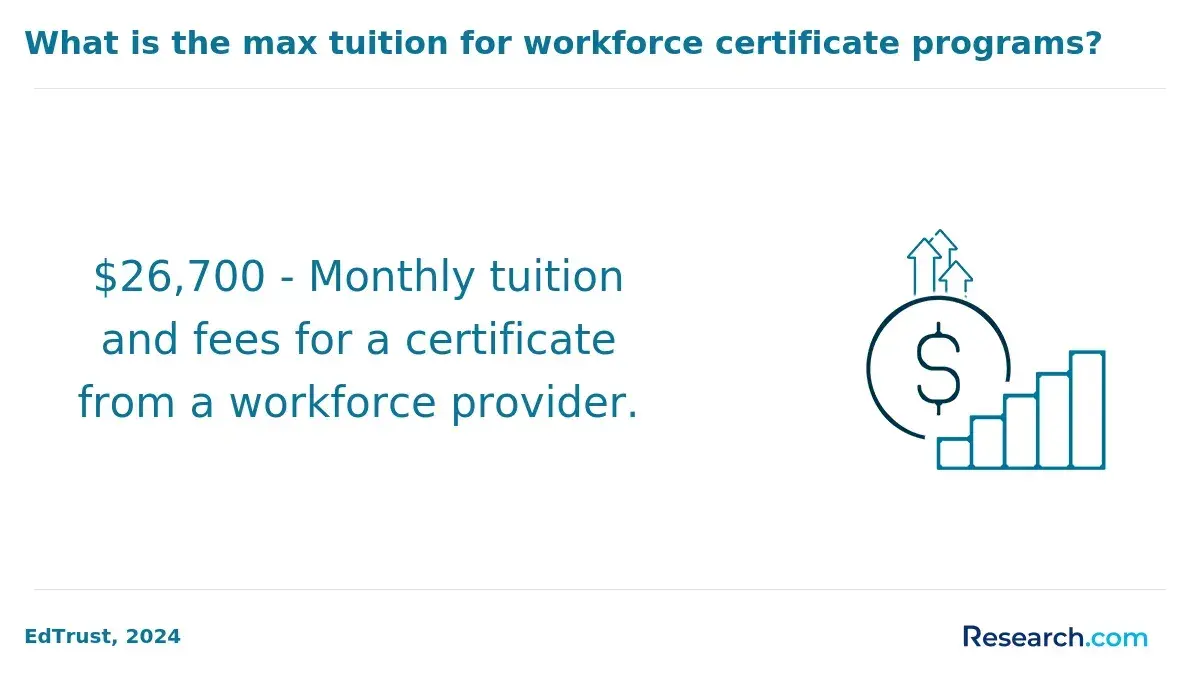
Low-cost, high-quality online certificate options are often found at public community colleges, regional public universities, and established nonprofit institutions. Quality is not determined by price alone: the institution should clearly state whether a credential is credit-bearing, the total number of credits or courses, instructor qualifications, student-support access, and any programmatic approval relevant to the field.
Start by comparing institutions with recognized institutional accreditation and transparent program pages. A list of good online colleges can help you identify schools to investigate, but verify the credential details directly with each institution.
Use these questions to distinguish a sound low-cost program from a weak bargain:
- Is the institution accredited by an agency recognized by the U.S. Department of Education or CHEA, when institutional accreditation is relevant?
- Does the program state whether credits transfer or stack into a certificate, associate degree, or bachelor's degree?
- Are tuition, technology fees, exam costs, required materials, and field-placement charges published in writing?
- Does the curriculum align with a named certification examination, licensing board rule, employer skill standard, or occupational pathway?
- Can the school explain career services, tutoring, disability support, and how online students access them?
Third-party providers can be appropriate for software, cloud, and project-management learning when employers recognize the resulting certification. They are less appropriate for regulated clinical and licensed-trade careers unless they document how required supervised training will occur.
What accreditation and licensing criteria should online certification programs meet?
Accreditation evaluates an institution or program; licensing is legal permission issued by a government authority; certification is a professional credential awarded by a certifying organization. Students should not assume that any one of these proves the others. The exact standard depends on the occupation and state.
For academic certificates, institutional accreditation can matter for credit transfer, financial aid eligibility, and employer confidence. For specialized programs, programmatic accreditation or state approval may be necessary, especially in healthcare. For industry certification preparation, confirm that the curriculum maps to the current examination objectives and that the exam provider recognizes the testing pathway.
Use the following checks before enrolling in a regulated or certification-focused program.
- Identify the job title and state where you plan to work.
- Check the relevant state licensing board or employer requirements for education, clinical hours, background checks, examinations, and supervised experience.
- Ask the school in writing whether its online format meets those requirements in your state.
- Confirm whether the credential is an educational certificate, exam preparation, or an actual professional certification.
- Keep copies of course descriptions, syllabi, and written approval statements for future licensing or transfer questions.
A common mistake is treating institutional accreditation as proof of licensure eligibility. Another is enrolling in an exam-prep course that does not include the required examination, experience, or renewal costs. For highly flexible degree alternatives, compare the format and academic policies of a self-paced bachelor's degree online option if your field ultimately requires a degree.
How can students estimate total costs, financial aid, and return on investment?
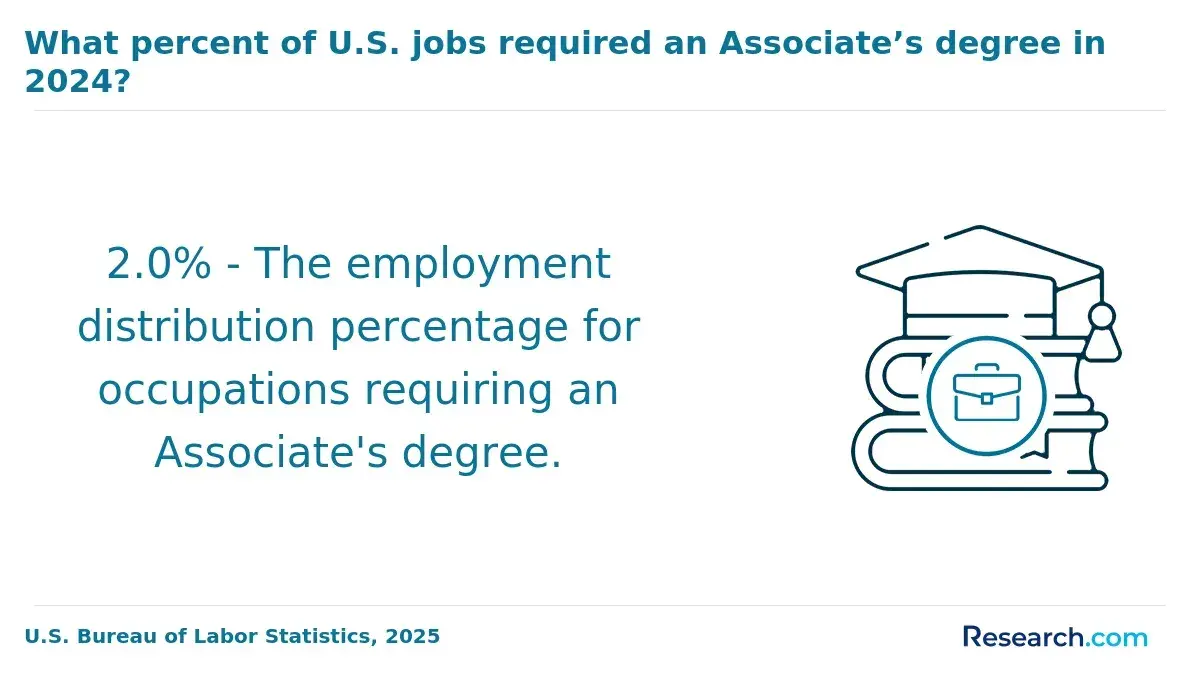
Estimate debt risk using the net price, not the advertised tuition. Net price is the amount remaining after grants and scholarships, plus required educational and living costs you cannot avoid. For short programs, even a small loan can be expensive relative to the credential's duration, particularly if completion does not lead to a higher-paying role.
Build a realistic one-page budget before applying. Include these categories so you can compare programs on the same basis:
- Tuition, registration charges, technology fees, textbooks, software, tools, uniforms, and required devices
- Certification examination fees, retake costs, background checks, drug screening, immunizations, and liability insurance when applicable
- Travel and lost work time for labs, proctored exams, externships, clinicals, or apprenticeships
- Grants, scholarships, workforce-agency assistance, military education benefits, employer tuition reimbursement, and payment plans
- Expected borrowing amount, interest, monthly payment estimate, and whether the program is likely to improve your job options
Federal aid availability depends on the school, program, enrollment status, and student eligibility; many short noncredit programs do not qualify. Complete the FAFSA when considering an eligible college program, but do not borrow before comparing grant aid and local workforce funding. For ROI, review several local job postings, note their required credentials, and ask the school for completion, placement, and debt information using definitions it can explain.
What admissions requirements and prerequisites do top online certification programs have?
Admissions requirements depend on the credential type. Noncredit professional certificate courses may require only registration and payment. Credit-bearing college certificates commonly require an application, identity and residency information, and evidence of high-school completion or an equivalent. Graduate certificates generally require a completed bachelor's degree and may require related coursework.
Prerequisites are especially important because low-cost programs can become costly if you must take extra courses first. Healthcare programs may require medical terminology, anatomy, immunization records, and background checks. Technology certifications may not require formal admission, but learners need basic computer skills and enough time for labs. Trade pathways may require in-person safety training or an employer-sponsored apprenticeship.
Ask admissions staff these practical questions before you enroll:
- Is this credential credit-bearing, and can its credits apply to a later degree?
- Which prerequisites must be completed before the first career-specific course?
- Is there a minimum GPA, placement assessment, portfolio, interview, or technical-skills requirement?
- Can prior college credit, military training, or documented industry learning reduce time and cost?
- What happens if I cannot secure a required clinical, internship, lab, or apprenticeship placement?
Do not mistake open enrollment for guaranteed success. A program with few admission barriers may still demand substantial reading, math, technology, or self-management skills.
What program formats, schedules, and support services do online certifications offer?
Online certifications and certificates are offered in synchronous, asynchronous, self-paced, cohort-based, and hybrid formats. The right format depends on whether you need schedule flexibility, instructor deadlines, live practice, or access to physical equipment. Fully online study is most realistic for knowledge-based fields such as IT, bookkeeping, project coordination, medical coding theory, and digital design.
This format comparison can help working adults choose a delivery model without overlooking support needs.
| Format | Best fit | Main advantage | Trade-off |
| Asynchronous online | Working adults with changing schedules | Coursework can be completed at flexible times | Requires strong time management |
| Live online cohort | Learners who value deadlines and discussion | Regular instructor and peer interaction | Set meeting times may conflict with work |
| Self-paced training | Experienced, independent learners | Potentially faster completion | May offer less instructor feedback and fewer aid options |
| Hybrid program | Students entering hands-on fields | Combines online theory with labs or clinicals | Travel and fixed attendance are still required |
Support services matter because online access alone is not career preparation. Look for tutoring, responsive technical support, instructor office hours, career coaching, library access, accommodations, mock interviews, and help locating required placements. Red flags include programs that provide only prerecorded videos, have no stated instructor access, or cannot explain how practical requirements are completed.
What entry-level and mid-career jobs do these certifications typically lead to?
Certificates and certifications can support entry-level hiring, career transitions, or advancement, but the credential must match the role's actual requirements. A short credential is most useful when it demonstrates a specific skill employers can verify, such as coding classification knowledge, spreadsheet proficiency, IT troubleshooting, bookkeeping software, CAD drafting, or a recognized safety standard.
The table identifies common role categories and the limitations readers should consider when planning a path.
| Program focus | Possible entry-level roles | Potential mid-career direction | Credential limitation |
| IT support or cloud fundamentals | Help desk technician, technical support representative | Systems support, network administration, cybersecurity specialization | Employers may require hands-on experience and vendor certification |
| Medical billing, coding, or health information | Billing specialist, coding assistant, records clerk | Health information technician, coding specialist | Employers may prefer certification and prior healthcare experience |
| Accounting or bookkeeping | Accounts payable clerk, payroll assistant, bookkeeper | Accounting specialist, office manager | Higher-level accounting roles often require a degree or licensure |
| Legal studies | Legal assistant, records specialist, intake coordinator | Paralegal or legal operations support | Requirements vary by employer; the credential does not authorize legal practice |
| Design and digital media | Production artist, junior designer, content assistant | UX designer, art director, digital marketing specialist | Portfolio quality and experience frequently outweigh certificate title |
For career changers, the safest route is often to pair the credential with a portfolio, supervised practice, volunteer work, internship, apprenticeship, or entry-level role. Do not present an occupational title on a résumé unless you meet the employer's and any state's requirements for that title.
What salary ranges and job outlook can graduates expect from these certifications?
Salary data describe occupations, not what every certificate holder earns. Pay varies by location, industry, experience, schedule, licensure, and employer. Use national wage figures as a starting point, then compare local job postings and state wage information before borrowing.
Recent Bureau of Labor Statistics occupational data illustrate the range of outcomes connected to fields where shorter credentials may play a role.
| Occupation | 2024 median annual wage | Projected employment change, 2024-2034 | How to interpret the data |
| Electricians | $62,350 | 9% | Typically requires apprenticeship and state or local licensing, not an online certificate alone |
| Medical records specialists | $50,250 | 7% | Certificate training can be relevant; employer preferences for coding certification vary |
| Computer support specialists | $61,550 | 2% | Certifications and demonstrated troubleshooting skills may help, but requirements vary by employer |
| Paralegals and legal assistants | $61,010 | 0% | A certificate may support entry, particularly for degree holders, but does not create a legal license |
| Graphic designers | $61,300 | 2% | Portfolio, software skills, and experience are central to hiring |
BLS projections are national estimates and do not guarantee local openings. Automation and AI are changing routine documentation, support, and design tasks, so choose programs that teach verification, problem-solving, client communication, data privacy, and current software rather than only repetitive tasks. A low-debt credential is most defensible when it leads to a credible next step, such as a recognized exam, paid apprenticeship, portfolio, or stackable degree pathway.
Other Things You Should Know About
They can be worthwhile when they teach skills required for a specific job, certification exam, or advancement opportunity and their total cost is manageable without substantial borrowing. They are less useful when the target occupation requires a degree, license, clinical training, or apprenticeship that the program does not provide.
Compare public community-college certificates, employer-sponsored training, workforce grants, and reputable exam-preparation options. Calculate total required costs, not tuition alone, and use grants or employer assistance before considering loans.
Sometimes, but only if the program meets the education, clinical, examination, and state-specific requirements for that license. Confirm eligibility directly with the relevant licensing board and obtain the school's statement in writing.
Choose a certificate when you need a narrow skill quickly and job postings support that route. Choose an associate degree when employers commonly require broader education, hands-on training, or a credential that can transfer toward a bachelor's degree.
References
- Average Student Loan Debt [2025]: by Year, Age & More https://educationdata.org/average-student-loan-debt
- The top grants to pay off student loans https://www.salliemae.com/resources/blog/grants-to-pay-off-student-loan/
- 20 Necessary IT Certifications + Salaries I Skillsoft - Skillsoft https://www.skillsoft.com/blog/top-paying-it-certifications
- Course Completion Rate Benchmarks: Improve Yours (2026) | Ruzuku https://www.ruzuku.com/learn/articles/course-completion-rates
- Highest Paying Certifications 2025-2026: IT, Cybersecurity, Medical & Career Growth Guide https://www.frontlinesourcegroup.com/blog-certifications-that-pay-the-most.html
- College is still worth it, even with student debt, but we can do better | Brookings https://www.brookings.edu/articles/college-is-still-worth-it-even-with-student-debt-but-we-can-do-better/
- Income Share Agreement Programs & Schools | How ISAs Work | MentorWorks https://mentorworks.com/income-share-agreements-program/
- How Much Student Loan Debt Is Too Much? https://www.savingforcollege.com/article/how-much-student-loan-debt-is-too-much
- Which Online Certification Programs Are Recognized by Employers in the U.S.? https://fellow.msicertified.com/blog/which-online-certification-programs-are-recognized-by-employers-in-the-u-s
- CourseCareers https://coursecareers.com/blog-posts/how-to-choose-the-right-online-career-training-program