2027 Best Non-Degree Programs With Full-Time Online Options

Co-Founder and Chief Data Scientist
Choosing a fast online program is difficult when "fully online" may still include labs, clinicals, exams, or internships. Non-degree options can build job-ready skills faster than a degree, but they vary sharply in employer recognition and licensing value. The U.S. Bureau of Labor Statistics projects about 1.1 million annual job openings in occupations typically requiring postsecondary nondegree awards from 2024 to 2034. This guide helps career changers, recent graduates, and working adults compare credible full-time online paths, identify hybrid requirements, and avoid paying for training that does not match a target job.
Key Things You Should Know
- Full-time online non-degree programs are best when the credential clearly maps to a job, industry exam, apprenticeship, or stackable college pathway; a general completion certificate alone may carry limited hiring value.
- Programs tied to hands-on work - such as welding, medical assisting, phlebotomy, and many public-safety roles - usually cannot be completed entirely online because state rules, clinical hours, labs, or skills assessments apply.
- BLS projects roughly 1.1 million annual openings in occupations typically requiring a postsecondary nondegree award from 2024-2034, but openings reflect the occupation, not a guarantee that any particular program leads to employment.
Top 10 Best Non-Degree Programs With Full-Time Online Options
Popular Trade School Programs
Online trade programs commonly cover electrical theory, HVAC fundamentals, construction estimating, drafting, safety, logistics, and industrial maintenance. A certificate can teach terminology and prepare students for entry-level helper roles or an industry exam, while an associate degree usually adds general education and may transfer more readily. Choose a fully online option for theory-heavy work such as estimating or CAD; choose hybrid training for welding, automotive repair, HVAC refrigerant handling, and electrical labs. Confirm whether local employers expect an apprenticeship, union training, or a state license before enrolling.
Healthcare Programs
Healthcare non-degree options include medical billing and coding, pharmacy technician, medical assisting, health information, sterile processing, and phlebotomy certificates. Billing and coding coursework may be online, but employers can prefer an industry certification after training. Patient-care certificates generally require supervised clinical practice, background checks, immunizations, and sometimes state approval. An associate degree is more common for careers such as registered nursing, dental hygiene, and radiologic technology. Verify that the program meets the eligibility rules for the certification examination or license you intend to pursue; completion alone does not necessarily do so.
Criminal Justice / Law Programs
Online certificates in criminal justice, legal studies, paralegal studies, cybersecurity, and emergency management can introduce legal research, report writing, ethics, and policy. They suit learners seeking support roles, career exploration, or a complement to prior experience. A paralegal certificate may be valuable, but hiring standards vary and some employers prefer programs approved by a recognized professional body or candidates with a degree. Police officer, corrections, and many investigative roles require agency-specific academy training, background screening, and physical requirements that an online certificate does not replace.
Arts & Design Programs
Full-time online certificates in graphic design, UX design, web design, digital marketing, animation, photography, and video editing emphasize portfolio projects and software workflows. These programs are often practical for career changers because work can be reviewed digitally. However, a credential matters less than a strong, original portfolio, technical fluency, and evidence that you can solve client or user problems. Compare software access, instructor feedback, portfolio reviews, and intellectual-property policies. For design roles, a short certificate can be a starting point; an associate or bachelor's degree may offer broader foundations and internship access.
What are non-degree online programs and who are they best suited for?
A non-degree online program is structured education that does not award an associate, bachelor's, master's, or doctoral degree. It may result in a college certificate, workforce certificate, continuing-education credential, bootcamp completion record, or preparation for a separate professional certification. "Full-time" usually means an intensive course load, but schools define it differently; credit-bearing programs often use 12 undergraduate credits as a benchmark, while noncredit providers may simply schedule 30 to 40 learning hours each week.
These programs work best for people with a specific, near-term goal: gaining entry-level skills, updating technical knowledge, qualifying for a certification exam, or testing a field before committing to a degree. They are less suitable when the target occupation legally requires a degree, a state license, extensive supervised practice, or a portfolio developed over several years.
The comparison below distinguishes common options so readers do not mistake an educational certificate for a professional certification.
| Option | What the learner earns | Best use | Key limitation |
| College certificate | Academic or workforce certificate | Career preparation or stackable credit | Transferability depends on the college and course type |
| Industry certification | Credential from a certifying organization | Validating job-specific competence | May require an exam, experience, renewal, or continuing education |
| Bootcamp or career-training program | Provider completion credential | Focused skill building and portfolio work | Recognition varies widely by employer |
| Associate degree | Two-year academic degree | Fields needing broader coursework or licensure preparation | Usually takes longer and may cost more |
For learners who ultimately need advanced academic credentials rather than short-term training, reviewing PhD programs online can clarify how degree-based pathways differ in admissions, research, and completion expectations.
How do full-time online certificate programs compare to campus-based options?
Full-time online certificate programs can reduce commuting and permit faster term schedules, but they are not automatically easier or more flexible. A strong online program has scheduled instructor access, clear deadlines, accessible technical support, meaningful assessments, and a plan for required in-person experiences. Campus programs can be better for learners who need shop equipment, clinical supervision, networking, or real-time accountability.
This comparison highlights the practical trade-off: the right format depends on how much of the occupation can be learned and assessed remotely.
| Decision factor | Full-time online option | Campus or hybrid option |
| Schedule | May offer asynchronous coursework, but intensive deadlines remain | Fixed meeting times and commuting are more common |
| Hands-on training | Best for software, theory, research, and digital projects | Better for labs, equipment, clinical skills, and simulations |
| Networking | Requires deliberate use of virtual office hours and employer events | More informal contact with peers and local employers |
| Cost exposure | May lower travel and housing costs | May provide facilities included in institutional charges |
| Career fit | Strong for remote-capable and knowledge-based work | Often necessary for regulated hands-on occupations |
Parents and caregivers balancing study with family schedules may also compare degrees for moms, especially when a short non-degree option is only the first step toward a longer credential.
What accreditation and licensing factors should students check for online programs?
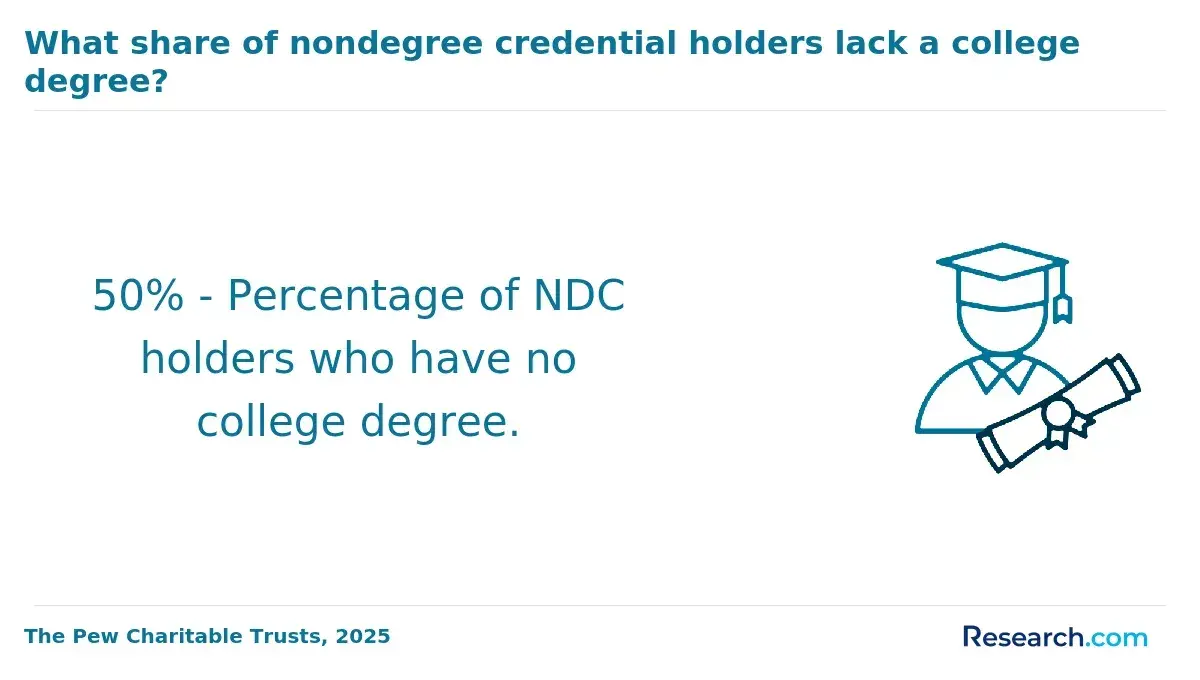
Accreditation and licensing are not universal requirements for non-degree programs, but they are critical when a program claims to prepare students for regulated work. Institutional accreditation evaluates a college as a whole. Programmatic accreditation evaluates specific fields, such as nursing or medical imaging. Neither is a substitute for checking a state board's current eligibility rules.
Before paying a deposit, verify the following directly with the school, the certifying organization, and - where applicable - the licensing board:
- Whether the provider is institutionally accredited or state-authorized, and whether that status matters to your employer or transfer goal.
- Whether the exact program, delivery format, clinical site, and completion date meet examination or licensure eligibility requirements.
- Whether required clinical hours, labs, proctored exams, background checks, and placements are included, arranged by the school, or the student's responsibility.
- Whether an industry certification is optional, included in tuition, or requires a separate exam fee and renewal cycle.
A major red flag is a program that promises licensure without naming the relevant state board, required practicum, or examination. Another is vague language such as "accredited" without identifying the accreditor and the program to which it applies.
What admission requirements and prerequisites do full-time online certificate programs typically have?
Requirements vary more by provider and field than by the phrase "non-degree program." Community-college certificates may request an application, proof of high school completion or equivalent, placement information, and prerequisites. Noncredit workforce programs may only require registration and payment. Advanced technology certificates can expect prior coursework or work experience, while clinical programs often add health, background, and drug-screening requirements.
Ask admissions staff for written confirmation of the requirements that apply to your cohort. The most important questions are whether prerequisites must be completed before the first term, whether online students can secure required placements, and whether prior learning or transfer credit reduces time or cost.
Learners seeking a lower-barrier academic route can explore easiest online degrees, but "easier" should not replace checking whether the curriculum supports the career you actually want.
How long do non-degree online programs take, and what do they cost?
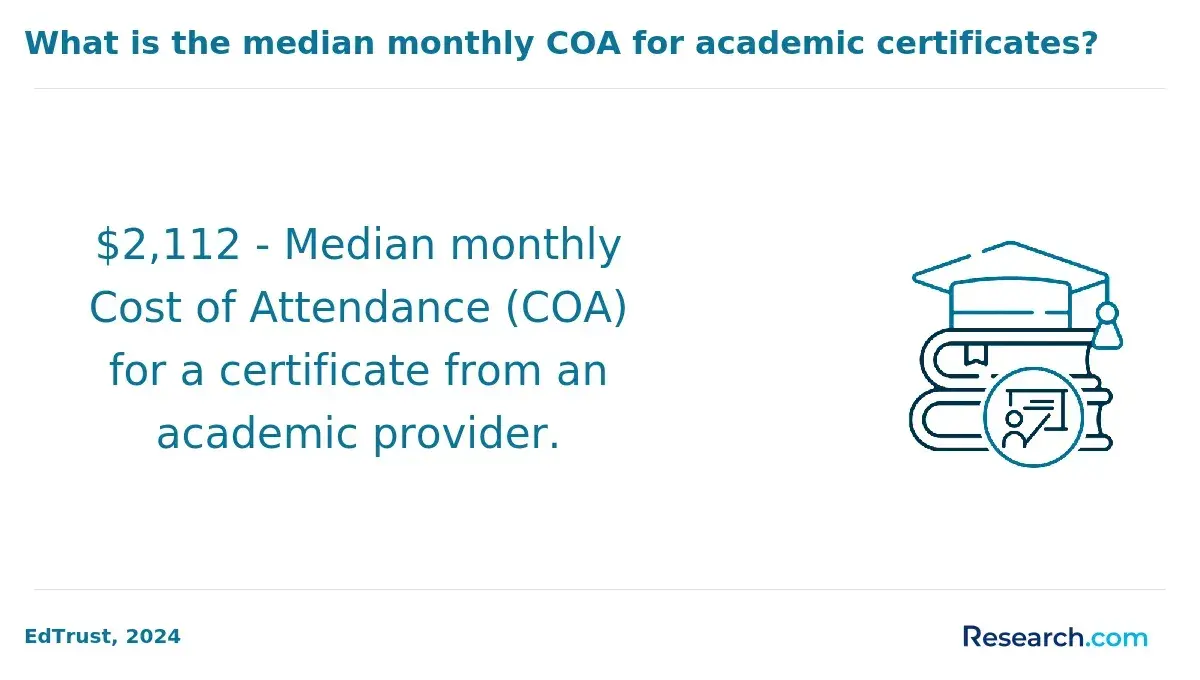
Non-degree online programs range from a few weeks for a focused provider course to roughly one year for many full-time college certificates. Associate degrees commonly require about two academic years of full-time study. Published tuition is only one part of cost: books, software, tools, exam attempts, travel, clinical compliance, proctoring, and lost work hours can change the total substantially.
The table gives planning ranges rather than a price promise. Request a program-specific written cost sheet before comparing providers.
| Program type | Typical full-time timeline | Common cost factors | Financial-aid considerations |
| Short noncredit training | Weeks to several months | Tuition, platform access, certification exam | Often not eligible for federal student aid; employer funding may be available |
| College certificate | About 6-12 months | Per-credit tuition, fees, books, required equipment | Eligibility depends on program length, institution, and student status |
| Career bootcamp | About 3-9 months | Tuition, software, portfolio services, financing charges | Federal aid is uncommon; scrutinize private financing terms |
| Associate degree | About 2 years | Credits, fees, general education, labs, clinical expenses | May qualify for federal aid at eligible institutions |
Older adults considering a short, structured academic option can compare one year degree for seniors options with certificates that offer less transferability but a narrower career focus.
What curriculum and coursework can students expect in leading online certificate fields?
Leading programs organize coursework around the tasks learners must perform, not simply around lecture topics. Quality matters most when the curriculum includes feedback, realistic tools, documented assessments, and career-relevant projects. Fully online instruction is most credible when students can demonstrate their work through supervised exams, simulations, code repositories, case files, or reviewed portfolios.
Expect course content to differ by field in the following ways:
- Information technology programs commonly cover networking, cloud tools, troubleshooting, scripting, cybersecurity basics, and preparation for vendor-neutral or vendor-specific certification exams.
- Business, bookkeeping, and project programs often include spreadsheets, accounting workflows, communication, compliance, project documentation, and business software.
- Healthcare administration programs may teach medical terminology, coding systems, privacy rules, reimbursement, and electronic health record workflows; direct-care programs add supervised skills practice.
- Design programs typically require iterative projects, critiques, accessibility concepts, software proficiency, and a portfolio showing process as well as finished work.
Ask to see a current course sequence and sample assignments. A curriculum that lists only broad topics without tools, assessment methods, or instructor feedback makes it hard to judge whether it will build usable skills.
What careers and job roles can non-degree online programs prepare you for?
Non-degree programs can prepare learners for entry-level, support, technician, or junior roles when employers recognize the training and the work does not require a degree or license. The strongest pathway connects the program to a defined role, required tools, a portfolio or supervised experience, and a realistic next credential. For licensed occupations, a certificate may be only one step toward eligibility.
This role map helps distinguish fields where online learning can be a direct skills builder from those where it must be paired with in-person preparation.
| Field | Possible entry-level direction | What strengthens candidacy | Important caveat |
| IT support | Help desk or technical support specialist | Hands-on troubleshooting, industry certification, customer-service experience | Employers may prefer demonstrated experience over a course completion record |
| Medical billing and coding | Billing, coding, or revenue-cycle support | Recognized exam preparation and familiarity with healthcare systems | Hiring requirements differ by employer; certification may be preferred |
| Design | Production artist, junior designer, content creator | Portfolio, software fluency, client-ready communication | A certificate does not replace portfolio quality |
| Skilled trades | Helper, trainee, estimator, or technician pathway | Apprenticeship, safety training, supervised shop experience | Licensure and hands-on requirements vary by trade and state |
Do not treat a school's job-title list as a promise of qualification. Compare each listed role with current employer postings and the applicable state or employer requirements.
What salary ranges and advancement opportunities are common after completing these programs?
Salary information should be used as labor-market context, not as a prediction of what certificate completers will earn. Pay varies by location, experience, employer, shift, union coverage, portfolio strength, and whether a role requires licensure. The BLS reported a 2024 median annual wage of $60,340 for computer user support specialists, an occupation that may be accessible through multiple education-and-experience routes rather than one required certificate.
Advancement is usually stronger when a short program fits a deliberate sequence: entry-level work, documented performance, an industry certification or apprenticeship, and then additional college credit or a degree if the occupation rewards it. For example, an IT support certificate may lead to specialized networking or security study; a design certificate may lead to increasingly complex portfolio work; a healthcare certificate may support administrative work but not automatically advance someone into a licensed clinical role.
Be cautious of providers that advertise occupational median pay as if it were graduate earnings. Ask for completion rates, job-placement definitions, the period measured, geographic scope, and whether outcomes are independently verified.
How can students choose a reputable, high-return non-degree online program?
A reputable, high-return program has a clear relationship between its curriculum, total cost, required time, and the job or next credential you want. The "best" choice is rarely the shortest program in isolation; it is the shortest credible path that meets your actual hiring, certification, apprenticeship, or licensing requirement.
Use this process before enrolling:
- Choose one target job and review several current postings to identify required skills, software, licenses, and preferred credentials.
- Confirm whether the program awards academic credit, a school certificate, or only a provider completion record, and determine whether that specific credential is recognized by target employers.
- Get the complete cost in writing, including tuition, fees, equipment, exams, proctoring, travel, clinical compliance, and financing charges.
- Verify delivery details: live attendance, weekly workload, exam proctoring, lab access, clinical placement responsibility, and any campus visits.
- Check accreditation, state authorization, and exam or licensing eligibility where relevant; do not rely on marketing summaries.
- Compare completion support, instructor qualifications, career services, refund policies, and transparent outcome disclosures across at least two providers.
Common mistakes include choosing solely on advertised tuition, assuming "online" means no in-person requirement, confusing a certificate with professional certification, and enrolling before confirming transfer or licensing rules. A practical alternative is to begin with a low-cost introductory course or employer-supported training when you are still testing career fit.
Other Things You Should Know About
Some can, especially in IT, business, coding, design, and digital marketing. Programs requiring clinical practice, shop work, equipment training, or regulated skills assessments are usually hybrid, even when most coursework is online.
They can be worth it when the credential teaches skills requested in target job postings, prepares you for a recognized exam, builds a portfolio, or provides stackable college credit. They are weaker investments when the provider cannot explain employer recognition or total costs.
No. A certificate is normally awarded after completing an educational program. A professional certification is awarded by a certifying organization after meeting its standards, often including an examination, experience requirement, and periodic renewal.
It depends on the institution, program length, student eligibility, and whether the program qualifies for federal aid. Many short noncredit programs do not qualify, so ask the financial-aid office and compare employer assistance, scholarships, and payment terms before borrowing.
References
- How Are Online Education Standards Accredited? https://lakewood.edu/online-education-standards-accreditation/
- Accreditation for Non-Degree and Certificate Providers: New Global Models https://iacde.org/uncategorized/accreditation-for-non-degree-and-certificate-providers-new-global-models/
- Executive Search and Outplacement Services for the Engineering, Architecture, Construction, and Manufacturing Industries https://www.davron.net/best-entry-level-jobs-no-degree/
- New Graduate Employment Data https://www.aacnnursing.org/news-data/research-data-center/new-graduate-employment-data
- Financial Aid Guide for Online College Students | Onlinedegrees.com https://www.onlinedegrees.com/degree360/student-loans-scholarships/
- Getting a job without a 4-year degree. Prospects increase with a certificate. https://www.luminafoundation.org/resource/non-degree-credentials-provide-value-for-adults-in-the-labor-market/
- How does a college degree improve graduates' employment and earnings potential? - APLU https://www.aplu.org/our-work/publicuvalues/employment-earnings/
- Online and Adult Learning - NCICU https://ncicu.org/online-and-adult-learning/
- Financial Aid Guide for Students at Online Colleges - OnlineColleges.net https://www.onlinecolleges.net/for-students/financial-aid-online-students/
- Grants vs. Loans vs. Scholarships: A Guide to Financial Aid https://www.straighterline.com/blog/grants-vs-loans-vs-scholarships-understanding-college-financial-aid