2027 Inventory Optimization Capstones: What to Look for in a Data Science Master's

Co-Founder and Chief Data Scientist
An inventory optimization capstone should do more than predict demand: it should show how a decision about stock changes under real constraints. For prospective data science master's students interested in supply chains, the challenge is finding a program that supports that full project - not merely one that lists forecasting in its curriculum. This guide explains what a strong capstone demonstrates and how to evaluate the courses, data access, supervision, and costs needed to complete one.
Key Things You Should Know
- Look for a capstone that connects demand forecasts to reorder or allocation decisions and tests those decisions against a simple baseline using service and cost measures.
- Confirm that students can access suitable data, receive guidance on optimization as well as modeling, and produce work they are permitted to show employers.
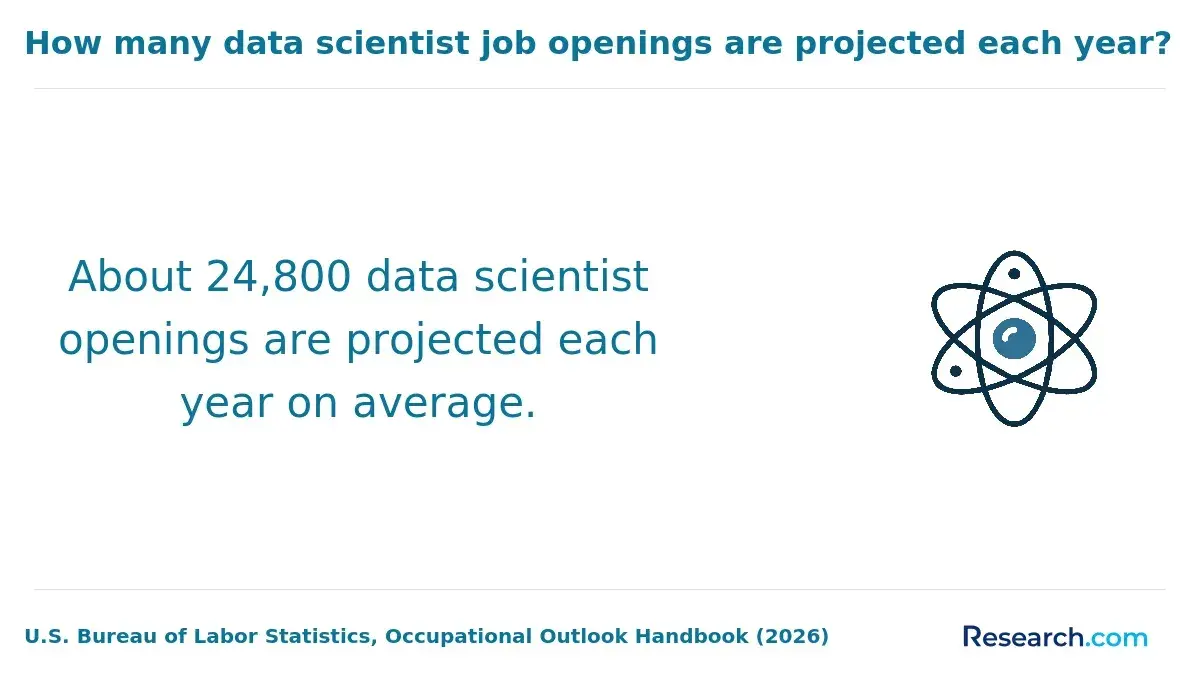
- The U.S. Bureau of Labor Statistics (BLS) projects 35% growth in data scientist employment from 2025 to 2035, but that occupation-wide forecast does not establish demand for a particular capstone specialty.
What is an inventory optimization capstone in a data science master's program?
It is a culminating project that uses data to improve a defined inventory decision, such as when to reorder, how much safety stock to hold, or where to place limited stock. A credible project identifies the decision-maker, the available data, the operational constraints, and the result that would count as an improvement.
For example, a student might forecast weekly demand by product and location, then compare a proposed replenishment policy with the organization's existing rule. Forecast accuracy alone would not establish success: the comparison must also examine outcomes such as stockouts, holding costs, and the feasibility of placing orders on time. Some programs permit this topic through a general capstone or applied project; do not assume they offer a dedicated inventory track.
If your interests are broader than inventory, you can find a data analytics master's program and compare its project requirements with those of data science degrees. The degree label matters less here than whether you can carry a decision-focused project through to evaluation.
What skills should an inventory optimization capstone project demonstrate?
A strong submission makes the path from messy operational records to a defensible recommendation visible. It should demonstrate data preparation, modeling, evaluation, and communication - not just proficiency with a software library.
When reviewing a program's sample projects or capstone rubric, look for evidence in these areas:
- Problem definition: A specified decision, planning horizon, service target, and cost or resource constraints.
- Data judgment: Checks for missing records, changing product definitions, promotions, lead-time variation, and sales that understate demand because an item was out of stock.
- Technical execution: An appropriate forecast or demand estimate linked to a replenishment, allocation, or other decision rule.
- Evaluation: A comparison with a plausible current policy, including trade-offs between availability and inventory cost.
- Reproducibility and communication: Documented assumptions, runnable or clearly described methods, sensitivity tests, and a recommendation a stakeholder could scrutinize.
Supplier and customer records may be confidential, so a portfolio version may need anonymization or a substitute dataset. Responsible handling of data matters alongside technical performance. Students seeking deeper study of oversight can explore AI master's pathways focused on governance, while checking whether those programs also teach the optimization methods this topic needs.
How do data science capstones use forecasting and optimization models?
Forecasting estimates future demand or its uncertainty; optimization selects an action given that estimate and the project's constraints. Keeping those tasks distinct is essential. A highly accurate forecast may still produce a poor inventory policy if the model ignores supplier lead times, order minimums, storage limits, or the cost of running out.
A manageable capstone could compare a historical-average forecast with a more detailed model, feed each into the same reorder policy, and simulate decisions over held-out historical periods. The student can then compare both policies with a simple existing rule. The evaluation should use information that would actually have been available at each decision date; testing on future information would make the results misleading.
More complex methods are worthwhile only when the data and project time support them. A clearly tested policy with documented assumptions is stronger evidence of skill than an elaborate algorithm whose inventory decisions were never evaluated.
What coursework prepares students for inventory optimization projects?
Prioritize a combination of statistics, programming, predictive modeling, and operations research or decision analytics. Course titles alone are insufficient: inspect descriptions and assignments for time-series validation, uncertainty, constrained optimization, simulation, and applied work with imperfect data.
Before applying, compare your preparation with the work you would need to complete. A student comfortable with machine learning but new to optimization may need a relevant elective or faculty adviser; a supply-chain professional may bring domain knowledge but need more practice with coding and statistical evaluation. Preparation for the project is not necessarily a formal admissions prerequisite.
If your intended emphasis shifts toward AI development rather than inventory decisions, review artificial intelligence master's routes from other disciplines. For this capstone goal, ask whether an AI-focused route still provides substantial optimization and operations coursework.
How do online and campus-based programs support capstone projects?
Either format can support a strong project. The useful distinction is access: Can you meet regularly with an adviser, obtain data, work with a sponsor when appropriate, and get feedback on the inventory decision as well as the model?
Online study may suit a working professional who can develop a project around an employer-approved problem, but remote access does not automatically include permission to use or publish company data. Campus study may make in-person collaboration easier, but proximity alone does not guarantee a suitable sponsor or faculty expertise. Ask programs how projects are proposed, approved, supervised, and assessed, and whether remote students have the same capstone options.
If price is pushing you toward an AI degree instead, compare low-cost online AI master's programs against the specific coursework and project support you need. A cheaper alternative is not better value if it cannot accommodate the intended capstone.
What admission requirements apply to data science master's programs?
Requirements vary by institution. Applicants may be asked to document prior quantitative study, programming ability, academic performance, recommendations, or relevant experience; a particular inventory project is generally a proposed direction, not a reason to assume admission.
When contacting a program, distinguish admission eligibility from capstone readiness. Ask whether you must complete any prerequisite coursework before enrollment, whether supply-chain experience can strengthen an application, and when students secure an adviser or approve a project topic. Do not assume a preparatory course fulfills a formal requirement unless the program confirms it.
How long do data science master's programs take and cost?
There is no reliable single duration or price for this decision: credit requirements, enrollment pace, tuition policies, and capstone arrangements differ across programs. Compare each school's current published tuition and mandatory fees using the number of credits you would take, then account for materials, possible travel, and any extra term needed to finish a sponsor-dependent project.
Time is a cost as well. Ask whether the capstone fits within the advertised schedule, what happens if data access falls through, and whether changing topics could delay completion. The graduate data science financial aid guide can help you examine funding options, but confirm award eligibility and actual charges with each institution before comparing offers.
How can students verify a data science master's program's accreditation?
Check the institution's current accreditation status through its stated institutional accreditor and the accreditor's official directory. Confirm that the degree is offered by that institution and review the program's published curriculum and capstone rules separately. Institutional accreditation establishes neither that inventory optimization is taught nor that a particular project will be approved.
For an online program, also ask the institution whether it can enroll students in your state. Verify both points before paying a deposit; neither a program ranking nor a promising capstone description substitutes for those checks.
What careers can inventory optimization capstones prepare graduates for?
The project can provide relevant work samples for data scientist, operations research analyst, supply-chain analytics, demand-planning, and inventory analytics roles. Fit depends on the job: a demand-planning role may emphasize forecast communication and business judgment, while an optimization role may require deeper mathematical modeling and implementation skills.
Tailor the portfolio explanation to the role. Show the decision you improved, the baseline you used, the constraints you honored, and what the results cannot prove. A capstone demonstrates applied capability; it does not replace an employer's assessment of experience or guarantee a particular job title.
What salaries and job outlook apply to inventory optimization careers?
The BLS reports a $120,230 median annual wage for U.S. data scientists in May 2025. That is an occupation-wide benchmark, not an expected salary for a new graduate or a measure of the return from an inventory capstone. Pay for related planning and analytics jobs can differ by role, location, employer, and prior experience.
Use labor-market figures to identify roles worth investigating, then compare actual postings for their required skills. Do not calculate a degree's payoff by treating an occupation's median wage as the salary the degree would cause you to earn.
Other Things You Should Know About Data Science
Yes, if the program permits it. Explain how you generated the data, which real-world complications it represents, and why results from a simulated setting cannot establish performance in an operating business.
Ownership and publication rights depend on the institution's rules and any sponsor agreement. Clarify access, intellectual property, and portfolio permissions before accepting the project.
Only within the permissions you have. Ask whether you may describe the problem and methods, report aggregated findings, or create a separate public demonstration without revealing protected information.
It can be, provided you can explain your own contributions and technical decisions. Keep a record of responsibilities and confirm how the program assesses individual work.
References
- Four practical tips for actionable and effective evaluation recommendations | who.int https://www.who.int/news/item/29-03-2025-four-practical-tips-for-actionable-and-effective-evaluation-recommendations
- Partnering with Students to Develop a Capstone for a... - PMC https://pmc.ncbi.nlm.nih.gov/articles/PMC11732519/
- MSDS Capstone Projects - College of Information Science https://infosci.arizona.edu/ms-data-science/capstone-projects
- Data Science Capstone Experience - Purdue Online https://www.purdue.edu/online/data-science/data-science-capstone-experience/
- Capacity in Supply Chain Management: A Practical Guide | bu.edu https://blogs.bu.edu/kongta/capacity-supply-chain-management-guide/
- Master's in Data Science: Capstone Project | NYU CDS https://cds.nyu.edu/masters-in-data-science-capstone/
- MDS Capstone Guidelines | U-M LSA Department of Statistics https://lsa.umich.edu/stats/masters_students/mastersprograms/data-science-masters-program/mdscapstoneguidelines.html
- Applied Data Science (MS) Student Capstone Projects | Bay Path University https://www.baypath.edu/academics/graduate-programs/applied-data-science-ms/student-capstone-projects/
- 2.2.7 Missing Data - Research Data Science https://alan-turing-institute.github.io/rds-course/modules/m2/2.2.7-MissingData.html
- Six ways to manage missing data | Zest AI https://www.zest.ai/learn/blog/6-methods-for-dealing-with-missing-data/