2027 Best Online Certificate Programs for Career Growth

Co-Founder and Chief Data Scientist
Choosing an online certificate is difficult when programs vary widely in academic credit, employer recognition, cost, and career usefulness. The U.S. Bureau of Labor Statistics projects healthcare support occupations to grow faster than average from 2023 to 2033, while technology and skilled-trade employers continue to value job-ready skills. This guide helps career changers, working adults, and recent graduates compare certificate types, identify credible providers, estimate total costs, and decide when a certificate is sufficient - or when a degree, certification, or apprenticeship is the better investment.
Key Things You Should Know
- Online certificates can be credit-bearing academic programs, noncredit career-training programs, or professional certificates; they are not automatically the same as an industry certification or occupational license.
- The strongest option matches a specific job target, has appropriate institutional or programmatic accreditation when required, and clearly states whether it prepares learners for a certification or licensure exam.
- Short programs can reduce time away from work, but occupational pay varies sharply: for example, BLS reported a $104,420 median annual wage for information security analysts in May 2024, a role that usually requires more than a beginner certificate.
Top 10 Best Online Certificate Programs for Career Growth
Popular Trade School Programs
Online trade certificates work best for theory-heavy training paired with required local labs, apprenticeships, or clinical practice. Common options include HVAC, welding, electrical technology, construction management, automotive technology, and industrial maintenance.
A short certificate can introduce safety, blueprint reading, codes, and tools, while an associate degree usually adds general education and deeper technical coursework.
Choose a hybrid or campus-supported program when hands-on assessments are required. For electricians, plumbers, and many HVAC roles, state licensing, supervised hours, or an apprenticeship - not online coursework alone - may determine whether you can work independently.
Healthcare Programs
Healthcare certificates include medical billing and coding, pharmacy technician, medical assisting, dental assisting, sterile processing, and practical nursing pathways. They differ substantially: billing programs may be fully online, but medical assisting and nursing require supervised clinical experiences.
Confirm that curriculum meets your state's rules and the eligibility standards for any intended exam, such as a pharmacy technician or coding certification.
An associate degree may be the more appropriate route for registered nursing, dental hygiene, or diagnostic imaging. Ask whether externships are arranged by the school and whether background checks, immunizations, uniforms, and exam fees add to total cost.
Criminal Justice / Law Programs
Online certificates in criminal justice, legal studies, paralegal studies, homeland security, and cybersecurity can build foundational knowledge for public-safety or legal-support work. A paralegal certificate is most useful when it includes legal research, writing, ethics, and software training; employers may prefer programs approved by the American Bar Association, though approval is not required everywhere.
These programs do not qualify graduates to practice law, become police officers, or obtain security clearances. Police and corrections roles typically have agency-specific fitness, background, academy, and state requirements. Choose an associate degree when you need broader general education or plan to transfer toward a bachelor's degree.
Arts & Design Programs
Online arts and design certificates commonly focus on graphic design, UX/UI design, digital photography, animation, web design, and video production. These programs are portfolio-driven: employers often evaluate completed work, technical fluency, and communication skills alongside the credential.
A noncredit professional certificate can be a practical choice for experienced workers adding a software skill, while a credit-bearing certificate may make more sense for students planning to stack coursework into an associate or bachelor's degree. Before enrolling, review student portfolios, software costs, instructor feedback, and whether the program teaches accessible design, copyright basics, and client-ready project workflows.
What Are the Best Online Certificate Programs?
The best online certificate program is the one that directly supports your target role, fits your prior education and schedule, and provides a credential employers or licensing bodies recognize. It is not necessarily the shortest or least expensive option.
Academic certificates are usually offered by colleges and may carry credit; professional certificates are often offered by universities, platforms, or industry organizations and may be noncredit; industry certifications are awarded by certifying bodies after candidates meet separate exam or experience standards.
This comparison helps distinguish options that can look similar in advertisements but lead to different next steps.
| Program type | Typical provider | Best for | Key limitation |
| Credit-bearing certificate | Community college or university | Entry-level preparation and future degree progress | Transfer policies vary by institution |
| Professional certificate | University continuing education unit or training provider | Focused upskilling and portfolio development | May not carry academic credit |
| Industry certification preparation | College, training provider, or employer | Preparing for a separate vendor or professional exam | Completion does not automatically confer certification |
| Career-training program | Private school or workforce provider | Structured job-specific training | Quality, outcomes, and regulatory oversight vary |
Prioritize a credit-bearing certificate if you may pursue an associate or bachelor's degree later. Choose a noncredit professional certificate when you need a narrowly defined skill and can verify that local employers value the provider, curriculum, and resulting work samples.
Before applying, use this practical screening process to avoid paying for a credential that does not serve your goal.
- Name the job title, not just the field, you want within the next one to three years.
- Review several current job postings to identify required education, software, licenses, and certifications.
- Verify the provider, curriculum, delivery format, total price, and any required in-person component.
- Confirm whether credits transfer or stack before assuming the program leads into a degree.
- Compare the program's timeline and total expense with apprenticeships, employer training, and degree alternatives.
How Do Online Certificate Programs Help Career Growth?
Online certificates can support career growth by documenting focused learning, helping learners build a portfolio, and creating a structured route into a new specialty without completing a full degree.
They are particularly useful for workers who already have a degree or relevant experience but need updated technical, regulatory, or digital skills. A certificate is less likely to be enough for regulated occupations that require clinical hours, supervised practice, a degree, or state licensure.
Flexible pacing can be valuable for employed learners. Learners considering accelerated progression beyond a certificate can also compare online doctoral programs if their long-term target is a doctorate-level role rather than a short-term skills credential.
Career growth is most realistic when the program produces evidence of capability. In technology, design, business analysis, and marketing, that evidence may include projects, case studies, simulations, or a portfolio. In healthcare and trades, it may mean documented competencies, clinical experience, or eligibility for a required examination. Ask employers or supervisors which credential carries weight before enrolling.
What Accreditation Should Online Certificate Programs Have?
Accreditation matters most when you need academic transfer credit, federal student aid eligibility, professional licensure, or employer confidence in a college credential.
For a college-based online certificate, verify that the institution holds recognized institutional accreditation and that the program has specialized accreditation when the occupation requires it. Nursing, medical assisting, health information, and some technical programs may have field-specific standards.
Noncredit professional certificates and vendor training often are not institutionally accredited, which is not automatically a problem. Instead, evaluate industry recognition, curriculum currency, instructor qualifications, assessment quality, and whether the provider is an authorized training partner where relevant. Do not assume a school's institutional accreditation means every program satisfies licensing-board education rules.
Red flags include vague claims about "national accreditation," no published curriculum, no information about required practical training, pressure to enroll immediately, and unclear statements about certification-exam eligibility. Contact the relevant state licensing board or certification organization directly when a credential is tied to legal authority to practice.
Which Online Certificates Lead to the Highest-Paying Jobs?
Certificates associated with higher-paying occupations tend to be advanced, stackable, or paired with prior experience and a degree. They do not independently create the occupation's salary.
For example, the BLS reported that information security analysts had a median annual wage of $104,420 in May 2024, but these roles typically require a bachelor's degree plus related experience; a cybersecurity certificate can strengthen skills or support an entry route, not replace all common requirements.
The table separates occupations with strong wage potential from the credential level commonly needed to compete for them.
| Career area | How a certificate may help | Common additional requirement |
| Cybersecurity and cloud technology | Builds platform, networking, or security skills | Experience, portfolio, industry certification, and often a degree |
| Healthcare administration and coding | Develops billing, coding, compliance, or records skills | Employer-recognized certification may be preferred |
| Skilled trades | Provides foundational technical and safety training | Apprenticeship, supervised hours, and state licensing where applicable |
| Project management and data analysis | Introduces tools, methods, and project evidence | Relevant work experience and demonstrated results |
For roles where a bachelor's degree remains the standard entry point, compare certificates against college degrees that pay well rather than assuming a shorter credential has the same labor-market value. A certificate can be an efficient first step, but a degree may offer broader access to advancement in some fields.
How Do Online and Campus Certificate Programs Compare?
Online and campus certificate programs can cover similar curriculum, but the better format depends on whether the field requires equipment, supervised practice, immediate feedback, or local employer connections. Online delivery is often well suited to information technology, business, coding, digital design, and legal studies.
Campus or hybrid delivery is generally safer for clinical healthcare, laboratory science, welding, electrical work, and other hands-on occupations. This comparison shows the trade-off between convenience and the support needed for practical training.
| Factor | Fully online | Campus or hybrid |
| Schedule | Often asynchronous and flexible | May require scheduled labs, clinicals, or meetings |
| Hands-on practice | Limited unless external placement is arranged | Usually easier to access equipment and supervision |
| Networking | Requires deliberate virtual outreach | May provide local faculty and employer connections |
| Best fit | Self-directed learners in digital or theory-based fields | Learners needing facilities, coaching, or required fieldwork |
Self-paced models can help learners move faster when they already know part of the material, but completion depends on consistent study time and strong support. Review competency based universities if demonstrating mastery rather than following a fixed weekly term better matches your learning style.
What Are the Admission Requirements for Online Certificates?
Admission requirements depend on the credential type. College certificates may require an application, high school completion or equivalent, placement measures, and prerequisites for technical or healthcare courses. Selective graduate certificates may require a bachelor's degree and relevant coursework.
Many noncredit professional certificates only require payment and basic technology access, while industry certification exams can require work experience or prior credentials.
Do not treat "no application required" as proof that a program is beginner-friendly. Check whether the curriculum assumes prior algebra, coding, anatomy, writing, software knowledge, or professional experience. International students, learners using employer tuition benefits, and students seeking financial aid may face additional documentation requirements.
Ask the provider whether credits are undergraduate or graduate level, whether prerequisites can be completed elsewhere, and whether admission to the certificate guarantees admission to a related degree. For regulated programs, also confirm background-check, drug-screening, immunization, and clinical-placement policies before paying a deposit.
How Long Do Online Certificate Programs Take?
Online certificate length ranges from a few weeks for a focused noncredit course to roughly one year or longer for a credit-bearing technical certificate. Completion time depends on total credits or modules, prerequisites, course sequencing, clinical requirements, and whether you enroll part time. A program advertised as "self-paced" may still have deadlines, proctored exams, or required live sessions.
Accelerated study is most appropriate when you already have the prerequisites, can dedicate regular weekly time, and do not need extensive hands-on training. If your goal requires graduate education rather than a short credential, comparing a shortest masters program can clarify whether a faster degree path offers better long-term value.
Request a term-by-term plan before enrolling. Include orientation, prerequisite courses, internship or clinical placement, exam preparation, and the time needed to retake a course if necessary. The published instructional length is not always the same as the time from enrollment to job readiness.
How Much Do Online Certificate Programs Cost?
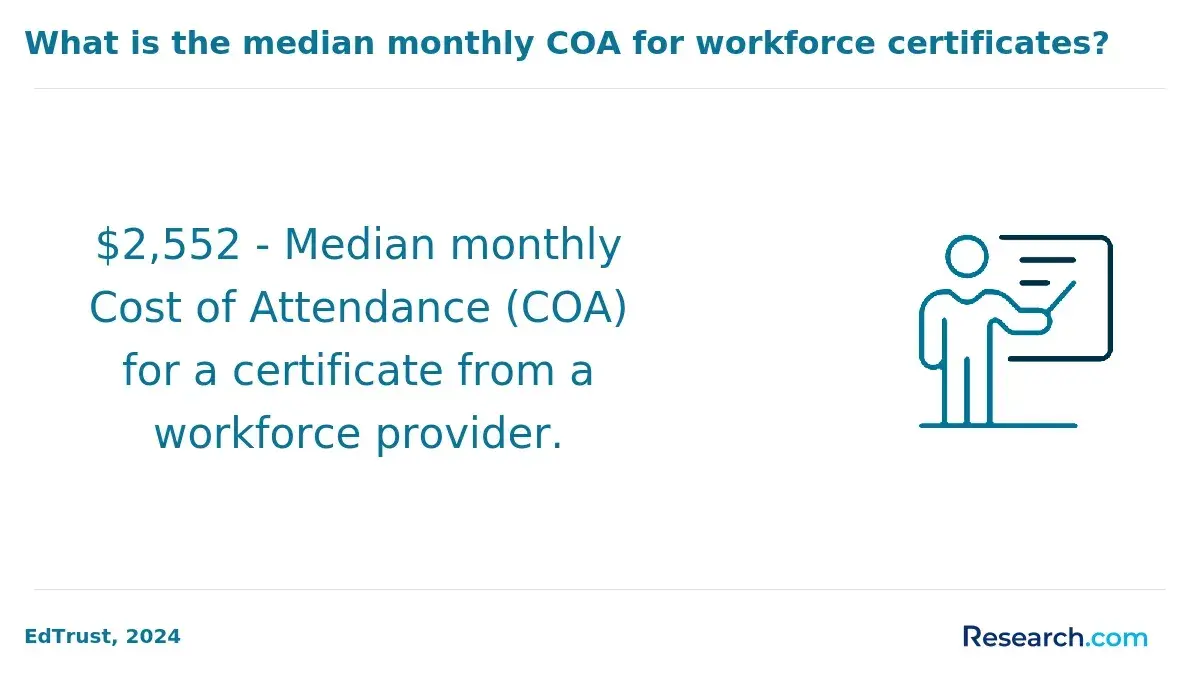
Cost varies more by provider and program type than by online format alone. Community-college certificates may charge per credit, while university continuing-education and private career programs may charge a bundled tuition price. The headline tuition is only one part of the investment; learners should compare the full amount required to complete the program and pursue any intended credential.
Use the following cost categories to compare offers on an equal basis.
- Tuition or per-credit charges, including any higher out-of-district or out-of-state rate
- Application, technology, graduation, proctoring, and course-material fees
- Software subscriptions, tools, equipment, uniforms, books, and supplies
- Travel, lodging, parking, and lost work time for labs, clinicals, or testing
- Separate certification-exam, background-check, licensing, and renewal fees
Federal student aid may be available for eligible students in qualifying credit-bearing programs at eligible institutions, but many short noncredit certificates do not qualify. Ask the financial-aid office about eligibility before relying on aid.
Employer tuition assistance, workforce grants, payment plans, and apprenticeships can reduce out-of-pocket cost, but compare repayment terms and confirm whether an employer requires continued employment after reimbursement.
Which Careers Need Licensure or Certification After a Certificate?
Many certificate-linked careers require a separate license or certification after training. Licensure is legal permission from a state or other government authority to practice a regulated occupation. Certification is a credential from a professional association, vendor, or certifying organization. Completing a certificate program may prepare you for one of these requirements, but it does not automatically grant either one.
This table highlights common situations where learners must verify requirements beyond graduation.
| Career path | Possible post-program requirement | What to verify |
| Practical nursing and other nursing roles | State licensure examination and board approval | Approved program status and clinical-hour requirements |
| Medical assisting, coding, pharmacy technology | Employer-preferred or state-required certification | Exam eligibility, state rules, and renewal requirements |
| HVAC, electrical, plumbing | State or local license and supervised work hours | Apprenticeship pathways and jurisdiction-specific rules |
| Paralegal and legal support | Usually no universal license | Employer preferences and state restrictions on legal practice |
Verify requirements through the state board or licensing agency for the state where you intend to work, not just the school's marketing materials. Requirements can change, and a program approved in one jurisdiction may not meet another state's education or clinical standards.
Other Things You Should Know About
They can be worthwhile when they teach skills requested in your target job postings, fit the field's education requirements, and have a credible provider. They are less valuable when they make vague job-placement claims or do not meet licensing, exam, or employer requirements.
It depends on the role. Certificates can support entry-level work in areas such as IT support, billing, administration, design, and trades preparation. Regulated and higher-level roles may also require experience, an exam, a license, clinical training, or a degree.
A certificate is awarded after completing an educational program. A certification is awarded by a certifying organization after meeting defined standards, which may include an examination, work experience, and continuing education.
Many employers do, particularly when the provider is reputable and the applicant can show relevant skills. Acceptance is stronger when the credential aligns with recognized industry standards, includes assessed work, and is paired with experience, a portfolio, or required certification.
References
- 7 in-demand certifications in 2025 | edX https://www.edx.org/resources/in-demand-professional-certifications
- Financial Aid For Online Colleges https://www.affordablecollegesonline.org/financial-aid/financial-aid-for-online-colleges/
- Highest Paying Certifications 2025-2026: IT, Cybersecurity, Medical & Career Growth Guide https://www.frontlinesourcegroup.com/blog-certifications-that-pay-the-most.html
- Professional Business Certifications to Boost Your Career in 2025 https://www.business.com/articles/best-business-certifications/
- The Top 5 Certificate Programs for Jobs With Growth Potential | CourseStorm https://www.coursestorm.com/blog/top-certificate-programs-for-jobs
- Vocational and skills training programs to improve labor market outcomes | The Abdul Latif Jameel Poverty Action Lab https://www.povertyactionlab.org/policy-insight/vocational-and-skills-training-programs-improve-labor-market-outcomes
- Cost of Online College vs. Traditional | Champlain College Online https://online.champlain.edu/blog/cost-of-online-education-vs-traditional-education
- The Professional Skills and Values of an Internship - Workplace Options https://www.workplaceoptions.com/blog/the-professional-skills-and-values-of-an-internship/
- Home https://www.husson.edu/online/blog/2024/06/benefits-of-internships
- Online Certificates for Job-Ready Skills | Grow with Google https://grow.google/certificates