2027 Best Certificate Programs for Remote Jobs

Co-Founder and Chief Data Scientist
Choosing a certificate for remote work is difficult because "online" training does not automatically lead to a remote-ready career. The strongest options build demonstrable skills for digital, administrative, health-information, legal-support, or creative work. For perspective, the U.S. Bureau of Labor Statistics (BLS) projects information security analyst employment to grow 33% from 2023 to 2033. This guide helps career changers, working adults, and new entrants compare certificate types, costs, timelines, recognition, and realistic remote-job outcomes before enrolling.
Key Things You Should Know
- For high-paying remote technical paths, a certificate can build job-ready evidence, but roles such as software developer or information security analyst often also require experience, portfolios, or degrees; BLS lists 2024 median pay of $124,910 for information security analysts.
- Credit-bearing college certificates may stack into an associate or bachelor's degree, while noncredit professional certificates usually emphasize practical skills and industry tools; confirm which credential an employer values before paying.
- Remote-compatible certificates are strongest when they include portfolio work, software practice, communication training, and career support - not simply recorded lectures or a completion badge.
Top 10 Best Certificate Programs for Remote Jobs
Popular Trade School Programs
Trade certificates usually prepare learners for hands-on work, so fully remote employment is less common. HVAC, welding, electrical, plumbing, automotive, and commercial driving programs require lab, shop, clinical, or road training and may lead to local work rather than home-based roles. A construction estimating, CAD drafting, project coordination, or building-information-modeling certificate can be more remote-friendly because the work uses digital plans and collaboration tools. Choose a trade program for a skilled-field career, not solely for remote-work flexibility.
Healthcare Programs
Healthcare certificates with remote potential include medical billing and coding, health information technology, medical transcription, patient access, and pharmacy-benefit support. Medical coding programs may prepare students for a separate certification exam, such as one offered by a professional association; program completion alone is not professional certification. Many employers prefer coders with certification and experience. Clinical certificates, including medical assisting, nursing assisting, and phlebotomy, generally require in-person clinical practice and lead primarily to on-site roles. Verify whether the curriculum meets employer or state requirements.
Criminal Justice / Law Programs
Legal studies, paralegal studies, legal transcription, compliance, and e-discovery certificates can support remote or hybrid administrative work. A paralegal certificate is an educational credential, while voluntary professional certifications have separate eligibility rules. Prospective paralegals should check whether employers in their market prefer an American Bar Association-approved program, a degree, or prior legal-office experience. Police, corrections, forensic, and emergency-management paths commonly involve field work, background screening, agency requirements, or shift-based duties, making fully remote work less likely.
Arts & Design Programs
Remote-friendly arts and design certificates commonly cover graphic design, UX/UI design, web design, digital marketing, video editing, animation, and content production. These programs are most useful when they produce a polished portfolio showing work in current software and real-world briefs. BLS reported a 2024 median annual wage of $61,300 for graphic designers, but that figure reflects the occupation broadly, not certificate graduates specifically. A certificate can help beginners demonstrate skills; competitive design roles may still favor extensive portfolios, internships, or degree-level preparation.
What certificate programs lead to remote work?
The best certificate programs for remote jobs teach work that can be performed, reviewed, and delivered digitally. They are not necessarily the shortest programs; they are the programs that align coursework, proof of skill, and an employer's actual hiring requirements.
This comparison highlights common remote-compatible paths and the trade-offs behind each option. Job outlook and pay figures are BLS occupational data, so they describe the occupation rather than an outcome guaranteed by a certificate.
| Certificate focus | Typical remote entry roles | Best for | Important limitation |
| IT support or cloud fundamentals | Help desk technician, support specialist | Problem-solvers starting in technology | Remote entry jobs can be competitive and may require shift coverage |
| Cybersecurity | Security operations support, compliance support | People with IT foundations | Many analyst roles require prior technical experience |
| Data analytics | Junior analyst, reporting assistant | Spreadsheet, SQL, and visualization learners | Portfolios and business communication matter |
| Medical billing and coding | Billing representative, coding support | Detail-oriented healthcare-administration learners | Employers may prefer a separate certification and experience |
| Bookkeeping or payroll | Bookkeeping assistant, accounts-payable clerk | Organized learners comfortable with numbers | Automation is changing routine transaction work |
| Digital marketing or design | Content coordinator, marketing assistant, junior designer | Creative and communication-focused learners | A portfolio is more persuasive than completion alone |
If your priority is flexible pacing rather than a traditional academic calendar, compare a cheapest self-paced online college option with career-training providers. Self-paced study can reduce scheduling barriers, but it also demands consistent independent work and may offer less live feedback.
Which certificate programs have the best job outlook?
Among remote-compatible occupations, outlook is strongest where organizations need technical protection, data interpretation, or regulated information management. BLS projects information security analysts to grow 33% from 2023 to 2033, much faster than average. That growth supports cybersecurity as a long-term field, but an introductory certificate is usually a starting point rather than direct qualification for an analyst title.
Use outlook as one screening factor, then test whether the entry route is realistic for your background. The following signals can help distinguish a promising certificate from a broad but weak one.
- Look for a curriculum that matches entry-level job postings: operating systems and networks for IT, SQL and dashboards for analytics, or coding systems and claims workflows for medical billing.
- Prefer programs with assessed projects, supervised practice, internships, or portfolio reviews because remote employers need evidence that you can work independently.
- Check whether the field has a recognized certification exam and whether the program actually prepares you for it; do not assume an educational certificate includes exam eligibility.
Which remote job certificates pay the most?
Certificates associated with the highest-paying remote occupations tend to be technical and are often most valuable to people who already have foundational education or work experience. BLS reports a 2024 median annual wage of $133,080 for software developers and $124,910 for information security analysts. These occupation-level figures are useful for understanding the ceiling of a field, not for predicting a new certificate holder's pay.
Higher-paying paths generally involve greater prerequisites and a longer runway. Cybersecurity, cloud administration, software development, data engineering, and project management may require prior IT knowledge, a degree, professional experience, a portfolio, or multiple certifications. A shorter certificate in customer support, bookkeeping, or medical billing can be a more attainable first step, but typically has a lower pay ceiling. Compare entry requirements, not just advertised salary claims.
Are online certificate programs accredited?
Some online certificate programs are accredited, but accreditation applies differently depending on the provider and credential. A credit-bearing certificate from a college may be offered by an institution with institutional accreditation. A noncredit professional certificate from a university extension division, technology company, or training platform may not be an accredited academic program, yet can still be useful when employers recognize its curriculum or provider.
For licensure-sensitive or regulated fields, institutional accreditation alone may not be enough. Confirm whether the program has specialized approval, includes required practical training, and meets the rules of the state where you plan to work. Be cautious of providers that imply "accredited" without naming the accrediting organization or that promise a license, certification, or job without explaining separate requirements.
What skills do remote job certificate programs teach?
Remote job certificates should teach both occupational skills and the habits that make distributed work reliable. Technical content varies by field, but employers commonly evaluate whether a candidate can document work, communicate clearly, manage tasks, and protect information without constant supervision.
Prioritize programs that build the following capabilities through assignments rather than merely describing them.
- Digital workflow skills, including shared documents, spreadsheets, ticketing systems, video meetings, cloud storage, and version control where relevant.
- Role-specific tools, such as SQL and visualization software for analytics, coding systems for health information, or design applications for creative work.
- Written communication, client or stakeholder updates, documentation, and asynchronous collaboration.
- Time management, task prioritization, data privacy, cybersecurity awareness, and professional troubleshooting.
How long do certificate programs take to finish?
Completion time ranges from a few weeks for a focused noncredit course to roughly one year for many college certificate programs. The real timeline depends on prerequisites, course load, required labs or clinicals, and whether students can move at their own pace. A short program can be useful for adding one skill; it is less likely to replace broad foundational preparation for a complex occupation.
If you want a credential that may carry more academic credit, an associate degree can be a better fit than stacking unrelated short courses. Review options for a fastest associates degree online program carefully: accelerated terms can reduce elapsed time, but they increase weekly workload and may not suit every major or licensure path.
How much do certificate programs cost?
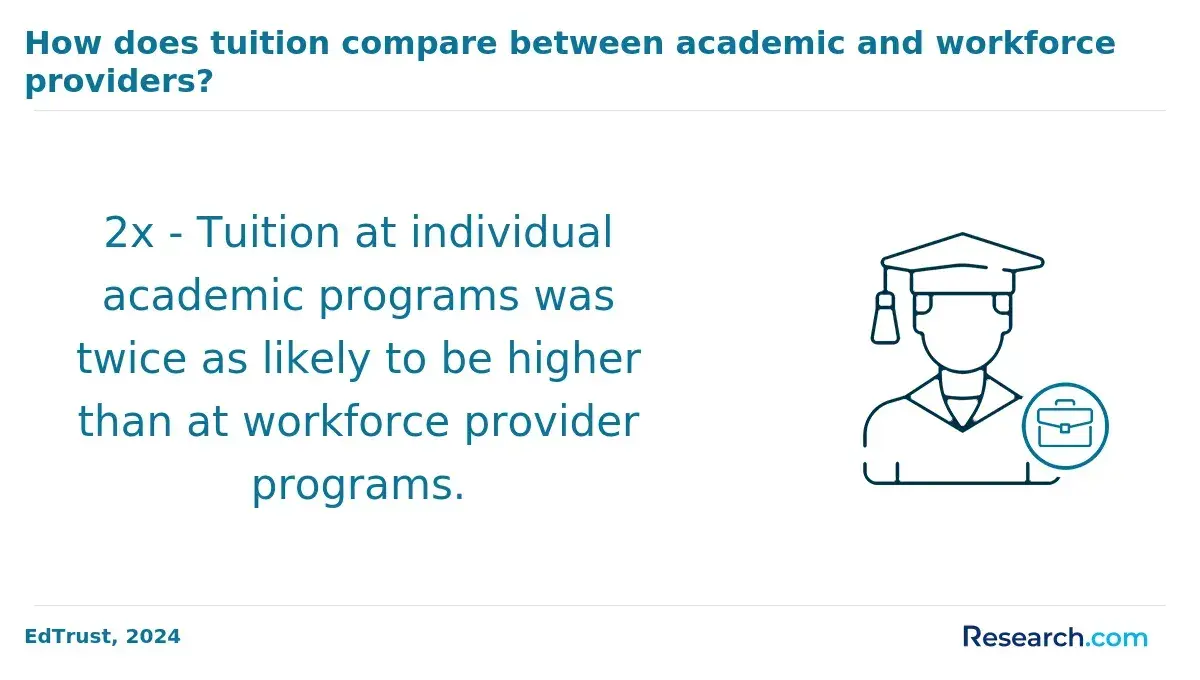
Certificate costs vary widely because provider type matters more than the word "certificate." A self-paced professional certificate may charge a subscription or course fee, while a community-college certificate can charge tuition by credit plus technology, books, testing, and lab fees. For remote learners, also budget for a reliable computer, broadband, required software, certification exams, and portfolio materials.
Compare total cost against the specific job target, not against a headline tuition number. Employer tuition assistance, workforce-development funding, veterans' education benefits, and federal aid may be available in some circumstances, especially for eligible credit-bearing programs, but availability depends on the school and student eligibility. If your target role eventually requires graduate education, exploring online masters programs can clarify whether a certificate is a lower-cost stepping stone or an unnecessary detour.
What jobs can you get with a certificate?
A certificate can support entry-level remote work when it matches a job's daily tasks and you can show evidence of competence. Common possibilities include IT support specialist, customer support representative, bookkeeping assistant, payroll clerk, medical billing representative, junior data analyst, content coordinator, digital marketing assistant, legal assistant, and junior graphic designer. Job titles and remote availability vary by employer, location, security requirements, and experience level.
Match the credential to the work sample an employer will expect. For example, an analytics candidate should show dashboards and documented analysis; a design candidate should show a portfolio; an IT candidate should be ready to troubleshoot common scenarios. Veterans and military-connected learners may also benefit from comparing an online military college when evaluating credit for prior learning, support services, and benefit administration.
How do you choose a reputable certificate program?
A reputable program makes clear what credential you earn, what it costs, what skills it teaches, and what it does not promise. Start with your intended role and review several current job descriptions before selecting a program. This prevents the common mistake of choosing a broad "remote work" certificate that does not teach the software or workflow employers request.
Before enrolling, use this checklist to compare providers on evidence rather than marketing.
- Identify whether the award is a credit-bearing academic certificate, a noncredit professional certificate, or preparation for a separate industry certification exam.
- Verify the provider's institutional accreditation when academic credit, transferability, federal aid, or licensure relevance matters.
- Request the complete tuition and fee schedule, including exam vouchers, software, supplies, proctoring, and required in-person components.
- Review syllabi, instructor qualifications, hands-on projects, career services, withdrawal rules, and any published outcomes methodology.
- Ask whether credits transfer or stack into a degree, and get the answer in writing if that feature affects your decision.
Red flags include guaranteed-job language, vague instructor information, unexplained accreditation claims, pressure to enroll immediately, and salary claims without a source or occupational context. A certificate is most worthwhile when its scope is transparent and it fills a documented gap between your current skills and a realistic target role.
Other Things You Should Know About
Sometimes, particularly in support, administrative, billing, marketing, and junior technical roles. Your chances improve when the program produces a portfolio, prepares you for relevant tools, and matches entry-level job postings. Some roles still require experience, a degree, licensing, or a separate certification.
A certificate is usually awarded after completing an educational program. A certification is a professional credential issued by a certifying body after meeting its standards, which may include an exam, experience, continuing education, or renewal requirements.
Employers typically care more about provider credibility, curriculum relevance, demonstrated skills, and any recognized certification than whether lectures were online. For regulated careers, confirm that online delivery meets all practical-training and state requirements.
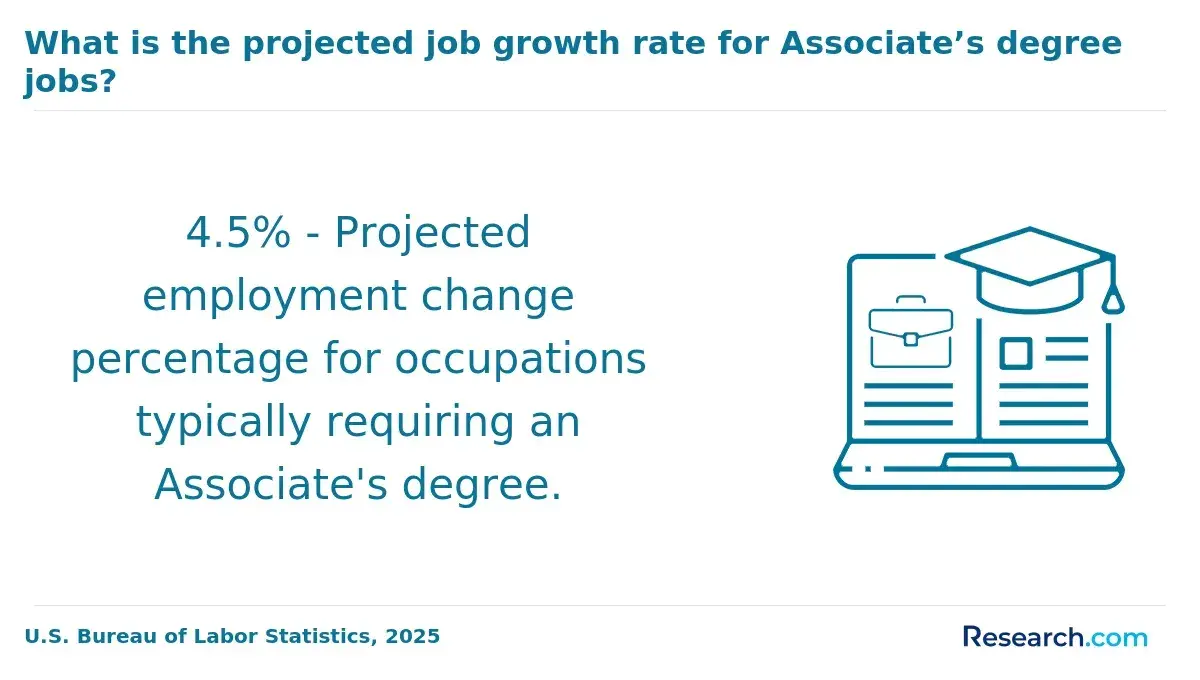
Choose a certificate when you need targeted skills quickly or want to test a field. Choose an associate degree when job postings commonly require a degree, you need broader foundations, or you want transferable college credit. A stackable college certificate can offer a middle path.
References
- Best Free and Paid Online Courses to Land Remote Roles https://remote4africa.com/blog/best-free-and-paid-online-courses-to-land-remote-roles/
- The Original Remote Work Certification from Workplaceless https://www.workplaceless.com/certification
- 26 High-Earning Remote Job Certifications for 2026 https://www.tealhq.com/post/remote-job-certifications
- 20 Best Certifications For Remote Jobs That Pay Well https://www.reliablesoft.net/best-certifications-for-remote-jobs/
- Why Soft Skills Are The Hidden Skills Employers Look For in Tech [2025 Guide] https://ntinow.edu/soft-skills-employers-look-for-in-it-careers/
- CourseCareers https://coursecareers.com/blog-posts/best-online-courses-land-remote-job
- The Best Free Online Certificate Courses to Strengthen Your Resume and Stand Out https://www.virtualvocations.com/blog/telecommuting-job-search-help/the-best-free-online-certificate-courses-to-strengthen-your-resume-and-stand-out/
- Best Online Certification Courses for Remote Work in 2026 https://certific.org/blog/best-online-certification-courses-for-remote-work-2026
- Remote work: the top skills employers are looking for https://www.amba-bga.com/insights/remote-work-the-top-skills-employers-are-looking-for
- What Is Skills-Based Hiring? And What Does It Mean for Remote Work Candidates & Team Members? - Instant Teams https://instantteams.com/blog/what-is-skills-based-hiring-and-what-does-it-mean-for-remote-work-candidates-team-members/