2027 Best Career Training Programs With the Best ROI

Co-Founder and Chief Data Scientist
Choosing career training means balancing speed, cost, and the chance of qualifying for work employers actually need. U.S. Bureau of Labor Statistics projections show overall employment is expected to grow 4% from 2023 to 2033, but many technical and healthcare roles are projected to grow faster.
This guide compares career training paths with strong ROI, including trade, healthcare, legal, and design programs. Learn what each credential can lead to, what it cannot guarantee, how to assess total cost, and how to identify a credible provider before enrolling.
Key Things You Should Know
- Strong ROI usually comes from short, employer-recognized training tied to a specific occupation, such as electrical work, diagnostic medical sonography, practical nursing, or HVAC service - not simply from the lowest tuition.
- Occupational pay varies by location and experience: BLS reports a $94,260 median annual wage for dental hygienists and $62,350 for electricians in 2024, but program completion alone does not guarantee access to those jobs or wages.
- Before paying, verify whether the program is credit-bearing, eligible for aid, accredited where required, and approved to prepare students for the certification or state license your target role requires.
Top 10 Best Career Training Programs With the Best ROI
Popular Trade School Programs
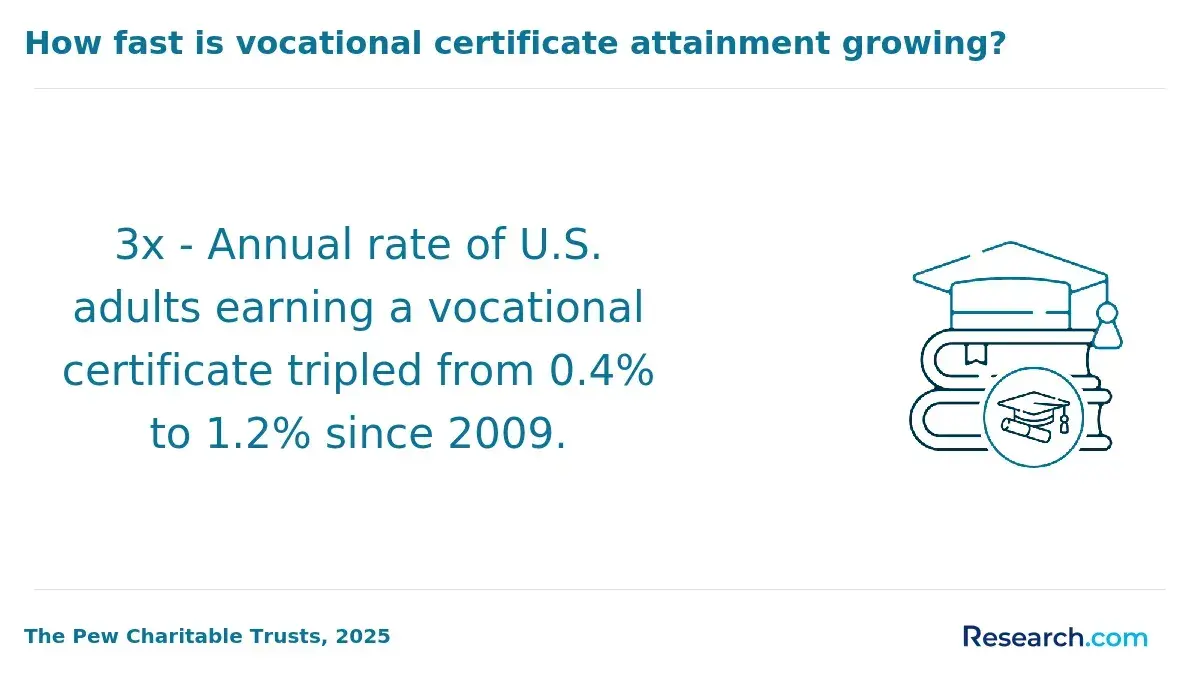
High-ROI trade programs combine classroom instruction with supervised hands-on practice. Electrical, HVAC/R, welding, plumbing, diesel technology, industrial maintenance, and commercial driving certificates commonly take months to two years; associate degrees may take about two years.
Apprenticeships can be a better-value route for electrical and plumbing work because participants earn while training. A school certificate is not the same as a journeyman license: licensing rules, required work hours, and examinations vary by state. Choose a program with current equipment, employer partnerships, transparent placement definitions, and a clear route to apprenticeship or licensure.
Healthcare Programs
Healthcare training can produce strong ROI when the credential meets a regulated role's entry requirements. Common options include practical nursing diplomas, registered nursing associate degrees, dental hygiene associate degrees, radiologic technology, diagnostic medical sonography, respiratory therapy, medical assisting, and pharmacy technician certificates. Most clinical programs require background checks, immunizations, drug screening, CPR training, and supervised clinical placements.
Accreditation and state approval are essential for programs leading to licensure; a short certificate may support an entry-level role but may not qualify a student for nursing, imaging, or hygiene licensure. Confirm examination eligibility before enrolling.
Criminal Justice / Law Programs
Career training in this area includes paralegal studies certificates or associate degrees, legal administrative assistant certificates, court reporting programs, corrections training, and public safety academies. Paralegal education can strengthen applications for law-office roles, but employers set hiring standards and a certificate does not authorize someone to practice law.
Police, corrections, and emergency dispatch requirements are established by agencies and state standards, often including background reviews, physical requirements, and academy training. Court reporting may require intensive machine shorthand training and state-specific certification. Compare local employer demand, schedule requirements, and required professional exams before selecting a program.
Arts & Design Programs
Arts and design certificates can be valuable when they produce a current, reviewable portfolio. Options include graphic design, UX/UI design, web design, digital marketing design, animation, photography, video production, interior design, and computer-aided drafting. These programs vary widely in length and employer recognition.
A noncredit portfolio program may be practical for an experienced learner updating software skills, while an associate degree may better suit beginners who need foundations, critique, and internships. Licensing applies to only some design-adjacent fields and varies by state. Review student portfolios, software access, instructor experience, and internship outcomes - not just course titles.
What makes a career training program deliver strong return on investment?
A career training program has strong return on investment when its total cost, time away from paid work, completion likelihood, and required follow-on steps are reasonable relative to the job opportunities it can realistically support. ROI is personal: a low-cost program is poor value if it does not meet licensing requirements, while a longer clinical program can be worthwhile if it opens access to a regulated occupation with durable demand.
The comparison below identifies the factors that matter more than a school's marketing claim or starting-tuition figure.
| ROI factor | Why it matters | What to verify |
| Employer relevance | Training should map to local job duties and hiring standards. | Advisory boards, internships, apprenticeships, and recent local job listings. |
| Credential fit | Some roles require a license, degree, examination, or documented clinical hours. | State board eligibility and certifying-body requirements. |
| Total investment | Tuition is only one cost component. | Fees, tools, uniforms, exams, transportation, lost wages, and financing. |
| Completion support | A fast advertised timeline has little value if students cannot finish. | Attendance policy, tutoring, clinical placement support, and schedule options. |
| Advancement options | Stackable credentials can reduce the need to start over later. | Transfer agreements, credit applicability, and employer-recognized progression routes. |
Program type should match the role. A short certificate often works best for a defined technician or support role, while an associate degree is often the more appropriate minimum pathway for regulated clinical careers. Learners seeking a broader academic pathway can also compare bachelor degrees that pay well when the target occupation typically requires four-year preparation.
AI and automation make role-specific judgment, safety practices, client communication, documentation, and troubleshooting especially important. Favor training that teaches students to use current technology responsibly rather than programs that promise that one software tool alone will secure employment.
How do program costs, financial aid, and time to completion compare?
Costs and completion times differ sharply by provider, delivery model, equipment needs, and whether clinical or shop hours are required. A certificate may take weeks or months, a diploma commonly takes about one year, and an associate degree usually requires about two academic years. These are planning ranges, not guarantees; prerequisites, waitlists, part-time attendance, and clinical scheduling can extend the timeline.
Use this comparison to estimate the cost categories and trade-offs before you compare individual schools.
| Training route | Typical time pattern | Primary cost considerations | Best fit |
| Noncredit provider certificate | Weeks to several months | Tuition, subscription charges, exam vouchers, limited aid availability | Software, office, or narrowly defined entry-level skills |
| Community college certificate | Several months to about one year | Per-credit tuition, fees, books, tools, possible aid eligibility | Career changers needing structured, credit-bearing training |
| Diploma program | About one year, often full-time | Tuition, supplies, uniforms, clinical or lab charges | Occupation-focused technical or healthcare preparation |
| Associate degree | About two years | Tuition, general education courses, lab and licensing expenses | Roles requiring broader coursework or licensure preparation |
| Registered apprenticeship | Usually multiple years | Lower direct tuition may be offset by longer progression; wages can begin during training | Skilled trades with established apprenticeship systems |
Federal student aid generally depends on attending an eligible institution and program; it is not automatically available for every short course, bootcamp, or vendor certificate. Ask the financial-aid office for the program's eligibility, then ask for a written estimate of charges beyond tuition. Employer tuition assistance, workforce-agency funding, veterans' education benefits, scholarships, and payment plans may help, but compare financing terms carefully.
Lower advertised tuition is not always lower total cost. A public or nonprofit provider may offer clearer aid processes and credit pathways; students comparing institutional options can explore non-profit online colleges when an online, credit-bearing route fits their goal.
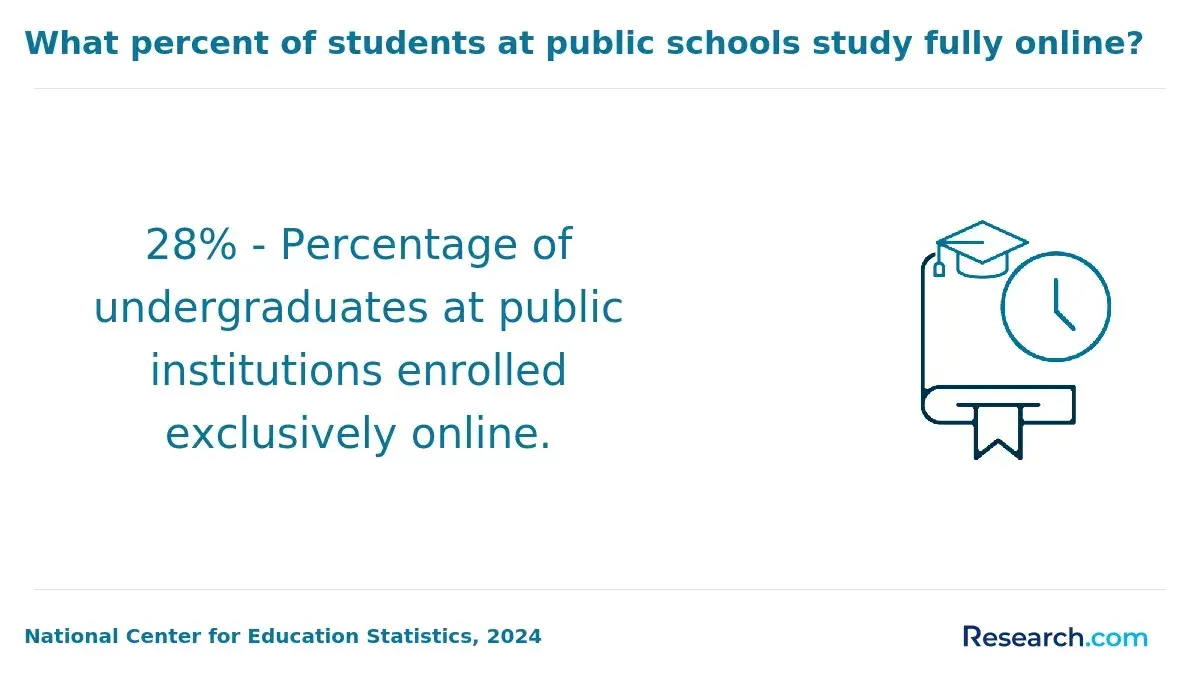
How do online and campus-based career training programs differ for students?
Online career training can reduce commuting and make theory courses easier to fit around work, but it cannot replace every practical requirement. Campus-based and hybrid programs usually remain necessary when learners need labs, equipment, clinical rotations, supervised skills checks, or direct preparation for a state-regulated occupation.
This comparison shows where each format tends to work well and where students should be cautious.
| Consideration | Online or mostly online | Campus-based or hybrid |
| Best uses | IT concepts, business tools, legal research, design software, theory courses | Clinical care, welding, electrical labs, imaging, machining, hands-on assessments |
| Schedule | Often flexible for lectures and assignments | Usually fixed lab, shop, studio, or clinical hours |
| Equipment | Requires reliable technology and sometimes home equipment | Provides access to specialized facilities and supervised equipment use |
| Licensure preparation | Must be confirmed carefully; online status alone does not establish eligibility | May better support required in-person hours, depending on program approval |
| Support needs | Requires self-management and responsive remote support | Offers more immediate practice feedback and peer contact |
Before enrolling online, obtain written confirmation that the provider accepts students in your state and that its curriculum meets any applicable licensing-board requirements. Be skeptical of programs that describe themselves as "fully online" for a career that legally requires clinical, field, or laboratory competencies.
Online study can also be a bridge to a later credential rather than a substitute for hands-on training. Professionals who eventually need graduate-level advancement may consider whether 1-year master's degree options align with their field, but should first confirm prerequisites and professional licensing implications.
Which accredited certifications and licenses are essential in high-ROI fields?
Accreditation, certification, and licensure serve different purposes. Institutional accreditation evaluates a school as an education provider. Programmatic accreditation evaluates a specific program in fields such as nursing, dental hygiene, sonography, radiography, or respiratory care. A professional certification is awarded by a certifying organization after meeting its standards, often including an exam. A license is a government authorization to practice a regulated occupation.
The following distinctions help prevent a costly mismatch between a training credential and the job requirement.
| Target field | Common required or valued credential | Critical check before enrollment |
| Electrician | Apprenticeship progression and state or local licensing | Whether program hours count toward the local licensing pathway |
| HVAC/R technician | EPA Section 608 certification for refrigerant handling | Whether training includes recognized exam preparation and hands-on practice |
| Practical or registered nurse | State licensure after an approved nursing program and NCLEX examination | State board approval and examination eligibility |
| Medical imaging or sonography | Program-specific accreditation and employer-recognized registry eligibility | Accreditation status, clinical placements, and eligibility rules |
| Paralegal | Education valued by employers; voluntary certification may be available | Local employer expectations and whether the program is credit-bearing |
Do not rely on a recruiter's verbal assurance. Check the relevant state board, licensing agency, certifying organization, or employer job posting yourself. Requirements can change and may depend on the state where you intend to work, not where the school is located.
What admission requirements and prerequisites do top career training programs have?
Admissions requirements should match the level and regulatory demands of the training. Noncredit career courses may require only registration and payment. Community-college certificates and associate degrees commonly require an application and proof of prior education, while selective clinical programs may add prerequisite courses, placement testing, health documentation, and competitive admission processes.
Applicants should confirm the requirements that affect both eligibility and time to completion before applying.
- Identify the exact job title and the state or employer requirements attached to it.
- Ask whether the program is open enrollment, has limited seats, or uses a separate clinical-program application.
- Request a written list of prerequisites, background checks, immunizations, physical requirements, drug screening, tools, and technology needs.
- Confirm whether prior college credit, military training, work experience, or industry credentials can reduce coursework.
- Ask whether a criminal record could limit clinical placement, licensing, or employment, and seek individualized guidance early.
Standardized tests and GPA are not universal requirements. They are more relevant to some credit-bearing and competitive programs than to employer training, bootcamps, and open-enrollment certificates. Avoid providers that imply easy admission means easy access to a regulated career.
What coursework and skills do high-ROI career training programs typically include?
High-ROI programs teach a combination of job-specific technical skills, safety and compliance, communication, and evidence of competence. The strongest curricula connect coursework to the tools, records, decisions, and professional standards used in the workplace rather than treating training as a collection of disconnected classes.
Across fields, students commonly encounter the following skill areas, although the exact mix should reflect the occupation.
- Technical foundations, terminology, measurements, calculations, and equipment or software operation.
- Hands-on practice through labs, simulations, studios, shop work, clinical experiences, or supervised fieldwork.
- Safety, ethics, privacy, documentation, quality control, and regulatory compliance.
- Problem-solving, customer or patient communication, teamwork, and professional reliability.
- Career preparation, including resumes, portfolios, interview practice, and certification or licensing exam preparation when applicable.
For design and technology-adjacent training, ask how often software and curriculum are updated and whether students retain portfolio work. For healthcare and trades, ask how competency is assessed and whether each student receives enough supervised practice rather than merely observing.
What careers, job roles, and advancement paths follow these training programs?
Career outcomes depend on the credential, local demand, licensing status, prior experience, and the employer's hiring standards. Training can prepare a learner to compete for a role; it does not substitute for any required license, background clearance, work experience, or employer screening.
This pathway view helps distinguish direct-entry training from programs that are mainly a first step toward advancement.
| Program area | Possible entry-level roles | Typical advancement direction |
| Electrical or HVAC/R | Apprentice, helper, maintenance technician, service technician | Journeyman status, specialized service, estimator, supervisor, contractor ownership |
| Nursing and allied health | Practical nurse, medical assistant, imaging support role, technician role | Licensure progression, specialty certification, management, additional degree study |
| Paralegal studies | Legal assistant, paralegal trainee, litigation support assistant | Specialized practice areas, senior paralegal, legal operations, compliance support |
| Digital design | Production artist, junior designer, content coordinator, design assistant | UX/UI specialization, art direction, freelance practice, creative management |
Ask providers for job-title-level outcomes, not broad claims such as "graduates work in healthcare." Useful information includes the number of completers, the share employed in related work, the period measured, median time to employment, and whether temporary or part-time work is counted.
Some advancement goals require graduate credentials rather than another short program. Experienced professionals evaluating research or senior academic paths can review online doctoral programs without dissertation, while recognizing that a doctorate is rarely necessary for entry-level technical work.
What salary ranges and earning growth can graduates realistically expect?
Salary data is most useful when it is tied to the occupation, not presented as a promise to every program graduate. The U.S. Bureau of Labor Statistics reported 2024 median annual wages of $94,260 for dental hygienists, $89,340 for diagnostic medical sonographers, $62,350 for electricians, $60,970 for paralegals and legal assistants, and $61,300 for graphic designers. These figures describe workers in each occupation nationwide; they do not show what a new certificate holder will earn.
The comparison below explains why actual early-career pay may differ from an occupational median.
| Pay influence | How it can affect earnings |
| Licensure and credentials | Required licenses or employer-recognized certifications may expand access to qualifying roles. |
| Experience and supervision level | Entry-level workers commonly earn less than experienced workers or independent practitioners. |
| Location and industry | Local labor demand, cost of living, employer type, and shift differentials can change pay substantially. |
| Schedule and employment type | Overtime, travel, contract work, self-employment, and part-time status can alter annual income. |
| Additional education | Some advancement roles require an associate, bachelor's, or graduate degree rather than a short certificate. |
For a realistic estimate, review local openings for your intended job title, identify the stated minimum credential, and compare entry-level posted pay with the program's total cost and months out of the workforce. Treat national medians as context, not a personal forecast.
How can students evaluate and choose reputable, accredited career training providers?
Reputable providers make it possible to verify their claims. They disclose program length, total charges, credential type, instructional format, faculty qualifications, completion policies, and any accreditation or approval relevant to the role. They also explain what outcomes data measures rather than using vague placement promises.
Use these steps to compare providers before submitting a deposit or signing a financing agreement.
- Start with the occupation, then identify its state licensing, certification, education, and clinical or apprenticeship requirements.
- Verify institutional accreditation and programmatic accreditation directly with the recognized accreditor or state approving body when the field requires it.
- Request a complete written cost sheet covering tuition, fees, books, equipment, uniforms, exams, background checks, transportation, and retake charges.
- Compare completion, licensure-exam, and job-placement information using the same definitions and reporting period across schools.
- Speak with current students, recent completers, and local employers about equipment quality, scheduling, clinical access, and job readiness.
- Read withdrawal, refund, attendance, and private-loan terms before committing.
Common red flags include guaranteed-job or guaranteed-salary language, pressure to sign immediately, missing approval information, unclear clinical placement plans, unusually vague job titles, and claims that a school certificate automatically creates a professional license. A credible school welcomes verification and gives prospective students time to compare alternatives.
Other Things You Should Know About
The best ROI depends on your target role, local openings, total cost, and required credential. Programs tied to regulated or skilled occupations - such as electrical work, nursing, dental hygiene, sonography, and HVAC/R - can be strong options when they meet licensing or employer requirements and lead to realistic entry-level opportunities.
A certificate can be better for a narrow skill or occupation that does not require a degree. An associate degree is often the better choice when employers, licensing boards, or certification bodies require broader academic coursework, clinical education, or eligibility for a professional examination.
Some business, technology, legal support, and design programs can be completed mostly online. Programs requiring clinical practice, labs, shop work, or state-regulated competency assessments are often hybrid or campus-based. Always verify your state's rules before enrolling.
Check local job postings first, confirm required licenses or certifications with the relevant authority, ask employers what training they recognize, and request written information on the provider's accreditation, approval, total costs, and outcomes. Never rely only on advertising or verbal promises.
References
- 5 Most Popular Job Training Sectors In The US https://coggno.com/blog/business-skills/5-most-popular-job-training-sectors-in-the-us/
- CourseCareers https://coursecareers.com/blog-posts/7-best-online-career-training-programs-for-beginners
- The Labor Market for Recent College Graduates https://www.newyorkfed.org/research/college-labor-market
- Sector-oriented job training programs https://educationtoworkforce.org/evidence-based-practices/sector-oriented-job-training-programs
- Online Career Training | Certificate Programs | CareerStep https://www.careerstep.com/
- Training Program ROI: How Fast Can You Recoup Your Investment? - Associated Training Services https://www.operator-school.com/blog/training-program-roi-how-fast-can-you-recoup-your-investment/
- Is College Worth it? | Return on Investment Analysis of College Degree https://educationdata.org/college-degree-roi
- ROI calculations for Different Workforce Development Programs https://www.managementconcepts.com/resource/how-to-calculate-the-roi-for-different-workforce-development-programs/
- Tech Training Programs for Career Transition - Merit America https://meritamerica.org/career-track/
- Positive Outcomes from Short Term Training Programs https://www.womenintrucking.org/blog/positive-outcomes-from-short-term-training-programs