2027 Best Online Short Certificate Programs for High-Paying Careers

Co-Founder and Chief Data Scientist
Choosing a short online certificate is difficult when programs promise fast career change but vary widely in employer value, licensing eligibility, and cost. The U.S. Bureau of Labor Statistics projects healthcare support occupations to grow 15% from 2024 to 2034, faster than the average for all occupations.
This guide helps career changers, working adults, and recent graduates compare credit and noncredit certificates, identify realistic high-demand paths, estimate total costs, and avoid programs that do not match their target job.
Programs offering fast career change must provide value to employers, ensure licensing eligibility, and be cost-effective to be worthwhile. This guide aims to assist individuals in making informed decisions about their online certificate choices.
Key Things You Should Know
- Short online certificates can take weeks to about one year, but the fastest option is not always the best: regulated roles may require supervised clinical training, an exam, or state licensure beyond the certificate.
- For occupational context, May 2024 BLS data reports median annual pay of $62,610 for paralegals and legal assistants and $81,320 for diagnostic medical sonographers; entry requirements differ substantially by employer and state.
- Choose programs by the specific job they support, total cost, required hands-on training, accreditation or industry recognition, and whether the credential is credit-bearing, stackable, or eligible for a required exam.
Top 10 Best Online Short Certificate Programs for High-Paying Careers
Popular Trade School Programs
Online trade certificates work best for theory, safety, estimating, codes, and software. Most hands-on trades still require labs, apprenticeships, or employer-based practice.
Common options include HVAC fundamentals, electrical technology, welding theory, construction management, plumbing pre-apprenticeship, industrial maintenance, and computer-aided design. Choose a credit-bearing community-college certificate when you may later pursue an associate degree.
Choose an apprenticeship-connected program when the occupation requires documented work hours. Avoid fully online programs claiming to qualify you immediately for field licensure without explaining local practical-training requirements.
Healthcare Programs
Healthcare short certificates include medical billing and coding, pharmacy technician, medical assistant, phlebotomy, sterile processing, dental assisting, and health information support. Online coursework may suit administrative roles, but patient-facing programs usually require in-person clinical placements.
A school certificate is not the same as professional certification from an industry body, and it may not meet state requirements. Confirm whether clinical placement is arranged, whether the curriculum prepares students for a recognized certification examination, and whether programmatic accreditation is required for your intended role.
Criminal Justice / Law Programs
Online certificates in legal studies, paralegal studies, criminal justice, cybersecurity investigations, and forensic support can build job-relevant knowledge for administrative, compliance, or support roles. A paralegal certificate may be useful for people who already hold an associate or bachelor's degree, while an associate degree can offer broader entry-level preparation.
These programs do not make someone an attorney, police officer, or licensed private investigator. Review state rules, employer preferences, background-check standards, and whether internships or practical legal-research training are included.
Arts & Design Programs
Short online programs in graphic design, UX design, digital marketing design, animation, photography, web design, and video editing emphasize portfolios more than academic credentials alone. A certificate can provide structure and feedback, but employers commonly evaluate completed work, technical skills, and experience.
Select a program that includes current software workflows, accessible instructor critique, portfolio projects, and clear ownership of your work. Learners seeking roles requiring extensive design strategy or advanced production skills may need a longer certificate, associate degree, or supervised professional experience.
What defines a high-quality online short certificate program for career advancement?
A high-quality online short certificate has a clear connection between its curriculum and a specific occupational outcome. It states whether it awards academic credit, a college certificate, a noncredit career-training credential, or preparation for a separate industry certification. It also explains what the program alone does not qualify a student to do.
For learners comparing academic certificates with vendor credentials, best certifications for jobs can be a useful comparison point. Certifications are usually awarded by a professional organization after an exam or other standards are met; a certificate is typically awarded by an education provider after coursework.
Use these quality signals to screen programs before applying:
- A published curriculum maps courses to job skills, software, procedures, or certification-exam domains.
- The provider identifies its institutional accreditation when applicable and discloses any programmatic accreditation needed for regulated fields.
- The program lists required clinicals, labs, internships, proctoring, equipment, background checks, and exam fees before enrollment.
- Instructors have relevant industry or professional experience, and students can access advising, technical support, and career services.
- The school provides realistic completion, withdrawal, and outcome information rather than implying a job, license, or salary is guaranteed.
Career advancement also depends on fit. A short certificate is strongest when it fills a defined skill gap, supports a current role, prepares for a recognized exam, or creates a first step toward a stackable credential. It is a weaker choice when a target occupation legally requires a degree, supervised experience, or a license that the program cannot support.
How do accredited online certificate programs compare to campus-based options?
Online and campus programs can lead to the same institutional certificate when they use the same curriculum, faculty standards, and assessment methods. The meaningful difference is usually delivery: online study can reduce commuting and allow asynchronous coursework, while campus or hybrid formats may provide easier access to labs, equipment, clinical sites, and instructor feedback.
This comparison helps match the format to the type of work you plan to do.
| Factor | Online certificate | Campus or hybrid certificate |
| Best fit | Administrative, technical, software, and theory-focused learning | Hands-on, clinical, laboratory, and equipment-intensive training |
| Schedule | Often flexible, though exams and live sessions may be scheduled | Usually fixed meeting times and locations |
| Practical training | May require local externships, labs, or residencies | Often integrated through campus facilities or local partners |
| Networking | Requires deliberate use of virtual office hours and career events | May offer more spontaneous peer and employer contact |
| Cost considerations | May reduce travel and housing costs; technology and local placement costs can remain | May add commuting, parking, and campus-fee costs |
Accreditation matters most when using a college certificate for credit transfer, federal aid eligibility, employer confidence, or a regulated pathway. Institutional accreditation applies to the school as a whole; programmatic accreditation applies to particular disciplines and may be essential for some healthcare pathways. A noncredit provider may not be institutionally accredited yet can still offer useful training, but learners should verify employer recognition before paying.
What admission requirements and prior education are needed for short certificate programs?
Requirements depend on the credential and provider. Many entry-level noncredit online programs require only an application, payment arrangement, and basic computer access. Credit-bearing certificates at community colleges commonly require a high school diploma or equivalent and may require placement testing or evidence of readiness for college-level English or math.
Healthcare and public-safety-adjacent programs can add prerequisites because students may enter clinical or regulated settings. These can include immunizations, CPR training, drug screening, criminal background checks, health insurance, physical examinations, and prerequisite science courses. A past record can affect placement or licensure in some fields, so ask the school and the relevant state board before enrolling.
Prior education is especially important for advanced certificates. Post-baccalaureate, graduate, and specialized paralegal certificates may expect an associate or bachelor's degree, prior coursework, or work experience. Do not assume credits will transfer into a degree later; obtain the receiving institution's transfer policy in writing.
How long do online short certificate programs take and what do they cost?
Most short certificates range from several weeks to roughly 12 months, depending on course load, prerequisites, required practical training, and whether students attend part time. Self-paced professional certificates may move faster, but an accelerated schedule does not replace mandated clinical hours, apprenticeship hours, or licensing requirements.
Cost is more than tuition. A published program price may exclude textbooks, software, tools, exam vouchers, uniforms, liability coverage, clinical requirements, background checks, proctoring, and travel to required in-person sessions. The National Center for Education Statistics reported that average undergraduate tuition and fees at public two-year institutions were $3,990 for the 2023-24 academic year; this is a broad college-price benchmark, not the price of a specific certificate.
For a faster training comparison, review quick certifications that pay well alongside longer academic certificates. A six-month option can be sensible when employers recognize the credential and no license or clinical requirement is missing.
Before accepting an offer, request a written all-in estimate and compare the following cost factors.
| Cost category | Why it matters | What to verify |
| Tuition and fees | May be charged per credit, course, term, or program | Whether the quoted amount includes registration and distance-learning fees |
| Required materials | Tools, software, scrubs, and books can be substantial | New versus used options and ongoing subscription costs |
| Exam and licensing costs | Often separate from instruction | Exam eligibility, retake fees, and state application costs |
| Practical training | Clinicals and residencies may require travel or unpaid time | Who arranges placement and whether extra insurance is needed |
| Financing | Eligibility varies by credential and institution | Federal aid, employer tuition assistance, scholarships, payment plans, and refund rules |
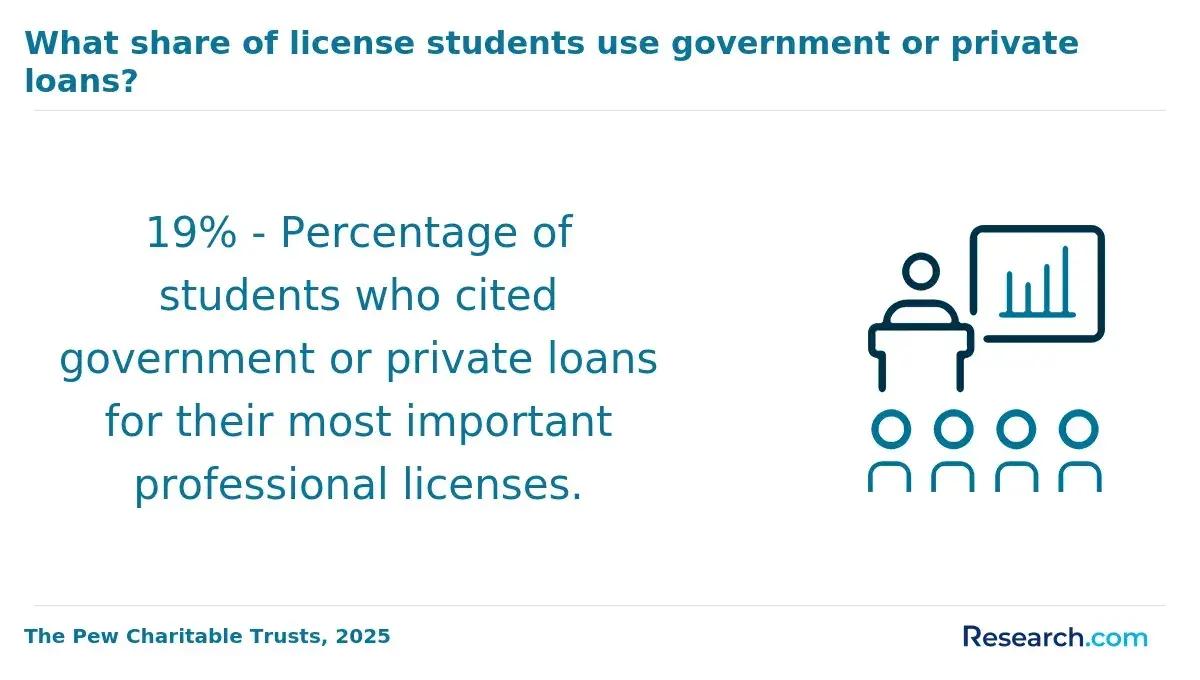
Credit-bearing certificates at eligible institutions may qualify for financial aid, but short or noncredit programs often do not. Employer assistance can improve affordability, particularly when the program teaches skills used in your present job. Compare borrowing only after confirming that the credential has documented value in your local labor market.
What careers and job roles can short certificate programs prepare you for?
A short certificate can prepare learners for entry-level work, career support roles, skill-specific responsibilities, or advancement within an existing occupation. It is not a universal substitute for a degree, apprenticeship, experience requirement, or professional license. The best program begins with a job posting analysis: identify the minimum education, software, certifications, and experience employers repeatedly request.
These examples distinguish likely preparation from occupations with additional barriers.
| Certificate focus | Possible job targets | Important limitation |
| Medical billing and coding | Medical billing specialist, coding support, revenue-cycle representative | Employers may prefer a separate coding certification and experience |
| IT support or cybersecurity fundamentals | Help desk technician, technical support specialist, junior security support role | Hiring often depends on demonstrable skills and vendor certifications |
| Paralegal studies | Paralegal, legal assistant, litigation support assistant | Employers may prefer an accredited program, degree, or prior legal experience |
| Digital design | Production designer, junior graphic designer, content-design assistant | A portfolio is typically more important than the certificate title alone |
| HVAC or electrical foundations | Installer helper, maintenance trainee, apprentice candidate | Independent work commonly requires apprenticeship and local licensing |
Workers who need a broader academic foundation may benefit more from an associate or bachelor's pathway than a standalone short credential. For adults able to handle a heavier course load, 2-year accelerated bachelor degrees can be a relevant alternative when the desired field routinely screens applicants for a bachelor's degree.
What salary ranges and earning potential are realistic after completing these certificates?
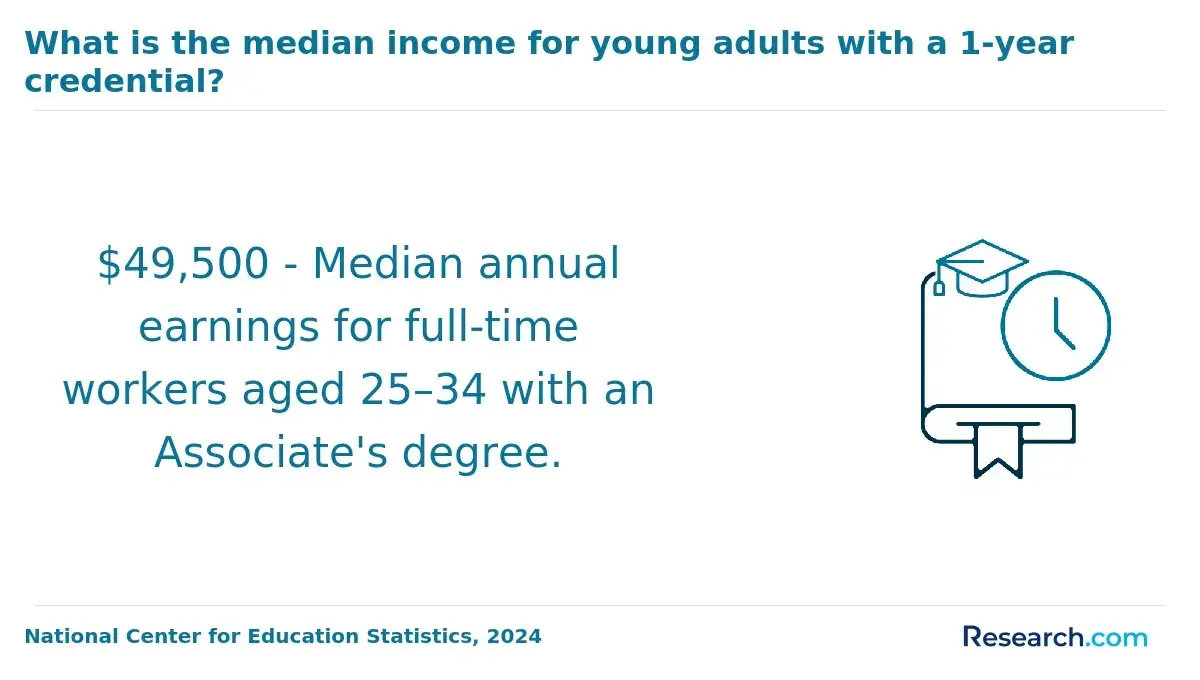
Salary depends on the occupation, location, employer, shift, experience, licensing status, and education beyond a certificate. A certificate can help demonstrate preparation, but it does not cause the occupation's median wage or guarantee entry into that occupation.
May 2024 BLS occupational wage data provides useful U.S. context for several certificate-adjacent career directions. Readers should use these figures to compare occupations, then check local postings because entry-level pay may be lower and requirements may exceed a short certificate.
| Occupation | May 2024 U.S. median annual pay | Certificate-only caution |
| Computer user support specialists | $60,340 | Employers may accept certificates, but skills and experience requirements vary. |
| Paralegals and legal assistants | $62,610 | Some employers prefer a degree or a qualifying paralegal certificate. |
| Medical records specialists | $50,250 | Certification preferences and coding duties vary by employer. |
| Diagnostic medical sonographers | $81,320 | Typically requires an accredited educational pathway and clinical preparation, not a brief online-only certificate. |
| Electricians | $62,350 | Usually requires an apprenticeship and state or local licensure. |
Higher pay is most realistic when the credential supports a shortage occupation, an employer-recognized technical skill, a legally required next step, or a promotion from an existing role. Be skeptical of marketing that cites a high occupational salary without disclosing the education, experience, or licensure usually needed to reach it.
What is the job outlook and industry demand for certificate-related careers?
Demand is strongest where employers need hands-on services, regulated care, technical support, infrastructure maintenance, or compliance work that cannot be fully automated. At the same time, AI is changing routine tasks in coding, design, customer support, and legal document review. That makes job-specific judgment, communication, troubleshooting, workflow knowledge, and a portfolio of real work increasingly important.
BLS projects overall employment to grow 3% from 2024 to 2034. Growth can be much faster in selected fields, but projected growth is not a guarantee of local openings or a signal that any certificate meets employer requirements. Check job postings within commuting distance or in your intended remote-work market before selecting a specialty.
Use a practical demand test before enrolling:
- Collect at least 15 recent job postings for your target title and location.
- Record the recurring education, license, certification, software, and experience requirements.
- Compare those requirements with the program curriculum, including required practical training.
- Ask the school for local employer partners and clarify whether its career services serve online learners.
- Choose the shortest credential that credibly closes the gap between your current qualifications and the postings.
What licensing or professional certification is required after completing these programs?
Requirements vary by occupation and state. A school-issued certificate documents completed training; a license grants legal authority to practice where a government agency requires one; and a professional certification usually verifies knowledge or competence through a private certifying organization. One credential does not automatically replace the others.
Licensing is common in occupations such as electricians, plumbers, HVAC technicians, many allied-health roles, and private investigators in some states. Programs may prepare students for an examination or meet part of an education requirement, but candidates can still need supervised hours, a background review, an application, and continuing education.
Before paying a deposit, contact the licensing board or certifying body that governs your intended role. Confirm that the exact online program, clinical arrangement, and degree level satisfy eligibility rules in the state where you expect to work. This is especially important if you plan to relocate, because approvals and scope-of-practice rules can differ.
How can students evaluate and choose a reputable online certificate program?
Start with the career destination, not the program advertisement. Reputable providers can show what students learn, what the credential represents, what it costs in total, and whether it meets the next requirement for employment, professional certification, or licensure.
Use this enrollment checklist to compare finalists on the issues that affect value most.
- Match the curriculum to current local job postings and verify that any advertised exam preparation covers the credential you actually need.
- Confirm the provider's accreditation or industry standing where relevant, and verify programmatic accreditation for regulated pathways.
- Get written confirmation of all required in-person components, clinical placement responsibilities, technology needs, and schedule expectations.
- Compare total cost, refund policy, payment terms, aid eligibility, employer reimbursement, and likely lost work time rather than tuition alone.
- Ask whether credits transfer or stack into an associate or bachelor's degree, and obtain the receiving school's policy rather than relying on verbal assurances.
- Review instructor qualifications, career support, student complaint procedures, and realistic outcome disclosures.
Common red flags include pressure to enroll immediately, vague claims about accreditation, "job guaranteed" language, missing clinical-placement details, and salary claims that do not name the occupation or experience level. If your long-term goal needs graduate education, compare the certificate route with what is the easiest master's degree to get only after confirming that a master's degree is genuinely required for advancement.
Other Things You Should Know About
They can be worthwhile when the program teaches skills employers request, prepares you for a recognized next step, and has a total cost proportionate to likely career value. They are less useful when they provide only a generic completion credential with no portfolio, practical training, transfer value, or employer recognition.
Some certificate-related paths can lead to well-paid work over time, especially in skilled trades and technical specialties. However, higher earnings often also require experience, apprenticeships, licensing, professional certification, shift differentials, or advancement into more responsible roles.
Many employers accept online learning when the provider is reputable and the applicant can demonstrate relevant skills. For clinical, trade, and licensed occupations, employers and regulators may also expect documented hands-on training, supervised hours, or an approved program.
A certificate is generally awarded by a school or training provider after coursework. A certification is generally awarded by a professional organization after a candidate meets its standards, often including an exam. Some certificate programs prepare students for certification, but completing the program does not automatically award the certification.
References
- Online Certificates for Job-Ready Skills | Grow with Google https://grow.google/certificates
- How does a college degree improve graduates' employment and earnings potential? - APLU https://www.aplu.org/our-work/publicuvalues/employment-earnings/
- CourseCareers https://coursecareers.com/
- 7 in-demand certifications in 2025 | edX https://www.edx.org/resources/in-demand-professional-certifications
- Short-term credentials and the labor market: Who stands to benefit? https://fedcommunities.org/short-term-credentials-labor-market-who-stands-benefit/
- The Top 5 Certificate Programs for Jobs With Growth Potential | CourseStorm https://www.coursestorm.com/blog/top-certificate-programs-for-jobs
- What You Should Know About Short-Term Certification Programs https://www.learnhowtobecome.org/career-resource-center/short-term-certifications/
- 15 Certificate Programs That Lead to High-Paying Jobs in Under a Year https://www.moneytalksnews.com/certificate-programs-that-lead-to-high-paying-jobs-in-under-a-year/
- 9 Best Online Certificate Programs that Lead to Higher Pay https://blackstone.edu/9-best-online-programs-for-higher-pay/
- 15 Jobs That Only Require a Certificate (and Pay Well!) | The Muse https://www.themuse.com/advice/jobs-that-only-require-a-certificate