2027 Best Online Career Training Programs for High-Paying Careers

Co-Founder and Chief Data Scientist
Choosing online career training is difficult when programs promise fast results but differ sharply in recognition, hands-on requirements, and career eligibility. This guide compares certificate, certification-prep, diploma, and associate-degree pathways for U.S. careers with strong earning potential.
U.S. Bureau of Labor Statistics projections show information security analyst jobs are expected to grow 33% from 2023 to 2033, illustrating why targeted, skills-based training can matter. Learn which programs fit your goal, what online study can and cannot replace, and how to evaluate cost, licensing, and likely career outcomes before enrolling.
Key Things You Should Know
- Online career training can be a practical route to high-paying work when the program leads to an employer-recognized certification, an associate degree, or required exam and clinical preparation; it is not a substitute for licensing, supervised experience, or a degree where those are required.
- U.S. Bureau of Labor Statistics May 2024 data place the median annual wage for information security analysts at $124,910, but this occupation usually requires related education and experience beyond an entry-level online certificate.
- Compare total cost, required equipment, exam fees, clinical or lab travel, state approval, and job-placement support - not tuition alone - before choosing a provider.
Top 10 Best Online Career Training Programs for High-Paying Careers
Popular Trade School Programs
Online trade training commonly covers electrical theory, HVAC fundamentals, welding safety, construction estimating, plumbing codes, and diesel technology. A certificate or diploma can build foundational knowledge, but most skilled trades require in-person labs, apprenticeships, supervised work, or state licensing. Electricians had a $62,350 median annual wage in May 2024, according to the U.S. Bureau of Labor Statistics; that figure reflects the occupation, not certificate completion alone. Choose hybrid programs connected to local employers when hands-on competency or apprenticeship placement is essential.
Healthcare Programs
Online healthcare options include medical billing and coding, health information technology, pharmacy technician preparation, medical assisting theory, and nursing prerequisites. These may be academic certificates, noncredit career programs, or exam-preparation courses; they are not interchangeable. Clinical roles usually require supervised practicum hours, background checks, immunizations, and state-specific approval. Medical records specialists had a $50,250 median annual wage in May 2024, making coding and records work a more online-compatible option than direct-patient-care occupations. Confirm that a program meets employer and certification-exam expectations before paying.
Criminal Justice / Law Programs
Online certificates and associate programs in criminal justice, paralegal studies, legal assisting, and court reporting introduce legal research, procedure, ethics, documentation, and communication. They can support entry-level administrative or support roles, but they do not authorize a graduate to practice law or replace law-school requirements. Paralegals and legal assistants had a $61,010 median annual wage in May 2024. Students pursuing paralegal work should prioritize programs with practical legal-research training and verify whether local employers prefer an approved or degree-based pathway.
Arts & Design Programs
Online arts and design training can focus on graphic design, UX design, digital illustration, video editing, animation, or web production. Certificates are useful when they produce a portfolio with current software and real project feedback; a credential alone rarely proves creative ability. Web developers and digital designers had a $95,380 median annual wage in May 2024, though pay varies widely by specialty, experience, location, and portfolio quality. Select programs that include accessible software, instructor critique, portfolio review, and career-relevant project briefs.
What qualifies as an online career training program for high-paying jobs?
An online career training program is a structured learning experience designed to build job-specific skills in less time than a traditional degree. It may award a college certificate, diploma, continuing-education credential, professional certificate, or preparation for an outside certification examination. "High-paying" is relative: a credible program should connect its curriculum to a role with sustainable demand and earnings that justify the full investment.
The strongest options have a clear pathway from training to work. This comparison shows why the credential label matters as much as the subject area.
| Pathway | Usually awarded by | Best use | Important limitation |
| Academic certificate | College or university | Focused, often credit-bearing study | Credits may not transfer automatically |
| Career diploma | Career school or training provider | Entry-level occupational skills | Recognition varies by employer and state |
| Professional certification | Independent certifying organization | Validating knowledge against an industry standard | May require an exam, renewal, or work experience |
| Associate degree | Accredited college | Broader career preparation and future degree options | Usually takes longer than a short certificate |
Programs are a better fit for career changers, working adults, and people seeking a defined skill gap. They are a weaker fit when the target occupation legally requires a bachelor's degree, graduate degree, apprenticeship, clinical training, or state license that the online provider cannot deliver.
How do online career training programs compare to campus options for outcomes and flexibility?
Online programs can offer lower commuting costs and schedule flexibility, especially for software, business operations, coding, design, billing, and legal-support coursework. Campus or hybrid delivery is generally stronger for careers requiring equipment, patient interaction, shop practice, clinical assessment, or closely supervised performance.
The key comparison is not "online versus campus" in the abstract; it is whether the delivery model lets you complete every competency required for your intended job. Readers seeking shorter academic routes can also compare fast degrees online when a credit-bearing credential would provide better long-term mobility.
| Decision factor | Fully online program | Campus or hybrid program |
| Scheduling | Often asynchronous and work-friendly | Set meeting, lab, or clinical times |
| Hands-on learning | Limited to simulations, home kits, or local placements | Direct access to labs and equipment |
| Networking | Requires intentional virtual outreach | Often easier through faculty and local employers |
| Licensure preparation | Works only if approved clinical or practicum arrangements exist | May integrate required practical hours more directly |
Ask whether lectures are live or self-paced, how quickly instructors respond, and who arranges required placements. A flexible format is valuable only if you can reliably complete the workload and practical requirements.
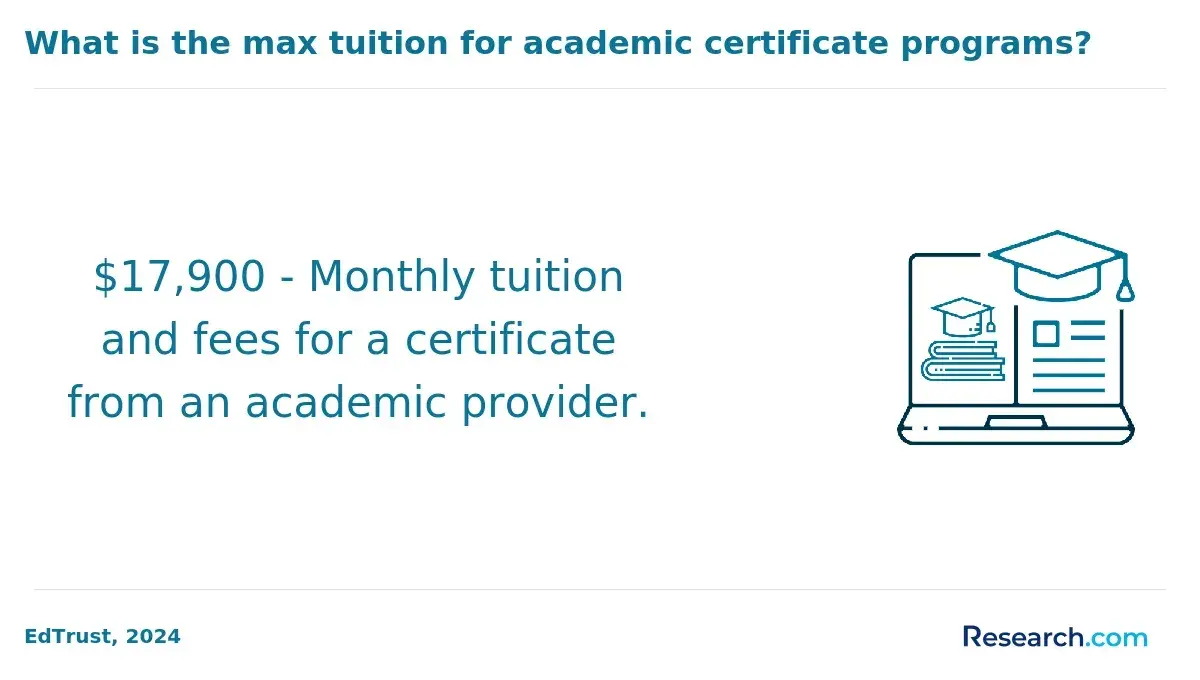
What accreditation and licensing requirements should these programs meet in the U.S.?
Accreditation evaluates an institution or program against quality standards; licensure is legal permission from a state to practice a regulated occupation. Professional certification is a separate credential issued by an industry body. Students should verify all three only where they apply to the chosen path.
For college-based programs, confirm institutional accreditation through the U.S. Department of Education or Council for Higher Education Accreditation directories and check whether a specialized accreditor is expected in the field. For nondegree providers, examine employer recognition, curriculum alignment, instructor qualifications, refund policies, and the specific certification examination the course prepares students to take.
Licensure is especially important in nursing, allied health, counseling, cosmetology, electrical work, plumbing, and other regulated fields. The program must meet the rules of the state where you plan to work, not merely the state where the provider operates. An online course can teach theory without meeting clinical, lab, apprenticeship, background-check, or supervised-hour rules.
- Check the relevant state licensing board before enrolling, particularly if you live in a different state from the school.
- Request written confirmation of whether the curriculum meets education requirements for your target license or examination.
- Confirm whether required clinicals, labs, externships, or apprenticeships are included, available locally, and paid separately.
What admission requirements, program length, and costs should students expect?
Requirements vary by provider and credential type. Noncredit training may require only a high school diploma or equivalent and basic technology access. College certificates and associate degrees may require an application, transcripts, placement measures, prerequisites, or background checks for clinical placement. Industry certification courses may have no admission process but can still assume prior skills.
Short programs may take weeks or months, while an associate degree commonly takes about two years of full-time study. If you need broader general education, transferable credit, or a credential that employers consistently recognize, compare 2 year online degrees rather than selecting the shortest available course.
Total cost includes more than published tuition. The table identifies costs that can materially change the return on investment.
| Cost category | Why it matters | Question to ask |
| Tuition and fees | May be charged per course, credit, term, or program | What is the complete published program price? |
| Equipment and software | May include tools, laptops, kits, uniforms, or subscriptions | What must I buy separately? |
| Exam and license costs | Often excluded from tuition | Which examination fees are included? |
| Travel and placement costs | Can apply to labs, clinicals, or proctoring | Where must I appear in person? |
Federal student aid generally depends on the school and program's eligibility; many short noncredit programs do not qualify. Ask about employer tuition assistance, workforce grants, payment plans, scholarships, and the withdrawal policy before making a deposit.
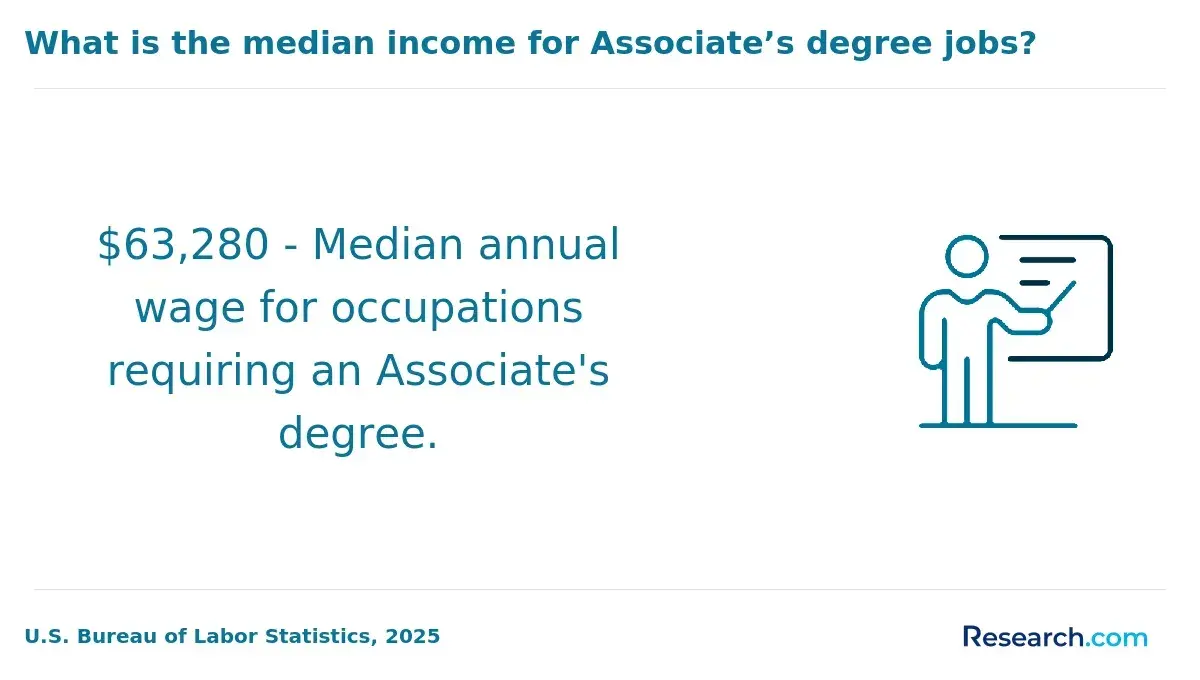
Which high-paying careers are accessible through online certificates and training programs?
Online training can help people enter or advance in occupations where employers value demonstrable technical skills, portfolios, certifications, or relevant experience. It is most credible when the curriculum matches a narrow job target and the learner understands the experience required beyond training.
The following occupations illustrate different levels of accessibility. Wage figures are U.S. Bureau of Labor Statistics May 2024 occupational medians, not promised outcomes for program completers.
| Career direction | Useful online preparation | May need beyond the program | 2024 median annual wage |
| Information security analyst | IT support, networking, security certification preparation | Related experience; often a degree for many openings | $124,910 |
| Web developer or digital designer | Web development or UX portfolio certificate | Portfolio and demonstrated technical skills | $95,380 |
| Dental hygienist | Prerequisites or general education online | Accredited clinical degree and state license | $94,260 |
| Paralegal or legal assistant | Paralegal certificate or associate coursework | Employer-specific education and software expectations | $61,010 |
| Electrician | Electrical theory and safety coursework | Apprenticeship and state or local licensing where required | $62,350 |
A short credential is particularly useful when it fills a defined gap: basic IT knowledge before a help-desk role, coding knowledge before a certification exam, or design projects before junior freelance work. People who want a low-pressure academic starting point should distinguish accessibility from career relevance when reviewing easy degrees; the best option still needs to match the job's requirements.
What skills, courses, and certifications do top programs include in their curriculum?
Top programs teach both technical tasks and the evidence employers use to assess those tasks. A quality curriculum names the tools, projects, assessments, and credential standards involved instead of making broad promises about "career readiness."
Look for curriculum features that map directly to the type of role you want.
- Technology programs should include troubleshooting, networking fundamentals, security concepts, cloud tools, ticketing workflows, and hands-on labs or portfolio projects.
- Healthcare administration programs should cover medical terminology, privacy practices, coding systems where relevant, claims workflows, and certification-exam alignment when advertised.
- Skilled-trade programs should teach safety, code awareness, measurements, tools, and troubleshooting while clearly identifying which competencies require in-person practice.
- Design programs should require portfolio pieces, iterative feedback, accessibility basics, client briefs, and current industry software.
- Legal-support programs should include legal research, writing, e-discovery or document tools, ethics, and practical drafting exercises.
Do not confuse course completion with professional certification. If a provider advertises preparation for an exam, ask whether the exam is independent, whether fees are included, and whether you meet the certifying organization's separate eligibility rules. Also ask whether completed courses carry academic credit, are stackable into a degree, or are strictly noncredit.
What salary ranges and earning potential do graduates of these programs typically see?
No responsible provider can guarantee earnings from a certificate or training program. Pay depends on occupation, location, employer, prior experience, shift differentials, licensure, productivity, and the level of responsibility. Use occupational wage data as a market benchmark, then investigate entry-level local openings rather than assuming a median wage is an entry salary.
These U.S. Bureau of Labor Statistics May 2024 medians help show the range of earnings across common training-related directions.
| Occupation | 2024 median annual wage | How to interpret it |
| Medical records specialist | $50,250 | Potentially compatible with certificate-level coding or records pathways, depending on employer requirements |
| HVAC mechanic and installer | $59,810 | Reflects a hands-on trade path that generally requires practical training |
| Paralegal and legal assistant | $61,010 | Education expectations differ among law firms, corporations, and government employers |
| Web developer and digital designer | $95,380 | Portfolio, specialization, and experience can strongly affect access to roles |
| Information security analyst | $124,910 | Usually a later-career role rather than a direct result of an introductory certificate |
For a realistic ROI estimate, compare total education cost and time away from work with local entry-level pay, expected advancement steps, and the probability that you can complete required practical training. Be wary of schools presenting a broad occupational median as the typical income of recent graduates.
What is the job outlook and employer demand for careers from these training programs?
Employer demand is strongest where training aligns with persistent operational needs, technology change, retirement replacement, and regulated services. The U.S. Bureau of Labor Statistics projects information security analyst employment to grow 33% from 2023 to 2033, far faster than the average for all occupations. That supports continued demand for security skills, but it does not eliminate the need for experience, technical depth, and competition for entry-level technology roles.
AI and automation are changing job tasks rather than making career preparation optional. Administrative workers increasingly need data accuracy, privacy awareness, and software fluency; designers need stronger portfolios and human-centered judgment; technicians need diagnostic skills; and cybersecurity workers need to use automation responsibly. Programs that teach current tools while building durable communication, problem-solving, and documentation skills are generally more adaptable.
Before enrolling, review several current local job postings for the role you want. Record repeated requirements, such as a license, portfolio, specific software, security clearance, shift availability, degree, or certification. Then choose training that closes the most important gap instead of enrolling in a program because its job title sounds promising.
How can students evaluate and choose reputable online career training providers?
Start with the job, not the school. Define your target role, identify its required credential or license, and then compare providers that can document how their program addresses those requirements. For applicants managing a record-related employment concern, this guide to what is the best degree for a convicted felon can help frame education choices alongside realistic employer and licensing considerations.
Use this sequence to make an evidence-based choice.
- Review at least five local or remote job postings and list the repeated minimum requirements.
- Verify institutional accreditation, specialized approval, or state authorization only where your intended credential requires it.
- Request the full curriculum, delivery schedule, required in-person components, and total cost in writing.
- Ask how students obtain clinicals, externships, apprenticeships, labs, portfolio feedback, or certification-exam preparation.
- Compare completion, employment, and licensure information carefully, including how outcomes are defined and measured.
- Read the cancellation, refund, leave-of-absence, and credit-transfer policies before paying.
Common red flags include guaranteed-job claims, vague accreditation language, pressure to enroll immediately, missing total-cost information, outdated software, and promises that online coursework alone qualifies students for a licensed role. A reputable provider will clearly explain limits, prerequisites, and the steps students must complete after training.
Other Things You Should Know About
Sometimes, but it depends on the occupation. Certificates can support entry-level work in areas such as IT support, medical records, web development, and legal support. Higher-paying roles often also require experience, a portfolio, an industry certification, a degree, a license, or an apprenticeship.
Some are legitimate and useful, while others offer weak employer value. Verify the provider, curriculum, total costs, instructor expertise, state approval where relevant, practical-training arrangements, and whether employers recognize the credential.
Only if the program meets the licensing board's education and practical-training rules in the state where the student plans to work. Fully online study alone is usually insufficient for clinical and many skilled-trade licenses.
Target a documented skill gap in a field with local demand, then choose the shortest credible training that employers accept. Compare job postings first, and avoid paying for broad training that does not lead to a required credential, portfolio, or practical experience.
References
- Top 30 High Income Skills To Learn in 2026 ~ Skill Up https://www.skill-up.org/top-30-high-income-skills-to-learn/
- Online Certificates for Job-Ready Skills | Grow with Google https://grow.google/certificates
- Best Online Colleges with Job Placement Programs for Career Success https://lakewood.edu/best-online-colleges-with-job-placement-programs-for-career-success/
- Why Employment Outcome Rates Matter | ACI Learning https://www.acitechacademy.com/blog/why-employment-outcome-rates-matter-a-guide-for-students-and-employers/
- 18 Best High-Income Skills in 2025 and How to Improve Them https://www.mpeslearning.com/blog/high-income-skills
- Which Online Certification Programs Are Recognized by Employers in the U.S.? https://fellow.msicertified.com/blog/which-online-certification-programs-are-recognized-by-employers-in-the-u-s
- CourseCareers https://coursecareers.com/blog-posts/college-vs-online-career-training
- Career Training Oregon | Online Certificate Programs https://digitalworkshopcenter.com/training/oregon-career-training/
- Top 7 Online Courses That Guarantee a High-Paying Job in 2025 https://rtepakistan.org/gya/top-7-online-courses-that-guarantee-a-high-paying-job-in-2025/
- Career Pathways: A Strategy to Boost College Completion and Economic Mobility | MDRC https://www.mdrc.org/work/publications/career-pathways-strategy-boost-college-completion-and-economic-mobility