2027 Best Microcredentials for Low Student Debt

Co-Founder and Chief Data Scientist
A short credential can be a smart alternative to borrowing for a degree, but only if it teaches skills employers or licensing boards actually recognize. College Board reported average published tuition and fees of $4,050 at public two-year colleges for 2024-25, before living costs and supplies.
This guide helps career changers, recent graduates, and working adults compare low-debt microcredentials, understand their limits, check quality, and select training with a realistic route to work.
Key Things You Should Know
- Low-debt microcredentials are usually short, targeted certificates, digital badges, industry credentials, or credit-bearing programs; their value depends more on job relevance and total cost than on speed alone.
- Public community colleges, employer-backed certification programs, apprenticeships, and workforce-funded training can reduce borrowing; a 2024-25 public two-year college's average published tuition and fees were $4,050 before non-tuition costs.
- Choose a credential only after confirming the target job's actual requirements: some roles accept short training, while licensed healthcare, legal, and skilled-trade roles may require approved education, supervised practice, an exam, or all three.
Top 10 Best Microcredentials for Low Student Debt
Popular Trade School Programs
Low-debt trade options include welding certificates, HVAC certificates, electrical helper programs, automotive technician certificates, and commercial driver training. Community-college certificates may be credit-bearing and stack into an associate degree; private training often is not. Apprenticeship is often the strongest debt-control option for electrical, plumbing, and some construction paths because participants can earn wages while training. Confirm required tools, exam fees, transportation, and state apprenticeship or licensing rules before enrolling. A short program can build entry-level skills but may not by itself qualify a worker for a journeyman license.
Healthcare Programs
Common lower-cost healthcare pathways include nursing assistant, phlebotomy, medical assisting, pharmacy technician, medical coding, and practical nursing certificate programs. Program approval matters more here than branding: clinical occupations may require state-approved education, supervised clinical hours, background checks, immunizations, and a licensing or certification exam. Medical coding credentials can be noncredit and online, while patient-care programs usually require in-person clinical training. An associate degree may be necessary for registered nursing and many allied-health roles. Compare mandatory clinical fees, uniforms, testing, and certification costs alongside tuition.
Criminal Justice / Law Programs
Affordable options include criminal justice certificates, paralegal certificates, legal studies certificates, and associate degrees in criminal justice. These programs can support administrative, compliance, court-support, or public-safety preparation, but a certificate does not make someone an attorney or automatically qualify them as a police officer. Paralegal employers may prefer programs approved by the American Bar Association, though approval is not legally required for every job. Students interested in law enforcement should check local agency fitness, background, academy, and education requirements before paying for training.
Arts & Design Programs
Graphic design, UX design, digital marketing design, web design, photography, and video-production certificates can limit debt when they produce a strong portfolio. Noncredit provider certificates may teach software workflows quickly, while community-college certificates can offer structured feedback and sometimes academic credit. Employers commonly assess work samples, technical ability, and relevant experience, so portfolio development is a central outcome to verify. Avoid expensive programs that promise creative-industry placement without showing instructor qualifications, graduate portfolios, software access, and clear ownership rights for student work.
How do microcredentials compare to traditional degrees for cost and value?
Microcredentials are focused learning experiences designed to verify a narrow set of skills. They may be college-issued digital badges, credit or noncredit certificates, vendor training, or industry certifications. A traditional degree is broader, generally takes longer, and may meet educational expectations for occupations where short training cannot.
The key cost question is not whether a microcredential is cheap in isolation, but whether it is the least expensive recognized route to the job you want. Readers considering occupations that commonly require a four-year education should also compare highest paying careers requiring bachelor's-level preparation rather than using a short credential as a substitute for a degree-required role.
This comparison separates the most important trade-offs.
| Option | Typical purpose | Debt risk | Best fit |
| Industry certification | Validates knowledge against an external standard, often by exam | Usually lower, but renewal and exam fees may apply | Workers building a specific technical or professional skill |
| College certificate | Teaches a defined academic or career subject | Varies by school and aid eligibility | Students needing structured instruction or stackable credit |
| Microcredential or badge | Documents a compact skill set or course sequence | Often low, but recognition varies widely | Upskilling alongside work or a degree |
| Associate or bachelor's degree | Provides broader education and credential access | Higher because of time and total attendance costs | Degree- or licensure-dependent careers |
Use a microcredential when the employer, occupation, or next academic step clearly accepts it. Choose a degree when job postings, state rules, or advancement standards consistently require one.
Which microcredential fields lead to the strongest career and salary outcomes?
The strongest outcomes usually come from fields where the credential maps to a recognizable skill, exam, license pathway, or employer workflow. Examples include information technology support and cybersecurity, bookkeeping, project coordination, commercial driving, skilled trades, healthcare support, and data tools. The U.S. Bureau of Labor Statistics projected information security analyst employment to grow 33% from 2023 to 2033, but that occupation typically requires a bachelor's degree plus related experience; an entry-level cybersecurity certificate is preparation, not an automatic entry ticket.
For shorter pathways, look for roles with transparent entry standards and local demand. Review certifications that pay well as a starting point, then verify that the specific certification is requested in current job postings in your area.
Career potential depends on more than the credential itself. The comparison below helps distinguish a useful first step from a credential that may be insufficient alone.
| Field | Potential low-debt credential | What to verify | Common limitation |
| IT support | Vendor-neutral support certification or college certificate | Hands-on labs and local entry-level postings | Experience may still be required |
| Healthcare support | Approved clinical certificate | State rules, clinical placement, exam eligibility | Online-only study may not meet clinical requirements |
| Skilled trades | Pre-apprenticeship or technical certificate | Apprenticeship connections and tool costs | Licensing requires supervised work hours in many states |
| Business operations | Bookkeeping, payroll, or project tools credential | Software training and employer recognition | Credential may not replace experience |
Occupational wage data describes workers in an occupation, not the earnings of certificate completers. Treat salary figures as labor-market context, not a return-on-investment guarantee.
How can students avoid high debt when choosing microcredential programs?
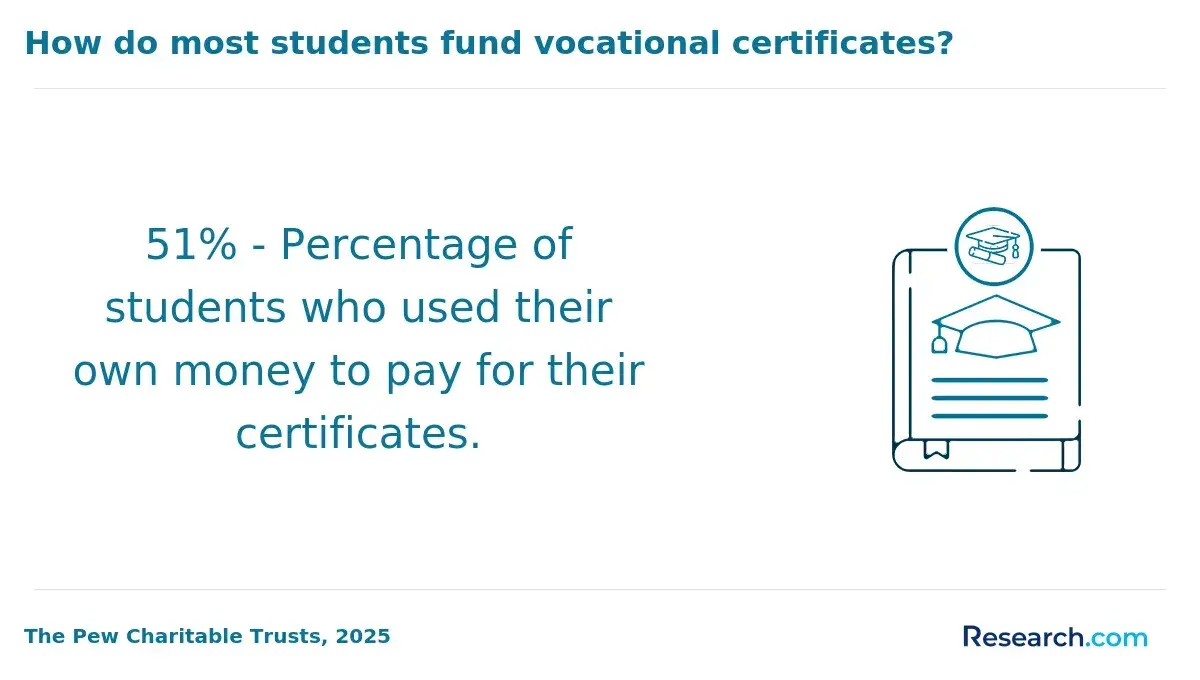
Students avoid excessive debt by setting a maximum out-of-pocket budget before applying and by choosing the shortest recognized route, not simply the shortest advertised program. Tuition is only one cost: testing, equipment, commuting, clinical requirements, background checks, software, and lost work time can change the real price.
Use these steps before signing an enrollment agreement.
- Identify the exact entry-level job title and collect several current local job postings.
- Write down each posting's education, license, certification, software, and experience requirements.
- Compare public-college, employer-funded, apprenticeship, union, workforce-agency, and nonprofit options before private-school financing.
- Ask for the full cost of attendance, refund policy, completion requirements, and all mandatory third-party fees in writing.
- Use grants, employer tuition assistance, savings, and payment plans before considering federal or private loans.
- Borrow only after confirming that the program is eligible for aid and that borrowing is necessary for your plan.
Common mistakes include financing a noncredit program as if it automatically transfers to college, choosing a school because it advertises job placement, and overlooking recurring certification renewal costs. Ask for definitions of "placement," the time frame used, and whether reported jobs are related to the training.
What accreditation and quality standards should microcredential programs meet?
Quality standards depend on the credential type. For a college-issued, credit-bearing certificate, verify that the institution is accredited by an agency recognized by the U.S. Department of Education or the Council for Higher Education Accreditation, and confirm whether credits apply to a named degree. For noncredit training, assess the provider's instructor expertise, curriculum, assessment method, employer partnerships, and evidence that the credential is recognized in the field.
Programs tied to regulated occupations need an additional check: approval by the relevant state board or specialized accreditor may be necessary for exam eligibility or licensure. Institutional accreditation alone may not satisfy a nursing, allied-health, cosmetology, trucking, or trade licensing requirement.
These red flags deserve extra scrutiny.
- Claims that completion guarantees employment, certification, licensing, or a specific salary.
- No written explanation of the credential awarded, skills assessed, or whether an external exam is included.
- Pressure to borrow immediately or reluctance to disclose all fees and refund terms.
- Vague statements about accreditation without naming the accreditor or applicable state approval.
How do online microcredentials differ from campus-based options in flexibility and support?
Online microcredentials can reduce commuting and scheduling costs and allow employed learners to study asynchronously. They work best for software, business, analytics, design, and knowledge-based skills that can be demonstrated through projects, simulations, or proctored assessments. Learners seeking flexible pacing can compare a self paced accredited online college option when academic credit and institutional support matter.
Campus-based or hybrid training is often better when equipment practice, instructor observation, clinical experience, shop safety, or networking is central. The most important question is not whether a program is online, but whether its delivery format gives you the required practice and support.
| Factor | Online option | Campus or hybrid option |
| Schedule | Often more flexible, especially asynchronous courses | Usually fixed meeting or lab times |
| Hands-on learning | Best for digital tools, theory, and simulations | Best for labs, clinicals, equipment, and supervised practice |
| Support | May include virtual tutoring and career services | Often offers direct access to facilities and instructors |
| Hidden costs | May require a computer, software, or remote proctoring | May require commuting, parking, uniforms, or materials |
Before enrolling online, confirm live-session requirements, technology specifications, accessibility support, assessment integrity, and whether internships or clinical placements are arranged or left to the learner.
What are typical admission requirements and timelines for microcredential programs?
Admission requirements range from almost none to highly regulated. A vendor-issued microcredential may require only account registration and payment. A college certificate may require an application, placement measures, transcripts, or prerequisite courses. Advanced professional certificates can require prior coursework, a degree, employment experience, or an existing certification.
Most short, self-paced programs allow rolling enrollment. Cohort-based college and clinical programs commonly follow term dates and may have earlier deadlines because seats, labs, or placements are limited. A practical timeline is to allow time for comparing providers, meeting prerequisites, applying for aid where available, and completing background or health requirements for clinical training.
Do not assume standardized tests, a minimum GPA, or transfer credit rules apply to every program. Ask the provider whether the credential is credit-bearing, whether prior learning can reduce required coursework, and whether earned credit has a defined transfer destination.
What curriculum and skills do leading microcredentials include for in-demand roles?
Leading microcredentials focus on competencies that can be assessed, shown in a portfolio, or applied at work. Effective programs state what learners will be able to do rather than merely listing topics. Employers increasingly use skills-based signals, but a badge is more credible when it reflects a meaningful assessment rather than simple attendance.
Look for curricula that combine technical practice with work-ready habits.
- Role-specific tools, such as spreadsheets, cloud platforms, design software, electronic records, or diagnostic equipment.
- Applied assignments that create a portfolio, lab record, case analysis, or supervised demonstration.
- Communication, documentation, teamwork, and problem-solving in realistic workplace scenarios.
- Ethics, privacy, safety, accessibility, or compliance content when the field requires it.
- Career translation support that helps learners describe verified skills accurately on résumés and in interviews.
Artificial intelligence has increased the value of foundational digital literacy and human review skills in many office and technology roles. Prefer programs that teach responsible use, verification, privacy, and task-specific application rather than treating an AI tool as a permanent substitute for core expertise.
How do microcredentials align with licensing or industry certification requirements?
A certificate documents completion of education or training. A certification is a separate professional credential awarded by a certifying body after a candidate meets its standards, which may include an examination, work experience, continuing education, or renewal. One program may prepare students for a certification exam, but completion does not necessarily confer the certification.
Licensure is different again: it is legal permission from a state authority to practice a regulated occupation. For licensed paths, verify all requirements directly with the appropriate state board before enrolling. These may include an approved program, clinical or supervised hours, background review, an exam, and continuing education.
Ask providers these questions before paying for exam preparation.
- Which exact exam, license, or certification does the curriculum prepare learners to pursue?
- Does completing the program meet the education eligibility rule, or are experience and other requirements still needed?
- Are exam fees, practice tests, retakes, and renewal costs included in the advertised price?
- Is the program approved in the state where the learner intends to work?
What criteria should students use to compare and select reputable microcredential providers?
Compare providers using evidence that connects learning to a specific next step. The best choice may be a low-cost community college, a trade apprenticeship, a professional association, a recognized technology vendor, or an employer partner - not necessarily the provider with the most advertising.
Use this evaluation framework to compare programs on the same terms.
| Comparison criterion | What strong evidence looks like | Why it matters |
| Job alignment | Curriculum matches recurring requirements in target job postings | Reduces the risk of paying for irrelevant skills |
| Recognition | Named employers, licensing boards, colleges, or certifying bodies accept it | Shows the credential has a usable signal |
| Total cost | Written estimate includes tuition, fees, exams, materials, and required equipment | Supports a realistic no- or low-debt budget |
| Assessment | Projects, exams, demonstrations, or supervised evaluation | Distinguishes verified competence from attendance |
| Progression | Clear path to certification, employment, academic credit, or a higher credential | Preserves future options |
If your long-term target eventually requires graduate education, do not buy disconnected short courses hoping they will substitute for a degree. Compare the prerequisite path and options such as the shortest masters degree only after confirming that a graduate credential is genuinely required for advancement.
A reputable provider welcomes questions about outcomes, costs, instructor qualifications, assessment, and limitations. Walk away when answers are vague, rushed, or inconsistent with the requirements for the role you want.
Other Things You Should Know About
Sometimes, but not automatically. Eligibility depends on the institution, program length, credit status, and federal aid rules. Many noncredit badges and vendor certificates are not eligible, so ask the provider's financial-aid office before relying on aid.
The lowest advertised price is not always the lowest total cost. Employer-sponsored training, apprenticeships, public community-college certificates, and recognized exam-preparation pathways can be affordable, but compare required fees, equipment, transportation, and exam costs.
It can be enough for skill-specific roles where employers accept it, but it does not replace a degree for occupations requiring a degree, professional license, or broad academic preparation. Check job postings and state requirements for your intended role.
They can range from a short course to several months, depending on the provider, prerequisites, pace, required projects, and clinical or lab components. Cohort-based and licensed-field programs may take longer than self-paced online options.
References
- Microcredentials in Higher Education: Why They're Reshaping Learning Paths https://moderncampus.com/blog/what-do-microcredentials-mean-for-the-modern-higher-education-institution.html
- Student Loan Debt Statistics [2026]: Average + Total Debt https://educationdata.org/student-loan-debt-statistics
- Microcredentials: Empowering Modern Learners & Employers https://evolllution.com/microcredentials-empowering-modern-learners-employers
- Microcredentialing and the role it will play in the future of work https://standtogether.org/stories/future-of-work/microcredentialing-and-the-role-it-will-play-in-the-future-of-work
- Types of Financial Aid https://www.hhloans.com/types-of-financial-aid/
- Types of Financial Aid - Edgecombe Community College https://edgecombe.edu/current-students/financial-aid/types-of-financial-aid/
- Student Financial Aid Models - Finance | Learn & Work Ecosystem Library https://learnworkecosystemlibrary.com/topics/student-financial-aid-models/
- Financial Aid provides financial resources to HSC students. https://www.unthealth.edu/financial-aid/financial-resources.html
- Alternatives to student loans [reduce higher education costs] https://financialcounseling.lssmn.org/blog/student-loan/alternatives-student-loans-reduce-higher-education-costs
- What is the typical debt load for graduates of four-year public universities - APLU https://www.aplu.org/our-work/4-policy-and-advocacy/publicuvalues/student-debt/