
2027 Best Certificate Programs for In-Demand Careers

Co-Founder and Chief Data Scientist
Choosing a certificate program is difficult when fast completion, affordable tuition, and real job access do not always align. Career certificates can provide focused, short-term training, but they are not the same as industry certifications or professional licenses.
The U.S. Bureau of Labor Statistics projects healthcare support occupations to grow faster than average through 2033, making targeted training especially relevant. This guide compares practical certificate paths, delivery formats, costs, credentials, and career limitations so you can choose training that fits your actual job goal.
Key Things You Should Know
- Certificate programs are educational programs; professional certifications are credentials awarded by a certifying body, usually after an exam or eligibility review.
- Healthcare, skilled trades, IT support, and legal support can lead to entry-level opportunities, but many roles also require state licensure, supervised clinical hours, an apprenticeship, or an employer-recognized certification.
- Compare total cost, required tools and exam fees, program accreditation, clinical or lab access, and local job postings before enrolling - not tuition or completion speed alone.
Top 10 Best Certificate Programs for In-Demand Careers
Popular Trade School Programs
Trade certificates emphasize hands-on skills for construction, repair, manufacturing, and transportation. Common options include HVAC/R, welding, electrical technology, plumbing, diesel technology, and commercial driver training. Many take several months to one year; apprenticeships may take longer but combine paid work with instruction.
Choose a credit-bearing community-college certificate if you may pursue an associate degree later. Choose an approved apprenticeship when the occupation requires documented work hours for licensing. Confirm that lab equipment, safety training, and local employer relationships match your intended specialty.
Healthcare Programs
Healthcare certificates may prepare learners for roles such as medical assistant, pharmacy technician, dental assistant, practical nursing, nursing assistant, medical billing specialist, or phlebotomy technician. Programs with patient care commonly require immunizations, background checks, CPR training, drug screening, and in-person clinical experiences.
A certificate may prepare graduates for a separate exam, but it does not itself confer certification or a license. Verify state-board approval for nursing and other regulated roles. Online coursework can work for theory, while labs and clinical placements generally must be completed in person.
Criminal Justice / Law Programs
Criminal justice and law-related certificates include paralegal studies, legal assisting, crime scene investigation, corrections, security management, and emergency management. A paralegal certificate can build legal research, writing, and e-discovery skills, but it does not authorize independent legal practice.
Security and law-enforcement roles often impose separate employer, state, physical-fitness, background, or academy requirements. These programs suit learners seeking support roles in law offices, courts, insurance, compliance, or public agencies. Ask whether the curriculum includes internships, software training, and local legal-employer connections.
Arts & Design Programs
Arts and design certificates commonly cover graphic design, UX/UI design, digital media, photography, animation, web design, fashion, or interior design fundamentals. A portfolio usually matters more to hiring managers than the certificate title alone. Look for structured critique, current software access, and projects that show research, accessibility, branding, or production skills.
Short programs can help career changers build samples quickly, while associate or bachelor's programs may be better for students needing broader foundations and internship access. Some fields, including interior design, have state-specific practice rules.
What are the most in-demand certificate fields and who are they best for?
The most in-demand field is not automatically the best choice. The right certificate matches the work you can perform, the credential employers request locally, and the amount of regulation attached to the role.
This comparison shows where a certificate is commonly useful and where learners should expect additional steps.
| Field | Best fit | Typical certificate value | Important limitation |
| Skilled trades | Hands-on learners who want field-based work | Builds technical and safety fundamentals | Licensing or apprenticeship hours may still be required |
| Healthcare support | People comfortable with patient service and regulated settings | May prepare for entry-level exams or clinical work | Clinical placement and state rules can control eligibility |
| IT support and data | Career changers with strong problem-solving skills | Builds job-ready software, networking, or analytics skills | Portfolios and vendor certifications may matter more |
| Legal support | Detail-oriented researchers and writers | Develops legal-document and research skills | Does not qualify a person to practice law |
Healthcare support and trade pathways can be strong choices for learners who want structured entry routes and can meet in-person requirements. Digital certificates can be a better fit for self-directed learners, but they require visible project work and continuing skill updates. People who prefer independent, lower-social-demand work may also explore career-fit options such as careers for introverts before selecting a program.
How do online and campus-based certificate programs compare for flexibility and outcomes?
Online certificates are often best for lecture-based subjects, working adults, and learners who need asynchronous scheduling. Campus, hybrid, and employer-site programs are usually stronger when competency must be observed in labs, shops, studios, simulations, or clinical settings.
The format should follow the occupation's training needs rather than convenience alone.
| Factor | Online | Campus or hybrid |
| Schedule | Often flexible and asynchronous | Usually fixed meeting, lab, or clinical times |
| Hands-on practice | Limited unless local placement is arranged | Direct access to equipment and instructors |
| Networking | May require proactive outreach | Often includes local peers and employer connections |
| Best use | IT, business, coding, billing, design theory | Trades, nursing, dental, laboratory, and clinical training |
Do not assume an online program qualifies you for a regulated occupation in your state. Ask where labs occur, who secures clinical placements, whether attendance is required, and whether the credential is credit-bearing. If a certificate is only a first step toward college, compare it with online associate degrees, which may offer broader coursework and more transferable credit.
How can you verify accreditation and program quality for certificate programs?
Program quality depends on the provider, field, and credential type. Institutional accreditation matters most for credit-bearing college certificates and federal student-aid eligibility; programmatic approval can be more important for regulated healthcare or technical programs. Industry providers may not be academically accredited, but their curriculum may still be recognized by employers or a certification body.
Use these checks before submitting an enrollment deposit.
- Confirm the school's institutional accreditation through the accreditor and the U.S. Department of Education database when academic credit or aid is relevant.
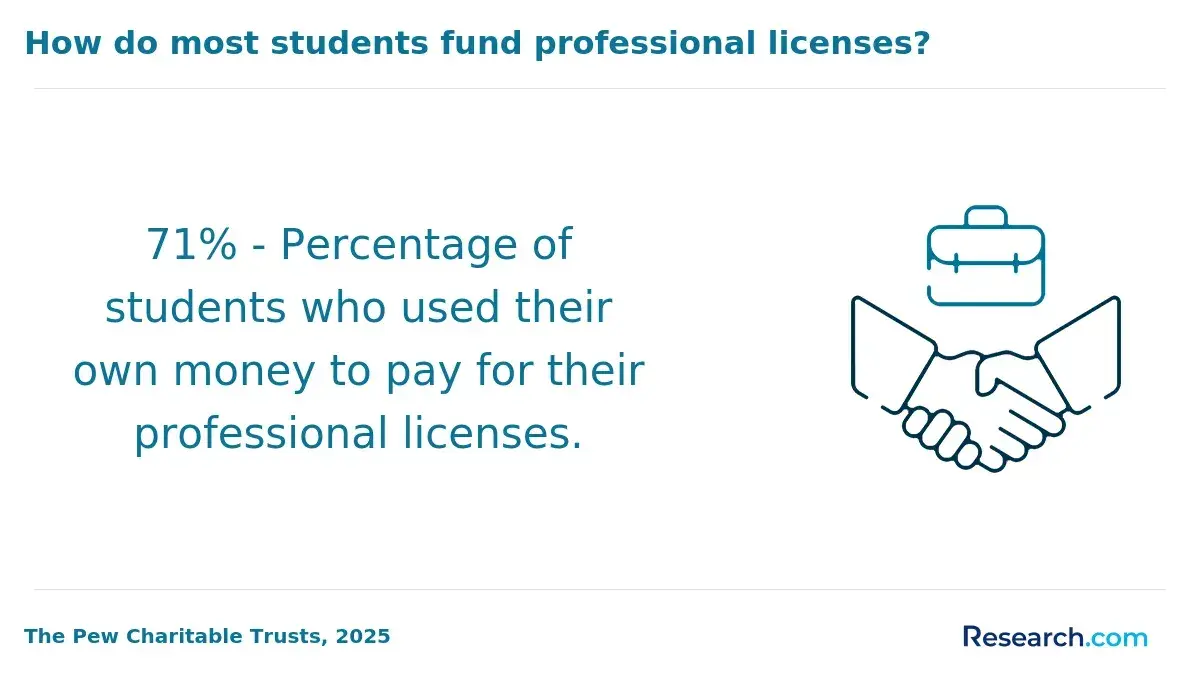
- Check the appropriate state licensing board or regulatory agency for required program approval in nursing, cosmetology, driving, security, or other regulated fields.
- Ask for the program's completion, exam-pass, placement, and licensure outcomes, including the reporting period and how outcomes are calculated.
- Review the curriculum, instructor qualifications, equipment, clinical agreements, and total charges in writing.
- Search local job listings to verify that employers recognize the certificate or request a different credential.
Red flags include vague claims about "accreditation," guaranteed employment language, pressure to sign immediately, missing refund policies, and no explanation of licensing eligibility. Learners considering a later degree should also verify whether credits transfer; an easiest online master's degree is only relevant after earning the undergraduate education required for graduate admission.
What are typical admission requirements and prerequisites for career-focused certificate programs?
Requirements vary sharply by provider. A short noncredit workforce course may require only age verification and payment, while a college certificate can require an application, high school completion or equivalent, placement testing, and prerequisite coursework. Competitive or clinical programs may add immunization records, background checks, drug screening, physical-capacity documentation, CPR certification, and health insurance.
Before applying, identify whether the program is entry-level, postsecondary, post-baccalaureate, or intended for already licensed professionals. Do not spend time preparing transcripts or standardized-test scores unless the provider specifically requires them. For technical certificates, ask whether prior math, computer, or shop experience is expected. For graduate certificates, confirm the required degree, professional background, and any prerequisite courses.
A practical admissions checklist should include the published entrance requirements, deadline, estimated out-of-pocket costs, required attendance times, technology needs, and the consequences of failing a background or clinical-placement review after enrollment.
How long do certificate programs take, and what do they cost by field?
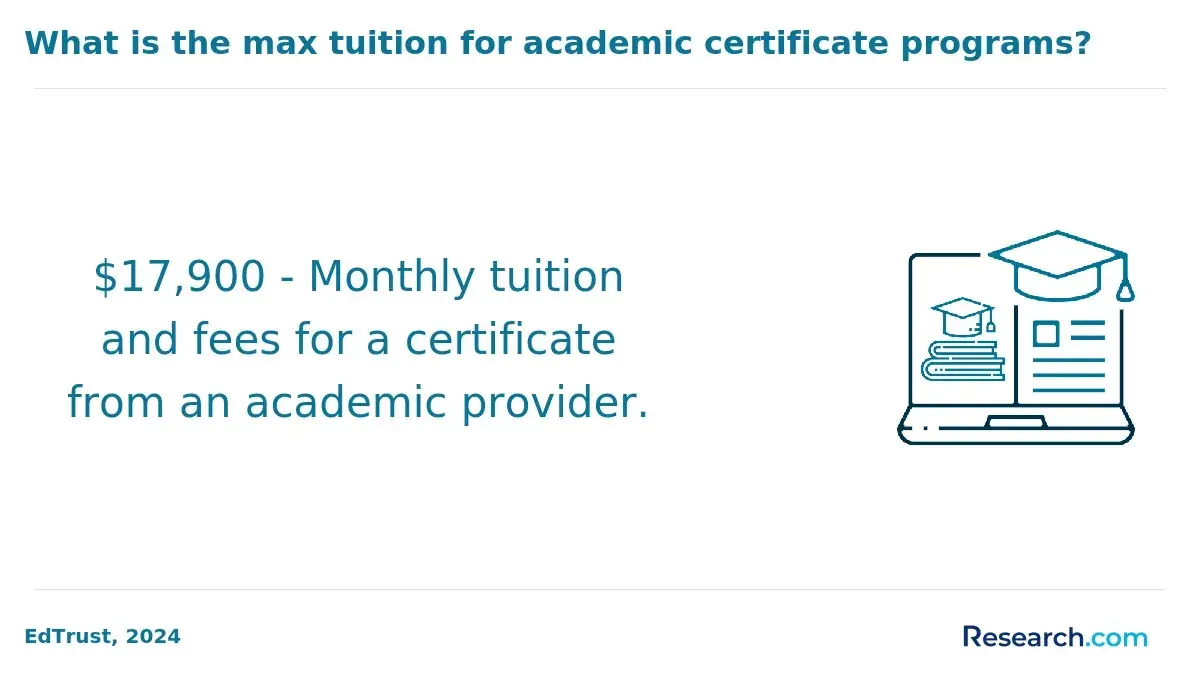
Completion time and cost depend more on field requirements than on the word "certificate." Noncredit digital programs may be completed in weeks, while credit-bearing, clinical, and trade certificates commonly run from one semester to about a year. Apprenticeships and licensure pathways can extend well beyond classroom completion.
The ranges below are planning estimates rather than price quotes; tuition, residency, equipment, examination fees, and clinical requirements can materially change the total.
| Program type | Typical duration | Common cost drivers | Why it may take longer |
| IT or business certificate | Weeks to 12 months | Tuition, software, certification exams | Part-time pacing and portfolio work |
| Trade certificate | 6 to 18 months | Tools, protective equipment, lab fees, licensing exams | Required lab hours and apprenticeship progression |
| Healthcare certificate | 4 to 18 months | Clinical fees, uniforms, immunizations, exams | Clinical rotations and state approval rules |
| Legal or design certificate | Several months to 1 year | Tuition, software, portfolio materials | Internships, projects, and part-time study |
Ask for a written net-price estimate that includes every required item, not just tuition. Federal aid is generally tied to eligible programs at participating institutions; noncredit programs may instead rely on employer tuition assistance, workforce grants, payment plans, or private financing. For learners who already hold a bachelor's degree and need advanced specialization, a 6-month master's degree may be a different - but usually more academically intensive - option.
What core courses and skills do top certificate programs usually include?
Strong certificate curricula teach a narrow set of competencies that employers can observe. The most useful programs balance technical instruction with applied work, documentation, communication, safety, and career preparation rather than relying solely on recorded lectures or multiple-choice assessments.
Core coursework often includes the following elements, adjusted for the occupation.
- Technical foundations, terminology, tools, equipment, software, or procedures used in the field.
- Applied practice through labs, simulations, client projects, clinical experiences, or supervised fieldwork.
- Safety, ethics, privacy, compliance, documentation, and quality-control standards.
- Problem solving, communication, teamwork, customer service, and professional conduct.
- Career preparation such as portfolio development, interview practice, résumé support, or certification-exam preparation.
For AI-affected fields such as design, business operations, and IT, look for instruction on using automation responsibly, checking output quality, protecting confidential information, and documenting human judgment. A program that teaches only a single tool may become outdated quickly; transferable workflow and problem-solving skills provide more durable value.
What jobs can you get with a certificate and how do career paths progress?
A certificate can help qualify you for entry-level work, but outcomes depend on employer requirements, work history, location, licensing, and the quality of your practical experience. The best programs clearly state which jobs are realistic immediately after completion and which require additional education or supervised hours.
This progression model helps distinguish an entry credential from a complete career pathway.
| Starting point | Potential entry role | Common next step |
| HVAC or electrical certificate | Helper, installer trainee, technician trainee | Apprenticeship, field hours, license progression |
| Medical assistant certificate | Medical assistant or clinical support role | National certification, specialty experience, further nursing education |
| IT support certificate | Help desk technician or desktop support assistant | Vendor certification, networking or cybersecurity specialization |
| Paralegal certificate | Legal assistant or paralegal support role | Practice-area experience and advanced legal technology skills |
| Design certificate | Junior production or design-support role | Portfolio growth, freelance projects, advanced specialization |
Before enrolling, collect 10 local job postings for your target title and note the repeated requirements. If employers consistently require an associate or bachelor's degree, a standalone certificate may be better used as a skills supplement than as your sole entry route.
What salary ranges and earning potential are realistic with a career certificate?
Occupational wage data describes workers in a job category, not what every certificate holder earns. Pay varies by state, industry, shift, experience, union coverage, commission structure, and whether a role requires a license or degree beyond the certificate.
The latest U.S. Bureau of Labor Statistics occupational data available for 2024 illustrates why readers should compare roles rather than assume one credential produces one income level.
| Occupation | 2024 U.S. median annual wage | Certificate-only caution |
| Medical assistants | $44,200 | Employers may prefer certification; duties vary by state and practice. |
| HVACR mechanics and installers | $59,810 | Licensing and apprenticeships can be required locally. |
| Paralegals and legal assistants | $61,010 | Some employers prefer an associate or bachelor's degree plus paralegal training. |
| Graphic designers | $61,300 | Employers commonly assess portfolios, experience, and software skill. |
Use these figures as occupation-level benchmarks, not promises. A better ROI calculation compares your full training cost, lost work time, expected entry-level openings, required follow-on credentials, and the likelihood that the program improves your candidacy for a specific local role.
What licensing or professional certifications might be required after completing a certificate?
Completing a certificate and obtaining a license or professional certification are separate events. A school may provide education that prepares you for an exam, but the licensing board or certification organization decides whether you meet its eligibility rules. Requirements can change by state and specialty.
Common examples include state licensing for electricians, plumbers, practical nurses, cosmetologists, and some security roles; national or employer-preferred certifications for medical assistants, pharmacy technicians, IT professionals, and HVAC technicians; and commercial driver licensing for many driving jobs. Healthcare learners should confirm that their program's approval, clinical hours, and curriculum meet the rules of the state where they intend to work.
Ask the provider for the exact exam or license its program is designed to support, the first-time pass rate where available, all additional fees, and whether graduates have faced eligibility barriers. Never rely on a verbal assurance that a certificate "meets requirements."
Other Things You Should Know About
Prerequisites vary by program, but in 2027, many in-demand certificate programs require a high school diploma or GED. Specific fields may require prior coursework or professional experience, such as computer science courses for IT certificates or clinical hours for healthcare fields.
A certificate is earned by completing an educational program. A certification is awarded by a professional organization after meeting standards that may include an exam, work experience, or continuing education.
Possibly, especially in fields such as IT support, business operations, bookkeeping, or digital design. For clinical healthcare and hands-on trades, confirm how the program provides required labs, supervised practice, and local placement support.
Employers may accept certificates from reputable schools, community colleges, unions, apprenticeships, and recognized industry providers. Review current job postings in your area to see whether employers request the specific certificate, a professional certification, experience, or a degree.
References
- Certificate programs continue to lead enrollment growth https://www.ccdaily.com/2026/06/certificate-programs-continue-to-lead-enrollment-growth/
- Certifications https://www.hfma.org/education-events/certifications/
- Online Certificate Programs | Certifications Programs https://www.uscareerinstitute.edu/online-certificate-programs
- How Do Certifications Influence Salary Increases? https://certiprof.com/blogs/news/how-do-certifications-influence-salary-increases
- CourseCareers https://coursecareers.com/blog-posts/college-vs-online-career-training
- The Benefits of Certificate Programs in Higher Education https://moderncampus.com/blog/benefits-of-certificate-programs.html
- What Enrollment Numbers Can (and Cannot) Tell Us About Access to Postsecondary Training Programs https://www.atlantafed.org/research-and-data/publications/workforce-currents/2026/04/08/02-what-enrollment-numbers-can-and-cannot-tell-us-about-access-to-postsecondary-training-programs
- How does a college degree improve graduates' employment and earnings potential? - APLU https://www.aplu.org/our-work/publicuvalues/employment-earnings/
- 7 in-demand certifications in 2025 | edX https://www.edx.org/resources/in-demand-professional-certifications
- 25 Continuing Education Statistics and Trends for 2026 https://www.ecarebehavioralinstitute.com/blog/continuing-education-statistics/


