2027 Best Online Career Training Programs With No GPA Requirement

Co-Founder and Chief Data Scientist
A low GPA should not prevent you from building job-ready skills, but "no GPA requirement" does not mean every online program has no entry rules. Many career-training providers evaluate age, identity, prior education, placement testing, or prerequisite courses instead.
The U.S. Bureau of Labor Statistics projects medical assistant employment to grow 12% from 2024 to 2034, illustrating why short, career-focused training remains appealing. This guide helps you compare legitimate online options, identify hands-on requirements, estimate total costs, and avoid programs that do not meet your career or licensing goal.
Key Things You Should Know
- Online career training programs may not request a minimum GPA, but healthcare, college-credit, and licensure-track programs can still require a high school diploma or equivalent, background check, immunizations, placement assessment, or prerequisite coursework.
- Choose the credential for the job: a school-issued certificate shows completed training, while an industry certification is a separate credential usually earned through an exam or experience requirements.
- Career demand varies widely: BLS projects 12% growth for medical assistants and 9% growth for electricians from 2024 to 2034, while some roles require supervised clinical or field experience that cannot be completed fully online.
Top 10 Best Online Career Training Programs With No GPA Requirement
Popular Trade School Programs
Online trade training commonly covers HVAC fundamentals, electrical theory, welding safety, construction estimating, plumbing concepts, automotive service, and industrial maintenance. Programs are usually nondegree certificates, though community colleges may offer credit-bearing certificates or associate degrees.
No-GPA providers often require only adult eligibility and a diploma or equivalent, but employers and licensing boards may require documented supervised hours. Online study works best for theory, codes, diagnostics, and safety; welding, electrical labs, and refrigerant work require in-person practice. Choose a hybrid program or apprenticeship when your target trade has mandatory field-hour requirements.
Healthcare Programs
Common online or hybrid options include medical billing and coding, pharmacy technician, medical assistant, dental office administration, health information technology, and patient care certificates. Billing and coding can often be studied online, while medical assisting, phlebotomy, and pharmacy training may require externships, labs, drug screening, and immunizations.
Admissions may not use GPA, but clinical partners can impose additional requirements. Confirm whether the curriculum prepares you for a specific certification examination, such as CPC or CPhT, rather than assuming a school certificate alone provides professional certification or state eligibility.
Criminal Justice / Law Programs
Online legal and public-safety training may include paralegal studies, legal office administration, criminal justice certificates, private security training, and court reporting preparation. An associate degree can provide broader general education and may be more useful for later bachelor's transfer; a short certificate is better for focused office skills.
Paralegal employers often value substantive legal coursework, writing ability, and local-law familiarity. Police, corrections, private-investigation, and security roles can have state-specific academy, background, age, fitness, or licensing rules. Verify those rules before enrolling because online coursework rarely replaces mandated field training.
Arts & Design Programs
Digital design, graphic design, UX fundamentals, photography, video editing, web design, and interior design support are common online options. These programs may award a noncredit career certificate, a professional certificate, or a credit-bearing college certificate; the distinction affects transferability and aid eligibility.
Admissions commonly emphasize basic computer access rather than GPA. For portfolio-driven work, completed projects, software fluency, feedback quality, and an employer-ready portfolio often matter more than the credential title. Interior design and architecture-related work can involve state rules or degree expectations, so confirm the requirements for the role you want.
What are online career training programs with no GPA requirement and who are they for?
Online career training programs with no GPA requirement are short, job-focused learning options that do not set a minimum grade-point average as an admission screen. They may be offered by community colleges, vocational schools, universities, employers, professional associations, or private training companies.
The outcome can be a school certificate, diploma, noncredit completion credential, or, in some cases, college credit. It is not automatically an industry certification.
These programs can suit adults returning to education, career changers, people whose high school grades do not reflect their current readiness, and workers who need targeted skills quickly. They are less suitable when the target occupation requires a bachelor's degree, accredited degree program, state license, extensive clinical training, or an employer-sponsored apprenticeship.
The key distinction is between admissions flexibility and career eligibility. A school may admit students without reviewing GPA while a clinical site, licensing board, or certification organization still requires prerequisites, identity verification, background clearance, or supervised experience. Read both the school's enrollment terms and the rules governing the job you want.
How do admission requirements work for online career training programs without GPA criteria?
"No GPA requirement" can mean several different things. A private career school may use open enrollment; a college may admit students to continuing education without GPA review but require placement before credit coursework; and an online platform may simply allow anyone to purchase a course. None of these models guarantees admission to an externship, advanced course, or licensed occupation.
This comparison shows what applicants should expect from common provider models. Requirements vary by institution and program, so use it to frame questions rather than as a substitute for the published admissions policy:
| Provider model | Typical GPA approach | Common requirements | Best fit |
| Private career school | Often no minimum GPA | Age, identity, diploma or equivalent, payment plan | Fast, focused occupational training |
| Community college certificate | Often open admission, but program rules may differ | Application, placement, prerequisites, residency documentation | Credit-bearing and potentially stackable study |
| University continuing education | May not review GPA for nondegree study | Course prerequisites and technology access | Professional upskilling |
| Online course platform | No formal admission review | Payment and basic technology access | Exploring a skill before a larger investment |
Ask admissions whether the advertised program itself has no GPA threshold, whether a separate clinical or practicum placement has criteria, and whether failure to meet placement rules affects completion. If you eventually want a degree, compare the program with online degree programs for working adults that may offer more formal academic progression and student support.
How can you verify accreditation and program quality for online career training options?
Quality review should match the credential and occupation. Institutional accreditation matters most for credit-bearing college programs, federal student aid eligibility, and transfer planning. Programmatic approval may matter more for healthcare, while a state board's approval can be decisive for regulated occupations.
Private noncredit providers may not hold institutional accreditation, so evaluate their curriculum, instructor qualifications, employer recognition, refund policy, and outcomes disclosures carefully.
Use these steps before paying a deposit:
- Identify the exact credential awarded and whether it is college credit, a school certificate, or preparation for an outside certification exam.
- Check the institution's accreditation status through the U.S. Department of Education or CHEA databases when the program is credit-bearing or aid-dependent.
- Check the relevant state licensing board, certifying body, or employer postings to confirm that the curriculum meets the role's actual requirements.
- Request written details on labs, externships, equipment, instructor access, completion policies, and every fee not included in tuition.
- Confirm whether credits transfer or stack into an associate or bachelor's degree; do not rely on verbal assurances.
Red flags include claims of guaranteed employment, vague statements that a program is "accredited" without naming the accreditor, pressure to enroll before receiving a catalog, and promises that entirely online training qualifies students for hands-on licensed work. For a broader comparison of institution types, review best online universities and then verify the specific program, not just the school name.
What are the typical program lengths, formats, and schedules for online career training?
Program length depends on the credential, prior knowledge, and required fieldwork. Self-paced noncredit courses can take weeks or months, while college certificates often run one or two terms and associate degrees generally require about two years of full-time study. Externships, clinical rotations, apprenticeships, and certification-exam preparation can extend the calendar beyond the advertised online class length.
The format matters because flexibility has limits. This comparison helps distinguish coursework that can genuinely be completed remotely from training that must include scheduled in-person work:
| Format | Typical schedule | Usually works well for | Main trade-off |
| Self-paced online | Start anytime; deadline-based | Coding theory, software, office skills | Less live support and weaker routine |
| Instructor-led online | Weekly deadlines or live sessions | Credit certificates and structured career courses | Less scheduling freedom |
| Hybrid | Online theory plus scheduled labs | Trades and clinical skill development | Travel and fixed attendance requirements |
| Online coursework plus externship | Remote classes followed by placement hours | Medical assisting and some technician paths | Placement availability may control completion timing |
Working learners should calculate study time, commute time for required labs, and the possibility of daytime clinical shifts before enrolling. A short online course may be a sensible first step, while people needing a degree pathway may prefer low cost masters degree online options only after confirming that a graduate degree is actually required for their intended advancement.
What do students learn in online career training programs and how is coursework structured?
Career training usually combines occupational knowledge, practical workflows, communication, and job-search preparation. A medical billing course may teach coding systems, claims workflows, privacy rules, and practice cases.
A design program may teach software, design principles, critiques, and portfolio projects. Trade curricula commonly cover safety, tools, troubleshooting, blueprints, and applicable codes before any hands-on component.
Coursework is often organized into short modules with recorded lessons, readings, simulations, quizzes, assignments, and instructor feedback. Stronger programs state how competence is assessed: graded projects, proctored exams, skill demonstrations, clinical evaluations, or employer-reviewed portfolios.
For certification preparation, confirm that the program maps its content to the current exam outline and gives clear information about practice tests and the separate exam fee.
Artificial intelligence is changing entry-level workflows in design, administration, coding, and customer support. Look for training that teaches responsible use of current tools, verification of outputs, data privacy, and core human skills rather than presenting software automation as a replacement for foundational knowledge.
How much do online career training programs cost and what financial aid is available?
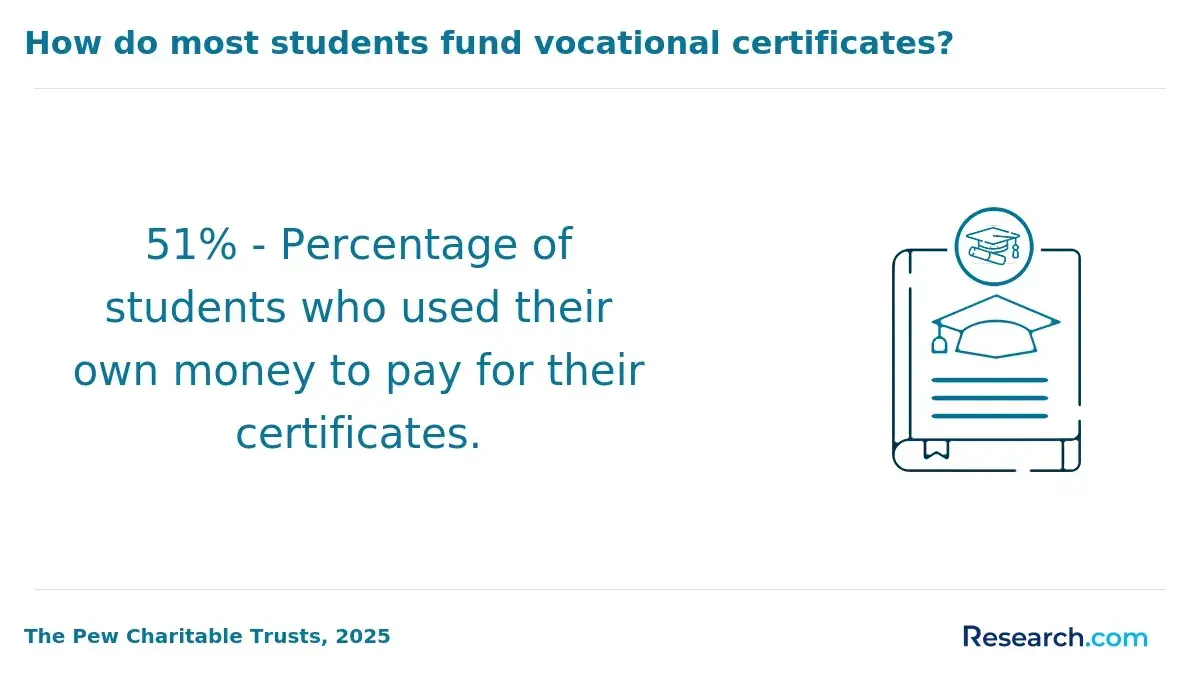
Costs range from low-cost online courses to college tuition and substantial clinical or lab expenses. The posted tuition is only one part of the decision. Books, software, tools, uniforms, examination fees, background checks, immunizations, transportation, and required retakes can materially change the total cost, especially in healthcare and trades.
Compare these cost categories in writing before you enroll:
- Tuition and whether the quoted price covers the entire program or each course separately.
- Registration, technology, lab, proctoring, and graduation fees.
- Required tools, software subscriptions, textbooks, uniforms, and safety equipment.
- Externship, clinical, licensing, and industry certification examination costs.
- Lost work time, local travel, and childcare for in-person requirements.
Federal aid is generally available only for eligible programs at eligible institutions; many short noncredit programs do not qualify. Depending on the provider, alternatives may include employer tuition assistance, Workforce Innovation and Opportunity Act funding through a local workforce agency, veterans' education benefits, scholarships, installment plans, or state workforce grants.
Borrow only after comparing the program's total cost with realistic local entry-level opportunities. Learners planning a long-term academic route can also compare cheap PhD programs online, though a doctorate is rarely necessary for entry-level career training goals.
What entry-level and advanced careers can these programs prepare you for?
Online career training can prepare learners for support and technician roles, but eligibility depends on the employer and the occupation's regulations. A certificate may help demonstrate focused skills; it does not replace a required degree, license, apprenticeship, portfolio, or professional certification.
The table separates accessible starting points from roles that normally require further experience or education. It helps prevent spending on a program that does not match the level of job you intend to pursue:
| Training area | Possible entry-level direction | Potential next step | Important limitation |
| HVAC or electrical fundamentals | Helper, installer trainee, maintenance trainee | Apprenticeship, journeyman pathway, specialty certification | State licensing and supervised hours may apply |
| Medical billing and coding | Billing specialist, coding support, patient accounts representative | Specialty coding work or health information roles | Employers may prefer an external certification and experience |
| Medical assisting | Medical assistant where permitted | Specialty clinical responsibilities or nursing pathway | Externship and employer requirements vary |
| Paralegal studies | Legal assistant, legal administrative support | Paralegal work with experience and deeper coursework | Program credentials are not law licenses |
| Digital design | Production artist, junior content creator, design assistant | Designer, UX-focused role, freelance specialization | Portfolio quality is central to hiring |
For most people, the best first role is one that offers supervised practice and a credible next credential. Review local job postings before enrolling: note required software, licenses, shift expectations, and experience levels, then choose a program that demonstrably teaches those requirements.
What salaries and job outlook can graduates of online career training programs expect?
Salary and outlook data describe occupations, not what every certificate holder will earn. Pay depends on location, experience, schedule, union status, employer, education, licensure, and specialization.
The figures below use U.S. Bureau of Labor Statistics national estimates and projections, making them useful for broad comparisons but not a local job offer forecast.
These examples show why program-to-career alignment matters more than an accelerated timeline alone:
| Occupation | Median annual wage, May 2024 | Projected growth, 2024-2034 | Training context |
| Electricians | $62,350 | 9% | Usually requires apprenticeship and licensure; online study alone is insufficient |
| Heating, air conditioning, and refrigeration mechanics and installers | $59,810 | 8% | Certificate training can support entry, with hands-on experience needed |
| Medical assistants | $44,200 | 12% | Programs commonly include clinical training; employer preferences vary |
| Paralegals and legal assistants | $61,010 | 0% | Employers may prefer an associate or bachelor's degree plus legal coursework |
| Graphic designers | $61,300 | 2% | Portfolio, software skills, and experience strongly affect opportunities |
Use wage data alongside local listings, not as a promise. A high median wage may reflect experienced workers, required licenses, or longer training pathways. Compare entry-level postings in your area and identify whether employers request a certificate, a certification, an associate degree, or prior experience.
Are licenses, certifications, or industry exams required after completing these programs?
Some programs prepare students for an outside examination or license; others simply teach job-related skills. A completion certificate is issued by the school. A professional certification is issued by a certifying organization after a candidate meets its rules, which can include an exam, education, work experience, or continuing education. A license is permission from a government authority to practice a regulated occupation.
Licensing is especially important in electrical work, plumbing, HVAC refrigerant handling, nursing-related roles, cosmetology, and some security occupations. Requirements are state-specific and may include approved education, supervised hours, examinations, fingerprints, or age requirements.
For example, HVAC work involving regulated refrigerants may require EPA Section 608 certification, while electrical licensing pathways typically depend on state or local rules and documented field experience.
Before enrolling, get written confirmation of whether the program is approved or accepted for your target examination or license. Ask whether the exam fee is included, whether clinical or field hours are arranged, and whether the program has geographic restrictions. If the answer is unclear, contact the licensing board or certification organization directly before committing funds.
Other Things You Should Know About
Often, yes. Many nondegree and open-enrollment programs do not set a GPA minimum. However, you may still need a diploma or equivalent, placement testing, prerequisites, identity verification, or clinical clearance depending on the program.
They can be legitimate, but GPA-free admission is not proof of quality. Verify the provider, credential type, total cost, refund policy, required hands-on training, and any accreditation, licensing, or certification alignment relevant to your goal.
Usually not through online coursework alone. Many licensed and patient-facing occupations require in-person labs, supervised clinical practice, apprenticeships, documented work hours, examinations, or state-board approval.
Choose a certificate when you need focused, short-term skills and the target employer accepts it. Choose an associate degree when you need broader coursework, want transferable credit, or expect a degree to improve access to the jobs or advancement path you want.
References
- Future Ready - Short-Term Programs at No Cost for Eligible Chicagoans - City Colleges of Chicago: Apply Now https://pages.ccc.edu/futureready/
- Colleges Without High School Diploma or GED 2025 https://www.educationconnection.com/resources/colleges-that-dont-require-high-school-diploma-or-ged/
- Best Online Degrees for Working Adults in 2026 https://www.straighterline.com/blog/degreecompletion-best-online-degrees-for-working-adults-in-2026
- Financial Aid For Online College Students | LearnHowToBecome.org https://www.learnhowtobecome.org/career-resource-center/financial-aid-for-online-colleges/
- Can I Enroll in a Career Training Program without a High School Diploma? - Central Coast College https://centralcoastcollege.edu/2021/07/15/can-i-enroll-in-a-career-training-program-without-a-high-school-diploma/
- CourseCareers https://coursecareers.com/blog-posts/college-vs-online-career-training
- Delivering on Student Expectations with Career Pathways https://moderncampus.com/blog/delivering-on-student-expectations-with-career-pathways
- Positive Outcomes from Short Term Training Programs https://www.womenintrucking.org/blog/positive-outcomes-from-short-term-training-programs
- Online Degrees With No Application Fee - Start Faster, Spend Less https://www.collegetransitions.com/blog/online-degrees-no-application-fee/
- Short-term programs bring lasting benefits - when student centered https://www.luminafoundation.org/focus-magazine/spring-2023/short-term-programs-bring-long-lasting-benefits-when-designed-with-students-in-mind/