2027 Best Non-Degree Programs With Career Coaching

Co-Founder and Chief Data Scientist
Choosing short-term training is difficult when programs promise job help but provide very different credentials, employer connections, and costs. The U.S. Bureau of Labor Statistics projects healthcare support occupations to grow faster than average from 2023 to 2033, while employers increasingly value demonstrable skills alongside formal education.
This guide helps career changers, recent graduates, and working adults compare non-degree programs with career coaching, verify quality, understand likely outcomes, and choose training that matches a specific job target rather than a vague promise of placement.
Key Things You Should Know
- The best option is the program tied to a specific entry-level role, required credential, and local employer demand - not simply the shortest program with "career coaching" in its marketing.
- Completion can range from a few weeks for a noncredit workforce course to about 12 months for many career certificates; healthcare and skilled-trade paths may also require clinical hours, an apprenticeship, an exam, or state approval.
- Career coaching is valuable when it includes documented services such as resume reviews, interview practice, employer introductions, and outcome reporting; it does not guarantee a job, license, or occupational salary.
Top 10 Best Non-Degree Programs With Career Coaching
Popular Trade School Programs
Trade-focused non-degree options include welding certificates, HVAC technician certificates, electrical pre-apprenticeship programs, plumbing training, commercial driver training, and industrial maintenance certificates. They suit learners who want hands-on work and a direct route into apprenticeships or entry-level technician roles. Programs may prepare students for separate industry exams, such as EPA Section 608 for refrigerant work, but completion alone does not create a license. Prioritize shop time, current equipment, safety instruction, local apprenticeship relationships, and coaching that helps with applications, work-readiness, and employer interviews.
Healthcare Programs
Common options include medical assisting, pharmacy technician, phlebotomy, patient care technician, dental assisting, medical billing and coding, and practical nursing certificates. These programs can be a practical fit for people seeking patient-facing or administrative healthcare entry points, but rules vary sharply by occupation and state. Clinical placement, background checks, immunizations, CPR training, and certification-exam eligibility may matter more than general career coaching. Ask whether the program meets your state's requirements and whether coaching continues through clinical placement and the first job search.
Criminal Justice / Law Programs
Paralegal studies certificates, legal secretary certificates, court reporting training, security officer training, and corrections-related career certificates are common non-degree paths. A paralegal certificate can build legal research, writing, and document-management skills, but it does not make someone an attorney or authorize independent legal practice. Security work may require state registration, training, or a background review. Choose programs that teach the software and procedures used locally, explain any legal limitations clearly, and offer coaching tailored to law offices, courts, agencies, or security employers.
Arts & Design Programs
Graphic design, UX/UI design, digital media, photography, video production, web design, and interior design certificates can help learners build job-ready portfolios. They are strongest when coursework produces reviewed projects, current software skills, and a portfolio aligned with the roles employers actually post. Coaching should include portfolio critiques, freelance-business guidance, networking practice, and interview preparation. A certificate may improve readiness for junior creative roles, but hiring is highly portfolio-driven and competitive. Learners seeking regulated interior-design credentials should check state requirements before enrolling.
What are non-degree programs with career coaching and who are they best for?
A non-degree program is structured training that does not award an associate, bachelor's, or graduate degree. It may award a college certificate, continuing-education certificate, completion credential, microcredential, bootcamp credential, or industry training record. Career coaching is a support service layered onto that training: it can include career planning, resumes, mock interviews, job-search strategy, portfolio feedback, networking, and employer referrals.
These programs are best for people with a clear target role who need practical skills quickly: a prospective medical assistant, HVAC trainee, junior designer, legal assistant, or IT support worker, for example. They can also fit workers who need a focused skill upgrade without committing to a multi-year degree. A credit-bearing certificate from a college may be stackable toward an associate degree; a noncredit program usually is not. Learners considering a longer academic route should also compare best associates degrees to get before assuming a short program is the better value.
The following comparison clarifies why the credential label matters. It helps prevent the common mistake of assuming that every short program has the same recognition or transfer value.
| Program type | Typical provider | What the learner receives | Best use |
| Credit-bearing certificate | Community college or university | Academic certificate and college credits | Entry training with possible degree pathway |
| Noncredit workforce program | College continuing education or training provider | Completion certificate | Fast, skills-focused occupational training |
| Professional certificate | University, company, or training platform | Provider-issued educational credential | Skill building and portfolio development |
| Professional certification | Independent certifying organization | Certification after meeting its standards | Meeting employer, industry, or regulatory expectations |
Career coaching cannot substitute for mandatory licensure, clinical experience, supervised work hours, or an industry certification examination. If the target occupation legally requires one of those steps, select training designed to prepare for it and verify requirements with the relevant state board or certifying body.
How do online and campus-based career coaching programs compare for flexibility and support?
Online programs are often the better fit for working adults who need asynchronous coursework, lower commuting costs, and access to a specialized curriculum. Campus-based programs are often stronger where learning requires labs, tools, clinical practice, studio critiques, or immediate access to instructors and local employers. Hybrid delivery can combine online theory with scheduled hands-on sessions.
The most important comparison is not whether classes are online; it is whether the program can deliver the practice and coaching your target job requires. Review these differences before enrolling.
| Decision factor | Online | Campus-based or hybrid |
| Schedule control | Often strongest for self-paced or evening learners | Usually fixed meeting times and locations |
| Hands-on training | May require local externships or separate arrangements | More direct access to labs, equipment, and supervised practice |
| Career coaching | Video appointments, virtual events, digital portfolio reviews | In-person advising, employer visits, and local career fairs may be easier |
| Best fit | Administrative, digital, and theory-heavy roles | Clinical, trade, and equipment-intensive roles |
Ask whether coaching is one appointment or an ongoing service, whether appointments are available outside business hours, and whether online students receive the same employer introductions as campus students. For clinical and trade training, confirm exactly who arranges placements, what geographic limits apply, and whether a placement is guaranteed or merely assisted.
A frequent red flag is an online program that advertises preparation for a licensed occupation but cannot identify how required practical hours will be completed. Do not assume a virtual course is approved for your state simply because it accepts applicants nationwide.
How can you verify accreditation and quality for non-degree programs with career coaching?
Quality checks depend on the provider and the occupation. Institutional accreditation matters most when enrolling through a college, using federal aid, seeking transferable credit, or pursuing a credential that requires an accredited school. Programmatic approval can be more important in healthcare and other regulated fields. For a private bootcamp or workforce provider, examine curriculum, instructors, refund terms, employer relevance, and independently verifiable outcomes rather than assuming institutional accreditation applies.
Use this sequence before paying a deposit. It separates evidence of quality from marketing language.
- Identify the exact job title, then check whether your state or an employer requires a license, registration, accredited education, clinical hours, or a certification exam.
- Confirm the school's institutional accreditation through the accreditor and verify any program-specific approval with the relevant state agency or professional body.
- Request the full curriculum, required software or tools, instructor qualifications, attendance rules, and total charges in writing.
- Ask for the methodology behind completion, employment, and salary claims, including the reporting period, job definitions, and number of graduates represented.
- Speak with recent students or local employers when possible, and compare the program against actual job postings in your area.
Be cautious of claims such as "accredited" without naming the accreditor, "job placement" without defining the service, or "certified" when the school only issues a certificate of completion. A legitimate provider should distinguish its educational certificate from a third-party certification and clearly state whether its curriculum prepares students for an exam.
If college credit and long-term advancement matter, compare the certificate's stackability with best college degrees for the future. A short program can be a sound starting point, but only if its credits and occupational preparation support your intended next step.
What admission requirements and prior experience do career coaching certificate programs expect?
Requirements range from open enrollment to selective admissions. Many noncredit programs ask only for identity verification, age eligibility, basic digital access, and payment arrangements. College certificates may require an application, placement assessment, or prerequisites. Healthcare programs commonly add background checks, drug screening, immunizations, physical capability documentation, CPR certification, and clinical-site requirements. Advanced technology or design certificates may expect prior coursework, a portfolio, or relevant work experience.
Do not interpret an open-admission policy as proof that the program is easy to complete or appropriate for every learner. The right question is whether you can meet the academic, scheduling, equipment, and practical-training demands after admission.
Before applying, make a realistic readiness check:
- Match required class and lab hours against work, caregiving, and transportation responsibilities.
- Confirm whether you need a computer, high-speed internet, tools, uniforms, examination fees, insurance, or clinical supplies.
- Ask whether any prerequisite course must be completed before the occupational sequence begins.
- For roles involving clients, patients, children, or secure facilities, ask how a past record may affect placement or licensing eligibility.
GPA and standardized tests are not universal requirements for this category. Avoid paying for preparatory coursework until the provider confirms which requirements apply to your specific cohort and target occupation.
How long do non-degree career coaching programs take and what do they cost?
Program length depends on whether training is a brief professional certificate, a credit-bearing college certificate, or a regulated pathway with labs and supervised practice. A digital-skills course may take weeks, while many occupational certificates take several months to about one year. Part-time schedules can improve access for employed learners but extend the calendar time. Apprenticeships and licenses may add substantial training after classroom completion.
Published tuition is only one part of the cost. This comparison shows the expenses that should be included when judging affordability and return on investment.
| Cost category | Why it matters | Question to ask |
| Tuition and registration | May be charged per course, term, clock hour, or program | What is the complete required tuition? |
| Materials and equipment | Tools, software, uniforms, books, and safety gear can be necessary | Which items are mandatory and included? |
| Testing and licensing | Some fields require separate examination or application fees | Does tuition include the first exam attempt? |
| Travel and unpaid practice | Clinical, lab, and externship schedules can create lost-work or travel costs | Where and when are practical requirements held? |
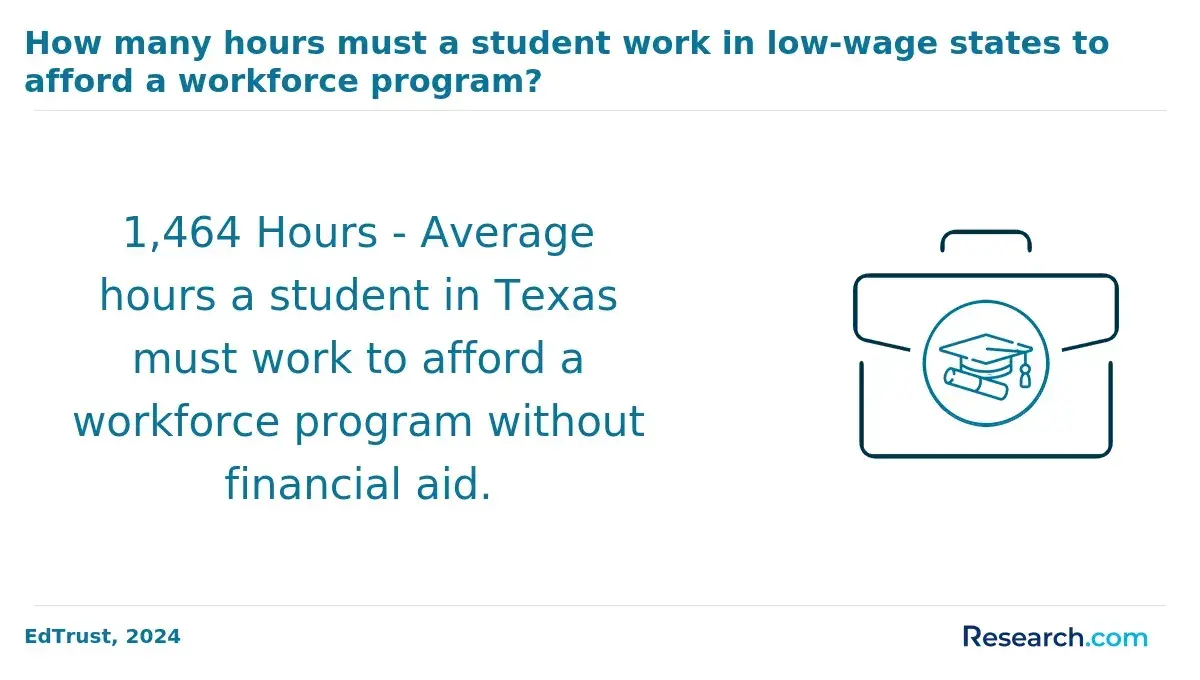
Federal student aid eligibility varies: eligible programs at participating institutions may qualify, while many short noncredit courses do not. Ask the financial-aid office - not a salesperson - whether the specific program is aid-eligible, and explore employer tuition assistance, workforce-agency support, scholarships, payment plans, and veterans' education benefits where applicable.
Accelerated study makes sense when you already have the time, prerequisites, and learning readiness to complete it without interruption. If your desired role ultimately requires graduate education, compare the timeline and admissions demands of a fastest masters degree rather than treating a short certificate as an equivalent substitute.
What core courses and coaching services do these programs typically include?
Strong programs combine occupational skills with job-search support that is relevant to the field. Core instruction might cover safety and equipment use in trades; anatomy, patient privacy, and clinical procedures in healthcare; legal research and document preparation in law-related programs; or software, visual communication, and portfolio production in design. The curriculum should name the competencies students will practice, not merely broad topics.
Career coaching is most useful when it produces tangible work products and connects them to a realistic hiring process. Look for services such as:
- A career assessment that links your interests, schedule, prior experience, and local opportunities to a specific job target.
- A resume and LinkedIn review tailored to the language and screening practices used in the field.
- Mock interviews, professional communication practice, and feedback on answers rather than generic interview tips.
- Portfolio, skills-demonstration, or work-sample reviews for roles where employers evaluate evidence of ability.
- Employer panels, recruiting events, alumni contacts, apprenticeship referrals, or supervised job-search accountability.
Ask how long coaching lasts, who provides it, how many appointments are included, and whether the coach understands your location and field. A career center that serves all students can be helpful, but specialized coaching from instructors or employer partners may be more relevant for regulated, technical, or portfolio-based careers.
What jobs can you get after completing a non-degree program with career coaching?
Career outcomes depend on the job's legal requirements, your prior experience, local demand, and the program's practical training. Non-degree programs most often support entry-level, trainee, assistant, technician, or support roles. They may also help an experienced worker demonstrate a newly developed specialty. Coaching improves application readiness and access to leads; it cannot replace the qualifications listed in a job posting.
This table connects common program areas to plausible next steps and the limitations readers should check before enrolling.
| Training area | Possible entry-level target | Important limitation |
| HVAC, welding, electrical, plumbing | Helper, trainee, apprentice, or technician assistant | Licensure and apprenticeship rules vary by state and employer |
| Medical assisting, phlebotomy, pharmacy support | Medical assistant, phlebotomist, or pharmacy technician | Employers or states may require certification, registration, or clinical eligibility |
| Paralegal and legal support | Legal assistant, file clerk, or paralegal support role | Does not permit independent legal practice |
| Digital design and media | Production artist, junior designer, content assistant, or freelance contributor | Portfolio quality and experience often drive hiring |
If your ultimate goal is a role that normally requires a bachelor's degree, compare a certificate's immediate value against an easy bachelor's degree pathway. The best choice may be stackable training that gets you working now while preserving a realistic route to later education.
One common mistake is choosing a program based on a broad industry label, such as "healthcare" or "technology," without identifying a job title. Search local postings first, record their required credentials and schedules, then choose training that closes those particular gaps.
What salary ranges and job growth should graduates realistically expect?
Salary data should be interpreted by occupation, not as a promise attached to a certificate. The U.S. Bureau of Labor Statistics reported a 2024 median annual wage of $49,670 for all occupations. Many entry-level support and trainee roles may start below an occupation's median, while experienced workers, specialized skills, overtime, union coverage, location, and licensure can change pay substantially.
BLS projections for 2023 to 2033 can help identify broad opportunity, but they do not predict hiring in a particular city or guarantee an opening after graduation. Healthcare support occupations are projected to grow faster than the average for all occupations over that period, making them worth investigating for learners who meet clinical and regulatory requirements. In contrast, portfolio-heavy creative work can be competitive even when training is accessible.
Use salary information as a screening tool. Compare local entry-level postings, expected schedules, benefits, required credentials, and advancement steps against your total training cost and income needs. Ask each provider for outcomes broken down by program, job title, geography, and time since completion; avoid programs that cite a high wage for a broad field without showing how many graduates reached that role.
How should students compare and choose the best non-degree program with career coaching?
The best program is one that is recognized for your target role, feasible within your schedule and budget, and specific about the career support it provides. Start with the job, then work backward to the credential, provider, format, and cost. This approach avoids enrolling in attractive but mismatched training.
Use the following process to make a defensible comparison between two or three options:
- Choose one or two target job titles and collect several local job postings to identify recurring skills, credentials, schedules, and experience expectations.
- Confirm whether the role requires state approval, an exam, supervised hours, a background check, or an accredited program before comparing tuition.
- Calculate total out-of-pocket cost, including equipment, travel, examination fees, missed work, and interest if financing is involved.
- Compare curriculum hours, hands-on practice, instructor experience, placement arrangements, and whether credits transfer or stack.
- Evaluate coaching by asking for the number of appointments, employer partners, career-event access, outcome definitions, and post-completion support period.
- Read the enrollment agreement and refund policy, then avoid pressure to sign before you receive answers in writing.
Choose a shorter noncredit option when you need a narrow, demonstrable skill and employers do not require academic credit. Choose a credit-bearing certificate when you may later pursue an associate or bachelor's degree. Consider an apprenticeship when paid supervised experience is central to the trade. Consider a degree instead when job postings consistently require one or when long-term advancement depends on it.
Programs deserve extra scrutiny when they guarantee employment, hide full costs, offer vague instructor biographies, cannot explain licensure eligibility, or report placement without defining what counts as a job. A credible school will help you understand limitations as clearly as benefits.
Other Things You Should Know About
They can be worthwhile when the training maps directly to a job requirement, includes credible hands-on practice, and costs less than the value of the skills and opportunities it creates. They are a weaker investment when the target role requires a degree, license, or experience the program cannot provide.
No. Coaching usually means guidance with career planning, resumes, interviews, networking, and applications. Ask whether the provider offers employer introductions, placement assistance, or a job guarantee, and get the exact terms and outcome definitions in writing.
Possibly. Eligibility depends on the institution, program length, credit status, and federal or state rules. Many short noncredit programs are not eligible for federal student aid, though employer support, workforce grants, scholarships, payment plans, or veterans' benefits may be available.
Employers generally focus on whether you have the required skills, recognized credential, experience, portfolio, or license. An online format can be acceptable, but verify that practical training, clinical requirements, exam eligibility, and career services meet the expectations of employers in your field.
References
- 6 Most Trusted Career Coach Certifications for 2026 (Reviewed) https://luisazhou.com/blog/career-coach-certifications/
- How to Become a Career Coach | University of Phoenix https://www.phoenix.edu/articles/business/how-to-become-a-career-coach.html
- Student Career Coach Certification - CSCC https://parwcc.com/student-career-coach-certification-cscc/
- Getting a job without a 4-year degree. Prospects increase with a certificate. https://www.luminafoundation.org/resource/non-degree-credentials-provide-value-for-adults-in-the-labor-market/
- Job Outlook for Career Counselors and Coaches https://www.cce-global.org/about/news/job-outlook-for-career-counselors-and-coaches
- No-Cost Training Programs in Massachusetts by Per Scholas https://perscholas.org/locations/greater-boston/
- Mentoring to Coaching: The Best Career Development Method https://www.managementconcepts.com/resource/from-mentoring-to-coaching-selecting-the-best-career-development-method-for-you/
- Career Coach Certifications | Insurance Canopy https://www.insurancecanopy.com/blog/career-coach-certifications
- Delivering on Student Expectations with Career Pathways https://moderncampus.com/blog/delivering-on-student-expectations-with-career-pathways
- Talent Capital https://talentcapital.ai/training