2027 Best Online Short Certificate Programs for In-Demand Careers

Co-Founder and Chief Data Scientist
Choosing a fast credential is difficult when programs use similar marketing language but lead to very different career options. Online short certificate programs can build job-ready skills in weeks or months, but they do not automatically provide a license, professional certification, or degree. The U.S. Bureau of Labor Statistics projects employment for information security analysts to grow 33% from 2023 to 2033, illustrating why targeted technical training matters. This guide compares common options, explains what employers and regulators recognize, and helps you match cost, time, and career goals.
Key Things You Should Know
- Short online certificates are educational credentials, not automatically professional certifications; confirm whether your target job requires a separate exam, supervised training, degree, or state license.
- High-demand pathways often include IT support, cybersecurity, healthcare administration, skilled trades, legal support, and digital design, but entry requirements and hands-on training needs vary substantially.
- Use total cost, completion time, accreditation or industry recognition, required equipment, and local job postings to compare programs; public two-year colleges charged average published tuition and fees of $4,050 for in-district students in 2024-25.
Top 10 Best Online Short Certificate Programs for In-Demand Careers
Popular Trade School Programs
Online trade certificates commonly cover HVAC fundamentals, electrical theory, construction estimating, welding safety, automotive service, and logistics. They work best for learners who can complete required lab work, apprenticeships, or employer-based training locally. A fully online program may teach code, safety, and technical concepts, but it usually cannot replace hands-on practice required for licensed electrical, plumbing, or HVAC work. Choose a credit-bearing community-college certificate when you may later pursue an associate degree; choose focused career training when speed and one specific skill matter more than transferable credit.
Healthcare Programs
Short online healthcare certificates may prepare students for medical billing and coding, pharmacy technician coursework, medical assisting theory, healthcare administration, or community health support. Clinical roles often require in-person labs, externships, background checks, immunizations, and a state-approved curriculum. Medical billing programs can be fully online more often than medical assistant programs, which need clinical practice. Before enrolling, identify whether the program prepares you for an industry certification examination, such as a coding credential, and whether local employers actually request it. Do not assume an online certificate alone qualifies you to provide direct patient care.
Criminal Justice / Law Programs
Online certificates in criminal justice, legal studies, paralegal studies, cybersecurity investigations, and victim advocacy can introduce legal procedures and documentation skills. A legal studies certificate may suit professionals seeking workplace knowledge, while a paralegal certificate can be more career-focused. However, paralegal hiring standards vary by employer, and a certificate is not a law degree or license to practice law. Students interested in policing, corrections, or investigations should also check agency-specific physical, background, residency, and academy requirements. Programs with legal research and writing assignments generally provide stronger practical preparation than survey-only coursework.
Arts & Design Programs
Online short certificates in graphic design, UX design, digital marketing design, photography, video editing, and web design emphasize portfolio development. They can be useful for career changers who need demonstrable work quickly, especially when courses include instructor critique and real-world briefs. Employers often evaluate creative candidates by portfolio quality rather than certificate title alone. Confirm which software is taught, whether licenses are included, and whether you will finish with shareable projects. A longer associate degree may be a better choice for learners who need broad design foundations, internships, and substantial portfolio-building time.
Which online short certificate programs lead to high-paying jobs?
The best-paying option is usually not simply the shortest one. Programs connected to technical roles, regulated occupations, or employer-recognized certifications may have stronger earning potential, but many higher-paying jobs still require experience, a degree, an apprenticeship, or licensure in addition to a certificate.
The comparison below separates occupational wage data from certificate outcomes. U.S. Bureau of Labor Statistics median annual wage figures describe workers in each occupation, not what a certificate graduate will earn.
| Career direction | Short-program relevance | 2024 median annual wage for occupation | Important limitation |
| Computer support specialist | IT support certificates can build entry-level troubleshooting skills. | $61,550 | Employers may prefer certifications, experience, or an associate or bachelor's degree. |
| HVAC mechanic and installer | Certificates can support entry into training or apprenticeship pathways. | $59,810 | Hands-on training and EPA-related requirements may apply. |
| Paralegal or legal assistant | Paralegal certificates can develop research and document-preparation skills. | $61,010 | Hiring expectations differ by law firm, employer, and prior education. |
| Medical assistant | Certificate programs commonly combine coursework with clinical preparation. | $44,200 | Programs often require in-person clinical experiences and employers may prefer certification. |
For readers comparing technical pathways, this guide to online programs that pay well can help place short certificates alongside degree options. Prioritize a program only after reviewing local postings for required credentials, schedule expectations, and experience levels.
What accreditation should online certificate programs have?
Accreditation matters most when a certificate is credit-bearing, leads toward licensure, uses federal financial aid, or must be recognized by another college. Institutional accreditation applies to the school as a whole; programmatic accreditation evaluates a particular professional program. Neither is automatically necessary for every noncredit professional certificate, but third-party providers should still demonstrate credible employer or industry recognition.
Use the credential type to decide what to verify. The following distinctions can prevent a costly mismatch.
| Program type | What to check | Why it matters |
| College credit certificate | Institutional accreditation and credit-transfer policy | Credits may be more likely to apply toward an associate or bachelor's degree, subject to receiving-school rules. |
| Healthcare or licensure-track program | State approval and any profession-specific accreditation or eligibility rules | Graduates may need an approved program to pursue an exam, clinical placement, or license. |
| Industry certificate or professional certificate | Provider reputation, curriculum currency, assessment method, and employer recognition | These programs may be noncredit and are evaluated more by practical relevance than academic transferability. |
| Career-training provider | State authorization where applicable, refund policy, outcome disclosures, and instructor qualifications | Marketing claims alone do not establish educational quality or job eligibility. |
Confirm a school's status through the U.S. Department of Education's accreditation database or the relevant state licensing board rather than relying on a logo on a program page. If a program claims it prepares students for licensure, ask for the exact state, occupation, and examination eligibility language in writing.
How do online certificate programs compare with campus programs?
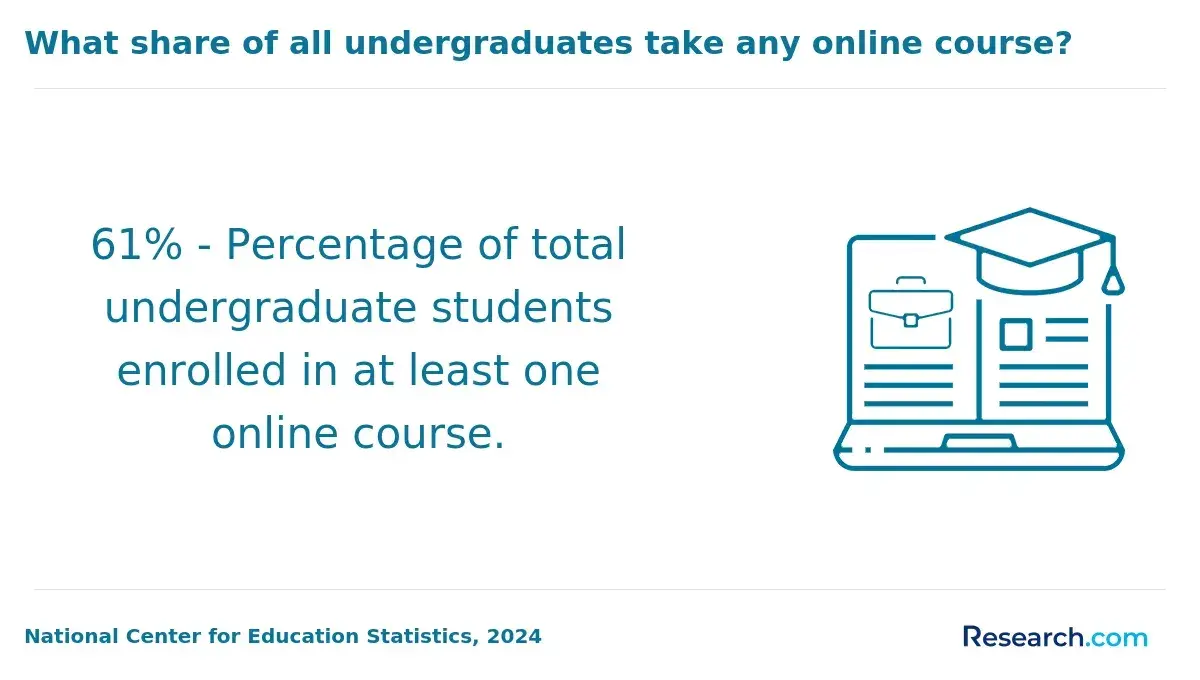
Online and campus certificates can cover the same academic content, but they do not deliver every skill in the same way. Online study is often a strong fit for software, business operations, billing, coding, legal research, IT fundamentals, and design. Campus or hybrid delivery is usually stronger when employers or regulators expect laboratories, equipment practice, clinical hours, supervised assessments, or immediate instructor feedback.
This comparison helps identify which format fits the actual work you expect to perform.
| Decision factor | Online certificate | Campus or hybrid certificate |
| Schedule | Often offers asynchronous coursework and part-time pacing. | Usually has set class, lab, or clinical times. |
| Hands-on learning | May use simulations, home kits, or local placements. | Provides direct access to labs, equipment, and supervised practice. |
| Networking | May require intentional outreach through virtual events and local employers. | Can offer easier access to peers, instructors, and campus career services. |
| Best use case | Knowledge-based, digital, or administrative skills. | Regulated, technical, clinical, or equipment-intensive training. |
A common mistake is choosing the most convenient format before confirming that it meets a licensing board's or employer's requirements. Ask whether externships are arranged, whether they are local, and whether students must find their own placement.
What are the admission requirements for short certificate programs?
Admission requirements depend on the provider and whether the credential is academic or noncredit. Many short noncredit courses allow direct enrollment and may only require payment, basic computer access, and any stated prerequisite knowledge. Credit-bearing college certificates commonly require an application, identity or residency information, and placement or prior-course review; selective healthcare programs may add prerequisites, health documentation, and background checks.
Before applying, collect the information most likely to affect your start date and eligibility.
- Check whether the program is credit-bearing, noncredit, undergraduate, graduate, or offered by an industry provider.
- Review prerequisite courses, required work experience, software skills, and minimum age requirements.
- Ask whether placement testing, transcripts, a high school diploma or equivalent, or college GPA are required.
- For clinical, public-safety, or fieldwork programs, confirm background-check, drug-screening, immunization, physical, and site-placement rules.
- Verify technology needs, including operating system, internet reliability, webcam requirements, and specialized software costs.
Do not assume a "no application" course has no prerequisites. A beginner cybersecurity course, for example, may be open enrollment but still move too quickly for someone without basic networking knowledge.
How long do online short certificate programs take?
Online short certificate programs can take from a few weeks to about one year, depending on topic depth, weekly workload, prerequisites, and whether required field experiences are included. A six-week course can introduce a focused tool or concept; it rarely provides the breadth of a college certificate or the supervised practice needed for a regulated career.
If you need a fast start rather than a long admissions cycle, explore online colleges that start soon. Frequent start dates can improve timing, but compare course sequencing carefully: some certificates still require classes in a fixed order.
Plan based on total learning hours, not only the advertised calendar length. A self-paced program may finish quickly for an experienced learner but take longer for someone balancing work, caregiving, or unfamiliar technical material.
How much do online certificate programs cost?
Costs range widely because "online certificate" can mean a low-cost single course, a community-college academic certificate, or a private career-training package. Tuition is only one part of the investment. For context, College Board reported average published tuition and fees of $4,050 for in-district students at public two-year colleges in 2024-25; individual certificate prices can be lower or higher depending on credits, residency, and program requirements.
Compare the full cost before accepting financing. The categories below reveal expenses that advertised tuition may exclude.
| Cost category | Questions to ask | Potential impact |
| Tuition and fees | Is pricing per course, credit, term, or entire program? | Determines the base price and whether repeat-course fees apply. |
| Materials and technology | Are books, exam vouchers, software, kits, and equipment included? | Can materially increase the total for technical and design programs. |
| Clinical or fieldwork costs | Who pays for screenings, immunizations, uniforms, travel, and insurance? | Especially relevant to healthcare and hands-on programs. |
| Credentialing costs | Does the program include certification-exam preparation or an exam voucher? | A certificate of completion may not include the separate professional examination. |
Federal aid may be available for eligible students in qualifying programs at eligible institutions, while many short noncredit programs do not qualify. Employer tuition assistance, workforce grants, payment plans, and community-college residency rates may reduce upfront cost. Borrow only after comparing expected total charges, refund rules, and a realistic local career pathway.
For a narrowly scoped option, review these 6 week online courses with certificates and verify whether the credential matches your intended job requirement.
Which careers can you start with a short certificate?
A short certificate can support entry-level work when it teaches a recognizable skill, includes practice, and aligns with an employer's requirements. It is most useful for roles where employers hire based on demonstrated competency, a portfolio, a required training course, or an industry examination. It is less likely to be enough for careers requiring a degree, lengthy apprenticeship, state license, or extensive clinical training.
Possible starting points include IT help desk support, junior bookkeeping support, medical billing support, pharmacy technician trainee roles, customer service operations, logistics coordination, digital content production, and entry-level design work. Career outcomes depend on local demand, prior experience, background requirements, and the quality of your work samples.
Some learners may be better served by an associate degree, particularly when they want broader general education credit or a credential with longer-term transfer potential. Compare short training against the easiest 2 year degree to get options if your target employers routinely request an associate degree.
Do certificate programs lead to licensure or industry certification?
Sometimes, but not automatically. Completing a certificate program awards an educational credential from a school or provider. Professional certification is usually awarded by a separate certifying body after a candidate meets eligibility standards and passes an examination. Licensure is government authorization to practice a regulated occupation and may require approved education, examinations, background checks, supervised hours, and state-specific applications.
Ask the provider to state exactly which outcome applies. Useful questions include whether completion makes you eligible to sit for a certification exam, whether the exam fee is included, whether graduates meet a state's education requirement, and whether additional clinical or work hours are required. Treat phrases such as "certification preparation" as preparation only unless the program clearly identifies the certifying organization and eligibility standard.
For example, an IT certificate may prepare you for a vendor-neutral certification exam, while a medical assistant program may prepare you for a certification examination and clinical work. Neither statement means every graduate passes an exam or obtains a job.
How do you choose a reputable online certificate program?
A reputable online certificate program is transparent about what students earn, what they will learn, what it costs, and what it does not qualify them to do. Start with the job or next educational step you want, then work backward to the minimum credential employers, colleges, or licensing boards actually require.
Use these steps to compare programs before paying an enrollment deposit.
- Search several local job postings and record the credentials, software, licenses, experience, and schedule requirements that recur.
- Match those requirements to the curriculum, not just the program title or marketing claims.
- Verify institutional accreditation for college credentials and state approval or programmatic standards when your field requires them.
- Request the total price, refund policy, schedule, instructor qualifications, equipment list, and any extra examination or placement costs.
- Confirm whether credits transfer or stack into a degree if continuing education is part of your plan.
- Ask how online students receive tutoring, career support, technical support, accessibility services, and required field placements.
Red flags include guaranteed-job language, vague claims about accreditation, pressure to finance immediately, missing refund terms, no named instructors, and promises that a fully online course meets clinical or licensing requirements without documentation. A lower-cost program can be the better investment if it teaches the needed skills and has transparent recognition; an accelerated program is not a bargain if you must later repeat training.
Other Things You Should Know About
They can be worthwhile when the curriculum matches a specific employer need, industry examination, or next academic step. They are less valuable when the target occupation requires a license, degree, apprenticeship, or hands-on experience the program does not provide.
Single-subject professional courses can take a few weeks, especially in software, project tools, customer support, digital marketing, or introductory IT. Fastest does not always mean best; verify that employers recognize the skill and that the workload is realistic for your schedule.
It is possible for some entry-level roles, but results depend on local hiring, your transferable skills, portfolio or project work, and employer requirements. Strengthen your application with practical projects, volunteer work, internships, or supervised field experience when available.
Many employers do, particularly when the provider is credible and the certificate demonstrates relevant skills. Employers generally care more about recognized curriculum, assessed competency, projects, required certifications, and your ability to perform the work than whether lectures were online.
References
- What You Should Know About Short-Term Certification Programs https://www.learnhowtobecome.org/career-resource-center/short-term-certifications/
- Online Certificates for Job-Ready Skills | Grow with Google https://grow.google/certificates
- Graduate Employment Outcomes: How to Measure & Improve https://gosprout.app/graduate-employment-outcomes/
- How does a college degree improve graduates' employment and earnings potential? - APLU https://www.aplu.org/our-work/publicuvalues/employment-earnings/
- 7 in-demand certifications in 2025 | edX https://www.edx.org/resources/in-demand-professional-certifications
- The Top 5 Certificate Programs for Jobs With Growth Potential | CourseStorm https://www.coursestorm.com/blog/top-certificate-programs-for-jobs
- Online Certificate Programs | Certifications Programs https://www.uscareerinstitute.edu/online-certificate-programs
- What Professional Certificates Boost Your Career Fast? https://www.csinow.edu/blog/what-professional-certificates-boost-your-career-fast/
- Accreditation Guide - Quality Online Schools | Sora Schools https://soraschools.com/blog/accreditation-a-parents-guide-to-quality-online-schools
- Best Online Courses to Take to Get a Job https://quickcv.io/blog/best-online-courses-to-get-a-job