2027 Best Certificate Programs With Competency-Based Programs

Co-Founder and Chief Data Scientist
Choosing a certificate is harder when "self-paced" programs vary widely in academic credit, employer recognition, and hands-on requirements. Competency-based education can let prepared learners move faster by proving mastery rather than waiting for a term to end. The U.S. Bureau of Labor Statistics projects healthcare support occupations to grow 15% from 2023 to 2033, illustrating why targeted career training remains relevant. This guide explains how competency-based certificates work, how to vet quality, and when a degree, license, or industry certification may be the better investment.
Key Things You Should Know
- Competency-based certificates award completion for demonstrated mastery, not simply seat time; they can be efficient for experienced learners but are not automatically faster for beginners.
- Check whether the credential is credit-bearing, whether the provider is institutionally accredited when college credit matters, and whether your target job requires a separate license or certification.
- Compare total expenses and outcomes, not tuition alone: the BLS projects 15% growth in healthcare support occupations from 2023 to 2033, but entry requirements differ substantially by role and state.
Top 10 Best Certificate Programs With Competency-Based Programs
Popular Trade School Programs
Competency-based trade options may include HVAC technician certificates, welding certificates, electrical technology certificates, industrial maintenance certificates, and automotive service programs. They work best when assessment includes verified lab performance, supervised shop work, and safety procedures - not online quizzes alone. HVAC and electrical pathways can prepare students for entry roles, but apprenticeships, state rules, and employer requirements often determine advancement. Welding and automotive programs may also prepare learners for separate industry exams. Choose campus or hybrid training when tools, equipment, or documented hands-on hours are essential.
Healthcare Programs
Common healthcare certificates include medical assisting, pharmacy technician, medical billing and coding, nursing assistant, phlebotomy, and sterile processing. A competency-based format can help learners progress through terminology, documentation, and clinical scenarios at their own pace, but clinical placements, background checks, immunizations, and state approval can set fixed timelines. A school certificate is not the same as professional certification or a license. Before enrolling, confirm whether the program meets eligibility rules for the examination or state credential required for the role you want.
Criminal Justice / Law Programs
Relevant options include legal studies, paralegal studies, crime scene investigation, cybersecurity foundations, corrections, and law-enforcement support certificates. Competency-based coursework can build legal research, report writing, ethics, records management, and evidence-handling skills. However, certificate completion does not make someone an attorney, police officer, or licensed investigator. Paralegal employers may prefer academic credentials, experience, or programs aligned with professional standards. Learners targeting public-safety work should verify agency hiring standards, fitness requirements, background screening, and academy expectations before treating a certificate as a direct hiring pathway.
Arts & Design Programs
Graphic design, digital media, UX design, photography, web design, animation, and interior design certificates can fit a competency-based model because learners can submit portfolio projects when ready. The strongest programs use clear rubrics, instructor critique, versioned project work, and software-based assessments. For creative hiring, a portfolio often carries more weight than a completion certificate alone. Verify whether software, materials, portfolio hosting, and studio access are included in the stated price. Interior design and similar regulated fields may require education or examinations beyond a short certificate.
What are competency-based certificate programs and how do they work?
A competency-based certificate program is an educational program in which learners demonstrate defined skills or knowledge through assessments instead of advancing only by completing a set number of classroom hours. The credential earned is typically a certificate of completion; it is not automatically an industry certification, professional license, or academic degree.
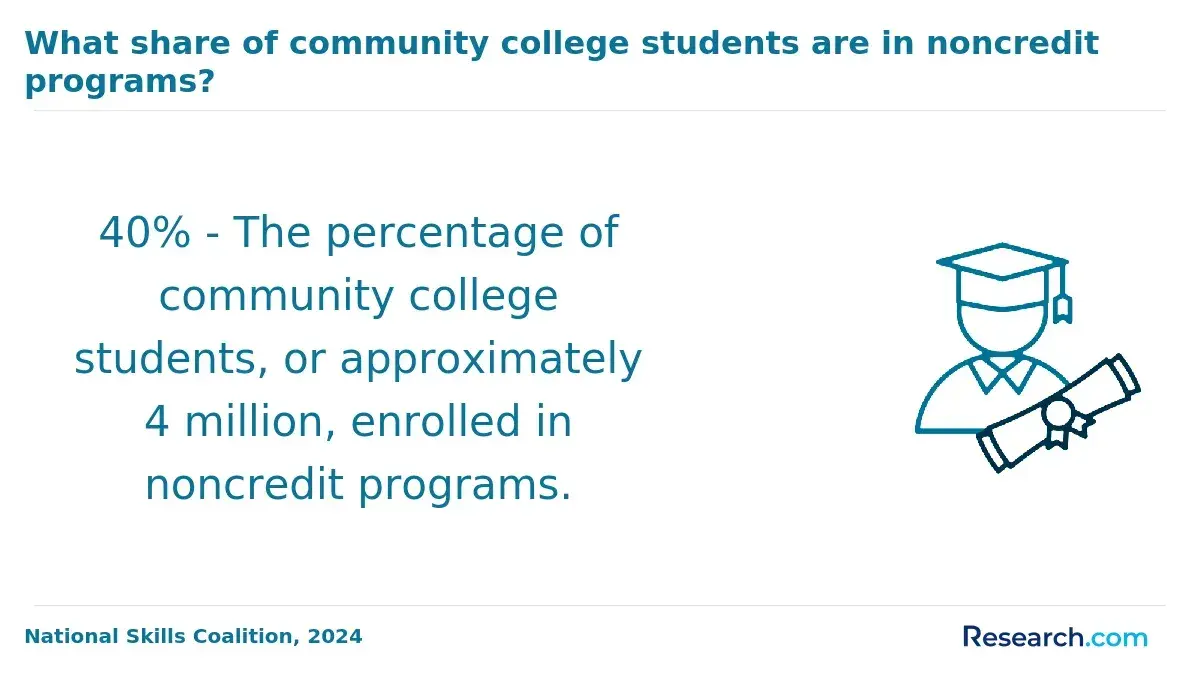
Programs may be offered by accredited colleges, community colleges, workforce providers, employers, or online training companies. Their design varies: some are for-credit academic certificates, while others are noncredit career-training credentials. A for-credit certificate may be stackable into an associate or bachelor's degree if the institution accepts it; a noncredit certificate usually does not transfer as college credit.
The basic process is straightforward, but the assessment method determines whether the program has real value.
- Students complete learning modules, practice activities, and required projects.
- They take an exam, submit a portfolio, complete a simulation, or demonstrate a practical skill.
- An evaluator confirms that the learner meets a preset competency standard.
- The learner advances to the next competency or completes the credential once all requirements are met.
This model suits adults with prior work experience, military training, or existing knowledge who can prove what they know quickly. It is less suitable for learners who need live instruction, externally imposed deadlines, or extensive supervised practice. In clinical, trade, and laboratory fields, competency progression may still include scheduled labs, clinical rotations, or required contact hours.
How do competency-based certificate programs compare to traditional certificate programs?
The central difference is pacing. Traditional certificates usually use semesters, weekly due dates, and credits based partly on instructional time. Competency-based programs use mastery milestones and may permit faster progress, although many still have enrollment periods and instructor deadlines.
This comparison helps clarify which model matches your learning style and career objective.
| Decision factor | Competency-based certificate | Traditional certificate |
| Progression | Advances after mastery is demonstrated | Advances by course and term schedule |
| Best fit | Independent learners with relevant prior knowledge | Learners who benefit from structure and regular instruction |
| Potential pace | May accelerate when competencies are mastered early | Generally fixed by academic calendar |
| Assessment | Projects, exams, simulations, demonstrations, portfolios | Assignments, exams, attendance, and course completion |
| Transferability | Depends on whether credits are awarded and accepted | Often clearer for regionally or institutionally accredited credit |
Neither model is inherently easier. Competency-based study shifts responsibility to the learner: moving quickly requires strong time management and sufficient preparation to pass rigorous assessments. Traditional formats can be the safer choice for newcomers to a technical field, learners seeking regular faculty interaction, or people who need a predictable financial-aid and course schedule.
If your long-term goal is a degree rather than a short credential, compare the certificate's credit pathway with an easiest online associates degree option. A longer credential can make more sense when employers expect broad general education, supervised training, or a degree for advancement.
Are competency-based certificate programs available online, on campus, or in hybrid formats?
Competency-based certificates are available online, on campus, and in hybrid formats. The right format depends less on convenience alone than on whether the target skill can be assessed credibly at a distance.
Online delivery is often effective for business software, IT support, coding fundamentals, bookkeeping, medical billing concepts, project management, and digital design. Look for identity verification, proctored assessments, instructor feedback, accessible technical support, and clear deadlines. Fully online study may be a poor fit for programs requiring labs, patient contact, machinery, or mandated clinical hours.
Hybrid programs combine online theory with scheduled campus labs, simulations, externships, or employer-based experiences. They are commonly the most practical option for allied health and skilled trades because they preserve flexibility without replacing hands-on evaluation. Campus programs offer the greatest equipment access and live supervision, but commuting and fixed schedules can increase the true cost.
Before choosing a format, confirm these operational details with the provider.
- Whether required labs, clinicals, practicums, or exams must be completed in person
- How skills assessments are observed, recorded, and graded
- Whether the program serves students in your state and meets any state-specific requirements
- What technology, software, tools, protective equipment, or travel costs you must provide
For professionals who already hold a bachelor's degree and need a tightly scheduled advanced option, a 1 year online masters program may offer a more appropriate credential level than a certificate.
What accreditation and quality standards should competency-based certificate programs meet?
Quality review should match the provider and the career goal. For a college-based, credit-bearing certificate, institutional accreditation recognized by the U.S. Department of Education or the Council for Higher Education Accreditation is an important signal for credit quality, transfer review, and federal aid eligibility where applicable. It does not guarantee that another school will accept credits.
Programmatic approval matters in fields with external standards. Healthcare programs may need state approval, clinical-site agreements, or specialized accreditation to make graduates eligible for licensure or a certification examination. Trade programs may need curriculum aligned to apprenticeship, safety, or state licensing requirements. A short online provider may not be an accredited college at all; that can be acceptable for skill development, but its completion credential should not be represented as college credit.
Use the following checks before paying a deposit. They reduce the risk of enrolling in a program that cannot support your intended next step.
- Verify the provider's accreditation or approval directly through the relevant accreditor, state agency, licensing board, or certifying body.
- Ask whether the exact certificate, location, and delivery format - not just the institution - meets exam or licensure eligibility rules.
- Request the competency map, assessment rubrics, instructor qualifications, completion requirements, and refund policy in writing.
- Confirm whether credits are transcripted, stackable, transferable, or merely recorded as noncredit continuing education.
- Be cautious of providers promising a license, job, salary, or certification exam eligibility without documenting the requirements.
Accreditation is one filter, not a substitute for career research. Employers may value a vendor credential, a portfolio, documented work samples, or an apprenticeship more than a general completion certificate, depending on the field.
How long do competency-based certificate programs take and what do they cost?
Completion time can range from a few weeks for a focused noncredit microcredential to about a year for a college certificate, but competency-based pacing makes advertised timelines especially variable. Learners with relevant experience may finish sooner; those who need repeated attempts, clinical placement, or part-time scheduling may take longer. Treat "finish fast" claims as a possibility, not a promise.
Costs also vary by provider, credit status, technology, and hands-on requirements. For perspective, the College Board reported average published tuition and fees of $4,050 for in-district students at public two-year colleges in 2024-25. That is a sector-wide benchmark, not the price of a particular certificate, and it excludes expenses such as books, tools, transportation, and lost work time.
This cost framework shows what to compare beyond an advertised tuition figure.
| Cost category | Why it matters | Questions to ask |
| Tuition or subscription | May be charged per credit, course, term, or month | Is the price fixed, and what happens if I need more time? |
| Assessment fees | Proctoring, retakes, and external exams may be separate | How many attempts are included? |
| Materials and equipment | Tools, software, uniforms, and supplies can be substantial | What is required versus optional? |
| Clinical or lab expenses | Travel, screenings, immunizations, and liability costs may apply | Are placements guaranteed and local? |
| Opportunity cost | Reduced work hours and scheduling can affect affordability | Can I study part time without extra charges? |
Federal aid generally depends on the school and program's eligibility; many noncredit offerings do not qualify. Ask about employer tuition assistance, workforce-agency funding, payment plans, veterans' education benefits when applicable, and institutional scholarships before borrowing. Compare total out-of-pocket cost against the entry requirements and local demand for your target role.
A short graduate credential is not always the lowest-cost route. If you need graduate-level knowledge quickly, compare the workload and eligibility of a 6-month master's degree online program with a certificate before committing.
What admission requirements and prior experience are needed for competency-based certificates?
Admission rules depend on the credential type. Many noncredit competency-based programs accept adults with a high school diploma or equivalent, basic computer access, and payment or sponsorship. College certificates may require an application, placement testing, prerequisite courses, or proof of prior education. Advanced technical certificates can require related work experience, earlier coursework, or an existing professional credential.
Do not assume GPA, standardized tests, or transfer credit apply. A short vendor-issued certificate may not ask for any academic record, while a credit-bearing college certificate may use placement requirements to ensure learners can succeed in math, writing, or technical coursework. Healthcare and public-safety programs often add background checks, drug screening, immunizations, physical requirements, CPR training, or other compliance steps.
Prior learning assessment can be valuable when it is formally documented. Some colleges may award credit after exams, portfolios, military transcripts, or evaluated training; others may let you skip content without awarding transferable credit. Ask whether successful assessment produces transcripted credit or only quicker completion.
Applicants considering a certificate because they want the least demanding academic route should first clarify the career requirement. An easiest degree to get may still be a better fit when target employers screen for bachelor's degrees rather than short-form training.
What skills, coursework, and assessments are included in competency-based certificates?
Competency-based certificates organize learning around observable outcomes. Instead of relying only on time in class, a program should state what you will be able to do, how performance is measured, and what counts as passing. The best assessment method depends on the skill: a spreadsheet task can be evaluated online, while a clinical procedure requires supervised demonstration.
Coursework often blends foundational knowledge with job-relevant practice. Common components include industry terminology, workplace communication, digital tools, safety and ethics, documentation, problem solving, and role-specific procedures. Technical programs may use labs or simulations; design programs may use portfolios; business and IT programs may use applied projects and scenario-based exams.
Review the assessment design because it reveals whether the certificate represents meaningful skill development.
- Written or proctored exams can assess concepts, rules, and applied decision-making.
- Simulations can test judgment in controlled scenarios but may not replace real equipment or patient interaction.
- Projects and portfolios can demonstrate work quality when they include clear rubrics and instructor feedback.
- Observed demonstrations are important for hands-on, safety-sensitive, or regulated skills.
- Externships and practicums can provide supervised workplace evidence when a field requires it.
A red flag is a program that describes broad career outcomes but cannot show the specific competencies, scoring standards, or assessor qualifications. Also ask whether your completed projects remain available for your portfolio and whether assessments are updated as software, regulations, or employer practices change.
What careers, industries, and job roles do competency-based certificates lead to?
Competency-based certificates can support entry-level work, role transitions, or skill upgrades, but outcomes depend on the occupation's hiring rules. They are most useful when the credential maps directly to employer-recognized skills and you can show evidence through a portfolio, practical assessment, internship, or relevant certification examination.
This overview distinguishes roles where a certificate may be helpful from roles that commonly require further education, licensing, or experience.
| Career area | Possible certificate-aligned roles | Important limitation |
| Information technology | Help desk support, junior support specialist, data or software support roles | Employers may also expect portfolios, vendor certifications, or experience. |
| Healthcare administration | Medical records, billing, coding support, patient-access roles | Clinical occupations often require approved training, certification, or state credentials. |
| Skilled trades | Trade helper, technician trainee, maintenance support | Licensing and apprenticeship hours may be required for independent practice. |
| Legal support | Legal assistant, records or compliance support | Requirements vary by employer; a certificate does not authorize legal practice. |
| Creative and digital work | Junior designer, content production, web support | Portfolio quality and current software skills are frequently decisive. |
Credential-based hiring can benefit applicants who need a focused, verifiable skill signal, particularly when the program includes real work samples. Still, a certificate is not a substitute for licenses, degrees, apprenticeships, or required experience. Search local job postings before enrolling and record the repeated requirements: education level, software, certifications, schedule, and experience. Then choose a program that closes those specific gaps.
What salary potential and job outlook can graduates of competency-based certificates expect?
Salary potential should be evaluated by occupation, location, experience, industry, and required credentials - not by certificate title. Completing a competency-based certificate alone does not establish a salary level or guarantee access to a particular role.
For labor-market context, the BLS projects employment for computer support specialists to grow 6% from 2023 to 2033, while healthcare support occupations are projected to grow 15% over the same period. These projections describe occupational demand nationally, not the prospects or earnings of certificate completers. They suggest that targeted training can be worth investigating, but they do not replace local job-posting research or licensing checks.
Use a practical return-on-investment test: identify the entry job you could realistically pursue, list its mandatory qualifications, estimate the certificate's full cost and study time, and compare those factors with nearby openings. If employers repeatedly request a degree, apprenticeship, license, or named industry certification, a certificate may be a first step rather than the complete pathway.
Programs are usually strongest investments when they lead to a clearly defined skill gap, have transparent assessments, and fit an employer-recognized route. Be cautious when a provider cites high salaries without identifying the occupation, geographic area, experience level, or additional credentials behind those outcomes.
Other Things You Should Know About
Possibly. You may progress quickly if you already know the material and can pass assessments on the first attempt. Required labs, clinicals, externships, and licensing steps can still create fixed timelines.
Employer recognition depends on the provider, field, skills demonstrated, and whether the credential is tied to recognized standards. A portfolio, hands-on assessment, industry certification, or accredited college credit can strengthen its value.
Only if the program awards academic credit and the receiving institution accepts it. Noncredit certificates generally do not transfer as college credit. Get transfer policies in writing before enrolling if a degree is your eventual goal.
Some eligible programs at qualifying schools may be covered by federal aid, but many short or noncredit programs are not. Ask the school's financial-aid office about eligibility, then explore employer benefits, workforce funding, and payment plans.
References
- The Complete Guide to Competency-Based Education https://www.d2l.com/blog/the-complete-guide-to-competency-based-education/
- Certification versus Competency https://www.centranum.com/resources/capability-and-competency/certification-versus-competency/
- What is Accreditation? https://www.credentialingexcellence.org/Accreditation
- Earn an Industry Certification | Your Florida Career https://www.floridashines.org/earn-an-industry-certification
- The Top 5 Certificate Programs for Jobs With Growth Potential | CourseStorm https://www.coursestorm.com/blog/top-certificate-programs-for-jobs
- Why Choosing the Right Certifications Can Help Your Career https://www.managementconcepts.com/resource/why-choosing-the-right-certifications-can-define-and-accelerate-your-career/
- Outcomes of Competency-Based Education in Community Colleges: Summative Findings from the Evaluation of a TAACCCT Grant https://www.mathematica.org/publications/outcomes-of-competencybased-education-in-community-colleges-summative-findings-from-the-evaluation
- Competency-based Education Certification https://www.cognia.org/cbe-certification/
- The Difference Between https://www.nchec.org/news/posts/distinguishing-between-quality-certification-and--assessment-based-certificate-programs
- What is Competency-Based Education (CBE)? | University of Phoenix https://www.phoenix.edu/blog/what-is-competency-based-education-and-how-does-it-work.html