2027 Best Career Training Programs With No Campus Visits Required

Co-Founder and Chief Data Scientist
Choosing career training without ever traveling to campus requires more than finding a program labeled "online." You need to know whether labs, clinicals, proctoring, internships, or licensing exams still require in-person attendance. This guide helps career changers, working adults, and recent graduates compare realistic no-campus-visit options.
U.S. Bureau of Labor Statistics projections for 2024-2034 show healthcare occupations growing much faster than average overall employment, making carefully selected online training especially relevant. Learn which credentials fit your goal, what they cost, and what to verify before paying.
Key Things You Should Know
- Fully online career training can work well for digital, administrative, legal-support, IT, business, and design roles, but most hands-on licensed trades and direct patient-care roles still require local practical training, clinical hours, or supervised examinations.
- A certificate is education completed through a school or provider; a certification is a professional credential usually awarded by an industry body after an exam or other requirements. Confirm which one employers actually request before enrolling.
- For labor-market context, BLS projections for 2024-2034 place healthcare occupations at 8.4% growth, compared with 3.1% for all occupations; growth does not remove the need to meet state licensing, experience, or employer requirements.
Top 10 Best Career Training Programs With No Campus Visits Required
Popular Trade School Programs
True hands-on trades such as welding, electrical work, HVAC, and plumbing usually cannot be completed with no campus visits because employers, apprenticeships, and licensing pathways require supervised practical work. Fully online alternatives include construction estimating, CAD drafting, project coordination, supply-chain operations, home inspection theory, and OSHA-focused safety training.
Choose an online certificate when your target role is planning, documentation, sales, estimating, or operations. Choose a hybrid program or registered apprenticeship when you need to install, repair, diagnose, or perform regulated field work. Ask whether software licenses, remote proctoring, or local externships add costs.
Healthcare Programs
No-campus-visit healthcare training is most realistic for medical billing and coding, medical administrative support, health information, pharmacy claims processing, and healthcare management fundamentals. These may lead to a school certificate or prepare learners for a separate industry certification examination.
Programs for nursing, dental hygiene, medical assisting, sonography, radiologic technology, and most clinical laboratory work require in-person skills training and clinical placements. Before enrolling, verify whether the curriculum meets the eligibility rules for the credential you want, since a general online course may not qualify you for a national certification exam.
Criminal Justice / Law Programs
Online certificates and associate degrees can cover criminal justice foundations, legal studies, paralegal studies, victim advocacy, emergency management, cybersecurity basics, and court administration. They suit learners seeking support, administrative, compliance, or public-service preparation rather than immediate authority as a police officer, attorney, or licensed investigator.
A paralegal certificate can strengthen job readiness, but employers may prefer programs approved by the American Bar Association or candidates with a degree and legal experience. Police academy training, firearms qualification, physical testing, and many investigative roles generally require in-person participation.
Arts & Design Programs
Graphic design, web design, UX foundations, digital marketing design, animation software, photography editing, interior design theory, and digital illustration are among the strongest no-campus-visit options. Programs may award a noncredit career certificate, a credit-bearing college certificate, or an associate degree.
For creative hiring, a polished portfolio often carries more weight than the certificate title alone. Select a program that includes current software workflows, critique, accessible portfolio projects, and rights to retain your work. Interior design licensure and architecture pathways may require accredited degrees, supervised experience, or examinations beyond online coursework.
What counts as a fully online career training program with no campus visits?
A fully online career training program with no campus visits delivers instruction, assignments, advising, assessments, and required collaboration remotely. It may be synchronous, with live scheduled classes, or asynchronous, allowing students to complete work within weekly deadlines.
"Online" alone is not enough: some programs still require a residency, skills intensive, local clinical placement, internship, testing center visit, or identity-verified exam.
This comparison identifies the attendance requirements that matter most before a student commits tuition and time:
| Format | Campus travel needed? | Best fit | Important limitation |
| Fully online, asynchronous | No, if remote proctoring is available | Working adults and self-directed learners | Deadlines and workload still apply |
| Fully online, live classes | Usually no | Learners who want regular instructor contact | Must attend at scheduled times |
| Online with local practicum | No campus visit may be needed | Programs requiring workplace exposure | Still requires in-person local participation |
| Hybrid or low-residency | Yes | Hands-on technical or clinical training | Does not meet a strict no-visit requirement |
Read the catalog, student handbook, and program disclosures rather than relying on marketing labels. Also distinguish remote learning from remote employment: an online program does not mean the eventual job will be work-from-home.
How do online career training programs compare to campus programs in quality and outcomes?
Quality depends more on curriculum alignment, instructor expertise, assessment standards, student support, and employer relevance than on whether instruction is online or on campus.
The strongest online programs use realistic projects, feedback, accessible tutoring, career support, and assessments that demonstrate individual competence. For software, administrative, design, and many business-support roles, remote delivery can mirror the digital tools used at work.
The trade-off is clearest when skills require physical equipment, direct observation, or regulated clinical practice:
| Decision factor | Online advantage | When campus or hybrid is stronger |
| Flexibility | Study around work and family schedules | Students needing fixed structure may benefit from scheduled labs |
| Hands-on skill development | Strong for software, documentation, and simulations | Better in person for equipment operation and patient care |
| Networking | Can include virtual employer events and group projects | Local placements may create stronger regional contacts |
| Cost control | Can reduce commuting and relocation expenses | Tuition, technology, and required materials may still be substantial |
Compare learning outcomes, completion policies, portfolio requirements, and job-placement methodology, not just course titles. Learners who need a broader academic credential or a structured route into advanced study may also compare easiest bachelor degree options, but should choose based on career relevance rather than perceived difficulty.
What accreditation should online career training programs have to be recognized by employers?
For a credit-bearing college certificate or associate degree, start by checking institutional accreditation through the U.S. Department of Education or Council for Higher Education Accreditation directories.
Institutional accreditation matters for federal aid eligibility, credit transfer prospects, and confidence that the college meets recognized academic standards. It does not automatically mean a particular program meets professional licensing rules.
Programmatic accreditation is essential only in fields where an employer, certifier, or licensing board requires it. Examples can include nursing, medical imaging, counseling, or certain technical programs.
Noncredit career courses may not be accredited at all; instead, evaluate the provider's reputation, instructor qualifications, curriculum version, employer recognition, refund policy, and whether it explicitly prepares you for a named third-party exam.
A common mistake is assuming that an accredited school makes every online program license-eligible. Ask the state board or certification organization whether the exact program, delivery format, and required practical components satisfy current eligibility rules.
Employer Confidence in Online vs. In-Person Degree Skills, Global 2024

What admission requirements and prior education are needed for online certificate programs?
Admission requirements vary by provider and credential type. Short noncredit training often requires only an account, payment arrangement, basic computer access, and English-language or placement readiness.
Credit-bearing undergraduate certificates and associate degrees commonly require a high school diploma, GED, or recognized equivalent; some also request transcripts or placement information. Graduate certificates typically require a bachelor's degree, while industry certifications may require work experience before an exam.
Before applying, use this sequence to avoid enrolling in training you cannot use:
- Identify the exact entry-level job, certification, or next educational step you want.
- Check the employer, certification body, or state board requirements before comparing schools.
- Confirm whether the program is credit-bearing, noncredit, stackable, or transferable in writing.
- Ask about technology, remote-proctoring, software, background-check, and local-placement requirements.
- Review withdrawal deadlines, total charges, and the evidence used for any placement claims.
Do not assume a high GPA, SAT, or ACT score is needed for every career-training program. Conversely, do not assume open enrollment means a program is appropriate for advanced certification or college transfer.
How long do online career training programs take, and what do they cost?
Completion time ranges from a few weeks for narrowly focused noncredit training to roughly one or two years for many part-time certificate or associate-level pathways.
Time depends on prerequisites, course load, cohort schedules, practicum requirements, and whether students repeat courses. A fast program is worthwhile only when it teaches the skills employers need and meets any exam or licensing requirements.
Cost should be evaluated as a total investment, not a tuition headline. The comparison below shows common cost drivers rather than a universal price, because providers set widely different rates:
| Program type | Typical timeline | Primary cost factors | Transfer potential |
| Noncredit online career course | Weeks to months | Provider fee, exam fee, software | Usually limited |
| College certificate | Months to about one year | Per-credit tuition, fees, materials | May transfer if credits are accepted |
| Online associate degree | About two years full time | Credits, general education, technology, books | Potentially stronger, subject to receiving school rules |
| Industry certification preparation | Weeks to months | Training, exam, retake, renewal costs | Not academic credit by default |
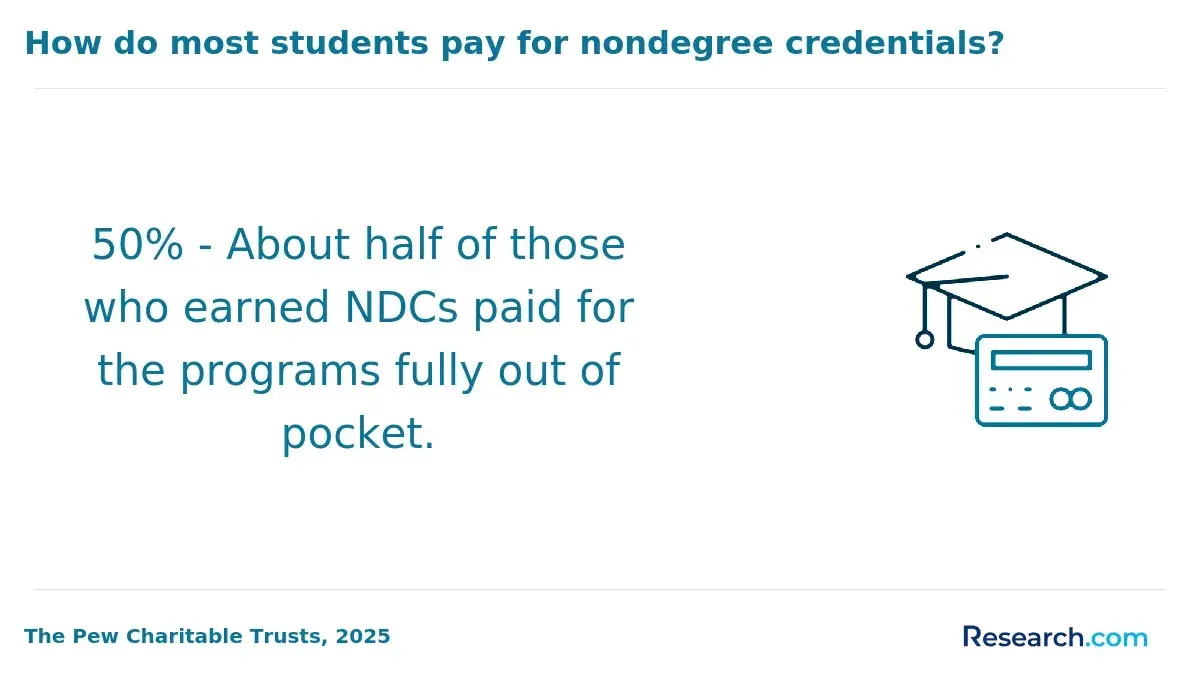
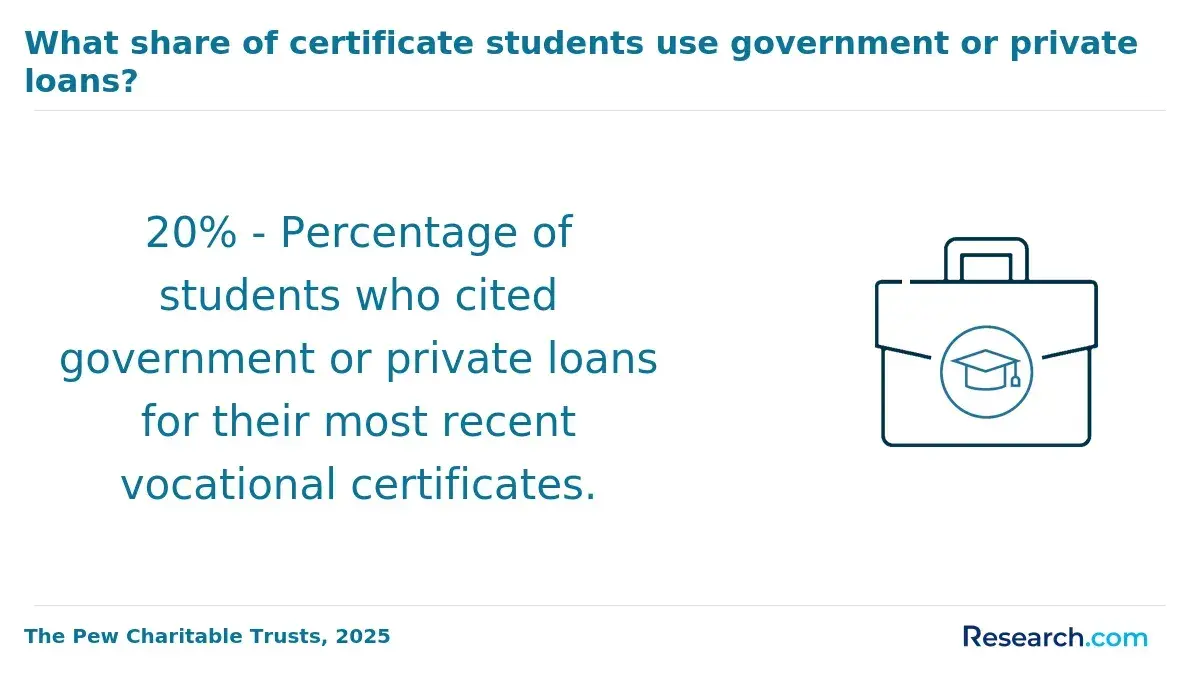
Federal student aid may be available for eligible students in qualifying credit-bearing programs at eligible institutions, while many noncredit courses are paid through savings, employer assistance, workforce grants, or payment plans.
If a bachelor's degree is already complete and a faster advanced credential fits the goal, compare 12 month master's programs online rather than paying for entry-level training that duplicates your education.
What coursework and skills do top online career training programs typically cover?
Top online career training programs teach job-specific tasks alongside the durable skills employers use to assess new hires. Coursework should make it possible to show what you can do through projects, simulations, case files, coding exercises, design samples, or documented workflows - not simply prove that videos were watched.
Look for a curriculum that covers the skills most relevant to your intended role:
- Digital workplace skills: Cloud collaboration, spreadsheets, file management, professional communication, and basic data privacy.
- Role-specific tools: Coding and billing systems, CAD or design software, legal research platforms, customer relationship systems, or project-management tools.
- Applied judgment: Documentation, quality control, troubleshooting, ethics, accessibility, and client or patient confidentiality where relevant.
- Career evidence: A portfolio, mock work products, interview practice, and a clear explanation of the credential's scope.
AI tools are increasingly part of office, design, technology, and marketing workflows. Favor programs that teach responsible use, fact-checking, privacy protection, and original work standards rather than treating AI output as automatically accurate or job-ready.
What careers can you pursue after completing an online career training program?
Career outcomes depend on the program level, prior experience, local labor market, portfolio quality, and any required license or certification. No-campus-visit programs most directly support roles where work products are digital or administrative.
Examples include medical records specialist, billing support worker, customer service representative, junior graphic designer, digital content assistant, CAD drafter, construction estimator trainee, legal assistant, compliance coordinator, IT support trainee, and project coordinator.
Use the credential as a targeted step, not a substitute for requirements it does not cover. For example, coding coursework can prepare a learner for an exam but does not itself award a coding certification; a legal studies certificate does not qualify someone to practice law; and an online healthcare administration course does not authorize clinical practice.
For roles where an employer values a recognized exam credential, review certifications for jobs alongside school-based training. A certification may be the better investment when it is explicitly named in job postings, while a college certificate may make more sense when you need academic credit or a pathway to an associate degree.
What salary ranges and job outlook can graduates of online career training expect?
Salary information should be used as occupational context, not as a promise of what certificate completers will earn. The BLS reported a May 2024 median annual wage of $50,250 for medical records specialists, a role that commonly uses postsecondary training and may be accessible through health-information pathways. Pay varies by location, employer, experience, specialty, shift, and credential requirements.
This snapshot helps distinguish occupations that may align with fully online preparation from those likely to require additional hands-on training:
| Occupation | May 2024 median annual wage | 2024-2034 projected growth | Training caution |
| Medical records specialists | $50,250 | 7% | Employers may prefer coding knowledge or certification |
| Graphic designers | $61,300 | 2% | Portfolio and software capability are central |
| Paralegals and legal assistants | $61,010 | 0% | Hiring can favor degree holders and legal experience |
| Information security analysts | $124,910 | 29% | Usually requires more than a short entry-level certificate |
BLS projections describe expected occupational demand, not guaranteed openings or individual outcomes. If your objective is a higher-level role requiring graduate study, cost-conscious learners can compare most affordable online masters options after confirming that the degree, not a short course, is the relevant credential.
How can students verify licensing, certification, and exam eligibility for online training?
Verify exam and licensing eligibility before enrollment, not after graduation. Requirements can differ by state, can change, and may depend on program accreditation, supervised hours, background checks, age, degree level, or a specific curriculum. Schools can describe preparation, but the licensing board or certifying organization makes the eligibility determination.
Take these practical precautions when evaluating a program:
- Find the official state board or certification body for the occupation and read its current candidate handbook or eligibility page.
- Request written confirmation from the school identifying the credential awarded, required in-person components, and the exam or license for which the curriculum is designed to prepare students.
- Ask whether graduates in your state have recently been approved to test or licensed, while recognizing that past outcomes do not guarantee your eligibility.
- Budget separately for application fees, background checks, fingerprints, exams, equipment, professional memberships, renewals, and possible retakes.
Red flags include vague statements such as "qualifies you everywhere," pressure to enroll before disclosures are available, missing refund terms, and claims that a short online course replaces clinical or apprenticeship requirements. When the answer affects licensure, obtain it from the regulator in writing.
Other Things You Should Know About
You can complete some trade-adjacent programs online, including estimating, drafting, safety, project coordination, and construction management fundamentals. Most skilled trades that require physical installation, repair, or diagnostic work need labs, field practice, or apprenticeships.
They can be, particularly when the provider is reputable, the curriculum matches the role, and you can demonstrate skills through a portfolio, assessment, or recognized certification. Employers generally focus on relevant capabilities and credential requirements more than course delivery mode.
Some do. Proctoring may occur through remote identity-verification software, a live online proctor, or an approved testing center. Confirm the assessment method before enrolling if you cannot travel.
Do not assume "100% online" means it meets licensing or certification requirements. Confirm every practical, clinical, internship, testing, and state-specific requirement for your exact career goal before paying tuition.
References
- Pay For School https://reachhighermontana.org/pay-for-school
- 9 Best Online Certificate Programs that Lead to Higher Pay https://blackstone.edu/9-best-online-programs-for-higher-pay/
- Weighing the Value of Industry-Based Certifications against Their Costs https://www.nasbe.org/weighing-the-value-of-industry-based-certifications-against-their-costs/
- EdAssist | Fuel Your Next Career Move: 4 Ways to Pay for Continuing Education https://www.brighthorizons.com/resources/blog/edassist/fuel-your-next-career-move-4-ways-to-pay-for-continuing-education
- Ed2Go Online Career Training Courses https://www.tsc.edu/academics-and-career-programs/ed2go-online-career-training-courses/
- CourseCareers https://coursecareers.com/blog-posts/best-online-courses-to-start-new-career
- Tuition Assistance for Job Training Programs https://www.fastweb.com/financial-aid/articles/tuition-assistance-for-job-training-programs
- Best Online Degrees for Working Adults in 2026 https://www.straighterline.com/blog/degreecompletion-best-online-degrees-for-working-adults-in-2026
- Indicator: Hybrid Work https://www.gallup.com/401384/indicator-hybrid-work.aspx
- Online Certificate Programs, Online Certificate Courses https://www.onlinedegrees.com/best-online-certificate-programs/