2027 Best Certifications for Remote Jobs

Co-Founder and Chief Data Scientist
Choosing a remote-job credential is difficult because a short program can teach useful skills without necessarily proving professional competence. The strongest options align with a specific job target, such as IT support, project coordination, bookkeeping, medical coding, or digital design.
U.S. Bureau of Labor Statistics projections published in 2024 show computer and information technology occupations are expected to grow much faster than average through 2033. This guide distinguishes certificates from certifications, compares practical pathways, and helps you evaluate cost, credibility, and realistic remote-work outcomes before enrolling.
Key Things You Should Know
- For most entry-level remote roles, employer-recognized certifications such as CompTIA A+, Google Career Certificates, AWS Certified Cloud Practitioner, and Salesforce credentials are more targeted than a general online certificate.
- Remote-friendly fields vary sharply: BLS projects growth of 15% for software developers through 2033, while many healthcare, trade, and legal-support roles still require in-person work or state-specific approval.
- Compare the full investment - not tuition alone - including exam fees, software, required experience, renewal costs, portfolio time, and whether the credential is accepted by employers in your target role.
Top 10 Best Certifications for Remote Jobs
Popular Trade School Programs
Trade certificates and associate degrees usually prepare learners for hands-on work, so they are rarely a direct route to fully remote employment. Electrical, HVAC, welding, automotive technology, and plumbing programs can lead to stable local careers, while construction estimating, CAD drafting, dispatching, and project coordination may offer hybrid or remote options after field experience.
Choose a certificate for faster skill training; choose an associate degree when you want broader technical coursework and potentially transferable credit. Verify required apprenticeships, local licensing rules, tools, and lab requirements before choosing an online format.
Healthcare Programs
Healthcare certificates can support remote-adjacent roles, but clinical credentials generally require supervised in-person training and may involve state rules. Medical billing and coding certificates are common choices for remote administrative work; employers may also prefer certification from organizations such as AAPC or AHIMA after training.
Pharmacy technician, medical assistant, nursing, and diagnostic programs are less remote because patient care, externships, or licensure requirements apply. An associate degree in health information technology can provide a broader path toward records, compliance, and informatics work, though remote availability depends on the employer and role.
Criminal Justice / Law Programs
Paralegal studies, legal studies, court reporting, and criminal justice certificates can build knowledge for administrative or research-focused work. Remote paralegal and legal assistant jobs often require strong document management, legal research, and confidentiality practices; a certificate alone may not meet employer experience expectations.
An associate degree may be a better fit for learners seeking a wider foundation or future bachelor's transfer options. Court reporting programs may lead to remote deposition work but require specialized equipment and, in some states, certification or licensure. Confirm local requirements before selecting a program.
Arts & Design Programs
Graphic design, UX design, web design, digital marketing, animation, and photography certificates can suit remote work because employers often evaluate portfolios alongside credentials. A short certificate is useful for career changers who need structured projects and current software skills.
An associate degree can offer more design theory, feedback, and general education coursework. Neither automatically creates a competitive portfolio: learners should finish with case studies, accessible design samples, and evidence of collaboration. Programs should clearly state which tools are taught, whether licenses are included, and who reviews student work.
Which certifications are best for remote work?
The best certification for remote work is the one that maps to a job's actual tools and responsibilities, not simply the fastest credential. A certificate is awarded for completing education; a certification is awarded by a professional body or vendor after meeting its standards, often through an exam. Entry-level learners usually benefit from role-focused certificates first, then add a recognized certification when they can meet its prerequisites.
This comparison highlights common remote-oriented options. Availability, pricing, exam policies, and experience requirements can change, so confirm them with the issuing organization before paying.
| Credential path | Best fit | Typical barrier to entry | Remote-work relevance |
| Google Career Certificate in IT Support, Data Analytics, UX Design, or Project Management | Career changers seeking structured introductory training | No degree is typically required; portfolio or job-search work still matters | High for support, analytics, UX, and coordination roles |
| CompTIA A+ or Network+ | IT support and junior infrastructure candidates | Vendor exams; hands-on troubleshooting practice is important | Moderate to high, depending on help-desk and systems-support needs |
| AWS Certified Cloud Practitioner | Beginners exploring cloud-related roles | Foundational exam; not a substitute for technical project experience | Moderate; stronger when paired with cloud labs or a technical credential |
| Salesforce Certified Administrator | CRM administration and business-operations candidates | Platform knowledge and certification exam preparation | High where organizations support distributed operations teams |
| CAPM or Google Project Management Certificate | Project coordination candidates | CAPM has PMI eligibility requirements; certificate programs vary | High for coordination, documentation, and stakeholder communication work |
A portfolio-based route may be especially appealing if you prefer focused, independent work; explore compatible jobs for introverts while checking whether the role still requires meetings, client contact, or on-call coverage.
What remote jobs pay well with certifications?
Well-paying remote roles generally require more than a single entry-level certificate. Certifications can help you signal specialized knowledge, but employers commonly evaluate prior experience, technical projects, communication, security awareness, and the ability to work independently. Occupational pay data should be read as pay for the occupation, not as a salary promise for credential holders.
The following BLS May 2024 median annual wage figures provide useful context for occupations that can include remote or hybrid positions. Actual remote availability varies by employer, location, clearance requirements, and seniority.
| Occupation | Median annual wage | Credential relevance | Important limitation |
| Software developers | $133,080 | Cloud, software, and security certifications can supplement a degree or demonstrated coding ability | Many jobs expect substantial programming skill; a basic certificate alone is seldom sufficient |
| Information security analysts | $124,910 | Security certifications may support progression from IT roles | Employers often seek prior IT or cybersecurity experience |
| Project management specialists | $100,750 | CAPM, PMP, Agile, or project-management training may be relevant | PMP requires verified project-management experience |
| Web developers and digital designers | $98,090 | UX, web-development, and platform certificates can support a portfolio | Hiring commonly depends on demonstrable work samples |
| Computer user support specialists | $60,340 | CompTIA A+ and IT support training are common entry credentials | Some support roles require scheduled phone coverage or onsite work |
For many people, the practical high-ROI sequence is entry-level IT support or operations training, documented project work, then a specialty certification in cloud, security, CRM, analytics, or project management. Do not choose an advanced exam solely for its salary association if you cannot yet meet the role's experience expectations.
Which certifications have the best job outlook?
Certifications with the best outlook usually connect to occupations with sustained digital, security, data, or operational needs. The BLS projects information security analysts to grow 33% through 2033, making cybersecurity a compelling long-term specialty - but it is typically not an entry-level field. Start with foundational IT knowledge if you do not already have networking, systems, or help-desk experience.
Use job outlook as one screen rather than a guarantee. This comparison shows where a credential can be strategically relevant and what additional evidence employers may expect.
| Field | Outlook signal | Useful credential direction | Best next proof point |
| Cybersecurity | Strong projected demand | Security+ after foundational IT preparation | Home lab, incident-response practice, or relevant IT experience |
| Cloud and systems | Broad technology adoption | AWS, Microsoft Azure, or Google Cloud foundational credentials | Documented cloud projects and automation skills |
| Data analytics | Demand depends on industry and role | Data analytics certificate plus spreadsheet, SQL, and visualization skills | Portfolio showing clean analysis and business communication |
| Health information | Healthcare administration remains essential | Medical coding or health-information training | Employer-required coding certification or experience, where applicable |
Be cautious of programs that claim an industry is "recession-proof" or imply that projected growth means immediate remote openings. Growth is measured across an occupation and does not identify the number of remote vacancies, entry-level jobs, or jobs in one city.
How do you choose an accredited certification program?
Accreditation matters most when a certificate is issued by a college, is credit-bearing, is intended to transfer, or prepares you for regulated work. Institutional accreditation evaluates a school; programmatic accreditation evaluates specific programs in certain fields. Vendor certifications are different: their credibility rests on the reputation of the certifying organization and employer recognition.
Before enrolling, use this sequence to avoid paying for a credential that does not serve your goal.
- Find 10 current job postings for your target remote role and record the named tools, certifications, degree preferences, and experience requirements.
- Confirm whether the provider awards academic credit, a completion certificate, or preparation for a separate certification exam.
- For college programs, verify institutional accreditation through the U.S. Department of Education or CHEA database and ask whether credits transfer.
- For regulated occupations, check the relevant state licensing board before choosing an online or out-of-state program.
- Request total cost, refund rules, exam fees, software costs, completion data, career-support details, and any required externship in writing.
A low-cost credential can be sensible for a narrowly defined goal, while a degree may be better when a role consistently requires one. If your plan eventually requires doctoral study, compare cheap doctoral programs separately rather than assuming a short certificate will transfer into an advanced degree.
Are online certification programs worth it?
Online certification programs are worth it when they provide current, job-relevant instruction and you can demonstrate what you learned. They work particularly well for software-based fields such as IT support, analytics, cloud administration, bookkeeping, project management, design, and digital marketing. They are less suitable as a standalone route for careers requiring clinical practice, physical labs, licensing, or supervised fieldwork.
Online delivery is not the same as low rigor. Compare these trade-offs before choosing a self-paced provider, college certificate, or instructor-led program.
| Format | Best for | Main advantage | Main trade-off |
| Self-paced professional certificate | Independent learners changing careers | Flexible schedule and often lower upfront cost | Requires self-management and may offer limited feedback |
| Live online college certificate | Learners wanting instructor access | Structured deadlines and possible academic credit | Higher cost and fixed meeting times may apply |
| Hybrid certificate | Programs needing labs or supervised practice | Combines online theory with hands-on learning | Travel and scheduling constraints remain |
| Vendor certification preparation | People who already have relevant knowledge | Direct alignment with an industry exam | Passing an exam does not replace workplace experience |
Do not select a program merely because it is marketed as the easiest degree to get online. Ease is not a reliable indicator of employer recognition, instructional support, or remote-job readiness.
What are the admission requirements for certification programs?
Admission and eligibility requirements depend on the credential type. Many third-party professional certificates have open enrollment and require only payment, internet access, and basic computer skills. Vendor certification exams may have no formal education requirement but can be difficult without prior knowledge. College-issued certificates may require a high school diploma or equivalent, placement steps, prerequisites, or admission to the institution.
Ask the provider which of these conditions applies to your exact program, since requirements can differ even within the same school.
- Academic prerequisites, such as prior coursework in math, anatomy, programming, or English composition
- Technology requirements, including a supported computer, webcam, licensed software, or reliable broadband
- Background checks, immunizations, drug screening, or clinical compliance for healthcare-related training
- Work experience or documented project hours for advanced professional certifications
- State residency, supervised-practice, or examination requirements for regulated occupations
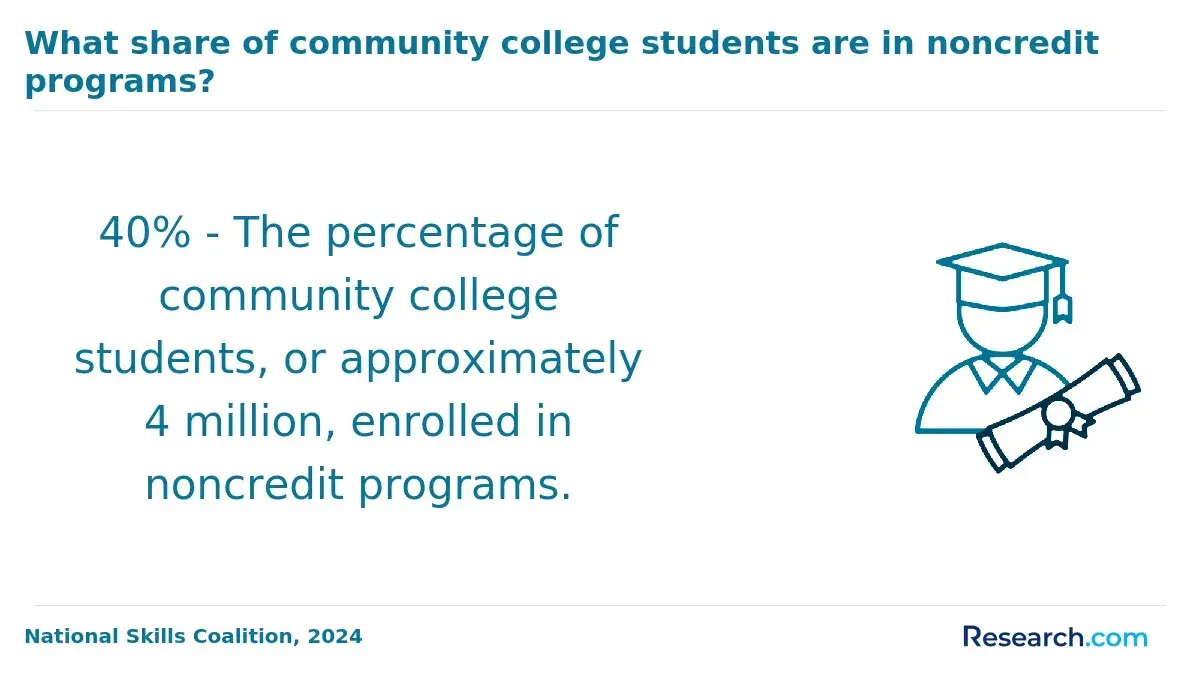
A GPA, standardized test score, or transfer-credit review is usually relevant only for academic programs. Do not assume these apply to a noncredit course or vendor exam, and do not assume open enrollment means the training will qualify you for licensure.
How long do certification programs take and cost?
Completion time ranges from a few weeks for a focused online course to one year or more for many college certificates. Associate degrees generally take about two years of full-time study, although prior credit, course availability, and part-time schedules can extend that timeline. The true cost includes tuition or subscriptions, exam vouchers, retake fees, books, equipment, software, and any required travel for labs or testing.
This comparison helps separate fast skill-building options from more comprehensive academic pathways.
| Pathway | Typical duration | Cost pattern | When it makes sense |
| Self-paced professional certificate | Weeks to several months | Subscription or course fee; may include limited career support | You need introductory skills and can build a portfolio independently |
| Vendor certification | Preparation varies by prior experience | Training is optional; exam, study materials, and renewal may cost extra | You need an employer-recognized validation of a defined skill set |
| Community-college certificate | Several months to about one year | Per-credit tuition plus institutional and course-specific expenses | You want instructor support, possible academic credit, or local employer ties |
| Associate degree | About two years full time | Broader tuition commitment, often with general education courses | You need a fuller academic foundation or want transfer options |
Ask whether courses are stackable into a degree before enrolling. Learners seeking a faster degree route should compare a fast-track bachelor degree with the time needed to earn separate certificates; acceleration may increase weekly workload and is not the same as reducing required learning.
Which skills do remote job certifications teach?
Remote-job certifications should build both technical capability and evidence that you can work reliably without constant supervision. Employers often need people who can document work, protect information, communicate asynchronously, and solve routine problems before escalating them.
The most transferable skills fall into four connected areas.
- Digital workflow: cloud collaboration, ticketing systems, spreadsheets, shared documentation, calendars, and version-controlled files
- Role-specific technical skills: troubleshooting, SQL, CRM administration, bookkeeping systems, design tools, coding, or medical coding, depending on the target job
- Remote communication: concise writing, meeting preparation, status updates, stakeholder follow-through, and professional client support
- Security and judgment: password hygiene, phishing awareness, privacy practices, access control, and knowing when to ask for help
Choose programs that assess these skills through projects, simulations, labs, or reviewed work. A video-only course with no practice may be useful for exploration, but it provides weaker evidence for an employer than a finished portfolio or proctored certification exam.
How do certification requirements vary by industry?
Requirements vary because industries use credentials for different purposes. Technology employers may prioritize vendor certifications and demonstrable projects. Healthcare and skilled trades can involve state rules, supervised hours, approved curricula, or licensing examinations. Business fields may value certificates but often weigh experience and software proficiency equally or more heavily.
This overview clarifies which checks matter before you invest.
| Industry | Common credential model | Key verification question | Remote-work caution |
| Information technology | Vendor certification, professional certificate, degree, or portfolio | Do employers request this vendor credential for the targeted role? | Some support and infrastructure jobs require onsite hardware access or on-call shifts |
| Healthcare | Academic certificate plus possible national certification or state requirements | Does the program meet eligibility requirements for the needed exam or license? | Patient-facing and clinical work is usually not fully remote |
| Legal support | Certificate or degree; employer requirements vary | Does the curriculum cover the jurisdiction and software used by local employers? | Confidentiality and court-related tasks may limit remote arrangements |
| Design and marketing | Certificate, bootcamp, degree, and portfolio-based hiring | Will you complete reviewed projects that demonstrate current tools and strategy? | Remote competition can be national, making portfolios especially important |
The common mistake is treating a provider's completion certificate as a license or an industry certification. Read the credential's exact name, identify who awards it, and confirm whether it is recognized by the employers or regulator relevant to your intended work.
Other Things You Should Know About
A self-paced IT support, data analytics, project management, bookkeeping, or digital marketing certificate can often be completed in months rather than years. The fastest option is worthwhile only if it teaches skills shown in target job postings and gives you work samples or prepares you for a recognized exam.
Sometimes, especially in entry-level support, coordination, customer operations, bookkeeping, or junior digital roles. A certificate is stronger when paired with a portfolio, software practice, prior related work, and evidence of reliable remote communication. Many higher-paying technical roles require deeper experience or a degree.
CompTIA A+ is a common starting point for IT support because it covers hardware, operating systems, networking, and troubleshooting. Google's IT Support Certificate can provide structured preparation. Review local job postings because some employers prefer one credential, both, or equivalent hands-on experience.
Some do. Vendor and professional certifications may require renewal fees, continuing education, retesting, or periodic recertification. Completion certificates from course providers usually do not expire, but the skills and software they cover can become outdated, so plan for ongoing learning.
References
- The Original Remote Work Certification from Workplaceless https://www.workplaceless.com/certification
- Best IT Certifications for Remote Work 2026 | ExamCert https://www.examcert.app/blog/best-certifications-remote-work/
- Has your salary increased with new certifications? - IT & Tech Careers - Spiceworks Community https://community.spiceworks.com/t/has-your-salary-increased-with-new-certifications/783313
- 15 Best Free Certification for Remote Jobs in 2026 https://tivazo.com/blogs/best-certification-for-remote-jobs-guide/
- Remote Work Certifications That Actually Help You Get Hired https://rentremote.com/blog/remote-work-certifications
- How Do Certifications Influence Salary Increases? https://certiprof.com/blogs/news/how-do-certifications-influence-salary-increases
- Remote Work Certifications That Are Worth It: Credentials That Can Strengthen Your Career https://fatumasvoice.org/328874/
- Online Certifications for Remote Jobs: A Guide for 2026 https://learntube.ai/blog/marketing/digital-marketing/online-certifications-for-remote-jobs-a-guide-for-2026/
- The Best Certifications for Remote Jobs in 2024 https://hubstaff.com/blog/certifications-remote-jobs/
- 26 High-Earning Remote Job Certifications for 2026 https://www.tealhq.com/post/remote-job-certifications