2027 Best Career Training Programs With Monthly Start Dates

Co-Founder and Chief Data Scientist
Waiting months for a traditional semester can delay a career change, especially when employers need skilled workers now. Monthly-start career training programs can shorten the time between deciding and beginning, but quality, licensing eligibility, clinical placement, and total cost vary widely. The U.S. Bureau of Labor Statistics projects healthcare support occupations to grow faster than the average for all occupations from 2023 to 2033.
This guide helps career changers, working adults, and recent graduates compare flexible programs, verify requirements, and choose training that fits a real job goal.
Key Things You Should Know
- Monthly starts improve enrollment flexibility, but they do not necessarily mean monthly completion; clinical rotations, apprenticeships, and licensing exams can still follow fixed schedules.
- Choose training backward from the job: verify whether a certificate is enough, whether an industry certification or state license is required, and whether the program includes required hands-on hours.
- Compare total price, not advertised tuition alone; include tools, uniforms, exams, background checks, supplies, commuting, and income lost if a daytime schedule prevents work.
Top 10 Best Career Training Programs With Monthly Start Dates
Popular Trade School Programs
Monthly-start trade programs commonly include HVAC technician, electrical technician, welding, plumbing, automotive technology, diesel technology, and construction certificates. These are usually school-issued certificates or diplomas, not professional certifications. Programs often combine safety instruction, equipment practice, and troubleshooting labs; many take several months to about a year. Apprenticeships can be a stronger choice for electrician or plumber pathways because states and employers may require supervised work hours for licensing. Ask whether training prepares you for EPA Section 608, ASE, NCCER, or a state examination - and whether those exams are included.
Healthcare Programs
Common monthly-start options include medical assisting, dental assisting, pharmacy technician, medical billing and coding, practical nursing, phlebotomy, and nursing assistant training. Healthcare certificates may lead to entry-level support roles, but regulated roles have additional rules. For example, practical nursing requires a state-approved program and NCLEX-PN licensure; a school certificate alone is not a license. Online coursework can work for billing and coding, while patient-care programs require labs and clinical experiences. Confirm clinical-site availability, background-check standards, certification-exam preparation, and state eligibility before paying a deposit.
Criminal Justice / Law Programs
Career training in this area may include paralegal studies, legal assistant, court reporting, private security, corrections, emergency dispatch, or criminal justice certificates and associate degrees. A paralegal certificate can build practical research, writing, and document-management skills, but it does not authorize someone to practice law. Security training and peace-officer preparation are especially state-specific and may require background checks, firearms training, academy attendance, or separate licensing. Choose an associate degree when you want broader general education and potential transfer credit; choose a focused certificate for a narrower, faster skills update.
Arts & Design Programs
Monthly-start creative programs can cover graphic design, web design, digital marketing, photography, animation, interior design, fashion, and UX-related tools. Certificates are often portfolio-focused and may be noncredit, while associate degrees usually include broader design foundations and general education. Employers commonly evaluate work samples, software fluency, and client-ready communication more than the credential title alone. Before enrolling, review student portfolios, software costs, instructor feedback practices, and ownership of your work. Interior design is different: some roles and jurisdictions have education, experience, or examination expectations beyond a short program.
What are career training programs with monthly start dates and who are they best for?
Career training programs with monthly start dates are short, job-focused courses, certificates, diplomas, or degree pathways that allow new cohorts to begin every month or nearly every month. They are offered by career colleges, community colleges, adult education providers, employers, and private training schools. A monthly intake is an enrollment feature, not a quality guarantee or a credential category.
They are often best for adults changing fields, displaced workers, military-connected learners, and students who cannot wait for fall or spring admission. They are less suitable when a target occupation requires a tightly sequenced cohort, extensive clinical placement, a registered apprenticeship, or a selective degree. In those cases, a frequent start date may apply only to general coursework, while the required practicum begins later.
Use this comparison to match the training model to your goal.
| Option | Best for | Main trade-off |
| Short career certificate or diploma | Rapid entry-level skill building | May not transfer to a degree or satisfy licensure rules |
| Credit-bearing certificate | Students who may continue to an associate degree | Often follows a more structured academic calendar |
| Associate degree | Broader preparation and transfer potential | Longer and usually more expensive |
| Apprenticeship | Trades requiring paid supervised experience | Entry can be competitive and schedules are employer-driven |
How do online career training programs compare to campus-based options for flexibility and support?
Online training is usually most flexible for theory-heavy fields such as billing and coding, legal studies, IT support, digital marketing, and design software. It can reduce commuting and let learners complete readings or recorded lessons around work. Campus-based instruction is usually stronger when students need repeated access to tools, instructors, patients, vehicles, welding booths, or simulation equipment.
For remote-friendly career planning, compare the training format with the job itself; readers considering degrees for remote work can also evaluate whether their target role is realistically performed away from a worksite.
The comparison below highlights the support question that often matters more than convenience.
| Feature | Online or hybrid | Campus-based |
| Start-date flexibility | Often frequent | May be tied to lab cohorts |
| Hands-on practice | Requires local placement or scheduled intensives | Usually built into the program |
| Instructor access | Varies by live office hours and response policies | Often immediate during lab time |
| Career support | May be virtual and regional | May include local employer relationships |
A red flag is an online healthcare or trade program that is vague about labs, equipment, clinical sites, or local licensing eligibility. Get those answers in writing before enrolling.
What accreditation and licensing requirements should these career training programs meet?
Accreditation and licensing are not interchangeable. Institutional accreditation evaluates an eligible school; programmatic accreditation evaluates specific programs in fields such as nursing, medical assisting, dental assisting, and some technical disciplines. Licensure is granted by a government board, while certification is usually awarded by a professional organization after its requirements are met.
Check the exact requirement for the occupation and state where you intend to work. A nationally accredited school may still offer a program that does not meet another state's curriculum, clinical-hour, or examination rules. For nonregulated fields such as many design, marketing, and office-support roles, employer recognition, portfolio quality, curriculum currency, and job-placement transparency may matter more than programmatic accreditation.
Before you apply, take these verification steps:
- Find the licensing board or certifying body for the target job and read its current eligibility rules.
- Ask the school whether its specific program meets those rules in your state, not merely whether the school is accredited.
- Confirm required clinical, lab, internship, apprenticeship, or supervised-hour arrangements.
- Request the program's exam pass-rate methodology and recent completion and placement disclosures where available.
What admission requirements and prior education are needed for most career training certificates?
Admission requirements depend on the provider and credential. Many entry-level career certificates require a high school diploma, GED, or equivalent and an application; some use placement assessments for reading, math, or English. GPA, SAT, and ACT requirements are uncommon for short nondegree training, though competitive healthcare programs may review prerequisite grades and use entrance testing.
Expect additional screening when training leads to work with patients, vulnerable populations, money, transportation, or public safety. This can include immunizations, drug screening, criminal-background checks, physical ability documentation, driving records, or CPR certification. A past record does not always bar enrollment, but it can affect clinical placement, licensing, or hiring.
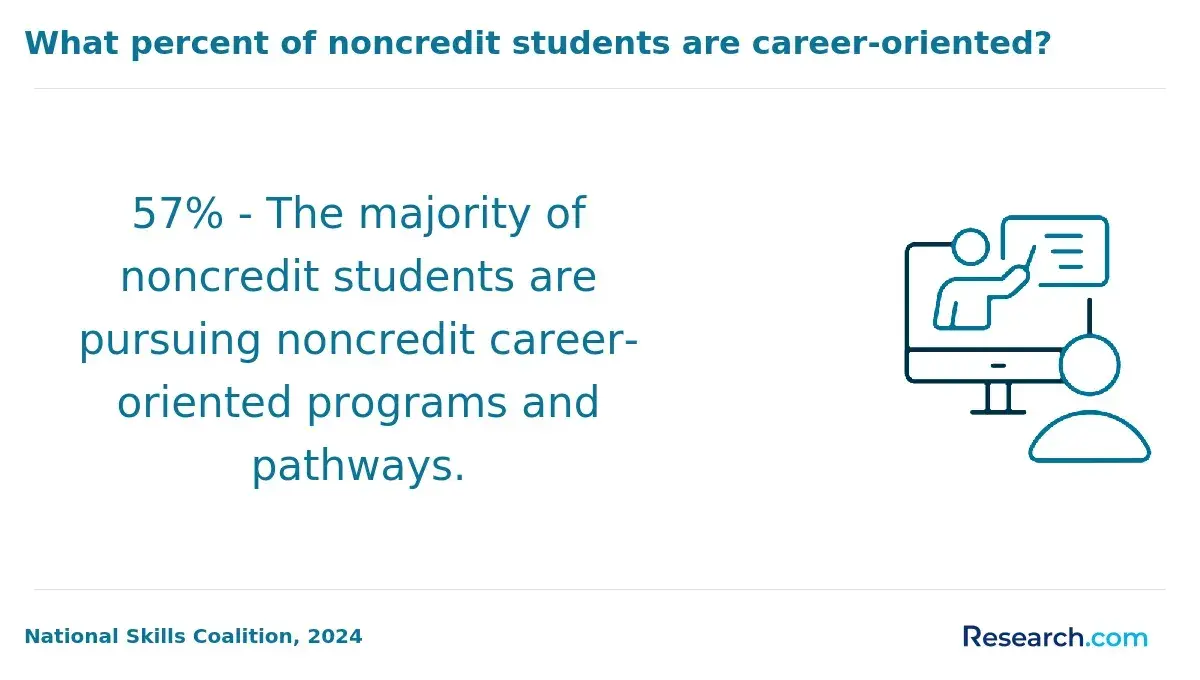
Ask whether the credential is credit-bearing. Credit-bearing certificates may have transfer policies, but transfer is never automatic. Noncredit programs can be faster and more skills-focused, yet usually have limited academic transfer value.
How long do career training programs with monthly start dates take and what schedules are offered?
Monthly start dates typically mean a school opens a new online or mixed-format cohort every four to six weeks. Short programs may run from a few weeks to roughly 12 months, while associate degrees commonly take about two years of full-time study. Exact timing depends on required clock hours, prerequisites, externships, and whether a learner studies full time.
Working adults should compare the calendar, not just the advertised duration. An "accelerated" program may require daytime labs, fixed live sessions, weekend clinicals, or 20 or more weekly study hours. A part-time option can protect income but may postpone access to the next course or clinical sequence.
Request a term-by-term schedule showing when lab work, field placement, examination preparation, and graduation processing occur. Do not assume that enrolling this month means being job-ready by a particular month.
What do typical curricula and hands-on training look like in high-quality career programs?
High-quality career programs teach both job tasks and the judgment needed to perform them safely. A typical curriculum starts with foundational terminology, safety, software, documentation, communication, and regulations; it then moves into applied practice, troubleshooting, and supervised performance. Strong programs map lessons to an employer-recognized standard, licensing-board requirement, or certification exam blueprint when one applies.
Hands-on training should be observable and assessable. For example, a welding learner needs supervised weld tests, a medical assistant needs skills validation and clinical exposure, and a design learner needs critique-driven portfolio projects. Simulated practice is useful, but it may not replace required clinical or field hours.
Ask to see the equipment list, instructor qualifications, student-to-lab-station ratio, assessment methods, and externship agreement. Avoid providers that promise "hands-on" learning but cannot explain where, how often, and under whose supervision it occurs.
What tuition costs, financial aid, and employer funding options exist for career training students?
Total cost can include tuition, registration, books, software, tools, uniforms, equipment, insurance, background checks, certification exams, and transportation to labs or clinical sites. Compare a written total-cost estimate with the number of instructional and hands-on hours. The least expensive option can be poor value if it omits mandatory preparation for the job or exam you need.
Federal student aid generally requires enrollment in an eligible program at a participating institution; many short noncredit programs do not qualify. Ask the financial-aid office whether the program is aid-eligible, what aid is available, and whether withdrawal or repeating a course creates a balance. Workforce Innovation and Opportunity Act funding, state workforce grants, veterans' education benefits, union support, and employer tuition assistance may also apply depending on the program and student.
If you are comparing shorter training with a much longer academic route, including an easiest doctorate to get pathway, evaluate each option against the education actually required for your intended role rather than prestige alone.
What entry-level job roles, advancement pathways, and work settings do these programs lead to?
Entry-level outcomes depend on the field, local hiring, prior experience, licensing status, and the quality of practical training. Possible roles include HVAC helper or technician trainee, welder, medical assistant, pharmacy technician, billing specialist, legal assistant, dispatcher, graphic designer, and production artist. A certificate can help demonstrate targeted preparation, but employers may still require an exam, portfolio, background clearance, experience, or license.
Advancement usually comes through supervised experience, additional industry certifications, an apprenticeship, or a stackable associate or bachelor's degree. Students whose long-term objective is management, engineering, advanced clinical practice, or a highly paid degree-required profession should compare their target with most profitable majors before choosing a short program as a final destination.
Ask each school for job titles held by recent completers, the geographic area used for placement data, and whether reported jobs were full time, related to training, and retained after placement.
What salary ranges and job outlook can graduates expect in major career training fields?
Salary information describes occupations, not a guaranteed return from any particular training program. In May 2024, the U.S. Bureau of Labor Statistics reported a national median annual wage of $59,810 for HVAC mechanics and installers and $42,290 for medical assistants. These figures illustrate the different earnings structures of trade and healthcare-support paths, but local pay, overtime, union coverage, credentials, and experience can change outcomes substantially.
BLS projections for 2023-2033 show faster-than-average growth for several healthcare support occupations, while demand in skilled trades can vary with construction activity, maintenance needs, and regional infrastructure investment. AI and automation are also changing office, legal-support, and design workflows; training that teaches verification, client communication, technical tools, and ethical use of automation may be more durable than training focused on a single software task.
For careers requiring more education, review most useful masters degrees as a separate long-term option. Use wage data as a comparison tool, then validate local openings and entry requirements before borrowing.
Other Things You Should Know About
Some providers offer monthly or rolling starts, particularly for online coursework. Programs with labs, clinicals, or cohort-based technical training may have frequent classroom starts but fewer dates for hands-on components.
They can be legitimate, but start frequency does not prove quality. Verify the school, program approval where required, instructor qualifications, required practical training, total cost, and eligibility for any license or certification exam.
Possibly. Eligibility depends on the school and program, not simply program length. Ask whether the specific program participates in federal aid and explore employer funding, workforce grants, veterans' benefits, and payment plans.
It may support entry-level hiring in some fields, but it is not automatically enough. Many roles also require a portfolio, practical experience, a background check, a professional certification, or state licensure.
References
- CourseCareers https://coursecareers.com/blog-posts/15-careers-you-can-start-with-no-experience-or-degree
- Accreditation Commission for Health Care https://achc.org/
- Free job training Los Angeles | Climb Hire https://climbhire.co/free-job-training-los-angeles/
- Advanced Career Training Programs Overview - /info/landing/online-career-training-program https://commed.smc.edu/info/landing/online-career-training-program
- Texas Top Job Training Programs https://gradplan.org/workforce_resources/texas-top-job-training-programs/
- Accreditation - ABET https://www.abet.org/accreditation/
- Why Employment Outcome Rates Matter | ACI Learning https://www.acitechacademy.com/blog/why-employment-outcome-rates-matter-a-guide-for-students-and-employers/
- Accreditation Tip of the Month - We've been an AP for years. What do we need to know now? https://www.iacet.org/events/iacet-blog/blog-articles/accreditation-tip-of-the-month-weve-been-an-ap-for-years-what-do-we-need-to-know-now/
- Job Training in New York City - New York City Employment and Training Coalition https://nycetc.org/membership/full-member-list/job-training-programs-in-new-york-city/
- About Accreditation - JRCERT https://www.jrcert.org/about-accreditation/