2027 Best Online Certifications With Asynchronous Classes

Co-Founder and Chief Data Scientist
Choosing an online certificate can be difficult when "self-paced," "asynchronous," and "career-ready" mean different things across providers. Asynchronous classes let students complete most coursework on their own schedule, but they still use deadlines, instructor feedback, and required assessments.
The U.S. Bureau of Labor Statistics projects about 19.2 million job openings per year from 2023 to 2033, making targeted, job-relevant training worth evaluating carefully. This guide helps working adults, career changers, and degree-seekers compare flexible certificate options, verify quality, estimate costs, and select a credential aligned with a realistic goal.
Key Things You Should Know
- Asynchronous online certificates are best for learners who need schedule control, but they are not necessarily self-paced: weekly modules, assignment deadlines, proctored exams, labs, or internships may still apply.
- Choose the credential type before enrolling: a college certificate may carry academic credit, while an industry certification usually requires a separate exam; neither automatically guarantees employment, licensure, or a salary outcome.
- BLS projects 19.2 million annual U.S. job openings from 2023 to 2033, but demand varies sharply by occupation; verify that a program's curriculum, required practical training, and employer recognition match the role you want.
Top 10 Best Online Certifications With Asynchronous Classes
Popular Trade School Programs
Asynchronous trade programs commonly cover HVAC theory, electrical fundamentals, construction estimating, welding safety, automotive service concepts, and industrial maintenance. A short certificate can build vocabulary and prepare learners for entry-level support work or a certification exam, but hands-on trades usually require campus labs, an apprenticeship, employer training, or supervised field experience.
Choose a fully online option only when the target job does not require documented practical competencies. For licensure-bound trades, confirm state board rules before enrolling; online coursework alone rarely satisfies every practical-hour requirement.
Healthcare Programs
Online healthcare certificates may include medical billing and coding, health information technology, medical terminology, pharmacy technician theory, healthcare administration, and community health. Asynchronous delivery works well for coding, compliance, and administrative content.
Clinical roles such as medical assisting, practical nursing, dental assisting, and sonography generally require in-person labs and clinical placements. A school certificate is not the same as national certification from an industry body, and it may not meet state licensing rules. Confirm exam eligibility, placement responsibility, background-check requirements, and any local clinical-site restrictions.
Criminal Justice / Law Programs
Common asynchronous options include criminal justice certificates, paralegal studies, legal research, compliance, homeland security, and cybercrime foundations. These programs can suit working adults seeking knowledge for administrative, investigations-support, corrections, or compliance-related paths.
They do not confer authority to practice law, become a police officer, or work as a licensed private investigator where a state license is required. Paralegal candidates should examine employer preferences and whether a program meets applicable professional-association standards. Learners seeking sworn public-safety roles should also verify physical, background, academy, and residency requirements.
Arts & Design Programs
Asynchronous arts and design certificates often focus on graphic design, digital illustration, web design, UX foundations, photography, animation, or video editing. They are useful when learners need a structured portfolio-building process and software practice without scheduled lectures.
For creative hiring, demonstrable work frequently matters as much as the credential, so compare portfolio reviews, instructor feedback, software access, and project ownership. A certificate may be less suitable for learners who need studio equipment, intensive live critique, or a bachelor's degree for a particular employer. Keep copies of finished projects and clarify commercial-use rights.
What are asynchronous online certificate programs and how do they work?
An asynchronous online certificate program delivers course materials without requiring students to attend most classes at a fixed live time. Students typically watch recorded lectures, read modules, participate in discussion boards, submit assignments, and complete quizzes through a learning management system. Instructors may set weekly due dates, office hours, group-work windows, and examination times.
A certificate is an educational award issued after completing a defined course of study. It may be credit-bearing through a college or noncredit through a university extension unit, workforce provider, or training company. By contrast, a certification is usually awarded by an independent professional organization after a candidate meets eligibility rules and often passes an exam.
The delivery label matters because programs can vary substantially despite both being called online:
| Format | Schedule control | Best fit | Common limitation |
| Asynchronous | High; work is completed around deadlines | Shift workers, caregivers, and independent learners | Requires time management and may include timed exams |
| Synchronous online | Lower; live attendance is scheduled | Learners who want real-time instruction | Can conflict with work or time zones |
| Hybrid | Moderate; theory online, practical work in person | Clinical, technical, and lab-based fields | Travel and fixed lab or placement hours |
| Self-paced noncredit training | Very high in some programs | Skill exploration or exam preparation | May offer less instructor support or academic credit |
Before treating a program as fully flexible, read its academic calendar and syllabus. "Asynchronous" does not eliminate required proctoring, internships, clinical rotations, team projects, or attendance at orientation sessions.
How do online certificate programs compare with campus options for flexibility and quality?
Online and campus certificates can cover the same learning outcomes when they use qualified instructors, assessed work, accessible support, and appropriate practical experiences. The major advantage of asynchronous learning is control over when coursework is completed. The trade-off is that students must create their own study routine and may receive less immediate interaction than in a classroom.
Quality depends more on program design than on whether lectures are recorded. The comparison below separates flexibility from educational fit:
| Decision factor | Asynchronous online certificate | Campus or scheduled option |
| Time commitment | Fits study around work, though deadlines remain | Requires travel and fixed meeting times |
| Instructor access | Usually email, discussion boards, recorded feedback, and virtual office hours | Often immediate before- and after-class interaction |
| Hands-on training | Strong for theory, software, writing, and analytics | Usually stronger for labs, equipment, and supervised practice |
| Networking | Possible through virtual events and group work, but requires initiative | More incidental peer and employer contact |
| Best use case | Flexible upskilling or credit coursework with no intensive lab requirement | Licensure pathways or skills requiring in-person demonstration |
Students considering a longer academic path should not assume a certificate substitutes for graduate education. For example, a learner exploring a PhD no dissertation option should evaluate doctoral admission, research, and professional requirements separately from short-form certificate study.
Choose asynchronous study when you can reserve consistent weekly hours, communicate in writing, and learn independently. Choose a campus or hybrid option when direct supervision, equipment access, clinical experience, or real-time practice is central to the occupation.
What accreditation and institutional approvals should online certification programs have?
Accreditation and approval checks should match the kind of credential and career goal. Institutional accreditation is most relevant when a college awards academic credit, participates in federal student aid, or claims that courses may transfer. Programmatic accreditation is especially important when a field requires specialized standards, such as many health professions.
For a college-issued certificate, verify that the institution is recognized by an accrediting agency listed by the U.S. Department of Education or the Council for Higher Education Accreditation. Then ask whether the particular certificate is credit-bearing, whether credits have a stated transfer policy, and whether the program has any discipline-specific approval.
For a noncredit professional certificate, institutional accreditation may not apply in the same way. Instead, evaluate the provider's instructor expertise, curriculum currency, assessment method, employer recognition, refund policy, and whether the program prepares for a named third-party certification exam.
Use these checks before paying a deposit:
- Identify whether you need academic credit, a professional certification, a state license, or only documented skills.
- Confirm the school or provider's legal identity, contact information, published policies, and credential issuer.
- Check the relevant licensing board or certifying organization directly when the program claims exam or license preparation.
- Get written confirmation of practical-hour, clinical-placement, and residency requirements that apply to your state.
- Save the current catalog page, total-cost estimate, and completion requirements before enrollment.
A red flag is a provider that uses vague phrases such as "accredited program" without naming the accreditor, approval, or exact credential. Another is a claim that an online course alone qualifies every graduate for a regulated role across all states.
What admission requirements and prior education are needed for online certificates?
Admission requirements vary more by provider type than by subject. Community colleges and universities may ask for an application, proof of high school completion or prior college study, placement information, and prerequisites for advanced coursework.
Graduate certificates normally require a completed bachelor's degree and may require prior coursework or professional experience. Some workforce and noncredit programs use open enrollment and may require only identity, payment, and basic technology access.
Do not assume that a GPA, standardized test, transfer credit, or federal aid rule applies to every certificate. A short noncredit program may have no traditional admissions process, while a credit-bearing certificate can follow the same registration and academic policies as other college courses.
Ask admissions staff or the provider these questions before applying:
- Is the award undergraduate, graduate, continuing education, or noncredit?
- Are there required prerequisites, placement tests, background checks, immunizations, or technical specifications?
- Can prior college credits, military training, or industry credentials satisfy any requirements?
- Will I receive an official transcript, digital badge, completion certificate, or preparation for a separate certification exam?
- What happens if I need to pause, withdraw, repeat a course, or request an extension?
Applicants pursuing regulated healthcare, legal, or public-safety pathways should check eligibility early. Criminal history, residency, age, clinical-site rules, and state-specific requirements can affect progression even when admission to an online course is open.
How long do asynchronous online certification programs take and what do they cost?
Completion time ranges from a few weeks for focused noncredit training to roughly one year or longer for multi-course college certificates. A program advertised as accelerated may require a heavier weekly workload rather than less total learning. Part-time asynchronous enrollment is often the better choice for students balancing full-time employment or caregiving.
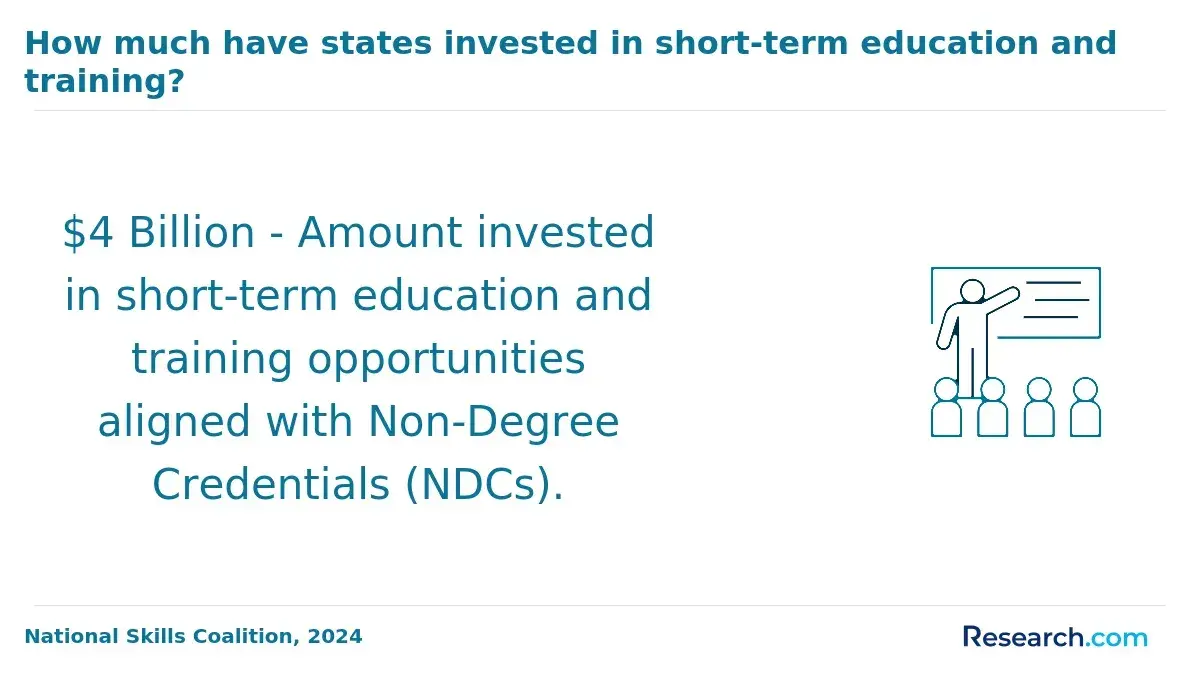
Total cost is broader than advertised tuition. Credit-bearing college certificates may charge per credit and add institutional fees. Noncredit providers may charge a single bundle price or subscription.
Books, software, certification exams, proctoring, tools, lab kits, travel, background checks, and clinical requirements can materially change the final amount.
This cost framework helps readers compare offers that use different pricing models:
| Program type | Typical duration pattern | Primary cost drivers | Funding considerations |
| College credit certificate | One or more academic terms | Per-credit tuition, fees, books, technology | Federal aid eligibility depends on the program and institution; ask the financial-aid office |
| Graduate certificate | Several advanced courses, often part time | Graduate tuition per credit and course materials | Employer tuition assistance may be relevant; aid rules vary |
| Noncredit career certificate | Weeks to months | Bundle price, subscription, exam voucher, software | May not qualify for federal aid; payment plans vary |
| Exam-preparation course | Days to months | Course fee, exam registration, retake costs | Employer reimbursement may depend on passing or job relevance |
Request a written total-cost estimate and compare cost per completed outcome, not just the lowest sticker price. A lower-cost program can be poor value if it lacks required preparation, practical training, or credible assessment; a higher-cost program needs a clear reason, such as transferable credit, supervised experience, or recognized exam eligibility.
What typical curriculum and learning activities are included in asynchronous certificates?
A well-designed asynchronous certificate uses more than recorded video. Expect a sequence of learning objectives, assigned readings or demonstrations, applied assignments, instructor feedback, and assessments that show whether learners can perform the intended skill.
Academic certificates may include graded courses and transcripted credit, while professional training may use projects, simulations, and completion milestones instead.
Typical learning activities differ by field:
- Business and technology programs may use case studies, spreadsheets, dashboards, coding exercises, and portfolio projects.
- Healthcare administration programs may use coding scenarios, privacy exercises, claims workflows, and terminology assessments.
- Trade-theory programs may use safety modules, calculations, equipment simulations, and troubleshooting exercises before in-person practice.
- Legal and criminal justice programs may use document analysis, research memos, policy scenarios, and ethics discussions.
- Creative programs may use briefs, iterative drafts, critiques, and portfolio-ready deliverables.
Review how learning is assessed. A certificate with only passive videos may be sufficient for basic exploration, but job-focused training is stronger when it requires applied work, feedback, and verifiable evidence of competency. Also confirm whether group work has fixed meeting times; this is a common surprise for learners expecting complete scheduling freedom.
What careers and job roles can these online certifications help you qualify for?
Online certificates can help learners build skills for entry-level work, transition into an adjacent role, prepare for an industry examination, or progress toward a degree.
Their value is highest when a specific employer, occupation, or licensing pathway recognizes the coursework. A certificate alone may not meet hiring requirements where employers expect experience, a degree, a portfolio, a security clearance, or state licensure.
The following examples show realistic ways certificate study can support career movement without implying automatic qualification:
| Certificate focus | Potential related roles | Usually needs more than online coursework? |
| Medical billing and coding | Billing specialist, coding support, patient-account representative | Often yes; employers may prefer an industry certification or experience |
| IT support or cybersecurity foundations | Help desk technician, technical support specialist, junior security support | Often yes; labs, a portfolio, and vendor certifications can help |
| Project management | Project coordinator, operations coordinator, administrative specialist | Yes; advanced project-management certifications can require experience |
| Paralegal studies | Legal assistant, litigation support, document specialist | Often yes; employer preferences and local market expectations differ |
| Digital design | Production artist, junior designer, content-creation support | Yes; a current portfolio is typically essential |
Start with job postings in your target area and identify recurring requirements before selecting a curriculum. If you are uncertain which broader fields have durable demand, review top degrees in demand for the future alongside certificate options; a degree, apprenticeship, or longer credential may be the better match for some occupations.
Artificial intelligence is also changing entry-level work. Choose programs that teach verification, ethical use of tools, communication, and role-specific judgment rather than relying only on software features that may change quickly.
What salary ranges and advancement opportunities are associated with certificate-based roles?
Salary information should be interpreted at the occupation level, not as a promised return from a certificate. The BLS reported a 2023 median annual wage of $48,780 for all occupations; pay for certificate-related roles can fall below or above that benchmark depending on industry, location, experience, shift differentials, licensure, and employer size. A short credential may help demonstrate readiness, but it does not establish a worker's wage.
Advancement usually comes from combining training with documented performance, experience, a stronger portfolio, a professional certification, or further education.
For example, an IT support certificate may be an entry point toward networking or security study; a medical coding course may precede a certification exam and specialized coding experience; and a design certificate may support a portfolio that leads to more complex work.
Use occupational pay data as a screening tool, then test the path against local requirements:
- Compare the occupation's typical education, training, licensing, and experience expectations with the exact certificate curriculum.
- Review several current job postings for entry-level and next-step roles to see whether the certificate is recognized.
- Calculate the full education cost, likely time away from work, and any exam or equipment expenses.
- Look for a progression path rather than treating an entry credential as a final destination.
Students primarily optimizing for income should compare role requirements, not simply program marketing. Resources on highest paying majors can help clarify when a longer degree path may offer different opportunities than a short certificate.
How can students evaluate and choose a reputable asynchronous online certification program?
A reputable asynchronous certificate should make it easy to identify the issuer, learning outcomes, instructors, format, total cost, and the credential earned. The best option is not automatically the fastest or cheapest; it is the one that meets the requirements of your intended next step with the least unnecessary time and expense.
Use this decision process to compare programs consistently:
- Define one target outcome, such as qualifying for an exam, building a portfolio, earning transferable credit, or gaining introductory workplace skills.
- Search local and remote job postings to identify the degree, certification, experience, software, and license requirements employers actually request.
- Match the program's stated outcomes to those requirements, including any required labs, clinicals, internships, or supervised hours.
- Verify institutional accreditation, program approval, or certification-exam eligibility directly with the relevant authority.
- Compare total costs, pacing, withdrawal rules, support services, accessibility, and technology requirements in writing.
- Ask how students receive feedback and whether the program produces a transcript, portfolio, exam preparation, or only a completion record.
Common mistakes include enrolling because a provider promises "job-ready" status without defining the job, overlooking exam and equipment fees, assuming credits will transfer, and choosing a fully online program for a hands-on licensed occupation. Avoid providers that will not clearly answer whether work is asynchronous, whether deadlines exist, or who issues the credential.
Service members and veterans should also compare military tuition policies, credit for prior learning, and support services before enrolling. A list of military friendly online colleges can be a useful starting point when a credit-bearing certificate or longer academic pathway is under consideration.
Other Things You Should Know About
They can be, especially when issued by a recognized college, university, professional association, or established provider and when the curriculum matches the job. Employers generally care more about relevant skills, recognized credentials, experience, and work samples than whether lectures were live.
Sometimes, but not always. Many asynchronous programs have weekly deadlines, fixed term dates, timed assessments, and instructor grading periods. Read the academic calendar and course syllabus rather than relying on "self-paced" marketing language.
Only if the certifying organization's eligibility rules say it does. Some exams require education, work experience, training from an approved provider, or a combination. Confirm eligibility directly with the organization that administers the exam.
It may be available for eligible certificate programs at participating institutions, but many short noncredit programs do not qualify. Ask the school's financial-aid office whether the specific program is eligible before you enroll or sign a payment agreement.
References
- Students say industry-recognized certifications provide value https://www.ccdaily.com/2025/03/students-say-industry-recognized-certifications-provide-value/
- How Much Should You Charge for an Online Course? 5 Pricing Models With Real Numbers https://oasis-lms.com/post/how-much-should-i-charge-for-an-online-course-a-complete-pricing-guide
- Weighing the Value of Industry-Based Certifications against Their Costs https://www.nasbe.org/weighing-the-value-of-industry-based-certifications-against-their-costs/
- Top Online Courses for Certifications for Tech Jobs https://sciontechnical.com/top-online-courses-certifications-tech-jobs/
- Which Online Certification Programs Are Recognized by Employers in the U.S.? https://fellow.msicertified.com/blog/which-online-certification-programs-are-recognized-by-employers-in-the-u-s
- How to Make Asynchronous Online Courses That Learners Enjoy https://blog.topclasslms.com/asynchronous-online-courses
- Alternative Pathways in Action https://www.jff.org/blog/alternative-pathways-in-action/
- How Long Do eLearning Courses Take to Complete? https://www.elearningcollege.com/elearning-blog/how-long-do-elearning-courses-take-to-complete
- Coursera's Latest Learner Outcomes Report Highlights the Real-World Impact of Online Learning https://investor.coursera.com/news/news-details/2023/Courseras-Latest-Learner-Outcomes-Report-Highlights-the-Real-World-Impact-of-Online-Learning/default.aspx
- The Rise of Online Certifications: Are They the Future of Professional Learning? | Adding Value Consulting https://www.addingvalue.nu/post/the-rise-of-online-certifications-are-they-the-future-of-professional-learning-018