2027 Best Certificate Programs With Fast Admissions Decisions

Co-Founder and Chief Data Scientist
Choosing a certificate program often means balancing urgency against quality: you may need a career change, a faster route into training, or a credential before the next term begins. Fast admissions decisions are common in open-enrollment, workforce, and online programs, but speed does not prove a program will meet employer or licensing requirements.
The U.S. Bureau of Labor Statistics reported a 2024 median annual wage of $49,500 for all occupations, making short training worth evaluating carefully against local job requirements. This guide helps you compare timelines, costs, recognition, and career paths before enrolling.
Key Things You Should Know
- Fast admissions usually means an application can be reviewed in days or on a rolling basis; it does not necessarily mean immediate enrollment, financial-aid clearance, or eligibility for clinical and licensing programs.
- Credit-bearing college certificates can be stackable toward an associate degree, while noncredit career certificates are often faster and more focused but may have limited transfer value.
- For career planning, compare the total cost, required equipment and exams, accreditation or state approval, and local job postings - not only the advertised program length.
Top 10 Best Certificate Programs With Fast Admissions Decisions
Popular Trade School Programs
Fast-admission trade options often include welding, HVAC, electrical helper training, plumbing, industrial maintenance, diesel technology, CDL preparation, and building trades certificates. Programs may run from a few weeks to about one year, depending on lab hours and state requirements.
A short certificate can build entry-level skills, but apprenticeships are often the stronger route for electricians and plumbers because paid supervised experience matters. Ask whether tuition includes tools, safety gear, testing fees, and employer connections. Campus labs are usually preferable when hands-on practice is central to the occupation.
Healthcare Programs
Common quick-entry healthcare options include nursing assistant, phlebotomy, medical assisting, medical billing and coding, pharmacy technician, and patient care technician certificates. Admissions may be fast, but clinical placement, immunizations, background checks, drug screening, and CPR requirements can slow the actual start date.
A school certificate is not the same as national certification or a state license. Nursing assistant and phlebotomy rules vary substantially by state. Confirm that the program meets the requirements of the employer, certifying body, or board where you intend to work before paying a deposit.
Criminal Justice / Law Programs
Certificate and associate options may cover criminal justice, legal studies, paralegal support, corrections, homeland security, or public safety administration. They can suit people seeking foundational knowledge for administrative, records, compliance, security, or support roles.
A certificate alone generally does not qualify someone to practice law, become a police officer, or work as a paralegal in every setting. Police and corrections roles commonly require agency-specific screening, fitness testing, background investigation, and academy training. Prospective paralegals should check whether local employers prefer an approved paralegal education pathway.
Arts & Design Programs
Graphic design, digital media, web design, photography, animation, UX foundations, and interior design certificates can offer relatively quick admissions decisions, especially online. Portfolio quality often matters more to employers than the certificate name alone.
Choose a program with software access, current project work, instructor feedback, and opportunities to create a portfolio aligned with actual job postings. A short certificate may be useful for targeted skills, while an associate degree can make more sense for learners who need broader design foundations, studio time, and a larger body of work.
What types of certificate programs offer the fastest admissions decisions?
The fastest admissions decisions usually come from programs with rolling admission, open enrollment, frequent start dates, and limited selective-entry requirements. These include noncredit workforce certificates, continuing-education programs, online career-training programs, and some community-college certificates.
They are a good fit when you need a practical skill quickly and the target occupation does not require a lengthy clinical sequence, competitive cohort, or state-approved curriculum.
Program speed and admissions speed are separate issues. A program may accept applicants quickly but require you to wait for a cohort, background clearance, clinical placement, or licensing exam window. If your broader goal is a college credential rather than a short workforce program, compare a fastest degree to get pathway with a certificate's shorter timeline and narrower scope.
| Program type | Typical decision speed | Best use | Key limitation |
| Open-enrollment noncredit certificate | Often same day to several days after payment or registration | Focused workforce skill training | May not carry college credit or qualify for aid |
| Community-college credit certificate | Often days to several weeks | Stackable academic or technical training | Placement, prerequisite, and term deadlines may apply |
| Online professional certificate | Often immediate account enrollment | Technology, business, or portfolio skills | Employer recognition varies by provider and field |
| Selective healthcare certificate | Often weeks or longer | Clinical career preparation | Health screening and cohort capacity can delay entry |
How do online and campus certificate programs compare for speed and flexibility?
Online certificates can be the fastest option when instruction is fully asynchronous and enrollment is continuous. They work well for billing and coding theory, IT support, bookkeeping, business software, and digital design. Campus or hybrid delivery is usually more practical for welding, HVAC, clinical healthcare training, and any field where equipment, labs, or supervised practice are essential.
The comparison below separates convenience from the learning conditions that employers and regulators may expect:
| Factor | Online certificate | Campus or hybrid certificate |
| Application and start timing | Often frequent or continuous starts | Usually tied to academic terms or cohorts |
| Schedule flexibility | Strong for asynchronous coursework | Fixed lab, clinic, or meeting times are common |
| Hands-on training | Limited unless local externships are arranged | Direct access to labs, equipment, and instructors |
| Best fit | Self-directed learners in desk-based fields | Skills requiring demonstration and supervised practice |
| Main risk | Assuming online training meets licensure rules | Underestimating travel, tools, and schedule demands |
If you want a degree-level option with flexible delivery rather than a standalone certificate, review online degree programs and compare their longer commitment with potential transfer and advancement value.
What admission requirements do fast certificate programs typically have?
Fast-admission certificate programs typically request a short application, identity and residency information, payment arrangements, and proof of education when required. Many open-enrollment programs do not use standardized tests and may not set a competitive GPA threshold. Credit-bearing college certificates may still require a high school diploma or equivalent, placement measures, transcripts, and prerequisite courses.
Healthcare, public safety, and programs involving minors or patients can add compliance steps. Before applying, ask admissions whether acceptance is conditional and whether these items must be completed before classes or before an externship:
- Official transcripts or proof of high school completion, if the program requires them.
- Background check, drug screening, immunization records, physical examination, or CPR training for clinical placements.
- Placement testing or prerequisite coursework for college-level math, English, anatomy, or technical classes.
- Proof of age, driving record, or state eligibility for CDL and other regulated training.
A common mistake is treating an admission email as final clearance for the career pathway. Read the conditions of enrollment and identify the deadline for each additional requirement.
How can students verify accreditation and program quality for certificate programs?
Program quality should be verified before you submit tuition, especially when an advertised certificate promises rapid entry into a regulated field. Institutional accreditation is most relevant for credit-bearing colleges and may affect transfer credit and federal student-aid eligibility.
Programmatic accreditation or state approval can be more important for healthcare, skilled trades, and programs tied to licensing rules. Industry certificates offered by vendors or professional organizations should be evaluated by whether employers in your area recognize them.
Use this verification sequence before enrolling:
- Identify the exact job title you want and review several local job postings for required education, certification, and experience.
- Ask the provider whether the credential is credit-bearing, noncredit, stackable, and transferable, then request the answer in writing.
- For regulated occupations, confirm approval directly with the relevant state board, agency, or certifying organization.
- Ask for the program's total charges, completion requirements, clinical or externship arrangements, and refund policy.
- Contact the institution's registrar or accreditation office if the school's marketing language is unclear.
Red flags include vague claims about "accreditation," guaranteed employment language, pressure to pay immediately, no explanation of licensing eligibility, and a refusal to identify the legal institution awarding the credential.
How long do fast certificate programs usually take to complete and what do they cost?
Fast certificates can take from a few weeks to roughly one year, but the actual timeline depends on required instructional hours, lab access, clinical placement, and whether you attend full time. Noncredit online programs may be self-paced.
Credit-bearing certificates typically follow terms and may take longer part time. Compare the published clock hours or credits, not just marketing phrases such as "finish fast."
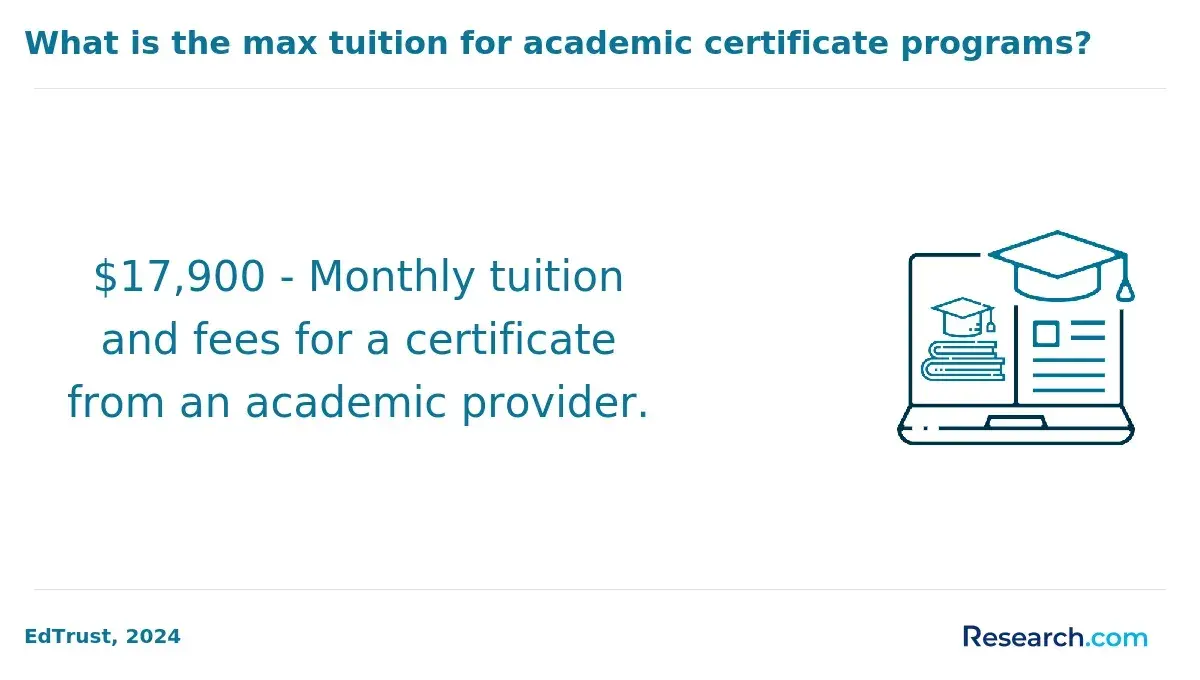
Cost varies more by field and provider than by program length. Tuition is only one component; required supplies can materially change the total. The U.S. Department of Education's College Scorecard and each school's net-price information can help with college-based comparisons, while private training providers should provide a complete written price breakdown:
| Cost category | Why it matters | What to confirm |
| Tuition or registration fee | Base instructional charge | Whether the quoted price covers the entire program |
| Books, software, and tools | Can be substantial in trades and design | Required brands, licenses, and replacement costs |
| Clinical, lab, or exam fees | Common in healthcare and regulated fields | Which fees are mandatory and refundable |
| Transportation and unpaid time | Campus labs and externships create indirect costs | Schedule, location, parking, and work-hour impact |
| Certification or licensing expenses | Often paid after program completion | Exam, application, fingerprinting, and renewal fees |
Federal aid may be available for eligible students in qualifying credit-bearing programs, but many short noncredit certificates do not qualify. Ask about employer tuition assistance, state workforce grants, payment plans, and refund terms before borrowing.
Which careers and entry-level roles can fast certificate programs support?
A fast certificate can support entry-level roles when its training matches a defined employer need. Examples include IT support technician, help desk assistant, bookkeeping clerk, medical receptionist, pharmacy technician trainee, nursing assistant, phlebotomy technician, welder helper, HVAC installer helper, CDL driver, legal administrative assistant, and junior graphic-production assistant. Actual titles and hiring standards differ by employer and state.
Certificates are strongest when they provide a verifiable skill, supervised practice, portfolio, or preparation for a recognized exam. They are less likely to be enough on their own for occupations requiring an associate degree, bachelor's degree, apprenticeship completion, extensive experience, or licensure.
For broader role ideas, explore high paying certificate jobs while checking the education and experience requirements attached to each occupation.
AI adoption is changing entry-level work in office, design, and technology roles. Choose programs that teach practical use of current tools, quality control, communication, privacy, and problem-solving rather than training only on a single platform.
What salary ranges and earning potential are common after completing certificate programs?
Earning potential depends on the occupation, location, work schedule, employer, experience, union coverage, and required licensure - not simply on completing a certificate. Use occupational wage data as context rather than a promise of outcomes.
The BLS reported that the median annual wage for all occupations was $49,500 in May 2024; roles above or below that figure may require very different levels of education, training, and responsibility.
For a realistic earnings estimate, compare three items: entry-level job postings in your commuting area, BLS occupational wage information for the relevant role, and the program's documented outcomes when available.
Be cautious when a provider highlights salaries for a broad occupation but does not show whether its graduates qualify for that role. The most useful comparison is usually net cost and time away from work against the entry-level opportunities the credential can credibly support.
What licensing or professional certification may be required after a certificate program?
Completing a certificate program may prepare you for a separate certification examination or a state license, but it does not automatically award either one. Certification is usually issued by a professional association, vendor, or certifying body after you meet its requirements. Licensure is permission from a government authority to practice in a regulated occupation.
Common examples include state nurse aide registration, commercial driver licensing, EPA Section 608 certification for technicians who handle refrigerants, pharmacy technician requirements that vary by state, and national exams used by some medical assisting, coding, and IT employers.
Verify the exact rule where you intend to work. Ask whether the program meets eligibility requirements, whether supervised hours are included, whether exam preparation is included, and whether graduates have any restrictions on testing or licensure.
How should students choose the best fast-admission certificate program for their goals?
The best fast-admission certificate is the one that reaches your specific next step without creating a credential dead end. Choose a short, noncredit program when you need a focused skill and local employers recognize the training.
Choose a credit-bearing or stackable college certificate when you may later pursue an associate degree. Consider an apprenticeship for licensed trades and a longer approved program for clinical careers.
Before committing, use the following decision process to compare providers fairly:
- Write down the target job, the latest date you can start, and the maximum total amount you can spend.
- Check at least five local job postings to identify required skills, licenses, credentials, and schedule expectations.
- Compare each program's decision timeline, first available class date, completion timeline, delivery format, and total out-of-pocket cost.
- Verify institutional accreditation, program approval, and exam or license eligibility when those factors apply to the field.
- Ask whether credits transfer or stack, whether career services are included, and what happens if a clinical site or required class is unavailable.
- Review the cancellation and refund policy before making a nonrefundable payment.
Application fees can add to the cost of comparing college-based options. If that is a barrier, consider a university with free application fee while still confirming that its certificate meets your career and location requirements.
Other Things You Should Know About
Some open-enrollment and online noncredit programs can confirm enrollment within days or immediately after registration. College-based and selective programs may take weeks, especially when transcripts, prerequisites, background checks, or clinical placements are required.
It depends on the school and program. Eligible credit-bearing programs may offer federal aid to qualifying students, while many short noncredit programs do not. Ask the financial-aid office or provider about eligibility, workforce grants, employer reimbursement, payment plans, and total borrowing costs.
They can be, particularly when they teach an in-demand skill and come from a recognized college, industry provider, or vendor. Employer value depends on the field. For regulated or hands-on work, confirm that online delivery satisfies practical-training and licensing requirements.
A certificate is usually better when you need a focused skill quickly and do not need broad general education credits. An associate degree may be better when the occupation requires it, when you want wider advancement options, or when you expect to transfer into a bachelor's program later.
References
- Ultimate List of Colleges with Rolling Admissions in U.S. https://www.ivywise.com/blog/top-colleges-rolling-admissions-us/
- Students say industry-recognized certifications provide value https://www.ccdaily.com/2025/03/students-say-industry-recognized-certifications-provide-value/
- Colleges With Rolling Admissions: The Full List and the October Anchor Strategy https://orieladmissions.com/colleges-with-rolling-admissions/
- How Different Streamlined Admissions Models Shape the Student Experience https://www.ihep.org/how-different-streamlined-admissions-models-shape-the-student-experience/
- Early Action vs. Regular Decision | University of Bridgeport https://www.bridgeport.edu/news/early-action-vs-regular-decision/
- The Benefits of Certificate Programs in Higher Education https://moderncampus.com/blog/benefits-of-certificate-programs.html
- Factors in the Admission Decision - National Association for College Admission Counseling (NACAC) https://www.nacacnet.org/factors-in-the-admission-decision/
- 12.1.7 Policy for Applicants for Graduate Admission https://charleston.edu/policy/policies-list/student/academic/applicants-for-graduate-admission.php
- How Attaining Industry-Recognized Credentials in High School Shapes Education and Employment Outcomes https://fordhaminstitute.org/national/research/industry-recognized-credentials
- Early Action vs. Early Decision vs. Regular Decision: Full Guide https://collegewise.com/blog/early-action-early-decision-regular-decision-full-guide