2027 Best Certifications for Military Spouses

Co-Founder and Chief Data Scientist
Frequent PCS moves can interrupt a career just as it gains momentum. The best certifications for military spouses emphasize portable skills, flexible delivery, and credentials employers recognize across locations. U.S. Bureau of Labor Statistics projections published in 2024 show healthcare support and skilled-trades occupations remain important sources of openings, but state licensing can complicate relocation. This guide compares certificate programs, industry certifications, associate-degree paths, costs, MyCAA considerations, and career outcomes so you can choose training that fits both your goals and military life.
Key Things You Should Know
- Portable options usually include IT support, medical billing and coding, project coordination, bookkeeping, pharmacy technician training, and skilled trades; however, licenses for nursing, cosmetology, dental assisting, and legal work can vary by state.
- MyCAA may provide up to $4,000 in tuition assistance for eligible spouses pursuing approved licenses, certifications, or associate degrees; confirm eligibility and school approval before paying a deposit.
- A short certificate can build entry-level skills in months, while an associate degree generally takes about two years and may offer broader advancement options; neither automatically guarantees a job, license, or salary.
Top 10 Best Certifications for Military Spouses
Popular Trade School Programs
Trade certificates in HVAC, electrical technology, welding, automotive service, and commercial driving can lead to hands-on local work. An HVAC or electrical certificate may prepare a student for entry-level employment and, where required, an exam or supervised apprenticeship; it is not itself a journeyman license. Associate degrees add general education and technical coursework but take longer. These paths fit spouses who can attend labs or arrange training after a move. Before enrolling, ask whether clinical/lab hours transfer and whether a new state requires separate registration or licensing.
Healthcare Programs
Healthcare certificates commonly prepare learners for medical assisting, pharmacy technician, medical billing and coding, dental assisting, or nursing assistant roles. A certificate is school-issued; credentials such as Certified Pharmacy Technician are awarded by a certifying body after eligibility and an exam. Medical coding and billing can be comparatively portable and remote-friendly, while direct-care roles often require in-person clinical training and state-specific rules. An associate degree in nursing is a longer route that may qualify graduates to seek RN licensure, subject to board requirements and the NCLEX-RN.
Criminal Justice / Law Programs
Paralegal studies certificates and associate degrees teach legal research, drafting, civil procedure, and office technology. They can support work as a legal assistant or paralegal, but they do not authorize someone to practice law. Employers may prefer American Bar Association-approved paralegal education, although approval is program-specific rather than a universal requirement. Security-guard, court-reporting, and law-enforcement training have different state rules and may involve background checks, age requirements, physical standards, or licensing. Spouses seeking portability should favor legal research, compliance, or administrative skills over credentials tied to one agency.
Arts & Design Programs
Graphic design, UX design, digital marketing, photography, and web-content certificates can build portfolio-based skills that travel well. A school certificate documents completed coursework, while vendor certifications validate use of a particular platform or tool. Associate degrees may provide more structured portfolio development and broader design foundations. These programs suit spouses who enjoy project work and can show employers samples of their work. Choose a curriculum with current software, accessible instructors, and portfolio reviews; avoid programs that imply a credential alone will secure freelance clients or a remote design job.
Which certifications offer the best portable careers for military spouses?
The most portable choice is usually a credential that is nationally recognized, can be renewed remotely, does not depend on a state license, and maps to employers in many locations. Industry certifications are typically stronger for portability than a school-issued certificate alone because an independent organization sets the standards.
This comparison separates credentials that can travel readily from those that may require new approval after a PCS.
| Path | Portability | Best fit | Important limitation |
| IT support or cybersecurity certification | High | Remote-capable technical support and entry-level IT | Employers may still expect hands-on experience or a portfolio. |
| Medical billing and coding certificate plus certification exam preparation | High | Healthcare administration and revenue-cycle work | Certification requirements and employer preferences vary. |
| Bookkeeping or payroll certification | High | Small business, accounting support, remote contract work | Not equivalent to CPA licensure. |
| Project management certification | High after experience requirements are met | Administrative, operations, and project-support roles | Some advanced certifications require documented work experience. |
| Licensed clinical or beauty occupation | Moderate to low | In-person patient or client care | State licensure, endorsements, and supervised-hour rules can apply. |
How do military spouse-friendly certification programs work and what do they provide?
Military spouse-friendly programs are not a separate credential category. They are certificates, certifications, associate degrees, or training programs designed with features that reduce disruption from deployments, PCS orders, childcare demands, and changing schedules.
Useful supports vary by provider, so compare what is actually included rather than relying on a military-friendly label.
- Asynchronous online coursework or multiple start dates can make it easier to continue during a move.
- Recorded lectures, virtual tutoring, and career coaching may reduce the effect of temporary schedule changes.
- Military enrollment advisors may help with benefit paperwork, transfer evaluation, and re-entry after a break.
- Programs with national exam preparation can be more portable than training aimed only at one local employer.
Ask whether the credential is credit-bearing. Credit-bearing college certificates may stack into an associate or bachelor's degree, but transfer acceptance is decided by the receiving institution. Noncredit career training may be faster and less expensive, yet usually does not transfer as college credit.
Which certifications qualify for MyCAA and other military education benefits?
MyCAA is a Department of Defense tuition-assistance program for eligible military spouses. It can provide up to $4,000 toward approved education and training that leads to a license, certification, certification exam, associate degree, or continuing education credential in an eligible career field. Eligibility, funding rules, and approved education plans should be verified through the official MyCAA process before enrollment.
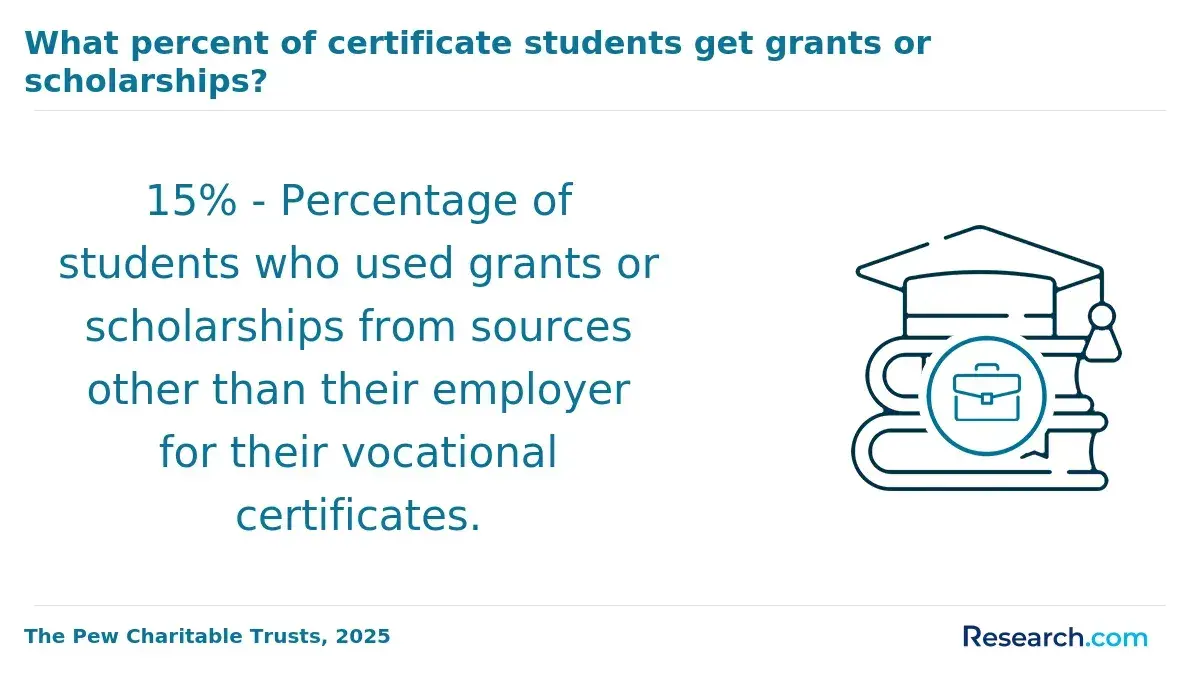
MyCAA is not the only way to lower costs. Compare military scholarships, school military discounts, workforce grants, employer support, and federal aid when the program is eligible. A spouse pursuing a longer degree after a certificate can also compare a cheap bachelor degree online option, but should first confirm that prior coursework will transfer.
Do not assume every provider qualifies. A bootcamp, exam voucher, professional membership, equipment charge, background check, clinical fee, or licensing fee may sit outside approved tuition assistance even when the underlying program is eligible.
What admission requirements and prerequisites do common military spouse certifications have?
Requirements depend on the credential type. A noncredit industry course may only require payment and basic computer access. A college certificate or associate degree often requires a high school diploma or equivalent and an application. Healthcare, law enforcement, and some trade programs can add immunizations, drug screening, criminal background checks, entrance testing, physical requirements, or prerequisite courses.
Review the requirement category before applying because a missed prerequisite can delay an otherwise short program.
| Program type | Common entry requirement | Extra condition to verify |
| Online IT or business certification course | Basic computer skills; sometimes no formal admission | Whether an exam, identity check, or renewal is required. |
| College certificate | High school diploma or equivalent | Placement, prerequisites, and whether credits stack into a degree. |
| Healthcare clinical program | Academic prerequisites and program admission | Background check, immunizations, CPR, clinical placement, and state rules. |
| Trade program | Age, diploma, or placement requirements may apply | Lab attendance, tools, safety gear, and apprenticeship pathways. |
| Professional certification | Exam eligibility set by the certifying body | Required education, training, work experience, and recertification. |
Do not confuse school admission with professional certification eligibility. The school may admit you to training even if a separate certifying organization requires more education or experience before you can sit for its exam.
How do online and campus-based certification programs compare for military spouses?
Online learning usually offers the strongest relocation flexibility, especially for IT, business, billing and coding, design, and project-support credentials. Campus or hybrid study is often necessary when instruction requires laboratories, tools, simulations, clinical rotations, or supervised practice. The best format is the one that meets the credential's real training requirements without creating a relocation barrier.
The following comparison helps distinguish convenience from program suitability.
| Format | Primary advantage | Primary trade-off | Best use |
| Fully online | Can continue through many moves | Requires reliable internet, self-management, and may not meet clinical rules | Business, IT, design, coding, and administrative credentials |
| Hybrid | Combines flexible theory with practical instruction | Scheduled labs or residencies can be difficult during PCS periods | Technical and allied-health programs |
| Campus-based | Direct access to equipment and local placements | Least portable before program completion | Trades, clinical training, and hands-on licenses |
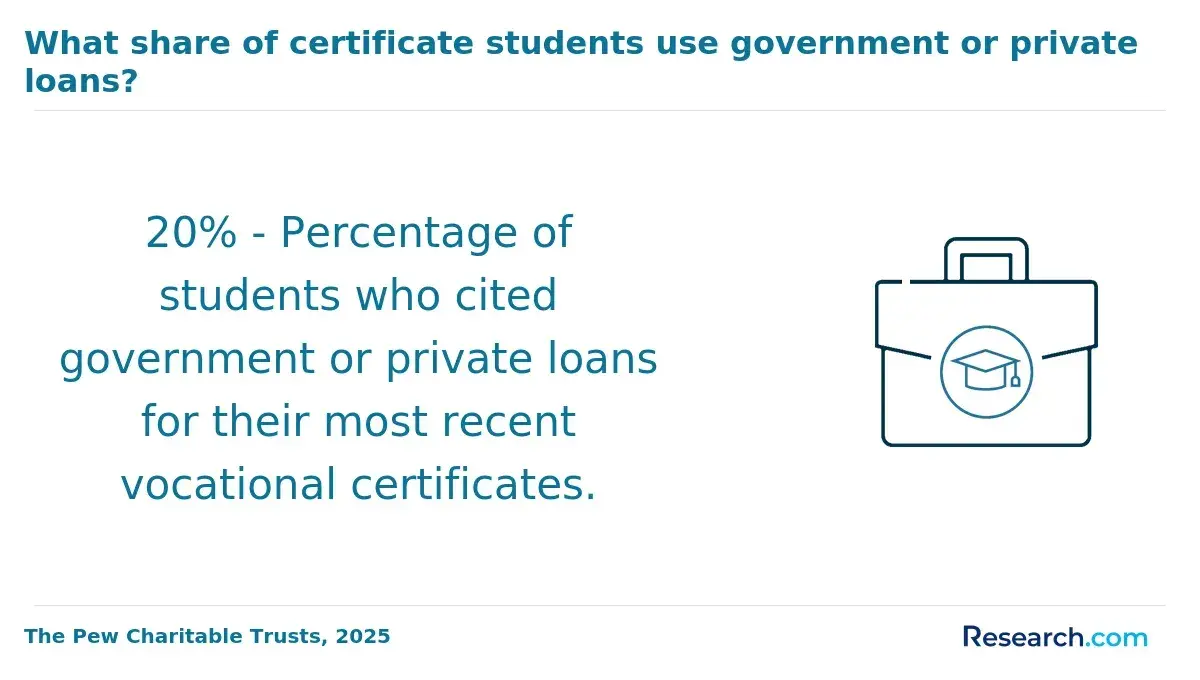
For a degree-based path, compare course schedules, residency requirements, and transfer policies at universities with no application fee. Waiving an application fee does not make a program low cost, so include tuition, proctoring, lab, software, and required-exam expenses in your comparison.
What accredited schools and organizations offer recognized military spouse certifications?
Choose providers based on the credential you need. For a college certificate or associate degree, verify that the institution holds institutional accreditation recognized by the U.S. Department of Education or the Council for Higher Education Accreditation and that any programmatic accreditation required for licensure is present. For an industry certification, verify the certifying organization, exam eligibility, renewal cycle, and employer recognition.
Healthcare students should confirm that the exact program - not merely the college - meets their state board and clinical-placement requirements. Paralegal students can investigate whether an American Bar Association-approved program matters for their intended employers. Trade students should ask whether training aligns with local licensing or apprenticeship requirements.
Red flags include pressure to enroll immediately, unclear total costs, promises of guaranteed employment, vague statements about accreditation, and a refusal to provide written details on exam eligibility. A reputable provider can explain what credential you earn, who awards it, and what it does not qualify you to do.
How long do these certifications take and what do they typically cost?
Time and cost range widely because an online certification exam course is not comparable to a clinical associate degree or equipment-heavy trade program. Short programs can be useful for a rapid career pivot, but lower tuition can be offset by exam fees, required tools, clinical costs, or the need for additional education later.
These ranges are planning estimates rather than quotes; obtain a written breakdown from each provider.
| Credential route | Typical timeframe | Typical cost factors | Value consideration |
| Self-paced professional certificate course | Weeks to several months | Course subscription, exam voucher, software | Useful for targeted skills; employer recognition matters. |
| College career certificate | About 6-12 months | Per-credit tuition, fees, books, labs | May be stackable if credits transfer. |
| Associate degree | About 2 years full time | Tuition, general education, program fees, clinical or lab costs | More depth for occupations requiring formal education. |
| Trade apprenticeship route | Often multiple years | Tools, licensing, union or program fees may apply | Can pair paid work with progressive skill development. |
Compare the full price against your likely need for future education. If a long-term academic goal requires advanced study, review a cheap online PhD only after confirming that your prior degree path meets doctoral admission requirements; short certificates alone generally do not.
What jobs, salary ranges, and career paths can these certifications lead to?
Career outcomes depend on local hiring, experience, licensure, clearance requirements, portfolio quality, and the credential itself. Use occupational data as context, not as a promise that finishing a short program produces a stated salary.
For example, BLS May 2024 wage data reported median annual pay of $50,250 for medical records specialists, $61,010 for paralegals and legal assistants, $59,810 for heating, air conditioning, and refrigeration mechanics and installers, and $61,300 for graphic designers. These are occupation-wide medians, including workers with different education and experience levels.
A practical career path may begin with entry-level support work, then add experience and a nationally recognized certification. Medical billing can progress toward revenue-cycle or compliance work; IT support can progress toward systems, cloud, or cybersecurity roles; bookkeeping can progress toward accounting support; and trade training can lead toward apprenticeship milestones. If a role is licensed, confirm the legal route before assuming a certificate is sufficient.
How can military spouses choose a reputable certification that fits their career goals?
Start with the job you want rather than the credential title. Search a sample of job postings near your current duty station and likely future locations, then identify recurring requirements: a license, an associate degree, a particular certification, software proficiency, security clearance eligibility, or a portfolio. This prevents paying for a program that employers do not value.
Before committing, use this sequence to compare programs consistently.
- Define whether you need portable remote work, local in-person work, or a path that can pause during PCS moves.
- Confirm whether the target occupation is regulated in each state where you may live.
- Identify whether you need a school certificate, an associate degree, an industry certification, or an apprenticeship.
- Request the complete cost, including exams, books, tools, labs, background checks, and renewal fees.
- Verify accreditation, program approval, exam eligibility, transferability, and MyCAA approval in writing.
- Compare completion schedules, withdrawal policies, career services, and the availability of supervised placements.
The common mistake is choosing the shortest advertised program without checking its outcome. A better choice may cost more or take longer if it includes required clinical experience, leads to a recognized exam, or provides credits that remain useful after the next move.
Other Things You Should Know About
Yes, if the spouse, program, school, and education plan meet current MyCAA rules. Online delivery alone does not determine eligibility. Obtain approval before enrolling or paying for coursework.
A certificate is usually awarded by a school after completing a course of study. A certification is awarded by an independent professional organization after meeting its standards, often including an exam, experience, or renewal requirements.
Nationally recognized IT, project-management, bookkeeping, payroll, and medical coding credentials are often more portable than state licenses. Still, employers set their own hiring requirements, and remote roles can be competitive.
Choose a certificate when you need focused, quicker training for an entry-level skill. Choose an associate degree when the occupation requires it, when you need broader preparation, or when you want credits that may support a later bachelor's degree.
References
- 7 Flexible Jobs for Military Spouses: Training Programs | U.S. Career Institute - USCI https://www.uscareerinstitute.edu/blog/7-flexible-jobs-for-military-spouses
- Key Facts To Know About the MyCAA Program for Military Spouses https://blackstone.edu/about-the-mycaa-program-for-military-spouses/
- The Hidden Workforce Reconsidered: Why Military Spouse Talent Is Too Valuable to Overlook - Hire Heroes USA https://www.hireheroesusa.org/hidden-workforce-military-spouse-talent/
- 15 Best Fully Remote Digital Nomad Jobs in 2026 https://www.gooverseas.com/blog/best-digital-nomad-jobs
- Licensing + Certification https://www.militaryfamily.org/licensing-certification/
- Free Certifications - MSOP https://joinmsop.org/certifications
- Certifications Under $4,000 Covered by MyCAA: Complete List https://www.militarytransitiontoolkit.com/blog/certifications-mycaa-covered-guide
- The Best Certifications for Remote Jobs in 2024 https://hubstaff.com/blog/certifications-remote-jobs/
- 8 Best Careers for Military Spouses | Outlier https://articles.outlier.org/careers-for-military-spouses
- 3 Surprising Things About Military Spouses in the Workplace https://www.hiringourheroes.org/stories/military-spouses-in-the-workplace/