2027 Best Online Certifications With Flat-Rate Tuition

Co-Founder and Chief Data Scientist
Choosing an online certificate is difficult when tuition models hide the real total cost. Flat-rate programs can offer predictable pricing, but an accelerated pace may increase workload and add fees for exams, materials, or clinical requirements. The U.S. Bureau of Labor Statistics projects healthcare support occupations to grow faster than the average for all occupations from 2024 to 2034, making career-focused training especially relevant.
This guide explains how flat-rate tuition works, which credentials fit different goals, and how to compare cost, recognition, and realistic career value.
Key Things You Should Know
- Flat-rate tuition usually means one price per term, session, or program—not necessarily one all-inclusive price—so confirm technology, exam, supplies, clinical, and graduation fees before enrolling.
- A certificate is an educational award; a professional certification is usually earned from a certifying body through an exam and sometimes work-experience requirements. Many careers need both training and a separate credential.
- For career outcomes, prioritize programs tied to recognized employer needs, state licensing rules, and measurable skills; BLS 2024-2034 projections show particularly strong demand in several healthcare support and skilled-trade occupations.
Top 10 Best Online Certifications With Flat-Rate Tuition
Popular Trade School Programs
Online trade certificates commonly cover HVAC fundamentals, electrical theory, welding safety, construction estimating, industrial maintenance, plumbing concepts, and diesel technology. They work best for learners seeking theory training before an apprenticeship, employer training, or supervised hands-on practice. Fully online study usually cannot replace shop hours required for skill development or licensing. An associate degree may suit students who want broader technical coursework and possible transfer credit, while a short certificate can be a faster introduction to an entry-level specialty. Verify whether local employers recognize the curriculum and whether required practical training is included.
Healthcare Programs
Healthcare certificates may prepare learners for medical billing and coding, pharmacy technician support, medical assisting coursework, health information, or patient-care roles. Programs vary sharply: billing and coding can often be completed online, while medical assisting, nursing aide, phlebotomy, and imaging pathways commonly require in-person labs or clinical placements. A school certificate does not automatically grant a state license or national professional certification. Choose a program only after checking the rules of the state where you plan to work, the eligibility requirements for any certification exam, and whether the school arranges clinical experiences.
Criminal Justice / Law Programs
Online certificates and associate degrees in criminal justice, paralegal studies, legal support, corrections, and cybersecurity law can build knowledge of procedure, ethics, report writing, and legal research. They may suit administrative, support, or public-safety-adjacent roles, but they do not qualify a graduate to practice law or automatically meet police-academy standards. Paralegal employers may prefer programs with institutional recognition or American Bar Association approval when available, although ABA approval is not universal. Students pursuing sworn law-enforcement work should first confirm academy, fitness, background-check, and state-specific requirements.
Arts & Design Programs
Online arts and design certificates often focus on graphic design, UX design, digital media, photography, web design, animation, or interior design fundamentals. These programs are strongest when they require portfolio projects, critique, software practice, and a final body of work that can be shown to employers or clients. A certificate can help career changers build targeted skills, while an associate degree may provide more extensive studio training and general education credits. Before paying a flat rate, confirm software costs, ownership of portfolio work, instructor feedback, and whether the field has state or title regulations.
What does flat-rate tuition mean for online certificate programs?
Flat-rate tuition is a pricing model in which a student pays a set amount for a defined enrollment period or entire program rather than paying separately for each course or credit. In subscription-style models, learners may complete more courses during a term without increasing tuition; in cohort programs, one published price may cover the prescribed curriculum. Neither model automatically means the program is inexpensive.
The most important comparison is the complete cost and the realistic time needed to finish. Learners who can devote consistent weekly time may benefit from a term-based flat rate, while students balancing unpredictable work or caregiving may pay for additional terms if they cannot maintain the expected pace. Students comparing flexible formats can also review online self paced college courses to distinguish true self-pacing from scheduled online instruction.
This comparison shows the questions behind the advertised price:
| Tuition model | How it is billed | Best fit | Main caution |
| Flat per term | One price for a fixed academic period | Fast, organized learners completing multiple courses | Extra terms can raise the total cost |
| Flat for program | One stated amount for the required curriculum | Students wanting cost predictability | Fees and excluded materials may remain |
| Per credit or course | Charge for each enrolled unit | Part-time learners needing flexibility | Total rises with added courses or repeats |
How do accredited online certification programs compare with campus-based options?
Accredited online certificate programs can offer the same curriculum outcomes as campus options when the provider uses qualified faculty, assessed learning, accessible student services, and any required supervised experience. Online delivery is often better for theory-heavy subjects such as business software, coding, billing, legal research, and design. Campus or hybrid study is often the safer choice for occupations requiring labs, equipment, clinical practice, or frequent instructor observation.
Institutional accreditation matters most for credit-bearing college certificates, transfer credit, federal aid eligibility, and confidence that a college meets recognized quality standards. Programmatic accreditation may matter more in regulated fields. Noncredit training providers may not be institutionally accredited; evaluate them through employer recognition, curriculum transparency, instructor qualifications, and eligibility for the intended industry certification exam.
The following comparison helps separate format from quality:
| Factor | Online certificate | Campus or hybrid certificate |
| Scheduling | Often flexible, with asynchronous options | Usually set meeting and lab times |
| Hands-on learning | May require local placements or intensives | Direct access to labs and equipment |
| Networking | Requires deliberate virtual outreach | More informal in-person contact |
| Licensure preparation | Appropriate only if clinical or field rules are met | Often easier to coordinate required practice |
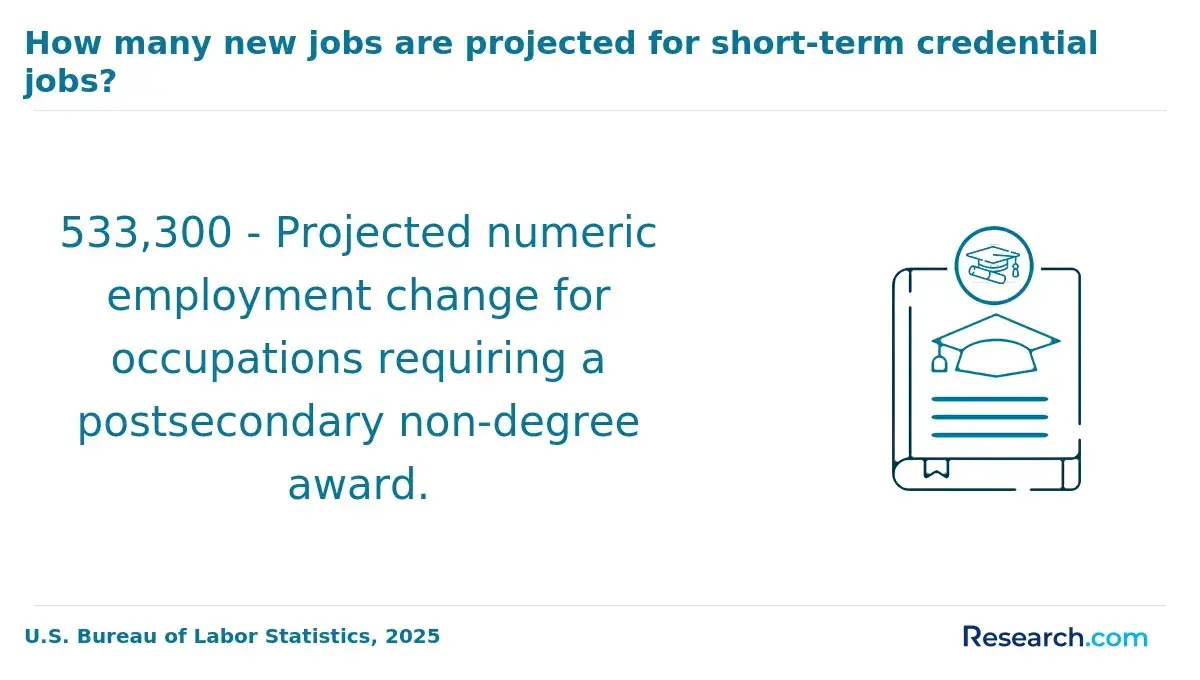
Which online certifications with flat-rate tuition lead to the strongest career outcomes?
The strongest career outcomes usually come from certificates that lead to a clearly defined next step: an employer-recognized certification exam, an apprenticeship, a supervised clinical pathway, or a job family with documented demand. Flat-rate tuition is valuable only when the pace, curriculum, and credential recognition fit that next step. A low-price program with no recognized outcome can be more expensive than a higher-priced program that meets employer or licensing expectations.
Healthcare support, information technology, skilled trades, accounting support, and project-focused business training can be practical options, but requirements differ by role. For example, BLS projects employment of medical assistants to grow 12% from 2024 to 2034, faster than the average for all occupations; that projection supports demand context, not a guarantee for any certificate holder. Compare potential pathways with certificate programs that pay well, then verify the specific employer requirements in your area.
Use this decision guide to match a program type to a realistic goal:
| Career direction | Potential credential path | What to verify before enrolling |
| IT support or cybersecurity | Career certificate plus industry certification preparation | Exam objectives, labs, employer recognition |
| Healthcare administration | Medical billing, coding, or health information certificate | Exam eligibility, coding systems, practicum needs |
| Skilled trades | Technical certificate followed by apprenticeship or field practice | State rules, hands-on hours, local hiring practices |
| Creative work | Design or digital media certificate | Portfolio requirements, software access, feedback quality |
What admission requirements do flat-tuition online certification programs typically have?
Admission requirements depend on whether the program is a credit-bearing college certificate, a noncredit career-training program, or an industry-provider course. Many entry-level noncredit programs require only age eligibility, identity verification, payment arrangements, and basic technology access. College certificates may require a high school diploma or equivalent, application materials, placement steps, or prerequisite courses. Graduate certificates normally require a bachelor's degree and may require prior coursework or professional experience.
Applicants should not assume that open enrollment means they are eligible for the career outcome. Regulated healthcare programs may require immunizations, background checks, drug screening, CPR training, and clinical-site approval. Certification exams can also impose education, training, or work-experience requirements separate from school admission.
Before applying, confirm these items directly with the provider and, where relevant, the licensing board:
- Ask whether the credential is credit-bearing, noncredit, or preparation for an external certification.
- Request the full list of academic prerequisites, technical requirements, and deadlines.
- Confirm whether prior credits, military training, or work experience can reduce coursework.
- Verify clinical, practicum, background-check, or residency requirements before paying a deposit.
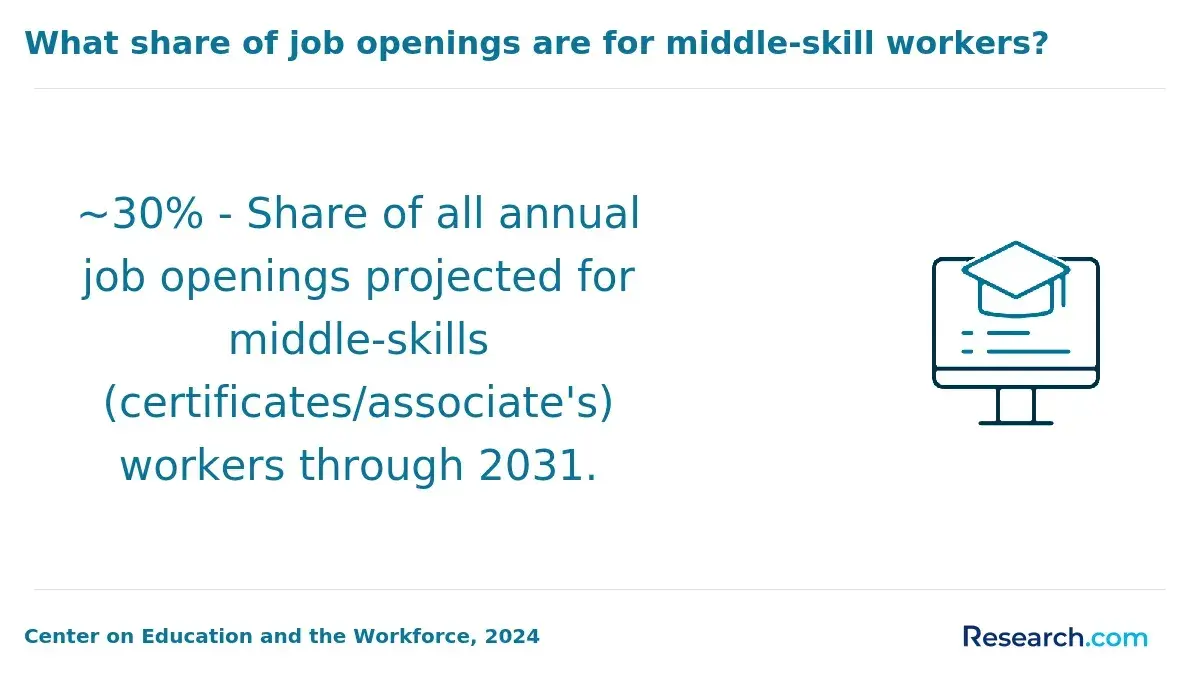
How long do flat-rate online certification programs take and what do they cost?
Completion time can range from a few weeks for a narrow professional certificate to roughly one year for many college certificate programs. Flat-rate term models reward rapid progress but should be judged against a realistic weekly workload, not the shortest advertised timeline. A program may be technically self-paced while still imposing assessment deadlines, mentor meetings, or term-end completion rules.
Costs should include more than tuition: textbooks, software, equipment, proctored exams, certification testing, travel for labs, liability coverage, and required clinical documents can materially change the total.
If a certificate is not enough for your target role, compare the cost of the full education path with affordable online masters only when a graduate credential is genuinely required for advancement.
These cost questions prevent an advertised flat rate from becoming an incomplete budget:
| Cost category | Often included in flat tuition? | Why it matters |
| Required courses | Usually | Confirm course limits and repeat-course charges |
| Digital materials and software | Sometimes | Creative and technical programs can require subscriptions |
| Certification exams | Often no | External exam fees are separate from school tuition |
| Labs, clinicals, or travel | Often no | Online programs may still require in-person participation |
What curriculum and skills are covered in leading flat-rate online certifications?
Leading flat-rate online certificates focus on demonstrable competencies rather than only seat time. Depending on the field, coursework may include industry terminology, safety, documentation, ethics, software tools, customer communication, data handling, troubleshooting, portfolio development, and preparation for external examinations.
Credit-bearing certificates generally use graded courses and may be stackable toward an associate or bachelor's degree; noncredit programs may instead issue a completion certificate or digital badge.
Ask to see a current course sequence and the assessments used to verify learning. The best fit includes practice that resembles the work: coding cases for billing students, simulated tickets for IT learners, estimates for construction students, or portfolio briefs for designers. Be cautious when a provider promises job readiness but cannot describe projects, feedback, instructor access, or evaluation standards.
How do licensing or professional certification requirements impact program selection?
Licensing and professional certification rules can determine whether an online certificate is useful in your state. Licensure is legal permission from a government authority to practice a regulated occupation. Professional certification is a credential from a private certifying organization that verifies defined knowledge or competence. A school certificate may prepare a student for either, but it is not automatically equivalent to either one.
This distinction is especially important in nursing, allied health, counseling, teaching, electrical work, plumbing, cosmetology, and other regulated fields. State rules may require approved education, supervised hours, examinations, background checks, and continuing education. Before enrolling, contact the relevant state board and ask whether the exact online program meets educational eligibility requirements. Do this before relying on a school's general statement that it "prepares" students for licensure.
Students seeking an industry credential should also check whether the program includes exam preparation, vouchers, hands-on labs, and any required work experience. A short course may be useful preparation even when it does not independently make someone exam-eligible.
What salary ranges and job titles can these online certifications support?
Salary information should be used as labor-market context, not as a promise that a certificate produces a specific income. Pay varies by location, experience, employer, shift, union status, licenses, degree level, and responsibilities. Some occupations require an associate degree, apprenticeship, license, or employer training beyond an online certificate.
For perspective, the BLS reported a 2024 median annual wage of $44,200 for medical assistants and $61,550 for computer user support specialists. These are occupational medians, not earnings estimates for certificate completers, and employers may set different education requirements. Higher-paying pathways often require progressive experience, a separate certification, or a degree.
The comparison below shows how to interpret common job targets responsibly:
| Job title example | How a certificate may help | Important limitation |
| Medical assistant | May provide foundational training and certification preparation | Employers and states may require specific credentials or clinical experience |
| Computer user support specialist | Can build troubleshooting and customer support skills | Some roles prefer degrees, experience, or vendor certifications |
| Bookkeeping clerk | Can teach accounting software and recordkeeping | Automation and employer requirements affect openings |
| Junior graphic designer | Can support portfolio development | Portfolio quality and experience often matter more than the certificate title |
For role-by-role options, explore certificate jobs that pay well while checking current local job postings for the credentials employers actually request.
How can students evaluate and choose reputable flat-rate online certification programs?
A reputable flat-rate program is transparent about its credential, tuition period, completion rules, faculty, student support, and limitations. Do not choose solely because a provider advertises an unlimited-course term or a short completion window. The right program is one you can finish at the required pace, and that is recognized for the outcome you want.
Use the following process before committing money or time:
- Define the target job, certification exam, apprenticeship, or degree pathway before comparing schools.
- Confirm whether the program is credit-bearing and whether credits transfer or stack into a larger credential.
- Calculate total costs, including fees, supplies, exam charges, travel, and likely additional terms.
- Check institutional and programmatic accreditation where it is relevant to aid, transfer, employment, or licensure.
- Review local job postings and ask employers whether they recognize the program or preferred certification.
- Get written answers about pacing, withdrawal policies, clinical placement support, and refund terms.
Common red flags include vague claims of accreditation, guaranteed job or salary promises, no published curriculum, pressure to enroll immediately, and unclear exam eligibility. A provider should be able to state exactly what credential you receive and what it does not qualify you to do. If the answer is unclear, consider a community college, established university, recognized industry association, apprenticeship sponsor, or another transparent provider.
Other Things You Should Know About
It can be cheaper if you complete a high number of courses within the billed term or finish the program on schedule. It can cost more if work, family obligations, failed assessments, or prerequisite delays require additional terms. Compare the full expected cost under both models.
Possibly. Eligibility depends on the school, whether the certificate is credit-bearing, program length, enrollment status, and federal or state aid rules. Noncredit career-training programs often have different funding options, such as employer tuition assistance, workforce grants, or payment plans.
Employers generally care more about the provider's credibility, the skills demonstrated, applicable accreditation or certification, and relevant experience than whether theory coursework was online. For hands-on and regulated careers, confirm practical training and licensure eligibility.
Sometimes, but only if the exact program meets the educational requirements set by the relevant state licensing board. Many licenses also require supervised hours, examinations, background checks, and continuing education beyond certificate completion.
References
- 9 Best Online Certificate Programs that Lead to Higher Pay https://blackstone.edu/9-best-online-programs-for-higher-pay/
- How Long Is University In Singapore? Full Guide https://singaporetuitionteachers.com/how-long-is-university-in-singapore-full-guide/
- Tuition & Payments Options | CG Spectrum https://www.cgspectrum.com/tuition-payment-options
- Part-Time Diplomas & Certificates https://www.nyp.edu.sg/adult-learner/course-types/part-time-diplomas-certificates
- Course Fees (Full Time Diploma) https://www.np.edu.sg/admissions-enrolment/academic-matters/course-fees
- How do Competency-Based Education Programs Structure their Tuition Models? - C-BEN https://www.c-ben.org/how-do-competency-based-education-programs-structure-tuition-models/
- NUS, NTU, SMU & Singapore Universities - Tuition Fees 2026 https://blog.moneysmart.sg/education/singapore-university-education-cost/
- Online Courses Singapore | Online Diplomas | PSB Academy https://www.psb-academy.edu.sg/online-courses
- EdAssist | Understanding college pricing models https://www.brighthorizons.com/resources/blog/edassist/understanding-college-pricing-models
- Certificates https://www.unionplus.org/benefits/education/certificates