2027 Best Online Certificate Programs for High-Paying Careers

Co-Founder and Chief Data Scientist
Choosing an online certificate can be difficult because "certificate" may mean a college credential, a short workforce program, or training for a separate certification exam. The right choice depends on the occupation, not marketing claims. U.S. Bureau of Labor Statistics projections for 2024-2034 show healthcare occupations growing much faster than the overall labor market, creating strong demand in several certificate-accessible pathways.
This guide helps career changers, working adults, and new students compare program types, expected costs, licensing limits, and realistic next steps before enrolling.
Key Things You Should Know
- High-paying certificate paths are usually tied to regulated healthcare roles, technical trades, or in-demand technology skills. A certificate alone does not guarantee employment or an occupation's median pay.
- For 2024-2034, U.S. employment is projected to grow 3.1% overall, while several certificate-relevant fields, including healthcare support, cybersecurity, and skilled trades, are projected to expand faster.
- Prioritize programs that clearly state total cost, delivery requirements, institutional accreditation or programmatic approval, exam eligibility, clinical placements, and the exact jobs they can realistically prepare you for.
Top 10 Best Online Certificate Programs for High-Paying Careers
Popular Trade School Programs
Online trade certificates work best for theory-heavy coursework paired with local labs, apprenticeships, or employer training. Common options include construction management, HVAC fundamentals, electrical technology, welding technology, industrial maintenance, CAD drafting, and automotive service. Fully online study rarely replaces hands-on practice required for skilled trades.
Choose a credit-bearing community-college certificate if you may later pursue an associate degree; choose an industry training program when an employer recognizes its curriculum. Confirm whether the program prepares you for apprenticeship entry, a manufacturer credential, or a state-specific licensing examination.
Healthcare Programs
Online healthcare certificates commonly cover medical billing and coding, pharmacy technician preparation, medical assisting theory, sterile processing, health information technology, and patient care fundamentals. Clinical roles such as practical nursing, dental hygiene, sonography, and radiologic technology require supervised in-person clinical education and may require an associate degree rather than a short certificate.
Medical coding can be a flexible nonclinical option, but employers may prefer candidates who also hold a separate certification. Before enrolling, verify clinical-placement responsibility, state approval, exam eligibility, background-check requirements, and whether the credential is academic or noncredit career training.
Criminal Justice / Law Programs
Online certificates in criminal justice, legal studies, paralegal studies, corrections, homeland security, and cybercrime introduce legal systems, documentation, ethics, and investigative concepts. A paralegal certificate can be useful for people who already hold a degree or have office experience, but it does not authorize independent legal practice.
Police, probation, and corrections roles often have agency-specific physical, background, academy, or state requirements beyond coursework. Choose a program with clear employer relevance in your region, especially because legal assistant hiring standards and public-safety requirements differ by jurisdiction.
Arts & Design Programs
Online arts and design certificates may focus on graphic design, UX design, digital marketing design, animation, photography, web design, or drafting. These programs can build a portfolio faster than a degree, but outcomes depend heavily on demonstrable work, software fluency, and client or internship experience.
A college certificate may offer structured critique and transferable credit; a professional certificate may be better for targeted software or workflow skills. Review student portfolios, required software costs, instructor feedback, and whether assignments create work you can legally include in a job-search portfolio.
What online certificates lead to the highest salaries?
The highest-paying occupations associated with short postsecondary training are often regulated clinical or technical roles, but eligibility varies substantially. A certificate can be a direct entry credential for some jobs, while other occupations require an associate degree, a bachelor's degree, clinical hours, or a state license.
This comparison separates occupational wage data from program outcomes. Median wages are for all workers in the occupation and should not be read as the typical earnings of certificate completers.
| Career area | Typical education route | Median annual wage context | Important limitation |
| Dental hygiene | Accredited associate degree plus licensure | $94,260 for dental hygienists, BLS May 2024 | A short online certificate is not sufficient for initial licensure. |
| Diagnostic medical sonography | Accredited certificate or associate pathway, usually with clinical training | $89,340 for diagnostic medical sonographers, BLS May 2024 | Employers may expect credentialing and hands-on clinical competence. |
| Information security | Certificate plus IT experience, or degree pathway | $124,910 for information security analysts, BLS May 2024 | Most analyst roles require more than an entry-level certificate. |
| Web and digital design | Portfolio-based certificate, associate, or bachelor's pathway | $95,380 for web developers and digital designers, BLS May 2024 | Portfolio quality and prior experience strongly affect access to roles. |
A certificate is most financially sensible when it fills a specific prerequisite: coding preparation for an existing healthcare worker, cybersecurity skills for an IT support professional, or a stackable college credential toward a degree.
Learners seeking a broader foundation may compare easy online associate degrees, particularly when target jobs require clinical education or general-education coursework.
Which online certificate programs have the best job outlook?
Programs with the best outlook usually prepare learners for work shaped by demographic demand, infrastructure needs, digitization, or security risk. Do not choose solely on projected growth: a rapidly growing occupation can still have limited local openings, high experience requirements, or strict licensure rules.
The following occupational outlook figures can help prioritize research. They represent national projections, not a forecast of openings in one city or a promise that any program graduate will be hired.
| Occupation | Projected growth, 2024-2034 | Why it may matter for certificate seekers |
| Information security analysts | 29% | Cybersecurity certificates can complement IT experience, though analyst jobs commonly require prior technical work. |
| Medical and health services managers | 23% | Healthcare administration certificates can support advancement, but management positions often require experience or degrees. |
| Wind turbine service technicians | 50% | Technical training and safety preparation can support entry, often alongside hands-on employer training. |
| Nurse practitioners | 40% | This is not a short-certificate path; it requires advanced nursing education and licensure. |
For an entry-level route, look for occupations where postings in your area explicitly accept the credential you plan to earn. For an advancement route, ask whether employers value the certificate alongside your current experience.
AI adoption also makes it important to choose programs that teach verification, privacy, documentation, client communication, and hands-on judgment, not only routine software tasks.
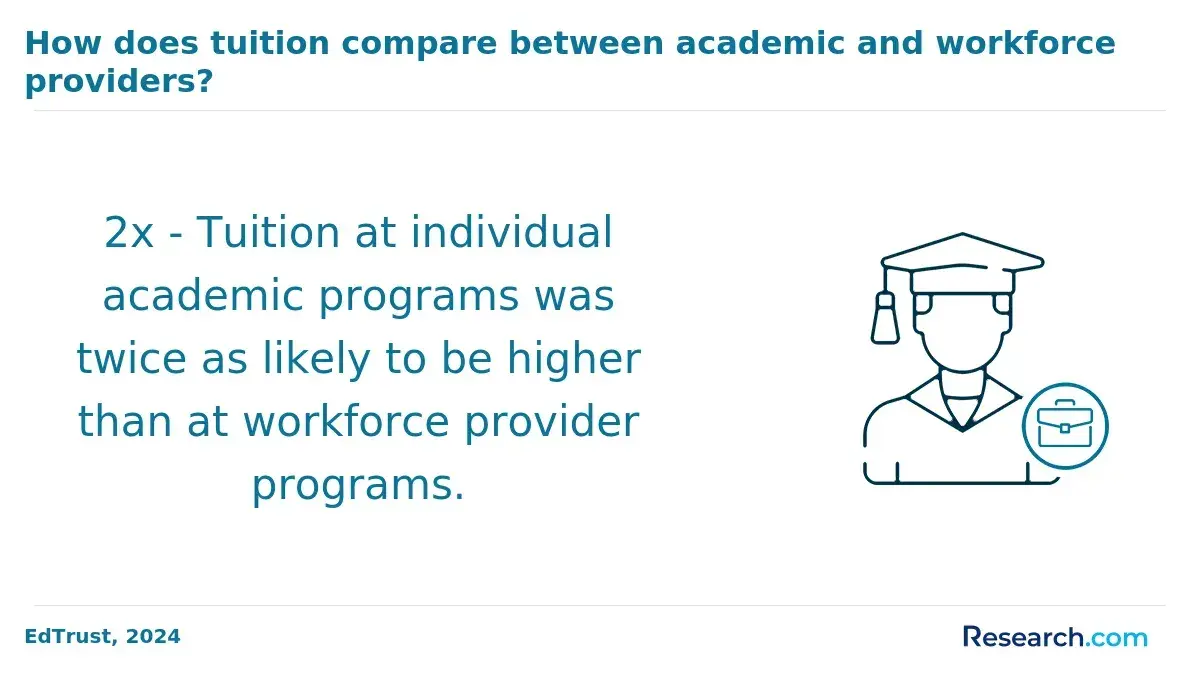
Are online certificate programs accredited and recognized?
Online certificate programs can be recognized, but recognition depends on the provider, the credential, and the occupation. Institutional accreditation matters most for credit-bearing college certificates and federal financial-aid eligibility.
Programmatic accreditation or state approval may be essential for healthcare programs that lead toward licensure. Industry certificates and professional certificates may be respected by employers even when they are noncredit and not institutionally accredited.
Use this distinction before you pay a deposit.
| Credential type | What to verify | Best use case |
| College academic certificate | Institutional accreditation, credit value, transfer policy, and catalog requirements | Students who may stack credits into an associate or bachelor's degree. |
| Career-training certificate | State authorization, employer partnerships, equipment or clinical requirements, and total fees | Focused preparation for a defined entry-level task or occupation. |
| Professional certificate | Provider reputation, curriculum currency, assessment quality, and employer demand | Skill building in areas such as data analytics, project work, or digital design. |
| Professional certification | Certifying body, exam requirements, renewal rules, and work-experience requirements | Workers seeking a third-party credential after meeting eligibility standards. |
A common mistake is assuming a school's general accreditation automatically makes a program license-qualifying. Contact the relevant state licensing board and ask the school for written confirmation of whether graduates meet educational eligibility requirements in your state.
How long do online certificate programs take to finish?
Online certificate timelines range from a few weeks for self-paced professional training to roughly one academic year for many college certificates.
Time to completion depends on credit load, prerequisite courses, course sequencing, clinical rotations, and whether the program has fixed cohort dates. A six-month program may take longer if it requires a practicum that is scheduled separately.
Use the published schedule, not the shortest advertised timeline, to judge whether a program fits your life.
| Program format | Typical timeline | Best fit | Trade-off |
| Self-paced professional certificate | Weeks to several months | Working learners with prior knowledge and strong self-direction | Usually noncredit and may provide limited instructor or career support. |
| Part-time college certificate | About 1-2 years | Students balancing work or family responsibilities | Longer path, although credits may be stackable. |
| Full-time college certificate | Often 2-3 academic terms | Learners seeking faster structured training | May limit work hours and still require in-person components. |
| Clinical or licensure pathway | Varies by required clinical hours | Students pursuing regulated patient-care roles | Cannot generally be completed fully online. |
If speed is the priority, compare curriculum sequencing with 1 year degree programs. An accelerated schedule is worthwhile only when it still includes the required supervised practice, exam preparation, and support for your intended career.
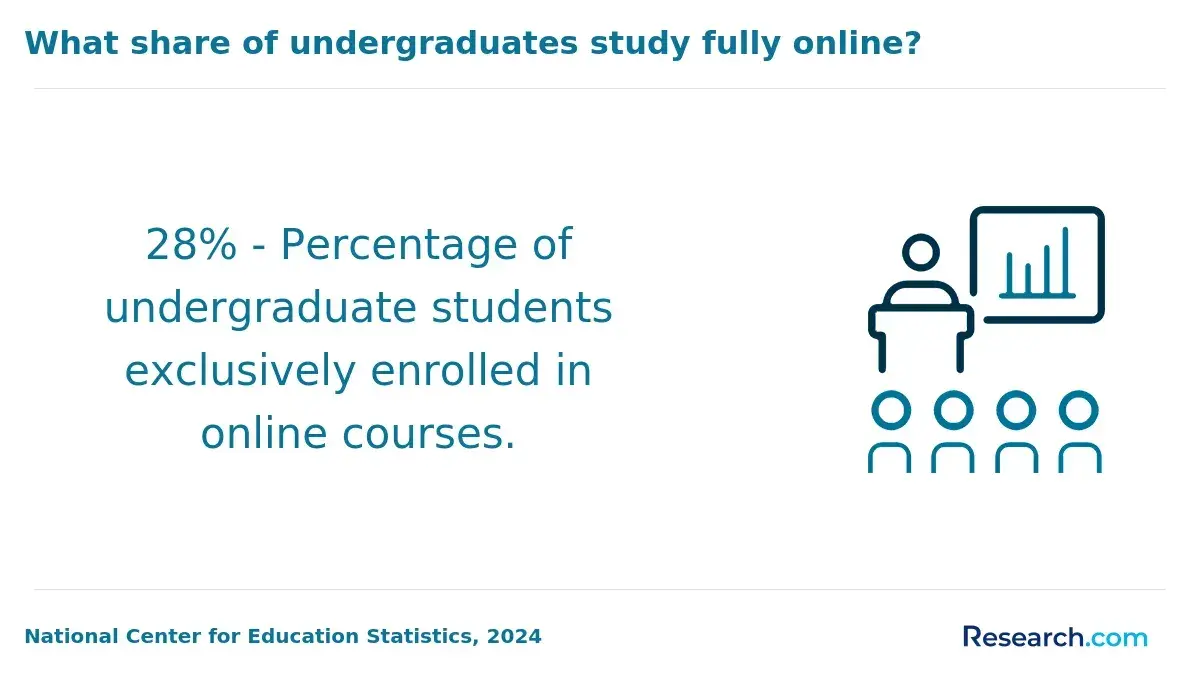
How much do online certificate programs cost?
Online certificate costs vary more by provider and required materials than by the word "online."
A noncredit professional certificate may charge a single course fee, while a college certificate may bill by credit and add technology, proctoring, lab, insurance, background-check, textbook, examination, and clinical-placement costs. Federal aid may be available for eligible programs at approved institutions, but many short noncredit certificates do not qualify.
Compare the complete cost of attendance rather than tuition alone.
- Ask for the total cost through completion, including fees, software, supplies, uniforms, examinations, and required travel.
- Ask whether the program is eligible for federal aid, state workforce funding, Veterans education benefits, employer reimbursement, or installment payments.
- Calculate the cost of retaking a required certification examination or extending access to a self-paced course.
- Compare lost work time and clinical travel costs with the price of a more flexible or local option.
Be cautious of providers that advertise low tuition but do not disclose mandatory certification, clinical, equipment, or externship fees until after enrollment. A lower-priced program is not the better value if it does not meet employer expectations or licensing rules.
What admission requirements do online certificate programs require?
Admission requirements depend on credential type. A college certificate may require a high school diploma or equivalent, placement testing, prerequisite courses, and proof of readiness for college-level work.
A professional certificate may only require an account and payment. Advanced technical or graduate certificates may expect prior coursework, a degree, or relevant work experience.
Before applying, determine whether the program's entry rules match both your background and your end goal.
- Confirm whether the credential is undergraduate, graduate, noncredit, or continuing education.
- Check for prerequisites in math, anatomy, computer networking, writing, or software skills.
- For clinical programs, ask about immunizations, drug screening, background checks, health insurance, and physical requirements.
- For certifications, read the certifying organization's eligibility rules separately from the school's admissions policy.
Do not assume that open admission means unrestricted career eligibility. A program may admit beginners while employers or licensing boards require additional education, examinations, supervised hours, or background clearance.
Which careers can online certificate programs prepare you for?
Online certificates can prepare learners for targeted roles, support career transitions, or document a specialization within an existing field. The strongest match occurs when curriculum, practical experience, and local job requirements align.
For example, a billing and coding certificate may support administrative healthcare work, while a cybersecurity certificate can strengthen an IT support worker's progression toward security responsibilities.
This table shows realistic ways to use common certificates without overstating what they qualify you to do.
| Certificate focus | Possible career direction | What may still be needed |
| Medical billing and coding | Billing specialist, coding assistant, patient-account representative | Employer-preferred certification, healthcare experience, or coding exam preparation. |
| IT support or cybersecurity | Help desk technician, junior systems support, security support work | Portfolio, hands-on labs, industry certification, and experience for analyst roles. |
| Construction or skilled-trade fundamentals | Apprentice, helper, estimator support, maintenance trainee | Apprenticeship, local licensing, safety training, and supervised field experience. |
| Paralegal studies | Legal assistant or paralegal support | Employer-specific standards; no authority to provide legal services independently. |
| Digital design | Production designer, content designer, junior web-design support | A strong portfolio, software proficiency, and client or internship experience. |
Certificates are not substitutes for advanced academic credentials when a role requires one. Professionals planning long-term leadership, research, teaching, or specialized practice may eventually explore online PhD programs for working professionals after completing the required degree progression.
Do online certificate programs lead to professional licenses?
Some online programs help students prepare for professional licenses, but the online portion alone does not grant a license.
Licensing boards set legal eligibility requirements, which may include an approved program, supervised clinical or field hours, an examination, background checks, and continuing education. These requirements vary by state and can change.
Programs most likely to involve licensure include nursing, practical nursing, dental hygiene, radiologic technology, sonography, counseling, teaching, and certain trades. In these areas, fully online claims deserve extra scrutiny because practical education is usually required.
Take these steps before enrolling in a license-oriented program.
- Identify the licensing board for the state where you intend to work.
- Read the board's current education and examination eligibility requirements.
- Ask the school in writing whether the exact program meets those requirements in your state.
- Confirm who arranges clinical placements, internships, or supervised practical hours.
- Keep copies of the curriculum, approval disclosures, and all responses from the school.
How do you choose the best online certificate program?
The best online certificate is the one that solves a defined career problem at a reasonable total cost. Start with the job you want, then work backward to the minimum credential, experience, license, and portfolio evidence employers actually request. Avoid choosing based solely on a short completion claim or a broad salary headline.
A careful comparison should cover the following decision points.
- Match the credential to a specific occupation or advancement goal, not a vague interest area.
- Search local job postings to see whether employers request a certificate, certification, degree, license, or prior experience.
- Verify institutional accreditation for academic programs and state or programmatic approval where licensure is involved.
- Compare total cost, schedule, instructor access, practical training, career services, and refund policies.
- Check whether credits transfer or stack into a degree if you may need additional education later.
- Ask whether the program teaches current tools while developing skills AI is less likely to replace, such as judgment, communication, troubleshooting, and supervised practice.
Consider a degree pathway instead of a standalone certificate when your target occupation requires broad education, clinical credentials, or advancement beyond entry-level work.
For experienced professionals whose long-term goal is scholarly or executive work, compare options such as doctoral programs online no dissertation only after confirming that the format aligns with employer, licensure, and academic expectations.
Other Things You Should Know About the Best Online Certificate Programs
They can be worthwhile when they lead to a specific employer-recognized skill, meet a licensing or certification prerequisite, or build on existing experience. They are less useful when the target role requires a degree, substantial clinical training, or a portfolio the program does not help you create.
Sometimes, but it depends on the occupation. Technical support, billing, skilled-trade entry, and some design roles may be accessible with focused training plus demonstrated skills. Many higher-paying healthcare and cybersecurity roles require additional education, experience, certification, or licensure.
A certificate is usually awarded by a school or training provider after completing a course of study. A certification is awarded by a professional certifying organization after meeting its standards, which may include an examination, work experience, and ongoing renewal.
Choose a college certificate if you want academic credit, possible transferability, or a pathway into an associate or bachelor's degree. Choose a professional certificate when you need focused, current skill training and employers in your target field recognize the provider or curriculum.
References
- 7 in-demand certifications in 2025 | edX https://www.edx.org/resources/in-demand-professional-certifications
- Why Choosing the Right Certifications Can Help Your Career https://www.managementconcepts.com/resource/why-choosing-the-right-certifications-can-define-and-accelerate-your-career/
- CourseCareers https://coursecareers.com/
- Highest Paying Certifications 2025-2026: IT, Cybersecurity, Medical & Career Growth Guide https://www.frontlinesourcegroup.com/blog-certifications-that-pay-the-most.html
- What Do Employers Think About Your Online Degree? | OnlineMBA.com https://www.onlinemba.com/resources/employers-thoughts-on-online-degrees/
- What Employers Actually Think About Online Degrees https://www.onlineu.com/magazine/what-employers-think-about-online-degrees