2027 Best Certificate Programs With Transparent Tuition

Co-Founder and Chief Data Scientist
The hardest part of choosing a certificate program is often finding its real price before enrolling. The best options publish tuition, required fees, equipment, exam, and clinical costs upfront - not just a low monthly payment. This guide helps career changers, recent graduates, and working adults compare credit and noncredit certificates by total cost, format, recognition, and job relevance.
U.S. Bureau of Labor Statistics projections for 2024-2034 show faster-than-average growth in several certificate-aligned fields, including healthcare and skilled trades, making careful program comparison especially important.
Key Things You Should Know
- Choose programs that show a written total-cost estimate, including tuition, mandatory fees, books, tools, uniforms, background checks, clinical expenses, and certification-exam costs.
- A certificate is an educational award; a certification is a professional credential usually earned through an external exam or eligibility process.
- Confirm whether your target job requires one, both, or a degree. For context, the U.S. Bureau of Labor Statistics reports a $49,500 median annual wage for all occupations in May 2024; occupational wages vary substantially by location, experience, licensure, and employer.
Top 10 Best Certificate Programs With Transparent Tuition
Popular Trade School Programs
Trade certificates usually combine classroom instruction with hands-on lab or shop training. Common options include welding, HVAC/R, electrical technology, plumbing, diesel technology, automotive service, machining, and commercial driving. A short certificate can build entry-level skills, while an associate degree may add general education and broader technical coursework. Ask whether tuition includes tools, safety gear, testing, and required driving or lab hours. Apprenticeship may be a better fit for learners who want paid work-based training, particularly in electrical and plumbing trades.
Healthcare Programs
Healthcare certificates can prepare students for roles such as medical assistant, pharmacy technician, dental assistant, phlebotomy technician, practical nurse, medical coder, or nursing assistant. Requirements differ sharply: some roles require state-approved education and a license, while others depend mainly on employer preferences or national certification eligibility. Clinical placement, immunizations, drug screening, background checks, uniforms, and exam fees can materially change the total price. Verify that an online or hybrid program can arrange clinical experiences where you live before paying a deposit.
Criminal Justice / Law Programs
Certificate and associate-level options include paralegal studies, legal assisting, criminal justice, corrections, emergency management, cybersecurity basics, and court reporting support. A paralegal certificate may be most useful for people who already hold a bachelor's degree or have relevant office experience; it does not authorize someone to practice law. Criminal justice credentials can support entry-level administrative or public-safety pathways, but police, corrections, and security roles may also require agency screening, fitness standards, academy training, or state credentials. Review employer requirements before choosing a specialization.
Arts & Design Programs
Arts and design certificates commonly focus on graphic design, UX/UI foundations, digital photography, animation, web design, interior design support, fashion merchandising, or audio production. Portfolio quality often matters as much as the credential, so compare the amount of critique, project work, software access, and career guidance included. Transparent programs disclose software subscriptions, printing, studio materials, portfolio hosting, and device requirements. A certificate can help a beginner develop focused skills, but advanced design roles may require a stronger portfolio, internship experience, or a degree.
What are certificate programs, and who are they for?
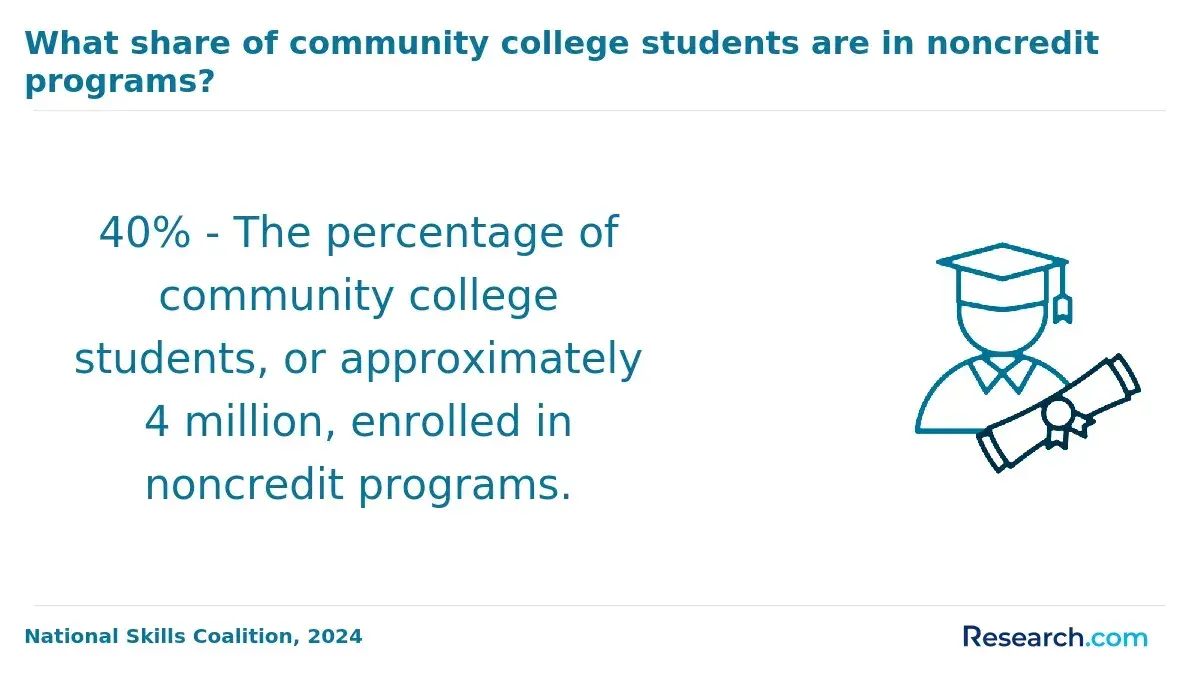
A certificate program is a focused course of study that awards an educational credential after completion. It may be offered by a community college, university, trade school, hospital system, workforce provider, or private training company. Some certificates carry academic credit and may stack into an associate or bachelor's degree; others are noncredit career-training programs with no transfer value.
Certificates are usually best for people who need targeted skills, a shorter path into a new field, or documented training for an existing role. They are less suitable when a target occupation legally requires a degree, license, lengthy supervised practice, or graduate education. Learners seeking a longer academic pathway may instead compare accelerated bachelors degrees when they need broader qualifications and transferable college credit.
The comparison below separates common credential types because the name "certificate" alone does not tell you what employers, licensing boards, or colleges will recognize.
| Credential type | Typical provider | Best use | Key limitation to check |
| Credit-bearing academic certificate | College or university | Career preparation or stackable college credit | Whether credits transfer or apply to a degree |
| Noncredit workforce certificate | College, workforce organization, or training school | Short, job-focused training | Employer recognition and eligibility for required exams |
| Professional certificate | University, platform, or industry provider | Skill development and portfolio building | Whether it is assessed, current, and valued in the field |
| Professional certification | Certifying body | Demonstrating competency against an external standard | Exam, experience, renewal, and continuing-education rules |
How do you choose an accredited certificate program?
An accredited certificate program is not automatically the best choice, but accreditation is essential when federal aid, college-credit transfer, clinical training, licensure eligibility, or employer acceptance depends on it. Institutional accreditation generally applies to colleges as a whole; programmatic approval or accreditation can be separately required in fields such as nursing, medical assisting, dental assisting, and automotive technology.
Use this process before applying. It protects you from paying for a credential that cannot serve its stated purpose.
- Identify the exact entry-level job, employer type, or licensing board requirement you are trying to meet.
- Confirm whether the program is credit-bearing, noncredit, state-approved, institutionally accredited, or programmatically accredited as relevant to that goal.
- Request a dated, itemized cost sheet that separates tuition from mandatory and likely out-of-pocket expenses.
- Ask whether graduates are eligible for a named certification exam or license and verify that answer with the exam sponsor or state board.
- Check completion, placement, and licensing-exam information, including how the school defines "placed" and the reporting period used.
A common mistake is treating a school's marketing language as proof of recognition. "Approved," "licensed," "accredited," and "eligible" can mean very different things. If you want a fully online provider, compare options among top online universities, then verify program-specific requirements rather than relying on institutional status alone.
Which certificate programs lead to the best jobs?
The best job-oriented certificate is the one that maps directly to a realistic entry route - not simply the shortest or cheapest program. Certificates are particularly useful in occupations where employers value technical training, supervised practice, a portfolio, or eligibility for a recognized certification exam. They are less likely to replace degrees in occupations with degree-based entry standards.
The following occupational data are from the U.S. Bureau of Labor Statistics' May 2024 wage estimates and 2024-2034 employment projections. These figures describe the occupations, not a guaranteed outcome for certificate completers.
| Career direction | Typical training relationship | 2024 median annual wage | 2024-2034 projected growth |
| HVAC/R mechanic and installer | Certificate, apprenticeship, or postsecondary nondegree training may support entry | $59,810 | 8% |
| Medical assistant | Certificate is common; employer and state expectations vary | $44,200 | 12% |
| Dental assistant | Certificate or on-the-job route; state rules vary | $47,300 | 6% |
| Paralegal and legal assistant | Certificate may help, often alongside a degree or related experience | $61,010 | 0% |
Use wage information as a labor-market benchmark, not an ROI promise. Local pay, shifts, union coverage, prior experience, and licensing status can change earnings materially. AI is also reshaping administrative, design, coding, and legal-support work: prioritize programs that teach verification, workflow tools, client communication, and applied problem-solving rather than software clicks alone.
Are online certificate programs worth it?
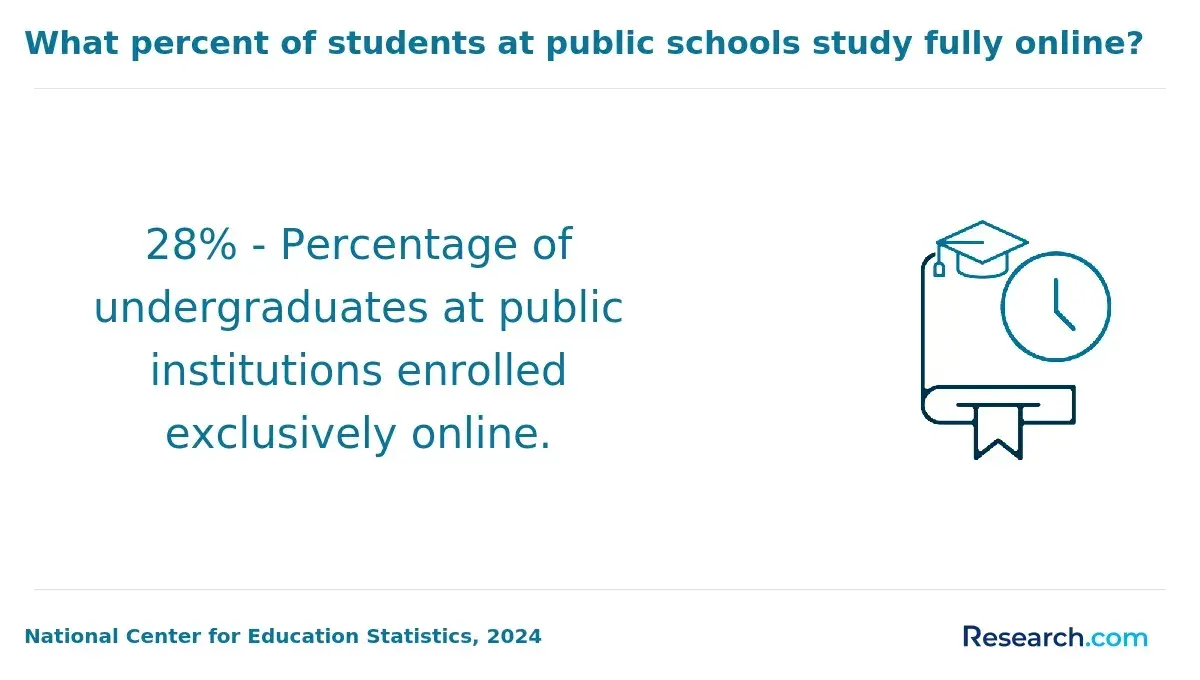
Online certificate programs can be worth it when the occupation does not require in-person clinical, shop, lab, or supervised field hours - or when the provider has a documented local arrangement for those experiences. Online delivery is often well suited to business software, project management, IT support, bookkeeping, coding foundations, digital marketing, and some administrative healthcare subjects.
Before choosing online study, compare the trade-offs that affect completion and employability.
| Format | Usually best for | Main advantage | Primary caution |
| Fully online | Knowledge-based and digital skills | Schedule flexibility | May lack hands-on practice or local employer connections |
| Hybrid | Programs needing labs, simulations, or practical assessments | Balances flexibility with applied instruction | Campus travel and scheduling can add cost |
| Campus-based | Trades, clinical programs, and equipment-heavy training | Direct access to facilities and instructors | Less flexible for full-time workers |
Do not assume an online program qualifies you for local licensure. Ask where practical requirements occur, who secures placements, what happens if a placement is unavailable, and whether the school enrolls students in your state for that program.
What will you learn in a certificate program?
Certificate curricula should teach the skills a beginner needs to perform defined tasks safely and reliably. Depending on the field, that can include technical concepts, equipment use, documentation, customer communication, workplace safety, privacy rules, troubleshooting, and supervised practice. Strong programs show course-level learning outcomes instead of relying on broad promises such as "career ready."
Ask for a course sequence and assess whether it includes the learning evidence employers actually need.
- For trade programs, look for hands-on hours, safety instruction, equipment exposure, and preparation for relevant code or industry exams.
- For healthcare programs, look for clinical or externship details, patient-safety content, documentation practice, and eligibility for any stated credentialing exam.
- For digital and design programs, look for portfolio projects, current tools, feedback from qualified instructors, and ownership of completed work.
- For business and technology programs, look for realistic projects, communication practice, and assessment beyond watching videos.
When the goal is advanced leadership, research, or specialized professional practice, a certificate may be too narrow. In those cases, compare graduate pathways such as 12 month master's programs online if the occupation and your prior education make a master's degree relevant.
What are the admission requirements for certificate programs?
Admission requirements depend on the provider and credential type. Many short noncredit certificates require only a high school diploma, GED, or adult-learning eligibility. College certificates may require an application, placement testing, transcripts, prerequisite courses, or proof of English proficiency. Healthcare and public-safety programs often add health records, immunizations, CPR training, background checks, drug screening, or physical-capacity requirements.
Confirm requirements before paying a nonrefundable fee, especially if the program has limited clinical seats or cohort-based enrollment. You should also ask whether prior learning, military training, industry credentials, or completed college courses can reduce required coursework. Transfer credit is meaningful only when the receiving institution confirms it in writing.
A GPA requirement is not universal. Avoid assuming "open enrollment" means every specialized program has immediate space, or that meeting minimum admission criteria guarantees acceptance into a clinical placement or selective track.
How long do certificate programs take and what do they cost?
Certificate programs can run from a few weeks to roughly a year, although clinical, trade, and credit-bearing programs may take longer when completed part time. A transparent-tuition program publishes what students are likely to pay from enrollment through completion. It should distinguish fixed institutional charges from variable costs that depend on a student's location, equipment choices, or exam attempts.
Compare total cost, not advertised tuition alone. This cost checklist identifies charges that commonly change the true price of a program.
| Cost category | What transparent disclosure should show | Why it matters |
| Tuition | Per-credit, per-course, or total cohort price | Lets you compare the base instructional cost |
| Mandatory institutional fees | Technology, lab, registration, graduation, and service fees | Can make a low tuition figure misleading |
| Required materials | Books, software, tools, kits, uniforms, and protective equipment | Often vary substantially by program type |
| External requirements | Exam, licensing, background-check, immunization, and clinical costs | May be necessary to enter the intended field |
| Opportunity and travel costs | Campus visits, commuting, reduced work hours, and childcare needs | Determine whether the schedule is financially workable |
Ask for the cost estimate in writing and compare refund rules, payment plans, employer tuition assistance, scholarships, and workforce grants. Federal student aid may be available for eligible programs at eligible institutions, but many short noncredit certificates do not qualify. Never borrow based on a hoped-for salary increase without checking local job postings and likely entry requirements.
What salaries do certificate program graduates earn?
Certificate program graduates do not share a single salary range because credentials do not determine pay on their own. Earnings reflect the occupation, region, employer, shift, experience, union status, commission structure, and whether a license or external certification is required. The most useful comparison is between the program's full cost and the entry-level opportunities it credibly prepares you to pursue.
The U.S. Bureau of Labor Statistics reported a $49,500 median annual wage across all occupations in May 2024. Use that broad benchmark cautiously: it does not show starting pay, local wages, or the value of any specific certificate. For a practical estimate, review several current local job postings, note required credentials, and ask the school for audited outcomes with the job titles, reporting period, and employment definition clearly stated.
Be skeptical of schools that advertise unusually high earnings without identifying the occupation, location, experience level, or the share of graduates included. A credible provider will explain the limits of its outcomes data rather than implying that completion guarantees employment.
Do certificate programs require licensing or certification exams?
Some certificate programs prepare learners for a separate licensing or certification step; completing the educational program itself is not the same as receiving the professional credential. Licensing is usually granted by a government authority and may be required to practice in regulated occupations. Certification is generally granted by a professional or industry organization after an exam and sometimes work-experience or continuing-education requirements.
Before enrollment, get clear answers to these questions from both the school and the relevant regulator or certifying organization.
- Does this exact program meet education requirements for the exam or license in my state?
- Are clinical, laboratory, apprenticeship, supervised-work, or background-check requirements included, arranged, or left to the student?
- What additional fees, exam attempts, renewal costs, and continuing-education obligations should I expect?
- Can I work in the intended role immediately after completion, or must I pass an exam or obtain a license first?
For highly regulated advanced careers, a certificate is often only one stage of a longer sequence. Learners considering doctoral study should understand that programs advertised as 1 year PhD programs online no dissertation may not meet the research, licensure, or academic expectations associated with traditional doctoral pathways.
Other Things You Should Know About
Transparent tuition includes a written breakdown of tuition, mandatory fees, required materials, external exam or licensing costs, and realistic program-specific expenses. It also explains refund policies, payment timing, and which costs can vary.
No. A lower-priced program can be poor value if it lacks required approval, hands-on training, exam eligibility, local clinical placement, or employer recognition. Compare the total cost against the credential's usefulness for your intended role.
Possibly. Eligibility depends on the institution, the program, its length, and federal or state rules. Ask the school's financial-aid office whether the specific certificate - not just the school - qualifies, and explore employer assistance and workforce grants.
Choose a certificate for focused, shorter training when the target job accepts it. Choose an associate degree when you need broader coursework, stronger transfer potential, or a credential required by employers or licensing rules. Confirm the requirements in local job postings before deciding.
References
- EdAssist | Understanding college pricing models https://www.brighthorizons.com/resources/blog/edassist/understanding-college-pricing-models
- How does a college degree improve graduates' employment and earnings potential? - APLU https://www.aplu.org/our-work/publicuvalues/employment-earnings/
- Tuition & Payments Options | CG Spectrum https://www.cgspectrum.com/tuition-payment-options
- Low Cost College Programs - Graduate Debt-Free w/ Financial Aid Support https://www.degreeforward.org/cost-aid
- Online College Tuition Comparison: Online vs. In-Person https://www.uagrantham.edu/blog/online-college-tuition-comparison-online-vs-in-person/
- 8 Alternative Tuition Models for Forward-Thinking Colleges [Infographic] - Collegis Education https://collegiseducation.com/insights/higher-ed-tuition-strategies-infographic/
- Cost of Online Education vs. Traditional Education [2025]: Comparison https://educationdata.org/cost-of-online-education-vs-traditional-education
- How We Calculated the Return on Investment of Associate Degrees and Certificates - Freopp https://freopp.org/whitepapers/how-we-calculated-the-return-on-investment-of-associate-degrees-and-certificates/
- Online Certificate Programs | Certifications Programs https://www.uscareerinstitute.edu/online-certificate-programs
- Tuition Basics | University of Phoenix https://www.phoenix.edu/tuition-financial-aid.html