2027 Best Online Stackable Credentials With 2.0 GPA Admission

Co-Founder and Chief Data Scientist
A 2.0 GPA can limit direct entry to some degree programs, but it does not eliminate online career-training options that build from a certificate into college credit or a degree. The U.S. Bureau of Labor Statistics projects total employment to add about 3.1 million jobs from 2024 to 2034, making focused, job-relevant training important for career changers and returning students.
This guide explains stackable credentials, realistic 2.0 GPA admission routes, costs, online formats, certifications, and career trade-offs so you can choose a pathway that fits both your academic record and goal.
Key Things You Should Know
- A 2.0 GPA may meet minimum admission standards at some accredited online colleges, but open admission, conditional admission, and program-specific requirements differ; competitive healthcare and licensure tracks can require higher grades.
- Stackable credentials let students complete a short certificate first, then apply eligible credits toward an associate or bachelor's degree; get the school's transfer and expiration rules in writing before enrolling.
- Cost and job fit matter more than speed alone: BLS projects 3.1 million additional U.S. jobs from 2024 to 2034, but employers may still require a license, industry certification, experience, or degree beyond a certificate.
Top 10 Best Online Stackable Credentials With 2.0 GPA Admission
Popular Trade School Programs
Online stackable trade pathways commonly start with construction management, HVAC fundamentals, electrical technology theory, welding technology, automotive service, logistics, or industrial maintenance certificates. They can suit students who need flexible coursework before moving into a credit-bearing diploma or associate degree.
Hands-on trades usually require local labs, employer training, apprenticeships, or supervised clinical-style practice; a fully online program is rarely enough for licensure or skill verification. Choose online theory courses when you already have access to practical training nearby.
Healthcare Programs
Healthcare stacks may include medical billing and coding, health information technology, pharmacy technician preparation, medical assisting foundations, or practical nursing prerequisites. A short academic certificate can lead into an associate degree, but it is not the same as certification from an organization such as AAPC or AHIMA.
Patient-care programs generally include background checks, immunizations, drug screening, CPR, and in-person clinical placements. Verify state eligibility before enrolling, especially for nursing, medical assisting, and pharmacy technician pathways.
Criminal Justice / Law Programs
Common stackable options include criminal justice certificates, legal studies certificates, paralegal studies, homeland security, corrections, and public administration. These programs can build academic credits toward an associate or bachelor's degree and support entry-level administrative, records, compliance, or public-safety support work.
They do not automatically qualify a graduate as a police officer, attorney, investigator, or licensed paralegal where regulation applies. Students targeting law school should prioritize transferable college credit and strong later academic performance over the shortest credential.
Arts & Design Programs
Online stacks in graphic design, digital media, user experience fundamentals, web design, photography, animation, and marketing content production may begin with a certificate and later apply toward an associate degree. Portfolio quality often matters as much as the credential for creative hiring.
Programs should provide current software access, instructor feedback, copyright guidance, and portfolio projects rather than only recorded tutorials. A noncredit course can build skills quickly, while a credit-bearing certificate is usually the better choice for students planning to continue into a degree.
What are stackable credentials and how do online programs work for 2.0 GPA students?
Stackable credentials are intentionally connected learning awards. A student may earn a short certificate, use its eligible academic credits toward a longer certificate or associate degree, and later apply those credits toward a bachelor's degree. The stack can include academic certificates, college courses, industry-aligned training, or separate professional certifications, but those credentials are not interchangeable.
For students with a 2.0 GPA, the key distinction is between admission to an institution and admission to a specific program. Some online colleges use open or conditional admission, while others review applicants with a 2.0 cumulative GPA individually. Selective programs may require prerequisite grades, placement results, an entrance exam, or a higher GPA even when the college admits the student generally.
Most online academic programs use a learning-management system for readings, discussions, quizzes, projects, and proctored assessments. Asynchronous courses offer schedule flexibility, but deadlines remain. Technical programs can combine online theory with local labs, internships, apprenticeships, simulations, or clinical placements.
A stackable route is a strong fit if you need an affordable first milestone, want to test a field before committing to a degree, or need to improve academic momentum. It is a weaker fit when your target job requires a bachelor's degree, a state license, substantial supervised practice, or a recognized industry certification that the program does not prepare you to earn.
Which accredited schools offer online stackable credentials with flexible 2.0 GPA admission?
Accredited colleges with flexible undergraduate admission models may be worth investigating, but no school should be assumed to guarantee admission at a 2.0 GPA. Institutions may change policies, and certificate-level, degree-level, and limited-enrollment programs can use different standards. Examples often considered by adult and online learners include community colleges with open-access admission, Colorado State University Global, Liberty University, Southern New Hampshire University, Purdue Global, and University of Maryland Global Campus. Confirm the current requirement directly with each admissions office.
The comparison below shows what to verify before treating a school as a 2.0 GPA option. Institutional accreditation is important for academic quality review and may affect credit transfer and aid eligibility, but it does not prove that a particular credential leads to licensing or industry certification.
| School type | Possible 2.0 GPA route | Best question to ask |
| Open-admission community college | General admission may not require a minimum GPA | Will this online certificate's credits transfer into the intended associate or bachelor's program? |
| Accredited online university | Minimum GPA, holistic review, or conditional admission may apply | Is a 2.0 cumulative GPA sufficient for this exact credential and term? |
| Career school or noncredit provider | Academic GPA may not be used for entry | Is the credential college-credit-bearing, employer-recognized, or eligible for a certification exam? |
| Limited-enrollment healthcare or technical program | Institutional admission may be easier than program admission | What prerequisite grades, placement scores, clinical requirements, and state rules apply? |
Ask for a written degree map showing every credential, course number, credits earned, and the destination degree. If a school cannot identify exactly how the certificate stacks, treat "stackable" as a marketing claim rather than a verified pathway.
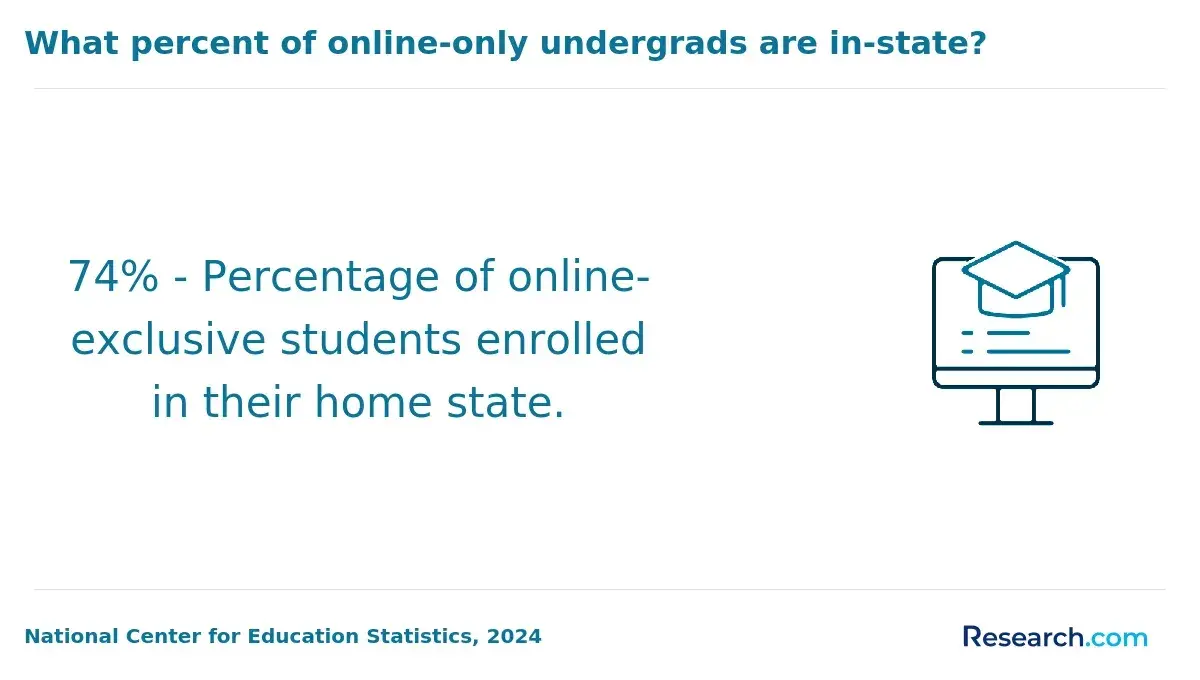
What admission requirements and support services exist for online stackable programs at a 2.0 GPA?
Applicants with a 2.0 GPA should expect requirements that are flexible but still documented. Typical materials include a high school transcript, GED record, prior college transcripts, identity verification, and a completed application. Some institutions may request a personal statement, academic plan, placement assessment, or proof that the applicant has completed developmental coursework before entering college-level English or math.
Conditional admission can be useful when it comes with specific support rather than vague promises. Students should ask whether they must maintain a minimum term GPA, have a credit-hour cap, complete tutoring, or meet with an academic coach before continuing.
Before applying, use these steps to reduce avoidable enrollment mistakes.
- Request the exact admission standard for the certificate or degree, not only the school-wide undergraduate policy.
- Send all transcripts early and ask whether the GPA is cumulative, recalculated, or based on the most recent coursework.
- Check whether prior credits will transfer and whether the receiving program has a time limit on technical courses.
- Ask about tutoring, writing support, disability services, career coaching, library access, and technical help for online learners.
- Confirm how financial aid, employer tuition assistance, payment plans, and satisfactory academic progress rules apply to your credential.
A frequent mistake is enrolling in a low-admission-barrier program without checking the next step. A student may complete a certificate successfully but discover that a selective associate degree requires different prerequisites or a higher GPA. Build the entire sequence first, then enroll.
How do online stackable credential pathways compare with campus-based certificate and degree options?
Online stackable credentials and campus programs can lead to similar academic awards when they are offered by the same accredited institution, but the learning experience and practical access can differ. Online study is usually best for working adults, self-directed learners, and fields where coursework is primarily digital. Campus or hybrid study is often better for students who need equipment, structured scheduling, direct practice, or frequent instructor access.
This comparison highlights the trade-off that matters most: flexibility does not replace required hands-on learning.
| Factor | Online stackable pathway | Campus-based pathway |
| Schedule | Often asynchronous with weekly deadlines | Fixed class, lab, and service schedules |
| Practical training | May require local placement, residency, or employer site | Usually easier access to labs and equipment |
| Credit progression | Can work well when certificate courses are preapproved for a degree | Often simpler advising and course sequencing on one campus |
| Student support | Virtual advising and tutoring; student must engage actively | In-person access may be more immediate |
| Best use case | Business, IT, design, administration, general education | Clinical, skilled-trade, laboratory, and equipment-intensive training |
Students seeking a rapid move into longer study can compare an accelerated bachelor's degree online option with a certificate-first plan. Acceleration makes sense only when you can sustain the pace and the program accepts your completed credits; otherwise, a smaller stack can be a safer way to rebuild academic confidence.
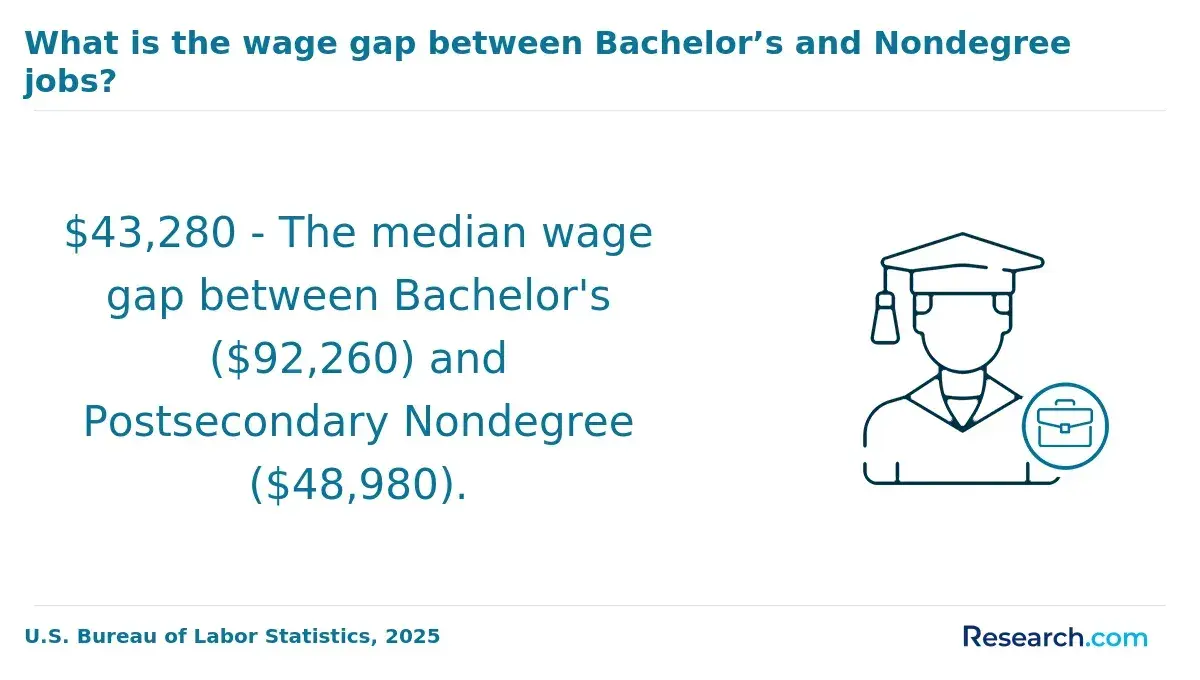
What curriculum, course structure, and pacing can students expect in online stackable credentials?
Credit-bearing stackable credentials usually use courses measured in semester credits. A short undergraduate certificate may contain several courses that also appear in an associate degree curriculum. Noncredit microcredentials may use modules, badges, projects, or contact hours instead; they can demonstrate skills but may not transfer as academic credit.
Online course design varies, so compare the actual weekly workload rather than relying on labels such as "self-paced." Many courses include recorded lectures, assigned readings, discussion posts, quizzes, case studies, group projects, and proctored exams. Synchronous sessions may be optional or required. Students in programs with fieldwork should plan for daytime availability even if the academic courses are online.
Short formats can help learners test a subject or complete a targeted skill unit. Review 6-week courses carefully, however, because compressed classes require the same learning outcomes in less calendar time and can be difficult when paired with full-time work.
When comparing curricula, prioritize a published course sequence, named learning outcomes, instructor qualifications, accessible software requirements, and an explanation of how each completed course applies to the next credential. Avoid programs that advertise "career-ready" training but cannot show the credential awarded, credit status, or assessment method.
How long do online stackable credential programs take and what do they typically cost?
Completion time depends on credit load, transfer credit, course availability, and whether a program includes required fieldwork. A short credit-bearing certificate may take one or two terms, while a stack from certificate to associate degree commonly takes longer because general education and prerequisite courses must be completed. Part-time online study offers flexibility but can extend the timeline when required courses are offered only in certain terms.
Costs should be evaluated as a total pathway, not just a certificate's advertised tuition. A lower-priced first credential is valuable only if its credits apply to the intended next program.
| Cost factor | Why it changes the total | What to verify |
| Tuition per credit or course | Rates vary by institution, residency, and credential level | Total credits required and whether future degree courses use the same rate |
| Mandatory fees | Technology, registration, distance-learning, and graduation fees may apply | Itemized estimate for the full certificate |
| Books and software | Design, IT, and technical courses may require subscriptions or equipment | Required tools, license duration, and hardware specifications |
| Fieldwork and testing | Background checks, uniforms, travel, exams, and certification fees may be separate | Which charges are not included in tuition |
| Lost credits | Nontransferable coursework can increase the price of the final degree | Written articulation or degree-map confirmation |
Federal student aid may be available for eligible students in qualifying programs at eligible institutions, but not every short certificate qualifies. Ask the financial aid office whether the specific program is aid-eligible, whether it meets program-length rules, and how withdrawal or unsatisfactory progress could affect aid. Employer tuition benefits may be useful for job-related education, but they often require continued employment or grade minimums.
If your goal is a very short skills credential rather than academic credit, compare total fees and employer recognition with 4-week certificate programs online. Fast noncredit programs can be practical for a narrow skill, but they generally should not be assumed to transfer into a college degree.
What entry-level and mid-career job roles can stackable credentials help students qualify for?
Stackable credentials can support career entry when the coursework matches a real hiring requirement, but the credential alone may not meet every employer's standards. Employers can also screen for software ability, customer-service experience, a portfolio, background clearance, a license, or an external certification.
The roles below show how a first credential can connect to a longer pathway without overstating what it qualifies a student to do.
| Credential area | Possible entry-level roles | Common next step |
| Business and administration | Administrative assistant, customer service representative, records clerk | Associate or bachelor's degree in business, management, or accounting |
| Information technology | Help desk support, technical support trainee, junior IT support | Industry certification and associate or bachelor's degree |
| Healthcare administration | Medical records clerk, scheduling coordinator, billing support | Coding certification preparation or health information degree |
| Legal and public service | Records technician, intake assistant, administrative support | Paralegal studies, criminal justice degree, or agency-specific training |
| Digital design | Production assistant, content assistant, junior freelance project work | Portfolio development and advanced design coursework |
For remote-friendly paths, examine daily job tasks rather than assuming online education leads to remote work. Customer support, digital content, IT support, bookkeeping, and project coordination may offer remote opportunities, while clinical, trade, and public-safety roles often require site-based work. This overview of the best degree for remote work can help compare longer-term options.
What salary ranges and career advancement opportunities are linked to stackable credentials?
Salary depends on occupation, location, experience, hours, employer, licensure, and education level; it should not be presented as the expected income of every certificate holder. The BLS reported a 2024 median annual wage of $49,210 for all occupations, providing a useful national benchmark rather than a promise of earnings from any one credential.
Stackable credentials can improve advancement prospects when each level adds a recognized capability. For example, an entry-level administrative worker may use a certificate to demonstrate office software or records skills, then complete an associate degree for supervisory or specialized roles. In IT, a college certificate may support foundational knowledge, while employer-recognized certification exams and experience can matter heavily in hiring.
Use salary information by researching the exact occupation - not the program title - and compare it with the full cost of education, expected time to completion, and local job postings. A credential may be worthwhile when it creates access to a realistic entry role, preserves credits for a larger goal, and limits borrowing. It is less compelling when the role's posted requirements consistently demand education, licensing, or experience the program does not provide.
Automation and AI are also changing entry-level work. Programs that include digital communication, data literacy, ethical use of AI tools, problem solving, and field-specific software can be more durable than programs focused only on repetitive tasks. Ask how the curriculum is updated and whether students complete work samples employers can evaluate.
How do stackable credentials align with industry certifications, licensing, and employer expectations?
Academic certificates, industry certifications, and licenses serve different purposes. A college certificate documents completion of a defined course of study. An industry certification is awarded by a professional organization or vendor after a candidate meets its rules, which may include an exam, work experience, continuing education, or renewal. A license is government authorization to practice in a regulated occupation or state.
Before enrolling, match the program to the employer or regulator expectation. An online medical billing certificate may prepare a student to study for a coding certification, but it does not automatically confer that certification. Similarly, online electrician theory courses do not substitute for the supervised hours and licensing requirements set by a state or local authority.
These checks help prevent expensive mismatches between training and the job you want.
- Read at least 10 local job postings and note the education, software, certification, experience, and schedule requirements that repeat.
- Ask the school whether the program prepares students for a named certification exam and whether exam fees, practice materials, and eligibility requirements are included.
- For regulated careers, verify requirements with the relevant state licensing board before paying a deposit or transferring credits.
- Confirm institutional accreditation for academic transfer goals and investigate programmatic accreditation when a profession commonly requires it.
- Request the school's written policy on credit transfer, credential stacking, course expiration, and recognition of prior learning.
Red flags include claims of guaranteed employment, unclear accreditation language, no stated credential level, promises that online coursework alone qualifies students for a hands-on license, and pressure to enroll before receiving a complete cost estimate. A credible program can explain its curriculum, assessment, faculty, student support, and limits plainly.
Other Things You Should Know About
Possibly. Some colleges use open admission, a 2.0 minimum, or conditional review. Admission to the college does not guarantee entry to selective majors, clinical programs, or programs with prerequisite-grade requirements.
They can be worthwhile when the first credential has clear labor-market value and its credits are documented as applicable to a later certificate or degree. They are less valuable when credits do not transfer or the target occupation requires credentials the program does not provide.
Only if the receiving institution accepts it and the courses fit the degree plan. Credit-bearing certificates from the same institution often stack more predictably than noncredit programs or certificates from unrelated providers.
Not automatically. A certificate may prepare you for an exam or meet part of an education requirement, but professional certifications and licenses have separate rules set by certifying bodies or state regulators.
References
- Teacher Education California Teaching Credential - CGU https://www.cgu.edu/academics/program/teacher-education-california-preliminary-credential-online/
- Online California Multiple Subject Teaching Credential https://www.pacificoaks.edu/academic-programs/online-learning/online-california-preliminary-multiple-subject-teaching-credential/
- Stackable Certificates & Credentials - Complete College America https://completecollege.org/our-approach/structure/stackable-certificates-credentials/
- FAQs https://calbaptist.edu/academics/programs/online-credentials/faqs
- 6 Things to Know About Stackable Credentials https://www.devry.edu/blog/6-things-about-stackable-credentials.html
- Making sure you're not a bot! https://www.iastatedigitalpress.com/jtmae/article/id/14484/
- USHE initiative helps students earn meaningful credentials on their way to a degree - Utah System of Higher Education https://ushe.edu/stackable-credentials-help-students-earn-credentials-on-their-way-to-a-degree/
- What Are Stackable Credentials and Why Do They Matter? https://www.pltw.org/blog/what-are-stackable-credentials
- How to improve student success in short-term credential programs | EAB https://eab.com/resources/blog/community-college-blog/improve-student-success-in-short-term-credential-programs/
- Admissions Requirements - CalStateTEACH https://www.calstateteach.net/admissions-requirements