2027 Best Short Certificate Programs for Adults Returning to College

Co-Founder and Chief Data Scientist
Choosing a fast credential can be difficult when you need a realistic path to better work without committing years to school. Short certificate programs help adults build focused skills in months rather than semesters, but their value depends on the occupation, licensing rules, and employer recognition.
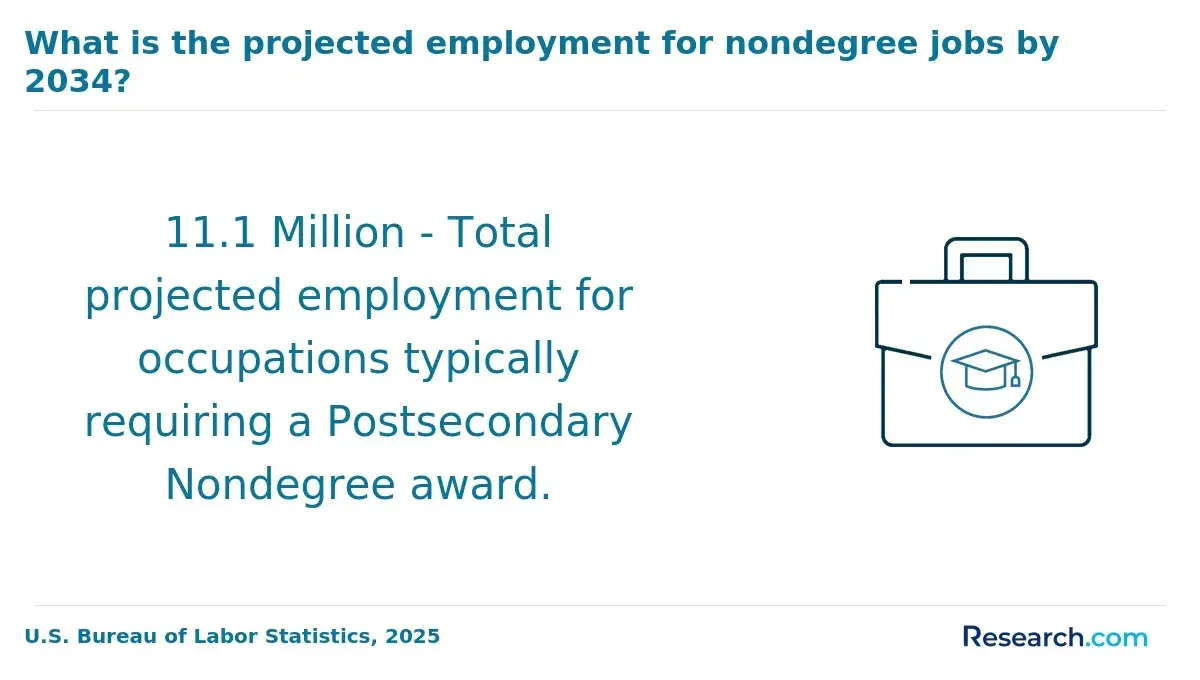
The U.S. Bureau of Labor Statistics projects employment to grow by 5.2 million jobs from 2024 to 2034. This guide compares practical certificate paths, formats, costs, requirements, and career trade-offs so you can choose training that fits your goals.
Key Things You Should Know
- Short academic and career certificates commonly take a few months to about one year; confirm whether the program is credit-bearing, noncredit, or designed to prepare you for a separate licensing or certification exam.
- Healthcare and skilled-trade certificates can lead to direct entry-level roles, while law, design, and technology certificates often work best when paired with experience, a portfolio, or further education.
- BLS projects HVAC mechanics and installers to grow 8% and medical assistants to grow 12% from 2024 to 2034, making both fields worth investigating for adults seeking relatively short training routes.
Top 10 Best Short Certificate Programs for Adults Returning to College
Popular Trade School Programs
Trade certificates emphasize hands-on, job-specific training and may run from several months to a year. Common options include HVAC, welding, electrical, plumbing, diesel technology, automotive service, and industrial maintenance. They suit adults who prefer practical work and can attend labs, shops, or employer-based training. Check whether your state requires an apprenticeship, supervised hours, or a licensing exam after graduation. A certificate can build entry-level skills, but it does not automatically make someone a licensed electrician or plumber. Compare lab access, tool costs, safety training, and local employer partnerships before enrolling.
Healthcare Programs
Healthcare certificates can prepare adults for roles such as medical assistant, dental assistant, phlebotomist, pharmacy technician, practical nursing, medical billing, or surgical technology. Program length and requirements vary sharply by role and state. Clinical programs generally require in-person labs, background checks, immunizations, drug screening, and supervised placements. Some programs prepare students for an industry certification examination; others satisfy part of a state licensure pathway. Verify clinical-site availability and board approval before paying tuition, especially for fully online programs. A short certificate is most useful when it aligns with a specific local hiring or licensing requirement.
Criminal Justice / Law Programs
Certificates in paralegal studies, legal assisting, court reporting support, cybersecurity, corrections, or criminal justice can help adults explore legal and public-safety work. A paralegal certificate is commonly intended for people who already hold a degree or have relevant education, while entry-level criminal justice certificates may be open to beginners. These credentials do not authorize graduates to practice law or guarantee law-enforcement employment. Background investigations, physical standards, civil-service testing, and academy training may apply to public-safety roles. Look for curriculum tied to local courts, legal employers, or agency requirements rather than relying on a broad program title.
Arts & Design Programs
Short arts and design certificates may cover graphic design, UX design, photography, digital media, animation, web design, interior design support, or video production. They are often portfolio-centered and can be offered by colleges, continuing-education divisions, or private providers. These programs fit adults who need structured practice, software training, and feedback, but a credential alone rarely replaces a strong portfolio. Ask whether students retain portfolio-ready projects and receive current instruction in industry software and accessible design practices. For regulated paths such as interior design, review state-specific rules because a short certificate may not meet professional credential requirements.
What are the best short certificate programs?
The best short certificate program is the one that matches a clearly defined target role, local employer expectations, and your available time for classes or clinical/lab work. A certificate is an educational award from a college, school, or training provider. It differs from a professional certification, which is awarded by an industry or certifying body after meeting its standards, often through an exam.
This comparison shows how common options differ in the commitment they require and the decisions adults should make before enrolling.
| Program type | Typical fit | Common format | Key decision point |
| HVAC or welding certificate | Hands-on technical careers | Campus lab, hybrid, or apprenticeship-linked | Confirm licensing, shop hours, and equipment costs |
| Medical assisting certificate | Entry-level clinical support | Hybrid with required clinical experience | Verify clinical placement and exam preparation |
| IT support or data analytics certificate | Career changers building technical skills | Online, hybrid, or campus | Review projects, employer recognition, and certification alignment |
| Paralegal certificate | Adults with prior college coursework or degrees | Online, hybrid, or campus | Check prerequisites and local legal-market expectations |
Choose a short certificate when you need targeted preparation for a defined entry-level role or a skill upgrade. Choose an associate or bachelor's degree when your intended occupation requires broader education, transfer credit, or advancement beyond an entry-level position. Adults seeking a quicker degree rather than a standalone credential can also compare accelerated online degrees.
Which certificate programs lead to good jobs?
Certificate programs can lead to good jobs when the credential is recognized by employers, includes required practical training, and maps to an occupation with accessible entry routes. The strongest choices tend to be fields where employers need specific technical or clinical competencies rather than a general academic credential.
Use this overview to distinguish programs that may support direct entry from those that usually need additional education, licensing, or a portfolio.
| Career area | Certificate value | What may still be required |
| HVAC service | Can support entry-level technician work | EPA Section 608 certification, apprenticeship, or state requirements may apply |
| Medical assisting | Often supports entry-level clinical or administrative work | Clinical training and employer-preferred certification may be needed |
| Pharmacy technician | Can prepare learners for technician roles | State registration or national certification may be required |
| Paralegal support | Can strengthen legal-office qualifications | A degree, prior education, or experience may be preferred |
| Digital design | Can build software and project skills | A portfolio and relevant work samples are usually essential |
A short credential is not the right substitute when your goal is a role requiring advanced graduate study, independent professional licensure, or substantial research preparation. For long-term academic career goals, review what an online PhD entails instead of expecting a short certificate to meet those requirements.
How do online and campus certificate programs compare?
Online certificates work well for theory-heavy subjects, software training, business skills, and some administrative healthcare content. Campus or hybrid study is usually the safer choice when a program requires clinical practice, equipment, studio critique, shop training, or local licensing approval. The best format is the one that lets you complete every required component without sacrificing employer recognition.
This comparison highlights the trade-offs adults should evaluate beyond convenience.
| Factor | Online certificate | Campus or hybrid certificate |
| Scheduling | Often flexible, especially for asynchronous coursework | Usually includes fixed class, lab, or clinical times |
| Hands-on learning | Limited unless local placements are arranged | Direct access to labs, equipment, and instructors |
| Best fit | IT, business, design software, and administrative skills | Trades, clinical healthcare, and equipment-based training |
| Main risk | Assuming online delivery meets licensure or placement rules | Underestimating commuting, childcare, and schedule demands |
Military-connected adult learners may need portable enrollment, predictable terms, and support during relocation. Comparing the best online college for military spouses can help identify institutions with policies that better fit that situation.
What accreditation should a certificate program have?
For a college-issued academic certificate, start by checking whether the institution holds recognized institutional accreditation. If the program leads toward a regulated healthcare or technical occupation, also verify any programmatic approval required by the relevant state board, accreditor, or certifying body. Industry certificates from private providers may not use academic accreditation; their value depends more on employer recognition and transparent assessment standards.
Before enrolling, use the following checks to avoid a credential that cannot be used for your intended purpose.
- Confirm that the school's accreditation and the program's approval status are current through the appropriate official accreditor, state board, or agency.
- Ask in writing whether the curriculum meets eligibility requirements for the licensing or certification exam you plan to take.
- Verify whether credits are transferable; noncredit certificates and private-provider credentials often do not transfer into a degree.
- Request information on clinical placements, lab access, completion policies, and all required fees.
A common mistake is treating institutional accreditation as proof that every program meets occupational licensing rules. Those are separate questions, and the answer can vary by state.
What admission requirements do adult learners usually need?
Admission requirements depend on the provider and certificate type. Community-college career certificates may ask for a high school diploma, GED, placement assessment, or basic skills coursework. Advanced certificates may require prior college credits, a degree, work experience, or prerequisite courses. Private online professional certificates may have no formal admission process but can still assume prior knowledge.
Follow these steps before submitting an application so you do not discover a requirement after paying a deposit.
- Identify whether the program is credit-bearing, noncredit, workforce training, or preparation for a separate certification exam.
- Read the published prerequisite list for academic courses, work experience, background checks, immunizations, or technical equipment.
- Ask whether prior learning, military training, or transfer credit can reduce required coursework.
- Confirm that your schedule can accommodate fixed labs, clinical rotations, exams, or internship hours.
Adults returning after a long break should ask about tutoring, advising, accessibility services, and refresher courses. A low GPA from years ago may matter for some credit-bearing programs, but it is not a universal certificate requirement.
How long do short certificate programs take to finish?
Most short certificates take from a few weeks to about one year, but the advertised timeline may exclude prerequisites, clinical rotations, exam scheduling, or waiting lists. Part-time enrollment can make a program more manageable for working adults, though it extends completion time. Accelerated formats compress weekly workload rather than reducing the amount of learning required.
If the occupation eventually requires graduate education, a certificate can be a bridge but not a replacement. Adults whose target role requires a master's degree should compare the commitment of the fastest masters degree options with a shorter, skills-focused certificate.
Before choosing an accelerated program, ask for a term-by-term schedule showing required course sequence, live sessions, clinical or lab hours, and the earliest realistic completion date. Avoid providers that promise unusually fast completion without explaining how practical training or required assessments are completed.
How much do short certificate programs cost?
Cost varies more by provider, field, delivery format, and required equipment than by the word "certificate." College Board reports that average published tuition and fees at public two-year colleges are $4,150 for the 2025-26 academic year. That figure is a broad institutional benchmark, not the total price of a particular certificate or the amount a student will actually pay after aid.
Build a complete budget that includes the items most likely to change the real cost of attendance.
- Tuition and mandatory institutional fees
- Books, software subscriptions, supplies, uniforms, tools, and safety equipment
- Certification-exam, licensing, background-check, immunization, and drug-screening fees where required
- Transportation, parking, childcare, and lost work time for labs or clinical rotations
- Interest and repayment obligations if you use loans
Credit-bearing certificates offered by eligible institutions may qualify for some federal, state, or institutional aid when program rules are met; noncredit and private-provider programs often use different payment options. Ask the provider's financial-aid office what aid applies to the specific program, not merely to the institution.
What jobs can certificate graduates get?
Certificate graduates can pursue entry-level jobs when the program aligns with hiring requirements, but job titles and qualification standards differ by employer and state. The credential may open an interview opportunity, demonstrate foundational skills, or prepare you for a required external exam; it does not guarantee employment.
The roles below illustrate common directions rather than automatic outcomes.
| Certificate focus | Potential entry-level job titles | Important limitation |
| HVAC | HVAC helper, installer assistant, maintenance technician trainee | Licensing and refrigerant-handling rules can apply |
| Medical assisting | Medical assistant, clinical assistant, front-office assistant | Employer certification preferences vary |
| Phlebotomy | Phlebotomist, specimen-collection technician | Some states regulate practice or certification |
| Paralegal studies | Legal assistant, paralegal assistant, legal records clerk | Many employers prefer prior education or experience |
| Graphic or web design | Production artist, junior designer, content-production assistant | Portfolio quality usually matters more than the credential alone |
To improve your chances, save completed projects, document practical hours, prepare for any required exam, and tailor your resume to the exact job tasks listed by local employers. For career changers, informational interviews can reveal whether a certificate is enough for entry or whether an internship, apprenticeship, or degree is more realistic.
What salaries and job outlooks do certificate careers offer?
Occupational pay data describes workers in an occupation, not what every certificate graduate earns. Pay varies by experience, location, employer, schedule, union status, licensing, and whether the job normally requires education beyond a certificate. Use national figures as a comparison point, then review local job postings and wage information before committing.
The BLS May 2024 wage data and 2024-34 employment projections provide useful context for several certificate-related career paths.
| Occupation | 2024 median annual pay | Projected growth, 2024-34 | Certificate-path context |
| HVAC mechanics and installers | $59,810 | 8% | Training can support entry; requirements vary by state and task |
| Medical assistants | $44,200 | 12% | Certificate programs are a common preparation route |
| Phlebotomists | $43,660 | 6% | State and employer certification rules vary |
| Paralegals and legal assistants | $61,010 | -1% | Certificates can help, but education and experience preferences vary |
| Web developers and digital designers | $95,380 | 7% | Many roles require a portfolio and may prefer a degree or experience |
Higher median pay does not automatically mean a faster or easier return on investment. Compare the program's full cost, time away from work, local openings, and the additional credentials needed to reach the occupation.
Other Things You Should Know About
Possibly, especially in healthcare support, skilled trades, IT support, and other fields with defined entry-level skills. Confirm that employers in your area recognize the credential and check whether a license, external certification exam, apprenticeship, or portfolio is also needed.
They can be worthwhile when they lead to a specific job target at a manageable total cost. They are less useful when the desired occupation requires a degree, lengthy supervised training, or professional licensure that the program does not support.
Many business, IT, and design certificates can be completed online. Programs involving clinical care, laboratories, trades equipment, or licensing requirements commonly require in-person training, supervised experience, or local placements.
Some credit-bearing college certificates are stackable and may apply toward an associate or bachelor's degree. Noncredit programs, continuing-education courses, and third-party certificates may not transfer, so obtain the transfer policy in writing before enrolling.
References
- What Flexible Learning Means for Students in Higher Education | Miller-Motte College https://www.miller-motte.edu/blog/general/what-flexible-learning-means-for-students-in-higher-education/
- Short-term programs bring lasting benefits - when student centered https://www.luminafoundation.org/focus-magazine/spring-2023/short-term-programs-bring-long-lasting-benefits-when-designed-with-students-in-mind/
- Best Online Colleges For Adult Education - OnlineDegree.com https://www.onlinedegree.com/article/best-online-colleges-for-adult-education/
- How 4-Week Courses Are Changing Lives in Florida https://coastaltechnicalinstitute.com/post/how-4-week-courses-are-changing-lives-in-florida
- What You Should Know About Short-Term Certification Programs https://www.learnhowtobecome.org/career-resource-center/short-term-certifications/
- Adults seek flexible options for college https://www.ccdaily.com/2019/05/adults-seek-flexible-options-colleges/
- The Top 5 Certificate Programs for Jobs With Growth Potential | CourseStorm https://www.coursestorm.com/blog/top-certificate-programs-for-jobs
- How to Avoid Burnout as an Adult Learner https://www.straighterline.com/blog/degreecompletion-how-to-balance-work-life-and-online-education-as-an-adult-learner
- Short-Term Training Programs Are Increasingly Popular, but Do They Work? | MDRC https://www.mdrc.org/work/publications/short-term-training-programs-are-increasingly-popular-do-they-work
- Flexible Learning with Online & Evening Programs https://applymontana.mus.edu/colleges/flexible-learning-options/index.html