2027 Best Stackable Credentials With Job Placement Support

Co-Founder and Chief Data Scientist
Choosing short-term training is risky when a program's "career support" amounts to little more than résumé tips. Stackable credentials offer a more flexible route: learners can earn a smaller certificate, enter the workforce, and apply credits or coursework toward a higher credential later. This matters as employers increasingly assess skills alongside degrees. U.S. Bureau of Labor Statistics projections for 2024-2034 show especially strong demand in several credential-friendly fields, including 12% growth for medical assistants.
This guide helps career changers, recent graduates, and working adults compare pathways, verify placement support, and choose a credential with realistic value.
Key Things You Should Know
- Choose a stackable pathway only when each credential has a documented next step, such as a certificate that applies toward an associate degree, apprenticeship progression, license, or industry certification.
- Job placement support should be measurable: ask for the most recent placement rate, reporting period, employer names, job titles, and whether the school counts temporary or unrelated jobs.
- Occupation data—not a school's marketing—should guide ROI: BLS projects 12% growth for medical assistants and 9% growth for electricians from 2024 to 2034, while demand and licensing rules vary by state.
Top 10 Best Stackable Credentials With Job Placement Support
Popular Trade School Programs
Trade pathways commonly stack a basic certificate into advanced technical coursework, an apprenticeship, or an associate degree. Options include electrical technology, HVAC/R, welding, industrial maintenance, plumbing, automotive technology, and construction management. Campus labs are usually essential for hands-on skills; hybrid formats may deliver theory online. Electrical and HVAC programs are strongest when they align with state licensing rules and include supervised field experience. BLS projects 9% employment growth for electricians from 2024 to 2034, but a school certificate alone does not replace an apprenticeship or state license where those are required.
Healthcare Programs
Healthcare stacks may begin with certificates in medical assisting, phlebotomy, pharmacy technology, practical nursing, billing and coding, or sterile processing, then lead to an associate degree or specialized certification. Clinical placements, background checks, immunizations, and state-specific rules can be required. Medical assisting is a notable entry option: BLS projects 12% growth from 2024 to 2034. Confirm whether the program prepares learners for an external certification exam, such as a medical assisting or coding exam; completing a school certificate is not the same as earning professional certification.
Criminal Justice / Law Programs
Common stackable options include criminal justice certificates, legal studies certificates, paralegal studies certificates, police academy preparation, cybersecurity foundations, and associate degrees in criminal justice. A legal studies certificate can build research, writing, and procedure knowledge, but it does not authorize someone to practice law. Paralegal pathways deserve special scrutiny because employer expectations differ by market; some prefer an associate or bachelor's degree plus paralegal education. BLS projects little or no employment change for paralegals and legal assistants from 2024 to 2034, making internships and employer connections particularly important.
Arts & Design Programs
Design stacks often combine short certificates in graphic design, UX/UI fundamentals, digital marketing, photography, web production, or motion graphics with portfolio courses and an associate degree. These programs work best when each stage produces employer-reviewable projects rather than only software tutorials. Online learning can suit design theory and portfolio feedback, while campus access may help with studios, equipment, and networking. BLS projects 2% growth for graphic designers from 2024 to 2034, so learners should prioritize a strong portfolio, current software skills, and internship or freelance experience over credentials alone.
What are stackable credentials with job placement support and how do they work?
Stackable credentials are sequenced educational or workforce credentials that build on one another. A learner might complete a credit-bearing community-college certificate, use those credits toward an associate degree, then add an industry certification or advanced specialty. In noncredit workforce programs, "stackable" may instead mean a series of provider-issued badges or certificates; transfer to a degree is not automatic.
Job placement support is a service, not a job guarantee. It may include career coaching, résumé review, interview practice, clinical or apprenticeship referrals, internships, employer recruiting events, and introductions to hiring partners. The strongest programs connect support to a specific local labor market and publish outcome definitions.
A useful stack generally has three parts: an entry credential that teaches employable basics, a recognized next credential that expands responsibility, and documented support connecting students with employers. Before enrolling, obtain the pathway map in writing and confirm whether credits expire, have residency limits, or require a minimum grade to apply forward.
How do stackable credential programs differ from traditional degrees and certificates?
Traditional degrees are broad academic awards with general education and major requirements. Certificates are shorter programs of study, while certifications are professional credentials awarded by an independent certifying body after meeting its standards. Stackable pathways can include one or more of these, but only when the next step is formally recognized.
The comparison below helps identify the trade-off between speed, portability, and long-term advancement:
| Option | Typical purpose | Best use case | Key limitation |
| Standalone certificate | Focused entry-level or skill training | Testing a field or gaining a targeted skill quickly | May not transfer or lead to a higher award |
| Stackable academic certificate | Credit-bearing first step toward a degree | Learners who want work-ready skills and a degree option | Credit acceptance depends on institutional policy |
| Industry certification | Validation against external professional standards | Roles where employers request a named certification | May require an exam, renewal, or work experience |
| Associate or bachelor's degree | Broader education and deeper specialization | Careers needing a degree or longer-term mobility | Higher time and total-cost commitment |
For learners whose goals eventually require graduate study, a short workforce credential is usually an early career step rather than a substitute for advanced education. Compare it with the most versatile masters degrees only when a future degree aligns with the occupation and the credential's credits are likely to count.
How can students evaluate online versus campus-based stackable credential options?
Online stackable credentials can reduce commuting and fit shift work, but hands-on occupations often require campus labs, clinicals, proctored assessments, or employer-based training. Campus programs can provide equipment and local networking, while online programs may offer broader scheduling options. The better choice depends on whether practical skills can be verified and whether the school can arrange required placements near you.
Use these comparison points before choosing a format:
- Verify where labs, clinical rotations, externships, or apprenticeship hours occur and who secures them.
- Confirm that online students receive the same career coaching, recruiting access, and placement reporting as campus students.
- Ask whether attendance is live, self-paced, or hybrid, and calculate the weekly workload around work and caregiving.
- Check state authorization and, for regulated occupations, whether the program meets educational requirements in your state.
Application friction should not decide the program, but it can affect how broadly you compare accredited options. Learners exploring low-cost entry points can review an online college free application option while still checking program-level outcomes and transfer policies.
What accreditation and quality standards should stackable credential programs meet?
Quality review depends on the provider and field. For credit-bearing college certificates and associate degrees, confirm that the institution holds recognized institutional accreditation and that the specific program meets any relevant specialized accreditation. For noncredit providers, assess employer recognition, instructor qualifications, curriculum transparency, assessment quality, and written stackability agreements.
Regulated healthcare programs may need specialized approval, and licensure boards—not schools—make final eligibility decisions. Trade programs should be evaluated against state licensing, apprenticeship, safety, and supervised-hour requirements. A school's general accreditation does not automatically mean an online program meets every state's licensure rules.
Red flags include vague claims of "national accreditation" without naming an accreditor, no published completion or placement definitions, pressure to enroll immediately, unclear refund terms, and promises that a certificate alone qualifies graduates for licensed work. Ask for the accreditor, approval status, catalog page, and state-board confirmation in writing.
What admission requirements and prior experience are needed for stackable credential pathways?
Admission requirements vary sharply by credential type. Many entry-level workforce certificates require a high school diploma or equivalent, an application, and placement testing or basic skills review. Credit-bearing college certificates may also require transcripts and placement procedures. Selective healthcare programs can add prerequisite courses, minimum grades, drug screening, immunizations, background checks, and CPR certification before clinical placement.
Prior experience is often unnecessary for introductory credentials, but advanced stacks may require completion of an earlier certificate, industry experience, a current license, or a qualifying exam. Apprenticeship-related trade programs may have age, physical-demand, driver's-license, or math requirements set by an employer or union.
Before applying, make a written checklist of the school's admissions requirements, the next credential's entry requirements, and the target occupation's licensing rules. Learners planning a long academic route should recognize that workforce credentials do not replace degree prerequisites; advanced study options such as 1 year PhD programs online generally require prior graduate-level preparation.
How long do stackable credential programs take, and what are typical tuition and fees?
Completion time ranges from a few weeks for a narrow noncredit course to roughly one year for many college certificates and about two years of full-time study for an associate degree. A stack can be faster than starting a degree from scratch only when prior coursework applies directly and the learner can progress without waiting for sequenced courses or clinical placement.
Cost depends on tuition, schedule, residency, labs, tools, uniforms, exams, background checks, transportation, and lost work time. For context, the College Board reported average published tuition and fees of $4,050 for in-district students at public two-year colleges in the 2024-2025 academic year. That is an annual average, not the price of a particular certificate, and private career schools may charge very differently.
This cost comparison identifies expenses that prospective students should obtain in writing before calculating ROI:
| Cost category | Often included in tuition? | Why it matters |
| Instruction and course fees | Sometimes | Can vary by credit load, residency, and delivery format |
| Books, software, and equipment | Often no | Design, technical, and trade programs may require specialized tools |
| Licensure or certification exam fees | Usually no | May be necessary for the intended job path |
| Clinical, lab, or background-check costs | Often no | Common in healthcare and some public-safety programs |
| Transportation and unpaid placement time | No | Can materially affect working students' total cost |
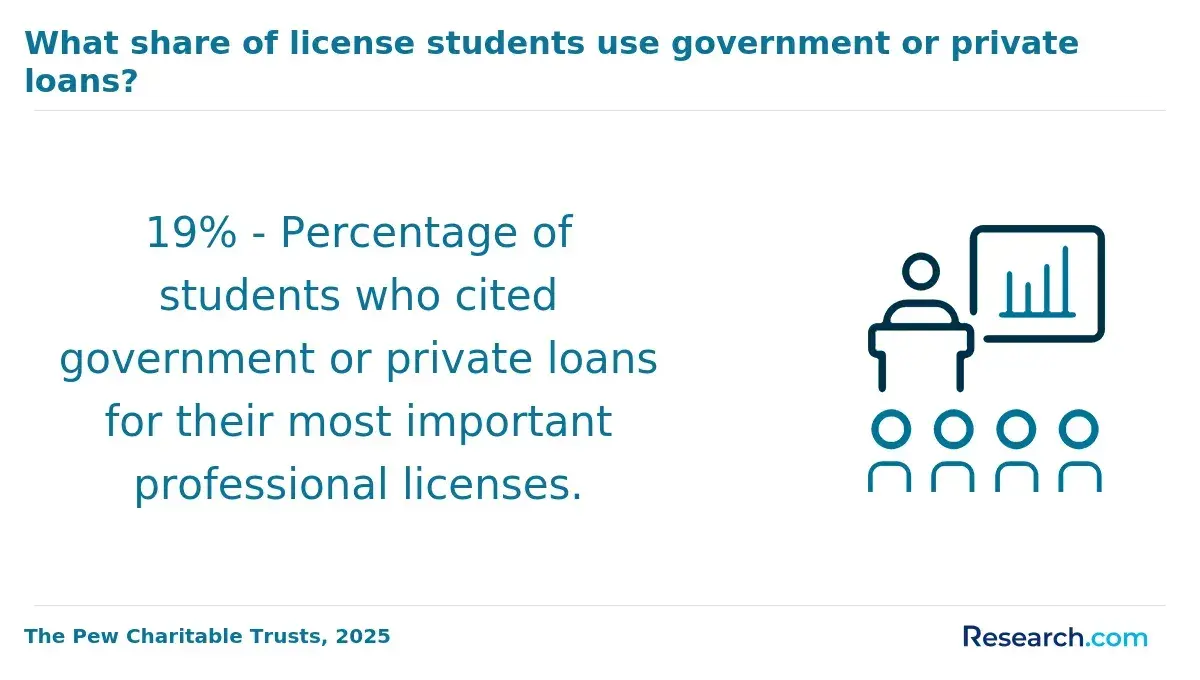
Ask whether federal aid applies; it is more commonly available for eligible credit-bearing programs at qualifying institutions than for short noncredit training. Employer tuition assistance, workforce-agency funding, and payment plans can help, but compare total borrowing against likely entry-level opportunities rather than advertised salary claims.
What careers, job roles, and industries most commonly hire graduates of stackable credentials?
Stackable credentials are most useful in occupations where skills can be demonstrated, regulations define training steps, or employers hire for specific technical competencies. Common hiring industries include construction, manufacturing, transportation, healthcare offices and hospitals, legal services, government, information technology, and creative agencies.
The table separates occupations that may welcome shorter training from those that usually require an additional license, degree, or experience threshold:
| Pathway area | Potential entry roles | Typical next stack | Important qualification check |
| Electrical and HVAC | Helper, installer trainee, maintenance trainee | Apprenticeship, license, advanced specialty | State and local licensing rules |
| Healthcare support | Medical assistant, phlebotomy technician, billing specialist | Professional certification or associate degree | Clinical eligibility and employer preferences |
| Legal support | Legal assistant, intake specialist, records clerk | Paralegal certificate or degree coursework | Role duties and education preferences |
| Digital design | Production artist, junior designer, content assistant | Portfolio specialization or degree | Portfolio quality and software proficiency |
Career changers should compare a short credential with the educational threshold of the role they actually want, not just the first job available. For broader degree-based options, this overview of the highest paying careers can help clarify when a bachelor's pathway may be the more appropriate long-term investment.
What salary ranges and advancement opportunities are associated with stackable credential careers?
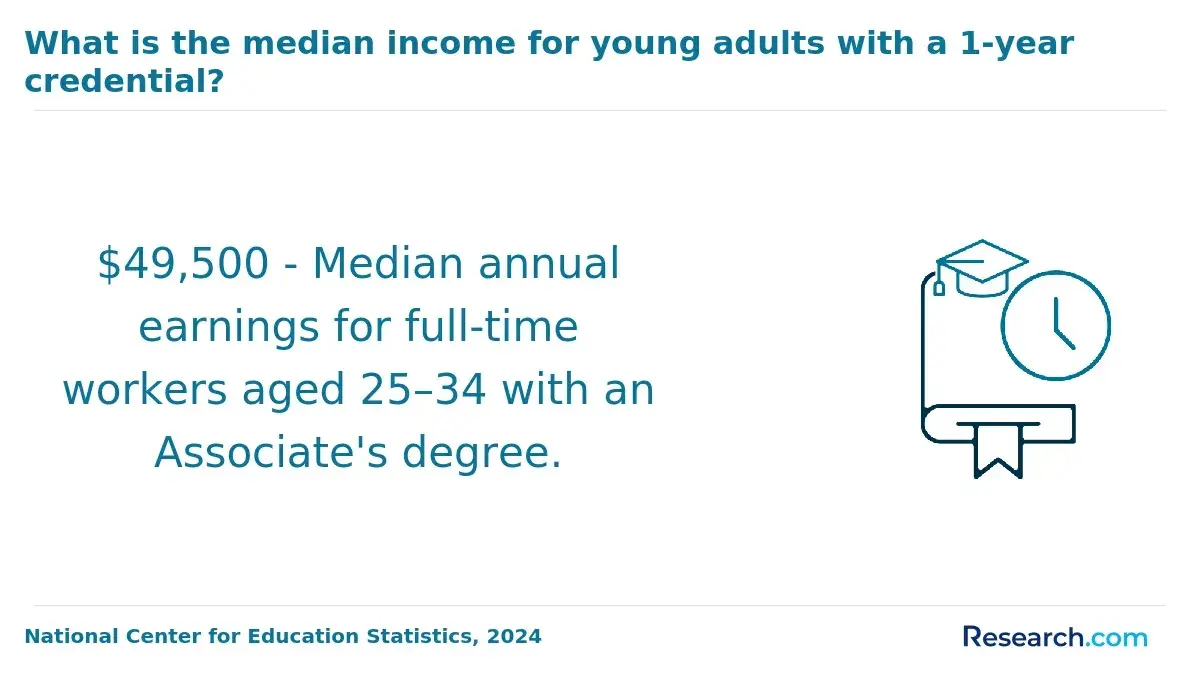
Salary data describes occupations, not what every certificate holder will earn. Pay varies by location, experience, union status, employer, shift, license, portfolio, and degree level. A stackable credential can improve access to training or an entry role, but it does not guarantee employment, promotion, or a particular wage.
The following BLS 2024 median annual wage figures provide occupation-level context for several pathways discussed here.
| Occupation | 2024 median annual wage | Advancement commonly depends on |
| Electricians | $62,350 | Apprenticeship completion, licensing, specialization, and experience |
| Medical assistants | $44,200 | Clinical experience, certification preferences, and employer setting |
| Paralegals and legal assistants | $61,010 | Legal specialty, experience, degree level, and employer requirements |
| Graphic designers | $61,300 | Portfolio strength, technical specialization, and client or industry experience |
Use wage data as a screening tool: compare local job postings, likely starting roles, total training cost, and the time needed to reach the credential's next level. A lower-cost certificate can be worthwhile when it creates a verified entry point; it is less compelling when employers require a license or degree the program does not provide.
How can learners verify job placement support, employer partnerships, and career services?
"Job placement assistance" can range from a self-service job board to direct interviews with local employers. Verify the service before paying a deposit. Ask whether career staff work with students in your program and location, how often employers hire graduates, and whether the school assists students who need flexible or part-time roles.
Request the following information in writing so you can compare programs using the same standard:
- The most recent placement rate, the cohort size, the reporting period, and the exact definition of "placed."
- Whether reported jobs must be related to the field, paid, full-time, and retained for a stated period.
- A list of current employer partners, internship sites, apprenticeship sponsors, or clinical affiliates relevant to your program.
- The percentage of students who completed required placements and whether students arrange their own sites.
- Examples of recent job titles, typical hiring timelines, and services available after graduation.
Do not rely solely on testimonials. Cross-check employer names through local job postings, speak with recent graduates when possible, and ask employers whether they recognize the credential. A program that refuses to define outcomes, cannot identify active partners, or labels any job as placement should be treated cautiously.
Other Things You Should Know About
They can be worthwhile when the first credential leads to a recognized next step, matches local job requirements, and has a total cost proportionate to realistic entry-level opportunities. They are less suitable when a target career clearly requires a bachelor's degree, graduate degree, or license that the pathway does not support.
No. Placement support may provide coaching, referrals, interviews, or employer introductions, but hiring decisions remain with employers. Ask how the provider defines placement and whether jobs must be related to the training.
Sometimes. Credit-bearing certificates from a college may apply toward a related associate degree under that institution's catalog rules. Noncredit certificates, vendor badges, and industry certifications may not carry academic credit, so obtain a written transfer or articulation policy first.
Choose a certificate when you need structured instruction, labs, clinical preparation, or college credit. Choose an industry certification when employers specifically request that external credential and you already meet its exam or experience requirements. Many strong pathways use both in sequence.
References
- Making sure you're not a bot! https://www.iastatedigitalpress.com/jtmae/article/id/14484/
- What are Stackable Credentials? https://assess.com/stackable-credentials/
- What Are Stackable Credentials and Why Do They Matter? https://www.pltw.org/blog/what-are-stackable-credentials
- Stackable Credentials: Living Links Between Learning and Work https://www.cael.org/resouces/pathways-blog/stackable-credentials-living-links-between-learning-and-work
- Building Stackable Credentials That Truly Deliver Value and Economic Mobility: 7 Steps for Success https://mcacs.talentfirst.net/building-stackable-credentials-that-truly-deliver-value/
- USHE initiative helps students earn meaningful credentials on their way to a degree - Utah System of Higher Education https://ushe.edu/stackable-credentials-help-students-earn-credentials-on-their-way-to-a-degree/
- Career Forward https://www.hiringourheroes.org/career-services/education-networking/career-forward/
- States see short-term credentials as key to long-term success https://www.luminafoundation.org/news-and-views/states-see-short-term-credentials-as-key-to-long-term-success/
- Stackable Credentials in Career Education at California Community Colleges https://www.ppic.org/publication/stackable-credentials-in-career-education-at-california-community-colleges/
- Stacked Credentials and Employment https://services.intead.com/blog/stacked-credentials-employment