2027 Best Non-Degree Programs That Pay Well

Co-Founder and Chief Data Scientist
A four-year degree is not the only route to stable, well-paid work, but choosing the wrong short program can waste time and tuition. Non-degree options include certificates, apprenticeships, diplomas, industry certifications, and license-preparation programs.
U.S. Bureau of Labor Statistics (BLS) May 2024 wage data show that several occupations commonly entered through sub-baccalaureate training, including elevator installers and repairers, had median annual pay above $100,000. This guide helps career changers, recent graduates, and working adults compare realistic paths, required credentials, costs, timelines, and career trade-offs.
Key Things You Should Know
- High-paying non-degree paths usually require more than a short course: expect an apprenticeship, supervised clinical training, a state license, an industry certification, or all of these depending on the occupation.
- BLS May 2024 data list median annual pay of $106,580 for elevator installers and repairers and $101,990 for radiation therapists, but local demand, experience, licensing, and employer requirements affect individual earnings.
- The best value is a program that leads directly to a required credential or demonstrable skill, verify total costs, clinical or apprenticeship placement, eligibility rules, and whether online study is accepted in your state before enrolling.
Top 10 Best Non-Degree Programs That Pay Well
Popular Trade School Programs
Trade programs teach hands-on work in construction, manufacturing, transportation, and repair. Common options include HVAC technician certificates, electrician apprenticeships, welding diplomas, plumbing programs, diesel technology certificates, and commercial driver training. Many take months to two years, while paid apprenticeships can take longer but combine work experience with classroom instruction. Electrician, plumbing, and HVAC work often require state or local licensing. A short welding certificate can build a useful skill, but specialized employer tests and experience usually determine access to higher-paying jobs. Choose a program with shop time, safety training, and employer connections.
Healthcare Programs
Healthcare non-degree programs range from short certificates to associate degrees. Medical assistant, phlebotomy, pharmacy technician, practical nursing, dental hygiene, diagnostic medical sonography, respiratory therapy, and radiologic technology are common choices. Clinical occupations may require accredited education, supervised clinical hours, an exam, and state licensure. A school certificate is not the same as professional certification from an outside credentialing body. Programs with patient-contact requirements are usually hybrid or campus-based even when lectures are online. Check whether the program qualifies graduates for the examination and license required where they intend to work.
Criminal Justice / Law Programs
Criminal justice and law-related non-degree training includes paralegal certificates, police academy preparation, emergency dispatch certificates, legal secretary programs, correctional officer training, and security guard licensing courses. Requirements vary sharply by employer and state. Paralegal certificates can suit people who already hold a degree or have office experience, but they do not authorize someone to practice law. Law-enforcement academies are commonly sponsored by agencies or state-approved providers and may require background checks, fitness testing, and hiring eligibility. Prioritize programs aligned with a specific role rather than broad "criminal justice" training with unclear employment outcomes.
Arts & Design Programs
Arts and design programs include graphic design certificates, UX/UI bootcamps, digital marketing certificates, photography training, animation programs, web design courses, and cosmetology school. Portfolio quality and current software skills often matter as much as the credential in digital creative fields. Cosmetology and similar personal-care occupations typically require state-approved training and licensure, while graphic design usually does not. Online programs can work well for software-based learning if they provide substantial project feedback and portfolio development. Be cautious of programs that advertise high salaries without showing the type of roles, experience, and portfolio expected.
Which non-degree programs lead to the highest salaries?
The highest occupational pay among non-degree routes tends to appear in tightly regulated technical, transportation, and healthcare roles rather than in general online certificates. The credential is only one part of entry: apprenticeships, federal or state requirements, clinical experience, and competitive hiring can be decisive.
The comparison below uses BLS May 2024 median annual wage data for occupations, not guaranteed pay for program completers. It helps show which paths may justify longer training and stricter entry requirements.
| Career path | Typical preparation | Median annual pay, May 2024 | Key limitation |
| Air traffic controller | FAA-approved pathway and federal hiring process | $144,580 | Strict age, medical, testing, and hiring requirements |
| Elevator installer and repairer | Usually a multiyear apprenticeship | $106,580 | Physically demanding; licensing may apply |
| Radiation therapist | Accredited program, certification, and usually state licensure | $101,990 | Clinical training and limited local openings can matter |
| Dental hygienist | Usually an accredited associate degree and licensure | $94,260 | Not generally a short certificate route |
| Diagnostic medical sonographer | Certificate or associate program plus clinical preparation | $89,340 | Employers may prefer accredited training and certification |
For someone seeking the fastest possible credential, these fields may not be the best fit despite their pay. They are better choices for applicants willing to meet demanding prerequisites and complete regulated training. If a bachelor's degree is ultimately needed for advancement, compare fast masters degrees only after confirming that you first meet their undergraduate admission requirements.
What non-degree jobs pay the most?
Some of the best-paid jobs accessible without a bachelor's degree are not "quick certificate jobs." They are occupations with formal apprenticeships, associate-level education, government hiring systems, or mandatory licensing. That distinction protects applicants from assuming that a low-cost online course alone creates eligibility.
This snapshot compares occupation types and the practical barrier that commonly separates a training program from employability.
| Occupation | Why pay can be strong | What applicants commonly need beyond coursework |
| Elevator installer and repairer | Complex mechanical and electrical work plus safety responsibility | Apprenticeship completion, field experience, and possible license |
| Radiation therapist | Specialized patient treatment in regulated healthcare settings | Clinical education, professional certification, and state licensure where required |
| Dental hygienist | Licensed preventive oral healthcare role | Accredited associate-level education and state license |
| Power plant operator | High-responsibility infrastructure operations | Extensive employer training and shift-work readiness |
| Transportation, storage, and distribution manager | Operational responsibility and leadership | Relevant experience; a certificate alone is rarely sufficient |
Workers who want a degree-free route should focus on roles where employers clearly recognize a specific license, registered apprenticeship, or certification. Those who want broader mobility into management, analytics, or technical leadership may eventually find that a degree adds value; accelerated bachelors degrees can be an alternative for eligible learners who need that broader credential.
Which programs offer the fastest path to good pay?
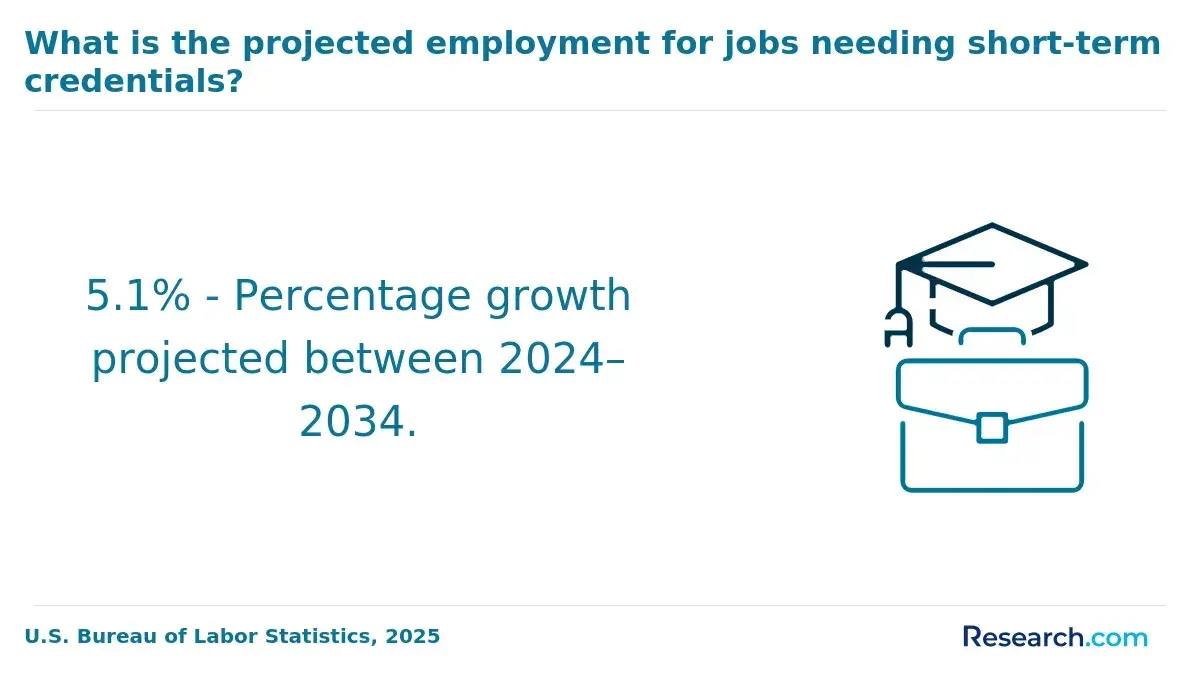
The fastest route is usually not the highest-paying route. Programs lasting a few weeks or months can help candidates enter support roles, while careers with stronger wage potential often require a year or more of training, licensing, or paid apprenticeship hours.
Shorter programs can make sense when they lead to a specific entry-level role and leave room to stack additional credentials. Examples include commercial driver training, phlebotomy, pharmacy technician, medical assistant, IT support, bookkeeping, and entry-level welding. Before choosing one, confirm local job postings actually request the credential and identify any exam, background-check, drug-screening, equipment, or clinical costs.
A practical way to compare accelerated options is to follow these steps:
- Start with a target job title and review several current local job listings for required licenses, certifications, and experience.
- Choose the shortest program that meets those stated requirements rather than the shortest program advertised.
- Calculate tuition, examination fees, tools, uniforms, transportation, and unpaid clinical or practicum time.
- Ask whether the provider reports completion, exam-pass, placement, and licensing-eligibility information for the exact program.
- Keep a longer pathway available if entry-level pay will not meet your income needs.
Programs with weekly or rolling starts can reduce waiting time, but schedule convenience should not replace credential quality. Compare online colleges with flexible start dates if a credit-bearing program better fits your timeline.
Are online non-degree programs worth it?
Online non-degree programs are worth considering when the occupation is primarily knowledge- or software-based, the provider is transparent about the credential awarded, and employers recognize the skill or certification. IT support, project coordination, bookkeeping, digital marketing, coding, and some business software programs can work well online when learners build a portfolio or complete hands-on projects.
Online delivery is a weaker fit when a field requires in-person clinical practice, equipment training, driving practice, laboratory work, or a state-approved curriculum. Healthcare, skilled trades, cosmetology, and commercial driving commonly require campus, clinical, shop, or field components. A fully online program should never be assumed to satisfy a state licensing board.
Before paying, ask the provider whether the offering is credit-bearing or noncredit, whether it prepares learners for a separate certification exam, how practical skills are assessed, and whether required placements are arranged. Also verify that the program's schedule, proctoring, and technology requirements fit your work and caregiving responsibilities.
What accreditation should non-degree programs have?
Accreditation matters most when it affects financial aid, credit transfer, professional certification eligibility, or licensure. Institutional accreditation evaluates a college or school as a whole. Programmatic accreditation evaluates a specific program and can be essential for regulated healthcare education. Approval by a state licensing board is different again and may be the requirement that matters most for trades or personal-care careers.
Use the credential type to decide what to verify:
- For a college certificate or associate degree, confirm the institution is accredited by an agency recognized by the U.S. Department of Education or the Council for Higher Education Accreditation and ask whether credits can transfer.
- For healthcare education, confirm the exact program meets the accreditor, certification-exam, and state licensure requirements for the intended occupation.
- For apprenticeships, verify registration or recognition through the relevant state apprenticeship agency, employer, union, or the U.S. Department of Labor system.
- For industry certifications, check that the credential is issued by the named certifying organization rather than merely taught by a training vendor.
- For cosmetology, security, driving, and similar state-regulated training, verify approval directly with the appropriate state board or agency.
A major red flag is a school that says it is "accredited" but will not name the accreditor, approval authority, or credentialing exam its program supports. Accreditation does not guarantee employment, but missing required approval can prevent a graduate from becoming eligible for a license or exam.
What certificates or licenses are required for these jobs?
Requirements depend on the job, state, employer, and work setting. A training certificate documents completion of an educational program. A professional certification is awarded by an outside organization after meeting its standards, often through an examination. A license is legal authorization from a government body to perform regulated work. One person may need all three.
For example, an HVAC student may complete a school certificate and then need an Environmental Protection Agency Section 608 certification to handle refrigerants. A radiologic technology student may need an approved educational program, a certification examination, and state licensure. An electrician may start as an apprentice and later meet experience and exam requirements for a journeyman license.
Do not enroll based on a general statement that a program is "certified." Ask these specific questions before signing an agreement:
- What credential will I receive from the school: certificate, diploma, academic credit, or completion record?
- Which outside certification or state license does the program prepare me to pursue?
- Am I eligible for that exam or license immediately after completion, or do I also need clinical hours, supervised work, or a degree?
- Which state's rules does the curriculum meet, and what changes if I relocate?
How long do non-degree programs take to finish?
Completion time ranges from a few weeks for focused workforce training to several years for apprenticeships and associate-level clinical programs. The advertised length may exclude prerequisites, waiting lists, clinical rotations, licensing examinations, or required work experience, so use it as a starting point rather than a promise.
A short noncredit course may take weeks to months. College certificates commonly take about one academic year when studied full time, though part-time schedules take longer. Associate degrees generally require about two years of full-time study. Registered apprenticeships frequently last several years because paid on-the-job learning is central to the credential.
Choose a fast program when it satisfies the actual entry requirement and you can accept its likely entry-level role. Choose a longer accredited or apprenticeship route when it unlocks a license, stronger employer recognition, or a clearer advancement path. For working adults, ask about evening labs, clinical-hour scheduling, attendance rules, and the maximum time allowed to finish.
How much do non-degree programs cost?
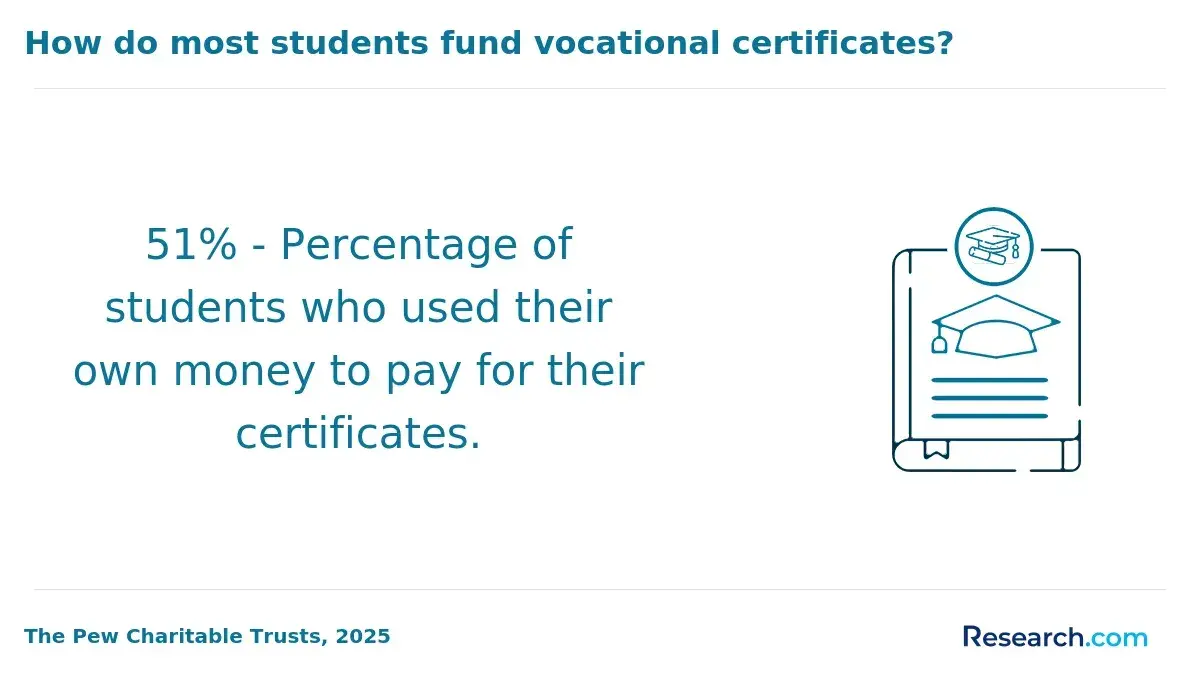
Cost varies more by provider, location, equipment, and required clinical or shop components than by program title. Community-college certificates may be comparatively affordable, while private career schools, bootcamps, flight-related training, and specialized healthcare programs can cost substantially more. Tuition alone is not a reliable measure of value.
Build a total-cost estimate before comparing programs. Include the following expenses because they can change the return on investment:
- Tuition, registration charges, technology fees, and payment-plan charges.
- Books, software subscriptions, tools, safety equipment, uniforms, and supplies.
- Certification examinations, background checks, immunizations, fingerprinting, and state license applications.
- Transportation, parking, childcare, and lost work hours during required labs or clinical placements.
- Retesting or additional coursework if an exam, skills assessment, or prerequisite is not completed successfully.
Federal student aid eligibility depends on the school and program, not simply on whether training is short. Credit-bearing programs at eligible institutions may qualify, while many noncredit courses do not. Learners considering eligible programs can review online colleges that accept FAFSA as one starting point for comparing aid-compatible options. Employer tuition assistance, Workforce Innovation and Opportunity Act funding, veterans' education benefits, and state workforce grants may also be available depending on eligibility.
How do you choose a reputable program?
A reputable non-degree program makes its career purpose, costs, schedule, credential, and limitations easy to verify. The right provider is not always the cheapest or fastest one; it is the one that meets the hiring, certification, or licensing requirement for the job you actually want.
Use this process to screen programs before applying:
- Name the target occupation, location, and entry-level employer type before searching for schools.
- Confirm required education, certification, license, apprenticeship, or clinical hours with local job listings and the relevant state board or certifying body.
- Request the complete cost of attendance and identify expenses not included in quoted tuition.
- Verify institutional accreditation, programmatic accreditation, state approval, or apprenticeship registration when those are relevant to the field.
- Ask how hands-on training, externships, clinical placements, and employer introductions are handled and whether any placement is guaranteed in writing.
- Compare completion, exam-pass, and job-placement information carefully, including how the school defines a placement and the reporting period used.
- Read the cancellation, refund, withdrawal, and financing terms before committing to a loan or income-share agreement.
Common mistakes include confusing a completion certificate with a professional certification, selecting a fully online course for a hands-on licensed occupation, and trusting salary advertisements that omit experience requirements. A good alternative is to speak with two employers or working professionals in the target field before enrolling; their feedback can reveal whether a particular credential is recognized locally.
Other Things You Should Know About
In 2027, industries like technology, healthcare, and skilled trades offer high-paying non-degree jobs. For example, data analytics and cybersecurity are lucrative fields in tech, while dental hygienists and sonographers are well-paid in healthcare. Skilled trade roles like electricians also provide lucrative opportunities.
A certificate can be better when it directly meets an entry requirement and you need a faster, lower-cost route. An associate degree may be better for licensed healthcare careers, broader general education, transfer options, and roles where employers expect a two-year credential.
Employers may accept online certificates when the provider, curriculum, and demonstrated skills are relevant. Acceptance is less likely to be enough for occupations requiring in-person clinical practice, licensing, equipment operation, or supervised field training.
The biggest red flag is vague career claims without a clear explanation of the credential awarded, total cost, required hands-on training, licensing eligibility, or employer recognition. Avoid providers that pressure applicants to enroll before answering those questions in writing.
References
- High-Paying, Fast-Growing Jobs Without a Degree https://www.rockwellinstitute.com/blog/jobs-dont-require-degree/
- The Labor Market for Recent College Graduates https://www.newyorkfed.org/research/college-labor-market
- 80 Highest Paying Jobs without a Degree (Over $50k) - USCI https://www.uscareerinstitute.edu/blog/80-Jobs-that-pay-over-50k-without-a-degree
- Best Paying Jobs Without a Degree: 24 High-Income Careers for 2026 - tripleten.com/blog https://tripleten.com/blog/posts/best-paying-jobs-without-a-degree
- What high-paying careers don't require a college degree? | Facet https://facet.com/career/careers-without-college-degree/
- Easy Degrees That Pay Well https://www.citizensbank.com/student/articles/easy-degrees-that-pay-well.aspx
- Highest Paying College Majors in 2026: Salary Data & Rankings | Extern https://www.extern.com/post/highest-earning-majors
- Getting a job without a 4-year degree. Prospects increase with a certificate. https://www.luminafoundation.org/resource/non-degree-credentials-provide-value-for-adults-in-the-labor-market/
- How does a college degree improve graduates' employment and earnings potential? - APLU https://www.aplu.org/our-work/publicuvalues/employment-earnings/
- High-Paying Jobs Without a Degree: 2026 Guide https://choosefi.com/earning-more/high-paying-jobs-without-degree