2027 Best Microcredentials With the Best ROI

Co-Founder and Chief Data Scientist
The best microcredential is not necessarily the fastest or cheapest one; it must match a real hiring requirement. Short, skills-focused programs can help workers pivot into technology, healthcare, trades, and business roles, but their value varies sharply by provider and occupation.
For context, the U.S. Bureau of Labor Statistics projects information security analyst employment to grow 33% from 2023 to 2033. This guide explains how to compare microcredentials, verify recognition, calculate total cost, and choose a path with realistic career value.
Key Things You Should Know
- High-ROI microcredentials usually build verifiable, job-specific skills in fields with employer demand, such as cybersecurity, data analytics, cloud systems, healthcare support, and skilled trades; they are not automatic substitutes for licenses or degrees.
- Completion can range from a few weeks to about one year, but ROI depends on total costs, required examination fees, equipment, lost work time, and whether employers recognize the issuing school or industry organization.
- Use occupational data as context rather than a promise: information security analysts had a $124,910 median annual wage in May 2024, but many analyst jobs still require related experience or a bachelor's degree in addition to a microcredential.
Top 10 Best Microcredentials With the Best ROI
Popular Trade School Programs
Trade-focused short certificates can offer strong ROI when they lead to an apprenticeship, employer-required credential, or state-approved licensing path. Common options include electrician, HVAC, welding, plumbing, industrial maintenance, commercial driving, and diesel technology programs. An associate degree may make more sense for learners seeking broader technical coursework or supervisory advancement. Electricians had a May 2024 median annual wage of $62,350, according to BLS, but a classroom certificate alone generally does not meet apprenticeship or licensing requirements. Compare lab access, tool costs, placement relationships, and state approval before enrolling.
Healthcare Programs
Healthcare microcredentials are most useful when they prepare students for a clearly identified exam, employer competency, or state-approved role. Examples include medical billing and coding certificates, pharmacy technician training, sterile processing, medical assisting, phlebotomy, and nursing-related specialty badges. Some programs are noncredit; others are college certificates that may stack into an associate degree. Verify clinical-placement requirements and state rules first. A short program may support entry-level work, but regulated roles can require licensure, supervised practice, certification examinations, background checks, immunizations, or CPR training beyond course completion.
Criminal Justice / Law Programs
Criminal justice and legal studies certificates can introduce court procedures, legal research, corrections, policing fundamentals, cybersecurity investigations, or victim advocacy. Paralegal studies is a common higher-ROI option when the program includes practical research and writing training; however, employer expectations differ, and some positions prefer an associate or bachelor's degree. Police officer eligibility is set by individual agencies and state standards, not by a generic certificate. Choose programs that clearly identify whether they are academic, career-training, or certification-exam preparation, and avoid assuming a credential alone provides authority to practice law or work in law enforcement.
Arts & Design Programs
Arts and design microcredentials can be worthwhile when they produce a portfolio tied to marketable tools or workflows. Practical options include UX design, digital marketing design, graphic design software, motion graphics, web production, photography, and video editing. A certificate is strongest when learners finish with reviewed projects, current software skills, and a plan to find freelance or entry-level work. For comparison, web developers and digital designers had a May 2024 median annual wage of $95,380, but pay varies widely by specialty, location, experience, and portfolio quality. Creative credentials rarely guarantee client demand.
What are microcredentials and how do they differ from certificates and degrees?
A microcredential is a focused, shorter-form learning credential that documents completion of a defined skill set or competency. It may be issued by a college, employer, professional association, technology company, or training provider. Some are digital badges; others are transcripted college certificates. Their value comes from clear evidence of relevant skills, not simply from a short completion time.
The distinctions below matter because employers, licensing boards, and colleges do not treat every credential the same way.
| Credential | What it usually represents | Best use | Key limitation |
| Microcredential | Narrow, skills-based learning achievement | Upskilling or testing a career direction | Recognition varies by issuer and employer |
| Certificate | Completion of an educational program | Structured career preparation or academic progression | May not lead to certification or licensure |
| Professional certification | Credential awarded by a certifying body, often after an exam | Showing validated professional competence | May require renewal, experience, or continuing education |
| Associate or bachelor's degree | Broad academic credential with general and major coursework | Roles requiring a degree or long-term advancement | Usually requires more time and tuition |
Choose a microcredential when you need a targeted skill, can verify employer recognition, and do not need a degree or license for your intended role. Choose a longer certificate or degree when job postings consistently require one, when supervised clinical or lab training is necessary, or when you want transferable academic credit.
Which microcredential fields currently offer the strongest career and salary ROI?
The strongest current ROI tends to appear in fields where employers can assess a specific technical competency and where the credential complements prior education or experience. Cybersecurity, cloud administration, data analytics, IT support, project management, healthcare operations, and advanced manufacturing are common examples. Demand alone is not enough: an entry-level learner should confirm that the program teaches the tools named in local job postings.
For learners comparing shorter training with longer academic routes, reviewing university majors can clarify when a degree has better long-term value than a standalone badge. The table separates promising fields by the role of the credential rather than implying that any course qualifies a learner for every job.
| Field | High-value microcredential focus | Who benefits most | Important reality check |
| Cybersecurity | Security fundamentals, cloud security, incident response | IT support staff and career changers with technical foundations | Many analyst roles also seek experience or a degree |
| Data analytics | SQL, spreadsheets, visualization, Python or business intelligence tools | Business professionals who can show work samples | Advanced data science positions often require deeper math and programming |
| Cloud and IT | Platform administration, networking, automation | Help-desk and systems professionals | Vendor credentials can change as platforms evolve |
| Healthcare operations | Coding, revenue cycle, health information workflows | Administrative workers entering healthcare settings | Clinical occupations have separate regulatory requirements |
| Skilled trades | Safety, equipment operation, specialty technical skills | Learners entering an apprenticeship pipeline | Licensing and paid apprenticeship hours may still be required |
Data supports prioritizing technical fields, but not treating them as guaranteed outcomes. BLS projects data scientist employment to grow 36% from 2023 to 2033; that occupation typically requires more than a brief introductory microcredential, so use a short program as a building block rather than a substitute for advanced preparation.
How can students determine whether a microcredential program is properly accredited?
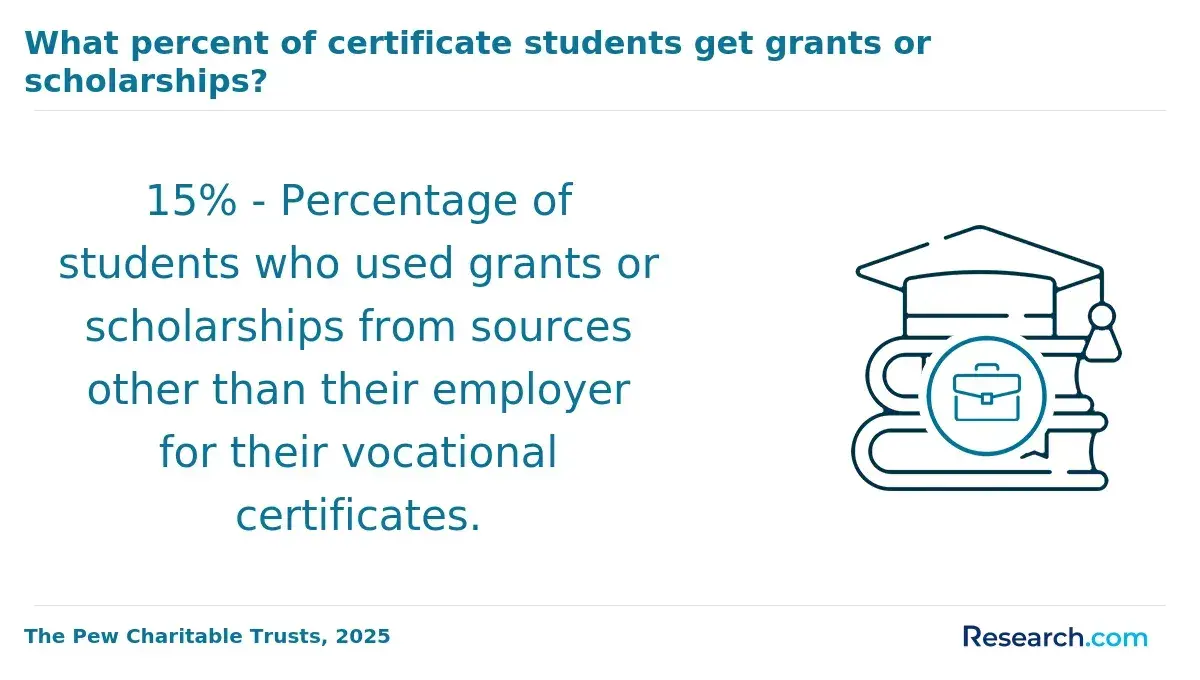
"Accredited" can mean different things, and it is not always applicable to a microcredential. Institutional accreditation applies to colleges and universities; programmatic accreditation applies to certain professional programs; industry certifications are governed by their issuing organizations. A noncredit badge from a reputable company may be useful without being academically accredited, but it may not transfer for college credit or meet a licensing requirement.
Before paying, verify the credential through the organization that has authority over the outcome you want. These checks reduce the risk of buying a credential with little labor-market value.
- Identify whether the provider is a college, employer, vendor, professional association, or private training company.
- For college-issued credit, confirm institutional accreditation through the U.S. Department of Education or the Council for Higher Education Accreditation.
- For regulated occupations, check the relevant state board's approved-program and examination rules.
- For industry certifications, confirm that the issuer - not merely the training provider - recognizes the training or examination pathway.
- Read local job postings to see whether employers name the provider, technology, certification, or skill covered.
A major red flag is vague language such as "internationally accredited" without naming the accreditor, recognition status, or exact occupational eligibility. Ask for the credential's transcript notation, digital verification method, credit value, and any policy governing transfer or renewal.
What admission requirements and prior experience are needed for high-ROI microcredentials?
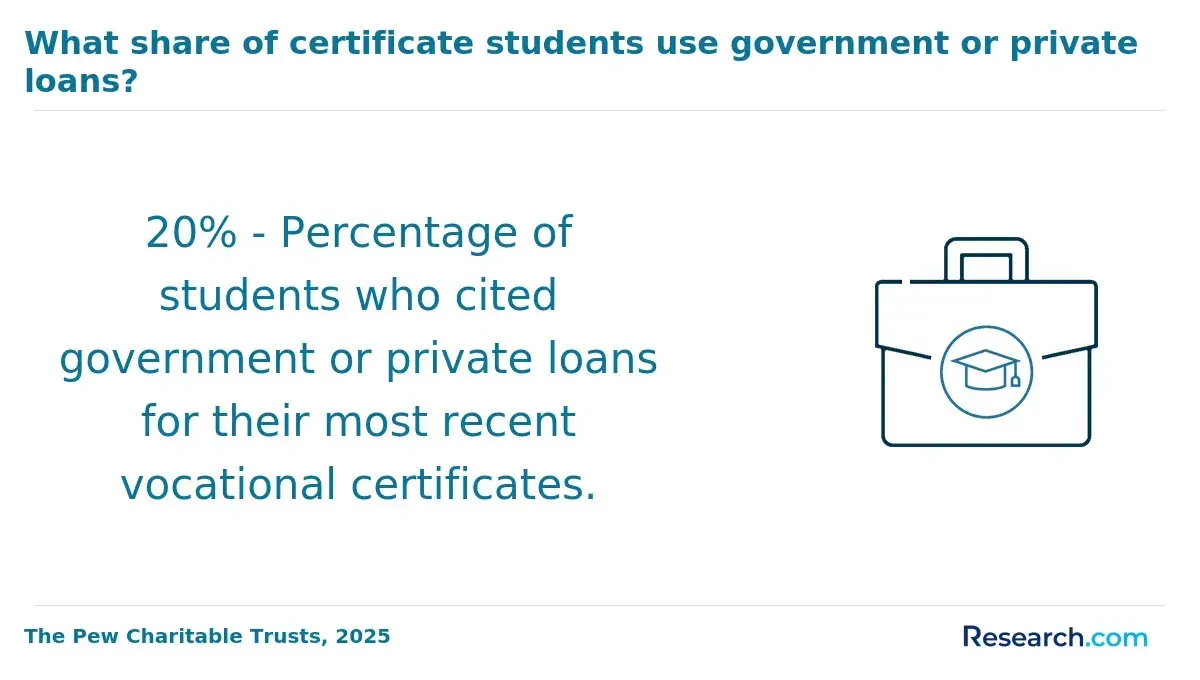
Admission requirements should match the type and level of microcredential. Open-enrollment, noncredit courses may require only payment and basic technology access. College credit certificates can require an application, placement assessment, prerequisite courses, or proof of high school completion. Advanced cybersecurity, data, and healthcare programs often assume prior coursework, professional experience, or technical fluency.
Applicants considering credit-bearing options can reduce friction by comparing an online college free application before paying multiple application charges. Do not mistake easy entry for easy completion: technical programs may still require substantial independent practice.
Match your starting point to the program level:
- Beginner learners should choose foundational training with stated prerequisites, tutoring, and hands-on projects.
- Career changers should favor programs that translate prior experience into portfolio evidence, supervised practice, or an employer-recognized examination.
- Experienced professionals should select advanced, vendor-specific, or specialty credentials that fill a documented skills gap.
A common mistake is enrolling in an advanced program because its marketing promises a fast transition. Review a sample syllabus and ask whether you can perform each prerequisite skill before committing.
How do online and campus-based microcredential formats compare for flexibility and outcomes?
Online microcredentials generally offer the best scheduling flexibility, particularly for software, analytics, project management, and business skills. Campus or hybrid formats can be stronger when learning depends on clinical practice, specialized equipment, shop work, live performance feedback, or supervised assessments. Outcomes depend more on curriculum quality, practice, instructor support, and employer recognition than on delivery mode alone.
This comparison helps identify which format fits the work itself, not just a preferred schedule.
| Factor | Online | Campus or hybrid |
| Schedule | Often asynchronous and part-time friendly | Usually fixed meeting or lab times |
| Hands-on training | Best for digital tools and simulations | Better for equipment, clinical, and shop-based skills |
| Networking | Requires deliberate use of virtual events and communities | Can provide direct access to instructors and local employers |
| Cost considerations | May reduce commuting and housing costs | May include lab, facility, parking, or material charges |
| Assessment | May use projects, proctoring, and virtual labs | Can support observed demonstrations of competency |
Before choosing online delivery, confirm how identity verification, lab access, internships, clinical placements, examinations, and technical support work. Avoid programs that advertise an online route to a licensed occupation without explaining the state-specific practical requirements.
What do typical microcredential curricula include and how long do programs usually take?
Most microcredentials focus on a compact set of job-relevant outcomes: foundational concepts, tool practice, applied projects, and an assessment such as a portfolio, simulation, skills demonstration, or exam. Time to completion ranges from a few weeks for a narrowly focused badge to several months for a multi-course certificate. Credit-bearing college certificates and clinical programs may take longer because they include sequenced courses or supervised experience.
Look beyond advertised duration. A six-week program may require 10 to 15 hours of weekly study, while a self-paced course can take longer if you need time for projects or exam preparation. Ask for the expected workload, deadlines, number of live sessions, software requirements, and whether the final assessment is included.
A stackable microcredential is most useful when the provider documents exactly what comes next: another badge, an industry exam, college credit, or a larger certificate. If no written pathway exists, treat "stackable" as a marketing claim rather than a transfer guarantee.
What tuition, fees, and hidden costs should students expect for microcredentials?
Tuition is only one part of microcredential ROI. Noncredit online courses may charge a single enrollment fee, while college certificates can assess tuition by credit plus institutional fees. Costs rise when programs require software subscriptions, tools, uniforms, examinations, retakes, background checks, travel, or unpaid clinical and practicum hours.
Use this cost checklist to compare programs on an equal basis before calculating whether a career move is financially sensible.
| Cost category | Questions to ask | Why it affects ROI |
| Tuition or course fee | Is the advertised price for every required module? | Low introductory pricing may exclude the full pathway |
| Assessment and exam fees | Are attempts, proctoring, and retakes included? | External certification costs can be substantial |
| Equipment and software | Do you need a laptop, specialized tools, or paid platform access? | Required materials change the real upfront cost |
| Clinical, lab, or travel expenses | Who arranges placement and covers transportation? | Required attendance may reduce work availability |
| Renewal costs | Does the credential expire or require continuing education? | Recurring expenses affect long-term value |
For lower-cost pathways that may complement a targeted skill plan, compare easy certifications to get online, while remembering that "easy" does not mean employer-recognized or appropriate for regulated work. Ask whether federal aid is available only when the specific college program is eligible; many standalone noncredit microcredentials do not qualify.
What jobs can microcredential graduates qualify for and how do employers value them?
Employers usually value microcredentials as evidence of a specific capability, especially when the credential comes with a portfolio, a proctored assessment, current technology training, or an industry-recognized certification. They are most persuasive when they complement relevant work experience, not when they attempt to replace credentials employers explicitly require.
A microcredential may help candidates pursue roles such as IT support specialist, junior data analyst, cloud support technician, medical billing specialist, pharmacy technician trainee, project coordinator, digital marketing assistant, or trade apprentice. Exact job titles, hiring criteria, and pay vary by employer and location. A credential can strengthen an application, but it does not independently confer professional authority, licensure, or experience.
For people deciding whether a short credential is enough, compare the job postings you want with 4 year degrees that pay well. A degree may be the better investment when most target roles require one for entry, promotion, or professional licensure.
To improve employer value, document completed projects, explain the tools used, connect the learning to a business problem, and list any separate professional certification accurately. Never label a course-completion certificate as an industry certification unless the certifying organization awarded it.
What are the salary ranges and job outlook for careers linked to microcredentials?
Salary and outlook data describe occupations, not the earnings of all microcredential holders. They are useful for judging the opportunity around a career path, but education, experience, region, industry, shift work, licenses, and employer size all influence actual pay. Some high-paying occupations require degrees or significant experience beyond a short credential.
The following BLS data provides a U.S. market snapshot for occupations that may connect to skills taught in microcredential pathways.
| Occupation | May 2024 median annual wage | Projected employment change, 2023-2033 | Microcredential role |
| Information security analysts | $124,910 | 33% | May support specialization; degree and experience are commonly expected |
| Data scientists | $112,590 | 36% | Useful for introductory tools, but advanced preparation is typical |
| Web developers and digital designers | $95,380 | 8% | Portfolio and technical skills can be especially important |
| Electricians | $62,350 | 11% | Training can support entry to apprenticeship and licensing pathways |
| Medical records specialists | $50,250 | 9% | Relevant certificates may support entry, depending on employer requirements |
Use the table to investigate a field, not to forecast personal income. A better ROI calculation compares total training cost and time away from work against realistic local entry-level openings, required credentials, and the next advancement step.
Other Things You Should Know About
They can be worth it when they teach a skill employers request, come from a recognizable provider, fit your experience level, and have a reasonable total cost. They are a weaker investment when the target occupation requires a license, degree, or apprenticeship that the program does not provide.
A microcredential usually verifies a narrow skill or competency. A certificate generally represents completion of a more structured educational program. Either may be credit-bearing or noncredit, depending on the provider.
Yes, particularly for roles with demonstrable technical skills. Career changers should prioritize programs with portfolio projects, practice assessments, career support, and a clear connection to entry-level job postings. They should also plan for experience-building through internships, projects, or adjacent roles.
Employers may recognize them when the issuer, skill, assessment, and evidence of competence are credible. Recognition is stronger when job postings name the technology or certification covered. Ask employers or review local postings before enrolling rather than relying on provider marketing alone.
References
- How Microcredentials Boost Skills-Based Hiring - TestGorilla https://www.testgorilla.com/blog/micro-credentials-skills-based-hiring/
- Microcredentials: What They Are and Why They Matter https://www.citizensbank.com/student/articles/what-are-microcredentials.aspx
- Best Micro-Credentials to Boost Your Tech Career https://www.dice.com/career-advice/best-micro-credentials-to-boost-your-tech-career
- 4 Strategies to Develop Successful Micro-Credential Programs | Research Brief https://www.wgulabs.org/posts/4-strategies-to-develop-successful-micro-credential-programs
- Microcredentials Impact Report 2025: Insights from Students and Employers https://www.luminafoundation.org/resource/microcredentials-impact-report-2025-insights-from-students-and-employers/
- Microcredentials: Empowering Modern Learners & Employers https://evolllution.com/microcredentials-empowering-modern-learners-employers
- Microcredentials for Teachers: Trends, Benefits and Programs https://moderncampus.com/blog/microcredentials-for-teachers-trends-benefits-and-programs.html
- How Microcredentials Are Revolutionizing the Higher-Education Business Model https://manhattan.institute/article/how-microcredentials-are-revolutionizing-the-higher-education-business-model
- 7 Powerful Ways Microcredentials Are Reshaping How Employers Hire - Lloyd Staffing https://www.lloydstaffing.com/7-powerful-ways-microcredentials-are-reshaping-how-employers-hire/