2027 Fastest Online Non-Degree Programs

Co-Founder and Chief Data Scientist
If you need job-relevant training quickly, an online non-degree program can be faster and less expensive than a degree, but speed does not automatically mean employer recognition or licensure eligibility. U.S. Bureau of Labor Statistics projections for 2024-2034 show above-average growth for several certificate-aligned fields, including medical assisting.
This guide compares fast online options, explains realistic timelines and costs, and shows how to verify whether a program supports your specific career goal before you enroll.
Key Things You Should Know
- Fast online non-degree programs commonly take weeks to about 12 months. Programs involving clinical practice, supervised skills, or state licensure usually take longer because required hands-on training cannot be completed entirely online.
- A certificate documents completion of education, while a certification is a professional credential usually awarded by an independent organization after an exam or other requirements; confirm which one employers actually request.
- For occupational context, BLS projects medical assistant employment to grow 12% from 2024 to 2034, while some office, legal, and design paths may have slower growth; match speed with local job demand.
Top 10 Fastest Online Non-Degree Programs
Popular Trade School Programs
Fast online trade training usually teaches theory, safety, estimating, codes, or preparation for an industry exam. HVAC, electrical, plumbing, welding, automotive, and construction management certificates may include online coursework, but hands-on skill assessment is often campus-based, employer-based, or completed through an apprenticeship.
An online HVAC certificate can be useful for entry-level knowledge and EPA Section 608 exam preparation, but it does not replace state licensing rules or field experience. Choose this route when a provider clearly identifies its lab, practicum, and licensing pathway.
Healthcare Programs
Healthcare non-degree options include medical billing and coding, pharmacy technician, medical assisting, dental assisting, patient care technician, and health information certificates. Fully online programs fit administrative roles best; direct-care programs normally require in-person clinical hours, background checks, immunizations, and sometimes state approval.
A school certificate may prepare learners for a separate certification examination, but passing eligibility varies by certifier. Medical assisting is a relatively strong-demand example: BLS projects 12% employment growth from 2024 to 2034. Verify clinical placement support before paying tuition.
Criminal Justice / Law Programs
Online criminal justice certificates can introduce policing, corrections, homeland security, court systems, or private security. Legal studies and paralegal certificates focus on legal research, writing, procedure, and document preparation. These programs can support entry-level administrative or support work, but they do not authorize someone to practice law, and law-enforcement hiring requires agency-specific screening and academy training.
For paralegal work, employer expectations vary; some positions prefer a degree or a program approved by the American Bar Association. Check the role's actual posting requirements before choosing a credential.
Arts & Design Programs
Short online programs in graphic design, UX design, digital marketing design, photography, video editing, and web content creation emphasize portfolio-ready projects. They are often noncredit career-training programs rather than academic certificates, so transfer credit may be unavailable.
Speed is valuable when you already have creative ability and need current software skills, but a credential alone rarely proves job readiness. Select programs that include instructor feedback, accessible software requirements, portfolio reviews, and projects resembling the work you want to pursue. Freelance work may require separate business and client-management skills.
What are online non-degree programs and who are they best suited for?
Online non-degree programs are short learning experiences that do not award an associate, bachelor's, or graduate degree. They may award a college certificate, continuing-education certificate, professional certificate, microcredential, digital badge, or provider-issued completion record. Their value depends on the provider, curriculum, employer recognition, and whether the target occupation has licensing or certification requirements.
They are usually best for career changers seeking a defined entry point, working adults updating job skills, and people testing a field before pursuing a degree. They are less suitable when a role legally requires a degree, license, extensive clinical training, or an apprenticeship.
A credit-bearing community-college certificate can make sense if you may continue into a degree; a noncredit provider program can make sense when speed and a narrow technical skill matter more than transferable credits.
| Program type | Typical provider | Best fit | Key limitation |
| Credit-bearing certificate | College or university | Students who may stack credits toward a degree | Often follows academic terms and may take longer |
| Noncredit career-training certificate | College continuing education unit or training provider | Focused job skills and faster entry | Usually has limited transfer value |
| Professional certificate | University, company, or industry provider | Skill development for a specific function | Employer recognition varies |
| Industry certification | Independent certifying organization | Roles where employers request a credential | May require an exam, experience, or renewal |
How long do fast online certificate and non-degree programs typically take to complete?
The fastest self-paced online programs may take a few weeks, while structured certificates commonly take three to 12 months. Completion time depends less on marketing claims than on required instructional hours, course sequence, grading deadlines, clinical rotations, labs, and your weekly study capacity. A program advertised as "six months" may take longer if it assumes full-time attendance or if you must arrange a practicum.
Use the published curriculum to distinguish a genuinely short program from an accelerated academic pathway. If your goal requires college credit, compare a certificate against the quickest associates degree; the degree takes longer but can broaden eligibility for roles that screen for postsecondary education.
| Format | Common pace | What can delay completion |
| Self-paced noncredit training | Weeks to several months | Limited instructor support, exam scheduling, learner time |
| Structured online certificate | One or more academic terms | Fixed course sequence and assignment deadlines |
| Hybrid clinical or skilled-trade program | Several months to more than a year | Lab capacity, clinical placement, supervised hours |
| Associate degree pathway | Usually longer than a certificate | General education and prerequisite requirements |
How do online non-degree programs compare to campus-based options in flexibility and outcomes?
Online programs offer the greatest flexibility when the work is knowledge-based: coding concepts, legal research, business software, health information, and design tools can often be taught asynchronously. Campus or hybrid formats are usually stronger for students who need equipment, face-to-face coaching, peer practice, employer connections, or required supervised training.
Outcomes depend on the program's fit with the occupation, not simply on delivery mode. A high-quality online course with graded projects, responsive instructors, career support, and verified assessments can be more useful than an unfocused campus course.
Conversely, a fully online program is a poor substitute for mandated clinical hours, shop practice, or an approved licensing curriculum. Ask how employers evaluate the credential and what portion of the course is live, self-paced, or in person.
What accreditation and institutional quality standards should these online programs meet?
Institutional accreditation matters most for credit-bearing college certificates, federal student-aid eligibility, and credit transfer. Confirm that the college is accredited by an agency recognized by the U.S. Department of Education or the Council for Higher Education Accreditation. Accreditation does not mean every program meets licensing-board requirements, however.
For noncredit training providers, evaluate quality through transparent curriculum details, instructor qualifications, assessed learning, refund terms, employer partnerships, and clear disclosure of whether the credential leads to an external exam.
Healthcare, legal, trade, and public-safety programs may need additional programmatic approval, board approval, or state authorization. The safest choice is a provider that identifies the exact standard it meets rather than making broad claims that it is "accredited" or "career ready."
Be particularly cautious of programs that promise a license, certification, job placement, or unusually high salary without explaining the independent requirements. A legitimate provider can explain what it teaches, what it awards, and what learners must still do afterward.
What admission requirements and prior education are needed for fast online programs?
Admissions requirements vary sharply by credential. Many short noncredit programs require only an online registration and payment. Credit-bearing certificates may request a high school diploma or equivalent, placement information, transcripts, and sometimes prerequisite coursework.
Programs involving clinical placement or regulated occupations can add background checks, drug screening, immunization records, CPR training, or minimum age requirements.
Do not assume a fast start means no preparation. Learners needing a rapid enrollment date can compare online colleges that start soon, then verify whether the specific certificate, not just the institution, has frequent starts and seats available.
Before applying, confirm these practical eligibility points:
- Whether the credential is credit-bearing, noncredit, or preparation for an outside examination
- Whether you need prior coursework, work experience, equipment, software, or a stable proctored-testing environment
- Whether the program accepts students in your state and supports any required practicum or clinical placement
- Whether a prior conviction could affect clinical placement, licensing, or employer hiring in the field
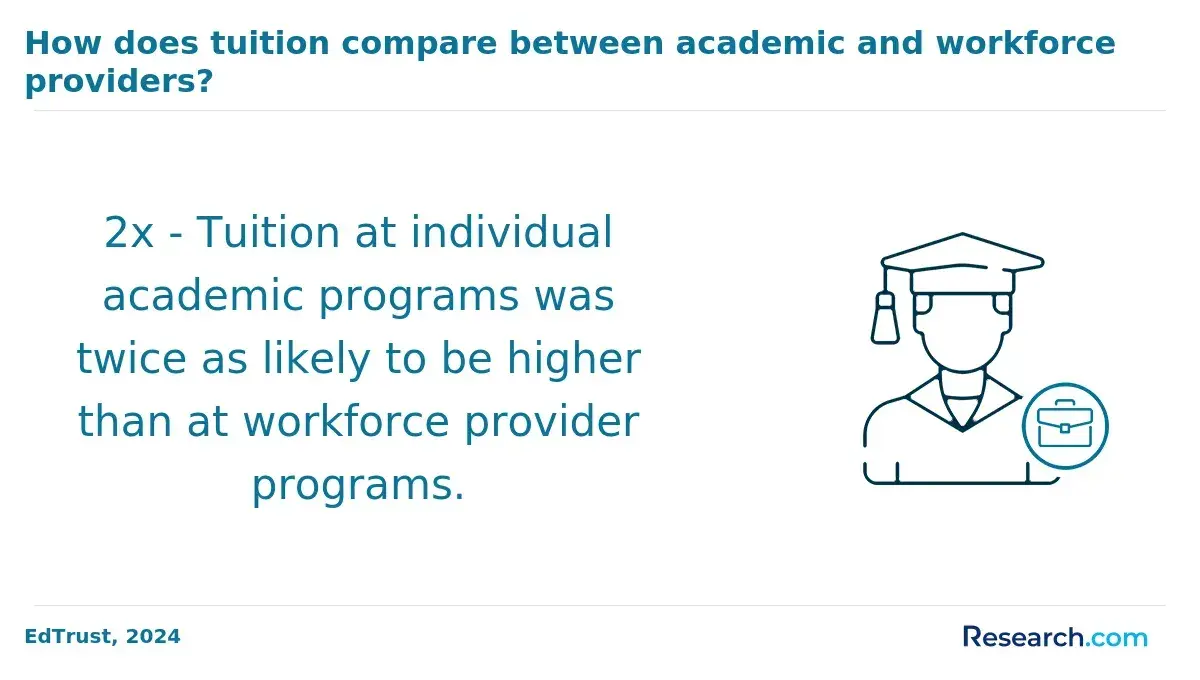
What tuition costs, financial aid, and employer funding options exist for short online programs?
Total cost is more than advertised tuition. Include registration fees, textbooks, exam vouchers, proctoring, software, tools, uniforms, background checks, insurance, clinical requirements, and travel for labs or testing.
A low-cost self-paced course may be appropriate for skill building, but it may not include the support, exam preparation, or supervised experience needed for a regulated role.
Federal aid generally applies only to eligible programs at participating institutions and is not automatic for short or noncredit training. Ask the financial-aid office whether the exact program qualifies, not whether the school broadly accepts aid.
For a credit-bearing route, compare options among the cheapest online college choices and calculate the full program cost before committing.
Possible ways to reduce out-of-pocket cost include:
- Employer tuition assistance or workforce-development benefits tied to an approved provider
- Workforce Innovation and Opportunity Act funding through a local workforce agency when the training is eligible
- School payment plans, veterans' education benefits when applicable, and state workforce grants
- Bundled exam vouchers only when the voucher, retake policy, and eligibility requirements are clearly stated
What careers and entry-level job roles can fast non-degree programs prepare you for?
Fast non-degree programs can prepare learners for entry-level or support roles when the credential matches employer needs. They are most credible when paired with a portfolio, supervised practice, an internship, customer-service experience, or an industry-recognized examination where relevant. They are not a universal replacement for degrees, apprenticeships, or licenses.
The following comparison separates likely entry points from roles with additional requirements, helping you avoid enrolling in a program that does not reach your target job.
| Training focus | Possible entry-level direction | Common additional requirement |
| Medical billing and coding | Billing specialist or coding support role | Employer-preferred certification or experience may be needed |
| Medical assisting | Medical assistant | Clinical training; certification may be preferred |
| HVAC fundamentals | Installer helper or service trainee | EPA credential, apprenticeship, or state requirements |
| Legal studies | Legal assistant or administrative support | Paralegal roles may prefer degree-level preparation |
| Digital design | Production artist or junior content role | Portfolio and software proficiency |
Read current job postings in your area before enrolling. If postings consistently require an associate or bachelor's degree, choose a stackable college certificate or a longer program rather than assuming a short credential will overcome that screening requirement.
What salary ranges and earning growth can graduates of fast online programs expect?
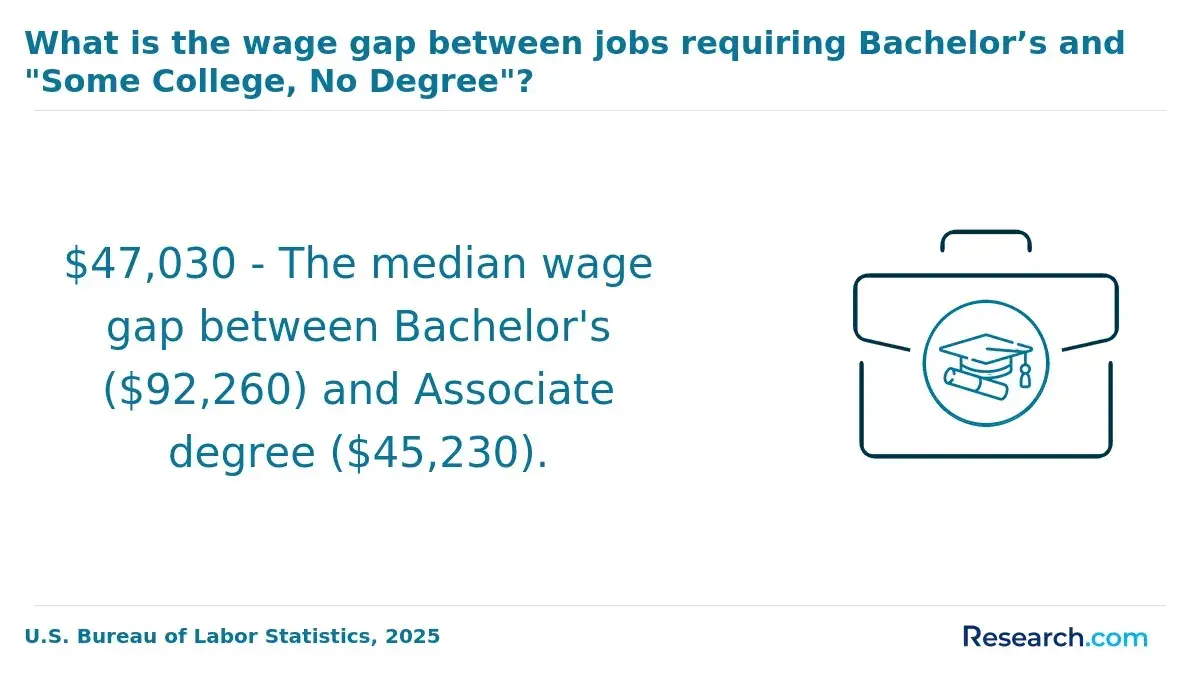
Salary information describes occupations, not what every certificate completer will earn. Pay varies by location, employer, schedule, experience, licensing status, and whether a role is entry level. Use occupational wage data as a reality check on a field's potential, then compare it with the complete cost and time of your program.
For example, BLS reported a 2024 median annual wage of $44,200 for medical assistants and $59,810 for heating, air conditioning, and refrigeration mechanics and installers.
These figures do not establish that a particular online program leads to either occupation or wage level; medical assistants may need clinical preparation, while HVAC work commonly requires field training and may involve licensing rules.
Earning growth is usually more plausible when short training becomes part of a sequence: entry-level work, verified skills, experience, employer-paid advancement, and an industry certification or degree. Be skeptical of providers that present a broad occupational median as the expected pay immediately after completion.
How can you evaluate and choose a reputable fast online non-degree program?
Choose the fastest program only after confirming it is fast enough for your timeline and substantial enough for your goal. Start with the job, license, certification, or skill you need, not with a provider's completion-time claim.
Students seeking a credit-bearing option may also want to compare non profit online colleges for institutional mission, accreditation, and longer-term academic pathways.
Use this process to compare finalists:
- Find several recent job postings for your target role and note the education, experience, software, license, and certification requirements.
- Verify whether the program awards academic credit, a completion certificate, or preparation for an independent certification exam.
- Calculate the complete cost, including required exams, supplies, travel, and lost work time.
- Confirm state authorization, clinical or lab arrangements, and licensing-board approval when the occupation is regulated.
- Ask for program completion, job-placement, and licensure-exam data only if the school can define how each measure is calculated.
- Review cancellation, refund, subscription, and financing terms before providing payment information.
Common red flags include vague claims about accreditation, no named instructors, pressure to enroll immediately, hidden recurring fees, guaranteed employment language, and a curriculum that never states what employers or licensing boards recognize. A short program is worth considering when it has a transparent outcome, a manageable total cost, and a direct connection to the work you actually want.
Other Things You Should Know About the Fastest Online Non-Degree Programs
Some self-paced, noncredit programs can be completed in weeks. Programs requiring college credit, clinical practice, labs, or licensing preparation usually take longer because they have required instructional and supervised hours.
Employers may value them when the provider is credible, the curriculum reflects job tasks, and you can demonstrate skills. Recognition is stronger when the program prepares for a commonly requested industry certification or includes assessed projects.
Sometimes, but only if the program meets the relevant state board's education requirements and you complete all other steps, such as examinations, background checks, supervised hours, or applications. Verify this directly with the state licensing authority before enrolling.
A non-degree program is better when you need a narrow skill quickly and local employers accept it. An associate degree is often better when employers require broader education, you want transfer options, or you expect to advance into roles with degree requirements.
References
- Best Online Degree Programs for Working Adults https://www.scholaro.com/db/News/best-online-degree-programs-256
- Fast Track Online Degrees | Colorado Technical University https://www.coloradotech.edu/admissions/registrar-evaluation-services/fast-track
- The Non-Degree Market: Oasis or Mirage? https://www.encoura.org/resources/wake-up-call/the-non-degree-market-oasis-or-mirage/
- What are the fastest-growing industries to consider for a career change? - MSU Denver https://www.msudenver.edu/innovative-lifelong-learning/blog/what-are-the-fastest-growing-industries-to-consider-for-a-career-change/
- Measuring - and Proving - the Effectiveness Of Non-Degree Programs https://www.calbright.edu/newsroom/blog/measuring-and-proving-the-effectiveness-of-non-degree-programs/
- High-Paying, Fast-Growing Jobs Without a Degree https://www.rockwellinstitute.com/blog/jobs-dont-require-degree/
- Boost Income with Flexible Online Degrees https://www.marian.edu/blog/2026/02/how-flexible-online-degrees-help-you-boost-income-on-a-budget.php
- Getting a job without a 4-year degree. Prospects increase with a certificate. https://www.luminafoundation.org/resource/non-degree-credentials-provide-value-for-adults-in-the-labor-market/
- Online college courses are popular, why do they still cost so much? https://hechingerreport.org/as-online-higher-education-hits-a-milestone-why-does-it-still-cost-so-much/