2027 Best Stackable Credentials With Conditional Admission

Co-Founder and Chief Data Scientist
Choosing training when you do not yet meet standard college admission requirements can feel like a dead end. Stackable credentials with conditional admission create a lower-risk starting point: complete approved coursework, meet defined academic benchmarks, and progress into a certificate, associate degree, or higher credential. The U.S. Bureau of Labor Statistics projects healthcare occupations to grow much faster than average from 2024 to 2034, making targeted, career-aligned pathways especially relevant. This guide helps you compare programs, costs, transfer value, delivery formats, and realistic outcomes before enrolling.
Key Things You Should Know
- Conditional admission is not open admission: students usually must complete specified introductory courses and maintain a minimum GPA before gaining regular status or moving to the next credential.
- The strongest stack is credit-bearing, clearly documented, and aligned with a named degree, employer-recognized certification, or state license pathway; noncredit certificates may not transfer.
- Use occupation data cautiously: BLS reported a $48,000 median annual wage for all occupations in May 2024, but a short credential alone does not automatically qualify someone for a higher-paying role.
Top 10 Best Stackable Credentials With Conditional Admission
Popular Trade School Programs
Common stackable trade pathways begin with a certificate and build toward an associate degree, apprenticeship, or license-eligible training. Examples include welding technology, HVAC/R, electrical technology, industrial maintenance, automotive service, construction management support, and diesel technology. Conditional admission may allow students to begin with foundational math, safety, and technical courses before entering selective clinical or lab sequences. Choose this route when hands-on training and local employer connections matter; choose a registered apprenticeship instead when paid work-based learning is available and fits your target trade.
Healthcare Programs
Healthcare stacks may move from nursing assistant or medical assisting coursework into practical nursing, respiratory care, health information, or an associate degree in nursing, depending on school and state rules. Programs often use conditional admission because anatomy, physiology, background checks, immunizations, drug screening, clinical placement capacity, and minimum grades can determine progression. A school certificate is not the same as a professional license or certification. Confirm that the curriculum meets your state board's requirements and identify the separate exam, supervised clinical hours, and application steps required for the role you want.
Criminal Justice / Law Programs
Typical pathways include certificates in criminal justice, corrections, paralegal studies, legal office technology, cybersecurity foundations, and emergency management that may apply toward an associate degree. Conditional admission can help learners demonstrate college readiness through introductory writing, law-related research, and ethics courses. These programs can support entry-level administrative, records, compliance, security, or public-safety-adjacent roles, but requirements for sworn law enforcement, legal practice, and many government jobs are set by employers or agencies. Paralegal education does not authorize someone to practice law independently.
Arts & Design Programs
Stackable arts and design options often include digital media, graphic design, web design, UX foundations, photography, animation, interior design support, and fashion merchandising. A first certificate may build software, portfolio, and visual communication skills before applying toward an associate degree. Conditional admission can be useful for students who need to establish academic performance or submit a stronger portfolio after initial coursework. Review required software, equipment, portfolio reviews, and intellectual-property policies. For design careers, demonstrable work and employer-relevant tools can matter as much as the credential title.
What are stackable credentials with conditional admission and how do they work?
Stackable credentials are intentionally sequenced educational awards. A student can earn a smaller credential first, use it for immediate skill development or employment, and apply some or all completed credits toward a larger credential. Conditional admission means the institution permits a student to begin under stated conditions rather than granting unrestricted admission to the final program immediately.
A common sequence is a foundational certificate, then an advanced certificate or diploma, followed by an associate or bachelor's degree. The condition might be earning a specified GPA in the first 6 to 12 credits, completing developmental education, passing prerequisite courses, or meeting professional-program screening requirements. The written catalog - not a verbal assurance - is the evidence that credits stack.
This model fits adults returning to school, students with a weaker prior academic record, career changers testing a field, and learners who need a short-term milestone. It is less suitable for someone who already qualifies for direct entry into a degree program and can complete the same credential more efficiently.
What admission requirements and academic standards apply to conditional stackable credential programs?
Requirements vary sharply by provider and credential level. Community colleges may conditionally admit applicants to general studies while requiring separate competitive admission to nursing or allied-health cohorts. Universities may admit students provisionally and require academic progress before declaring a major. Industry providers may use only prerequisite assessments and payment enrollment, with no college admission process at all.
Before paying a deposit, get the progression rules in writing. The following checklist identifies the questions that determine whether a conditional pathway is genuinely usable.
- Ask which courses you may take while conditional and whether those credits apply to the intended certificate or degree.
- Confirm the minimum grade and cumulative GPA required for regular admission, plus the deadline for meeting them.
- Ask whether a failed or withdrawn course limits future progression, financial aid, or re-entry.
- Verify placement testing, English-language proficiency, background checks, health clearances, portfolios, or entrance exams that apply to the next stage.
- Request the policy for transfer credits, including maximum transferable credits and evaluation timing.
Conditional status is a performance agreement, not a guarantee of entry into capacity-limited programs. Keep copies of advising notes, course plans, and the catalog year governing your enrollment.
How do online and campus-based stackable credential programs compare for flexibility and support?
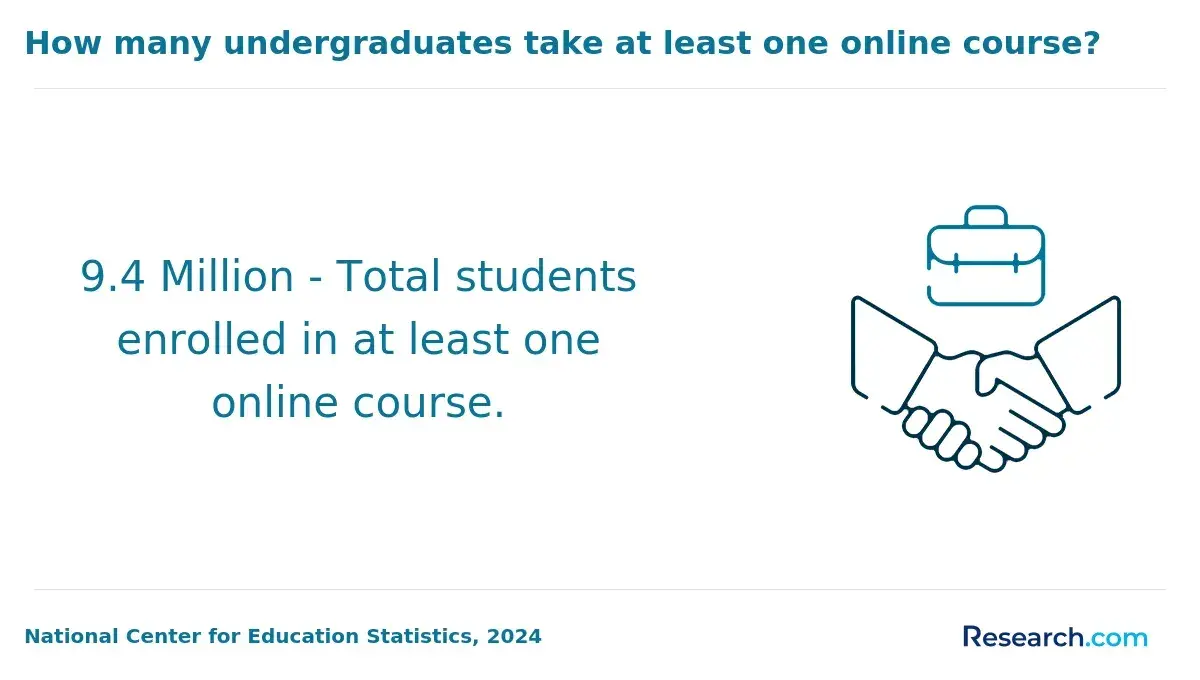
Online stackable programs can reduce commuting and make part-time progress easier, while campus-based programs often provide stronger access to labs, equipment, tutoring, and cohort support. Hybrid delivery is common where theory can be taught online but practical competencies must be assessed in person.
This comparison highlights the trade-off that matters most: flexibility is valuable only if the format can deliver the required learning experiences and support.
| Factor | Online or hybrid pathway | Campus-based pathway |
| Scheduling | Often asynchronous for general education and theory courses | Usually fixed meeting times and structured pacing |
| Hands-on learning | May require local placements, intensives, or approved proctors | Direct access to labs, studios, and supervised practice |
| Student support | Depends on virtual advising, tutoring, and response times | More immediate in-person contact and service access |
| Best fit | Working adults with strong self-management and reliable technology | Students needing routine, equipment, or frequent face-to-face help |
Competency-based formats can let experienced learners progress after demonstrating mastery, but they require careful review of transfer and licensing rules. Compare best competency-based colleges if self-paced assessment is central to your plan.
What accredited institutions and program types offer stackable credentials with conditional admission?
Look first for public community colleges, accredited technical colleges, universities with bridge or provisional-entry policies, and employer or union training partners. The right provider depends on whether you need academic credit, occupational licensure preparation, an industry certification, or a narrow job skill.
Institutional accreditation matters most when you expect to use federal financial aid, transfer academic credit, or continue to a degree. Programmatic accreditation can be essential in regulated fields such as nursing, respiratory care, medical imaging, or paralegal education, where employers, certifying bodies, or state boards may expect it. Verify each credential separately; institutional accreditation does not automatically mean every program meets a profession's standards.
For learners whose end goal is a four-year credential, identify the receiving institution before beginning. An easiest bachelor degree to get online may be a better fit when a school publishes clear transfer pathways and you can meet the eventual degree requirements.
Be cautious with providers that use "accredited" without naming the accreditor, cannot explain whether credits are transcripted, or promise a license without identifying the relevant state board.
How long do stackable credential programs take and what do they typically cost?
Completion time depends on credit load, prerequisites, course availability, and whether the program has clinical, lab, internship, or cohort gates. A short certificate may take months, while a multi-award sequence to an associate degree commonly takes longer because later credentials require general education and advanced coursework.
Published tuition is only one cost. The table separates common cost drivers so you can compare total investment rather than choosing solely by the lowest advertised price.
| Cost factor | Why it changes the total | What to verify |
| Tuition and fees | May be charged per credit, term, clock hour, or course | In-district, out-of-district, online, and program-specific rates |
| Books and technology | Digital platforms, laptops, and software may be required | Required subscriptions and equipment ownership rules |
| Hands-on requirements | Labs, uniforms, tools, exams, and clinical compliance add costs | All mandatory supplies, screenings, and travel |
| Time away from work | Externships and daytime labs may reduce available work hours | Required attendance schedule and placement location |
Federal Student Aid's 2024-25 national average tuition and fees at public two-year institutions was $4,050, but local charges and living costs vary substantially. Ask for the program's full cost of attendance and determine whether each stage is eligible for aid. Noncredit training may have different funding rules than credit-bearing certificates.
If your stack is meant to continue into graduate study, do not assume every accelerated undergraduate credential creates the necessary foundation. Compare masters degrees online only after confirming the bachelor's degree, prerequisites, and accreditation expected by the graduate school.
What coursework, skills, and learning outcomes do stackable credential pathways usually include?
Most pathways start with foundational academic and workplace skills, then add occupation-specific theory and practice. The sequence should make the next credential meaningfully more advanced rather than repeating introductory content for another fee.
Students should expect coursework in some combination of the following areas, adjusted for the field and credential level.
- College readiness, communication, quantitative reasoning, digital literacy, and study strategies.
- Field-specific terminology, safety, ethics, documentation, customer or patient interaction, and relevant regulations.
- Technical tools, simulations, lab work, portfolio projects, supervised practice, or work-based learning where applicable.
- Career preparation, including resumes, interviewing, professional conduct, and preparation for a separate certification or licensure examination when required.
AI tools are increasingly part of workplace productivity, but programs should teach appropriate verification, privacy, attribution, and human judgment rather than treating generated output as reliable by default. In clinical, legal, and public-safety contexts, policies may restrict the use of generative AI with confidential information.
What careers, job roles, and advancement opportunities do these credentials lead to?
Stackable credentials can support incremental advancement, but the exact job outcome depends on local hiring practices, work experience, licensure, background-screening results, and the level of credential completed. An entry certificate may qualify a learner for support work, while the next credential can unlock technical responsibility, supervisory potential, or degree transfer.
The following examples show how career progression can work without implying that every credential alone meets hiring or licensing requirements.
| Pathway area | Early-stage roles | Potential next step | Important limitation |
| Skilled trades | Helper, technician trainee, maintenance support | Apprenticeship, journey-level work, technical supervision | Licensing and apprenticeship rules vary by trade and state |
| Healthcare | Administrative support, aide, technician support | Licensed or credentialed clinical role, depending on program | Clinical roles may require board approval and an external exam |
| Criminal justice and law | Records, dispatch support, security, legal office support | Specialized public safety, compliance, or paralegal work | Agency hiring standards and legal-practice rules remain separate |
| Arts and design | Production assistant, junior designer, content support | Portfolio-based specialist or creative project lead | Hiring often depends heavily on portfolio quality and experience |
Choose a stack when its first award has standalone value and its next award aligns with a clearly identified target role. If your target occupation typically requires a bachelor's degree, plan the transfer route early rather than accumulating unrelated certificates.
What salary ranges and earning potential can graduates expect over the long term?
Earnings should be evaluated by occupation, region, experience, schedule, and required license - not by a school's credential label alone. The BLS reported a May 2024 median annual wage of $62,340 for healthcare practitioners and technical occupations, but that broad category includes roles with very different education and licensure requirements. Use occupational data as context, not as a promise of what a certificate holder will earn.
A stack may improve earning potential over time when each completed stage qualifies you for more skilled work, helps you retain employment while studying, or applies efficiently toward a required degree. It may have weak return on investment when credits do not transfer, the entry credential is not recognized by local employers, or the target field has limited openings.
Calculate a personal break-even estimate using total out-of-pocket cost, reduced work hours, expected wage change based on local job postings, and the likelihood that you can complete the next stage. For advanced education decisions, review which masters degrees are worth it rather than assuming a graduate credential will improve outcomes in every field.
How can students evaluate program quality, accreditation, and licensing alignment before enrolling?
Quality review should happen before enrollment, especially when conditional admission makes a future credential dependent on successful progression. A legitimate program should clearly state who awards the credential, what academic or professional standards apply, whether credits transfer, and what happens if a student does not advance.
Use these checks to compare programs consistently and uncover red flags before committing money or time.
- Confirm institutional accreditation through the accreditor named by the school and verify any programmatic accreditation required for your intended profession.
- Read your state licensing board's education rules when pursuing a regulated occupation; ask the school to identify the precise curriculum-to-licensure connection.
- Request a curriculum map showing every credential, the credits shared between them, prerequisites, grade thresholds, and maximum time allowed for progression.
- Compare total cost, required materials, refund rules, completion schedule, and whether financial aid or employer funding applies at every stage.
- Ask for outcome information that defines the cohort, measurement period, and job category rather than relying on unsupported placement or salary claims.
- Speak with an advisor about transfer agreements in writing and obtain an official credit evaluation before assuming prior learning will count.
Major warning signs include pressure to enroll immediately, vague claims about accreditation, missing licensure disclosures, unverified job-placement promises, and a refusal to provide the student catalog. A lower-cost program is not a bargain if its credits cannot be used for your next educational or career step.
Other Things You Should Know About
It means you can begin under specified conditions, such as completing prerequisite courses or meeting a minimum GPA. You must satisfy those conditions to continue into regular status or the next program stage.
Some are, but transfer is never automatic. Credit-bearing courses from an accredited institution are generally more likely to transfer than noncredit training, but the receiving school decides what it will accept.
It can provide an opportunity to demonstrate current academic ability through successful college coursework. It does not remove later GPA, prerequisite, or selective-program requirements.
Employers usually care more about the issuing institution, demonstrated skills, required license or certification, and relevant experience than delivery mode. For hands-on fields, confirm how labs, clinicals, and competency assessments are completed.
References
- Six Types of Credentials Non-Traditional Students Want https://laurelridgeworkforce.com/six-types-of-credentials-non-traditional-students-want/
- What Are Stackable Credentials? Clearly Explained | Certifier https://certifier.io/blog/stackable-credentials
- Stackable Credentials in Career Education at California Community Colleges https://www.ppic.org/publication/stackable-credentials-in-career-education-at-california-community-colleges/
- Building Stackable Credentials That Truly Deliver Value and Economic Mobility: 7 Steps for Success https://mcacs.talentfirst.net/building-stackable-credentials-that-truly-deliver-value/
- Making sure you're not a bot! https://www.iastatedigitalpress.com/jtmae/article/id/14484/
- What Are Stackable Credentials and Why Do They Matter? https://www.pltw.org/blog/what-are-stackable-credentials
- What Are Stackable Credentials, and How Can You Build Programs Around Them? https://www.jenzabar.com/blog/what-are-stackable-credentials-and-how-can-you-build-programs-around-them
- Stackable Credentials | Learn & Work Ecosystem Library https://learnworkecosystemlibrary.com/topics/stackable-credentials/
- USHE initiative helps students earn meaningful credentials on their way to a degree - Utah System of Higher Education https://ushe.edu/stackable-credentials-help-students-earn-credentials-on-their-way-to-a-degree/
- Stackable Credentials: Living Links Between Learning and Work https://www.cael.org/resouces/pathways-blog/stackable-credentials-living-links-between-learning-and-work