2027 Best Certificate Programs for Students With Low GPA

Co-Founder and Chief Data Scientist
A low GPA can limit admission to selective degree programs, but it does not eliminate short-term career training. Certificate programs may use open enrollment, placement testing, prerequisite courses, portfolios, interviews, or work experience instead of a strict GPA cutoff.
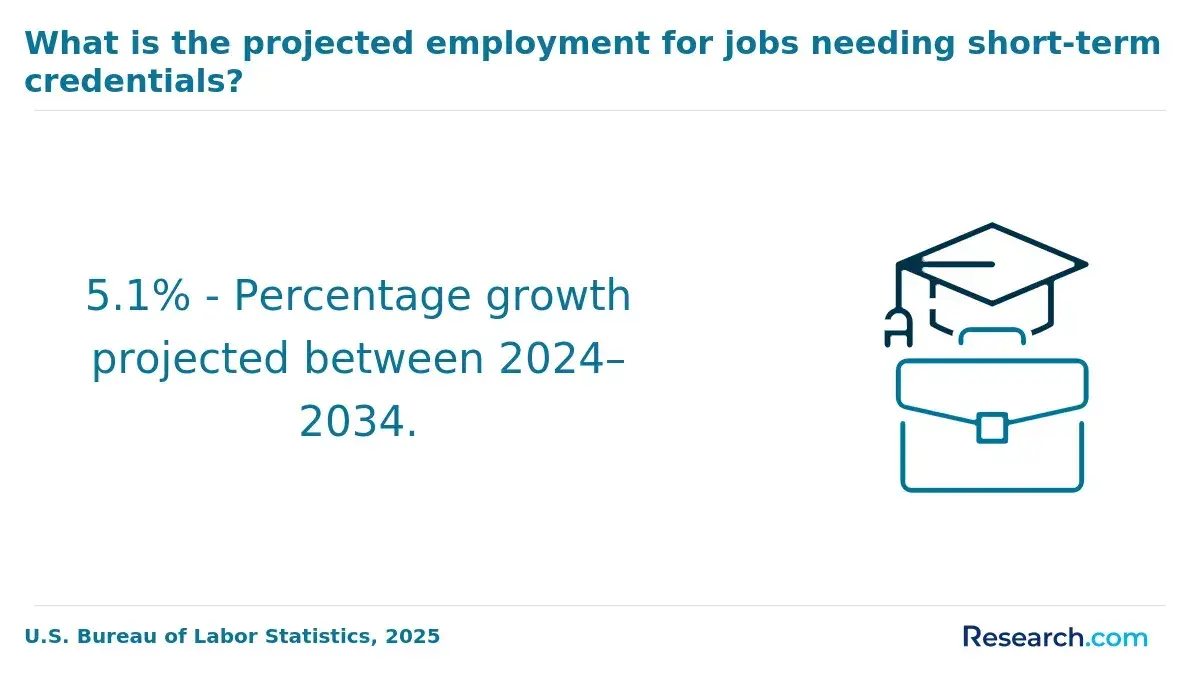
This guide helps students compare practical certificate options, understand which programs require licensing or separate certification exams, and avoid costly mismatches. The U.S. Bureau of Labor Statistics projects healthcare support occupations to grow faster than average from 2024 to 2034, making targeted training especially relevant for career changers and recent graduates.
Key Things You Should Know
- Many community-college and career-training certificates use open or flexible admission, but clinical healthcare programs and competitive cohorts may still require prerequisite grades, entrance exams, background checks, or minimum GPAs.
- Short certificates can take weeks to about one year; they are not the same as professional certifications, which are typically awarded by an industry body after an exam or other eligibility requirements.
- For cost context, College Board reported average published tuition and fees of $4,050 for public two-year in-district students in 2024-25, compare total costs, supplies, exams, and licensing fees, not tuition alone.
Top 10 Best Certificate Programs for Students With Low GPA
Popular Trade School Programs
Trade certificates often prioritize attendance, aptitude, placement testing, and safety readiness over high school GPA. Common options include welding, HVAC/R, electrical technology, plumbing, diesel technology, automotive service, CDL training, and industrial maintenance. Programs usually combine classroom instruction with shop or lab practice and may last a few months to one year. An associate degree can add general education and broader technical coursework, but it is usually slower. Choose a certificate when entry-level skills are the goal; choose an apprenticeship when paid, supervised work experience is available.
Healthcare Programs
Healthcare certificates can include medical assisting, pharmacy technician, phlebotomy, medical billing and coding, dental assisting, nursing assistant, and practical nursing. Admission flexibility varies sharply: billing programs may have open enrollment, while patient-care programs can require immunizations, drug screening, CPR, entrance testing, and minimum grades in anatomy or English. A school certificate may prepare students for a separate national certification exam, but it does not automatically confer certification. Nursing, pharmacy, and other regulated roles may also have state-specific authorization rules.
Criminal Justice / Law Programs
Entry-level certificates in criminal justice, legal studies, paralegal studies, homeland security, and court reporting support foundational knowledge for administrative or support roles. Many programs accept students through open admission, although law-enforcement agencies set their own hiring, fitness, background, and academy standards. A paralegal certificate can be useful for students who already hold a degree or have office experience; employers may prefer programs approved by the American Bar Association, though approval is not universally required. Do not assume a legal studies certificate qualifies you to practice law or become a police officer.
Arts & Design Programs
Graphic design, digital media, web design, photography, UX fundamentals, animation, and video-production certificates may be good options when a portfolio matters more than GPA. Community colleges, art schools, and online providers offer both credit-bearing and noncredit formats. Employers often evaluate work samples, software skills, and practical problem-solving, so students should confirm that coursework produces portfolio-ready projects. A short certificate can build targeted skills, while an associate degree may provide more time for critique, internships, and broader design foundations. Check software, equipment, and portfolio-review costs before enrolling.
What certificate programs accept low GPA students?
Certificate programs that accept students with low GPAs are most often open-admission community-college programs, adult career centers, workforce-provider programs, and noncredit continuing education courses. "Open admission" usually means the institution admits eligible applicants, not that every limited-seat program has no academic screen.
The comparison below separates common options by the admission factor that matters most. Confirm the policy with the specific campus because requirements can differ by program, cohort, and state.
| Program type | Typical admission approach | Best for | Important limitation |
| Noncredit workforce certificate | Often open enrollment or basic eligibility screening | Fast skills training and career exploration | May not award college credit or qualify for federal aid |
| Community-college credit certificate | College may be open admission; courses may use placement or prerequisites | Students who may later stack credits into a degree | Selective clinical or technical cohorts can set higher standards |
| Industry training program | Provider-defined prerequisites, often no GPA review | Software, IT, project, or job-specific skills | Recognition varies by employer and industry |
| Apprenticeship-related instruction | Employer or sponsor screening | Students seeking paid work-based learning | Openings may be competitive despite no GPA cutoff |
Applicants with a weak academic record should look for transparent alternatives: recent coursework, placement assessments, a personal statement, a portfolio, work history, or a probationary first term. Avoid interpreting "no GPA requirement" as "no requirements"; healthcare and public-safety pathways often have nonacademic eligibility rules that are just as important.
Which online certificate programs have flexible admission requirements?
Online certificate programs can be flexible when they use open enrollment, multiple start dates, self-paced coursework, or holistic review. Flexibility is strongest for nonclinical fields such as business software, IT support, digital marketing, bookkeeping, design, and project coordination. It is weaker for programs requiring labs, supervised fieldwork, or clinical hours.
Students considering online study should distinguish an academic certificate from a provider-issued professional certificate. A college certificate may carry academic credit and sometimes stack into an associate or bachelor's degree; a professional certificate typically demonstrates completion of a provider's curriculum and may not transfer. Students who want an institution-based online option can compare non profit online universities alongside local community colleges.
Before paying, verify these practical points:
- Whether the provider reviews GPA, requires placement testing, or accepts applicants directly into the program.
- Whether online students receive required labs, externships, proctoring, clinical placements, or career support.
- Whether the credential is credit-bearing, transferable, recognized by relevant employers, or aligned with a certification exam.
- Whether students in your state are eligible to enroll when the program leads toward a regulated occupation.
How do accredited certificate programs support career entry?
Accredited certificate programs can support career entry by providing structured instruction, documented completion, access to instructors, and - in some fields - eligibility for licensure or certification examinations. Institutional accreditation matters most when students need federal financial aid, intend to transfer academic credit, or attend a college. Programmatic accreditation can be essential in regulated healthcare education.
Accreditation is not a universal quality guarantee. For short IT, design, or business programs, employer recognition, current curriculum, instructor expertise, portfolio outcomes, and exam alignment can matter as much as institutional accreditation. Ask whether the program itself is accredited or approved where required, rather than assuming a school's general accreditation covers every credential.
A certificate is most useful for career entry when it includes evidence of job-ready work: supervised practice, a portfolio, an externship, industry-standard tools, or exam preparation. It is less likely to be enough on its own for occupations that require a degree, extensive experience, a state license, or employer-sponsored academy training.
What are the fastest certificate programs for job training?
The fastest certificate programs are generally short, focused training options that teach a narrow set of entry-level skills. Many can be completed in a few weeks to several months, while credit-bearing college certificates commonly take one or two academic terms. Speed should be evaluated against required practice hours, not marketing claims.
These options illustrate common trade-offs between rapid completion and career preparation.
| Training path | Typical pace | Potential advantage | Key trade-off |
| CPR, first aid, or workplace safety training | Days to weeks | Fast supplemental credential | Usually not a standalone career qualification |
| Noncredit office, bookkeeping, or digital-skills certificate | Weeks to months | Flexible entry and targeted skills | Employer recognition can vary |
| Phlebotomy or nursing assistant training | Weeks to months | Direct patient-care entry path in many areas | State rules, exams, and clinical requirements may apply |
| IT support or software-focused certificate | Months | Can build demonstrable technical skills | Projects and continued learning are usually necessary |
| Credit-bearing college certificate | About one academic year | May stack into a degree | Longer timeline and prerequisite sequencing |
Choose accelerated training only after confirming the program teaches the exact skills employers request. A very short program can be a sound first step, but it may be insufficient where clinical competency, licensing, or substantial hands-on practice is mandatory.
How much do certificate programs cost?
Certificate costs range from low-cost workforce courses to college programs with tuition, lab, equipment, and examination expenses. Public two-year colleges can be a cost-conscious choice for credit-bearing study, especially for in-district residents, but a lower tuition figure does not necessarily mean a lower total price.
Use this cost checklist when comparing offers. It helps reveal whether an apparently inexpensive program includes the requirements needed to work afterward.
- Tuition and mandatory institutional fees, including different resident and nonresident rates where applicable.
- Books, uniforms, tools, software subscriptions, protective equipment, and transportation to labs or clinical sites.
- Background checks, drug screening, immunizations, liability coverage, exam fees, and licensing application fees for regulated fields.
- Lost wages from required daytime labs, unpaid externships, or a schedule that prevents full-time work.
- Whether grants, workforce funding, employer tuition assistance, veterans benefits, or payment plans apply to the specific credential.
Federal aid eligibility depends on the institution and program; noncredit programs frequently do not qualify. Students seeking a lower upfront barrier may also review online college no application fee options, while still checking program-specific tuition and state authorization.
Which certificate programs lead to high-demand jobs?
High-demand certificate paths tend to align with occupations that need practical, verifiable skills and have recurring local hiring needs. BLS projections for 2024 to 2034 show faster-than-average growth for healthcare support occupations, but local demand, state rules, and employer preferences should guide a final choice.
The following fields can merit investigation, not automatic enrollment. Occupational demand does not mean every certificate is equally valued or that every graduate will receive an offer.
| Field | Certificate relevance | What to verify before enrolling |
| Healthcare support | Certificates can support roles such as nursing assistant, phlebotomy, or medical assisting | State eligibility, clinical hours, exam preparation, and local employer preferences |
| Skilled trades | Technical certificates can build foundational shop and safety skills | Apprenticeship access, licensing pathway, tools, and local construction demand |
| IT support and cybersecurity | Certificates can demonstrate foundational tools and concepts | Hands-on projects, industry certifications, and required experience |
| Logistics and transportation | Training may support warehouse, dispatch, or commercial-driving pathways | License requirements, driving record standards, and employer-sponsored options |
Salary research should be occupation-specific rather than credential-specific. For a broader comparison of degree-based earnings pathways, see what degree makes the most money; a certificate may be a better first move when time, GPA, or immediate skill-building is the priority.
What jobs can you get with a certificate?
A certificate can help applicants pursue entry-level work, particularly when it includes applied training or leads to a required exam. Possible jobs include nursing assistant, phlebotomy technician, medical assistant, pharmacy technician, bookkeeping clerk, help desk technician, welder trainee, HVAC helper, automotive service trainee, legal assistant, production assistant, and junior graphic-design support roles.
Job titles vary by employer and state. Some employers hire based on a combination of training, customer-service skills, a portfolio, a driver's record, background screening, or prior experience. In technical and creative fields, adding projects, volunteer work, internships, apprenticeships, or an industry certification may strengthen an application more than collecting unrelated certificates.
Students should search local job postings before enrolling and note repeated requirements. If postings consistently request a license, a degree, a named certification, or experience beyond the certificate, plan for that next step before committing money.
How do licensing requirements affect certificate programs?
Licensing requirements can determine whether a certificate is useful, especially in healthcare, skilled trades, transportation, cosmetology, and public safety. A school certificate documents completion of training; a license is government authorization to practice a regulated occupation. The certificate may be one requirement for licensure, but it is rarely the only one.
Before choosing a program, complete these checks in order:
- Identify the state board or agency regulating the occupation in the state where you intend to work.
- Confirm required education, clinical or field hours, examinations, background review, and application steps.
- Ask the school whether its curriculum meets that state's educational requirement and obtain the answer in writing when possible.
- Confirm that online, hybrid, transfer, or out-of-state instruction is accepted before paying a deposit.
A common mistake is enrolling in a convenient online clinical program without verifying local placement and state eligibility. Another is assuming a national certification replaces a state license. Requirements change, so use the relevant board's current rules as the final authority.
How should students compare certificate program quality?
Program quality is best judged by fit, transparency, and evidence - not by a promise that a low GPA will not matter. Start with your target job, then work backward to the required training, license, credential, and experience. A short certificate is a strong fit when it fills a specific skill gap; it is a weak fit when the target role clearly requires a degree or lengthy apprenticeship.
Compare finalists using the following questions:
- Is the credential credit-bearing, noncredit, stackable into a degree, or issued by a third-party provider?
- What are the exact admission standards, prerequisite grades, placement requirements, and nonacademic eligibility rules?
- Who recognizes the program: a licensing board, certification body, local employers, or only the provider?
- What are the full costs and required schedule commitments, including labs, internships, tools, and examination fees?
- Can the school provide current completion, licensure-exam, placement, or employer-partnership information relevant to this program?
Students who later decide a bachelor's degree is necessary should compare certificate stackability and transfer policies early. Those considering a graduate pivot can also explore easiest master degree pathways, but admission standards for graduate programs are separate from certificate admission rules.
Other Things You Should Know About
Often, yes. Many workforce and community-college certificate programs use open admission or do not set a GPA minimum. However, selective healthcare, technical, and limited-seat programs may require stronger grades in prerequisites or use entrance testing.
Some do, but many focus instead on a high school diploma or equivalent, placement scores, prerequisite completion, or basic eligibility. Ask whether the school reviews cumulative GPA, course-specific grades, or neither.
A certificate is usually better for a faster, narrower career goal. An associate degree may be better if you need broader education, want to transfer later, or are entering a field where employers prefer more extensive training.
It can support job applications when the training matches employer needs and includes credible evidence of skill, such as projects, supervised practice, or preparation for a recognized exam. It may not be enough by itself for licensed or experience-heavy occupations.
References
- Colleges That Accept Low GPA Scores | Find Options https://www.educationconnection.com/resources/colleges-that-accept-low-gpa/
- Certificate Programs - Los Angeles Pacific College https://www.lapacific.edu/certificate-programs/
- The Value of Certificates vs. Degrees: What's Right for You? https://www.calmu.edu/the-value-of-certificates-vs.-degrees-whats-right-for-you
- Online Certificate Programs | Certifications Programs https://www.uscareerinstitute.edu/online-certificate-programs
- Explore Top IT Certificate Programs | CyberDegrees.org https://www.cyberdegrees.org/listings/best-it-certificate/
- 2025's Best Online Graduate Certificate Programs in the U.S. https://www.onlinemastersdegrees.org/graduate-certificate-programs/
- Education Certificate Programs | ACE https://ace.edu/degree-programs/certificates/certificates-education/
- The Benefits of Certificate Programs in Higher Education https://moderncampus.com/blog/benefits-of-certificate-programs.html
- 7 in-demand certifications in 2025 | edX https://www.edx.org/resources/in-demand-professional-certifications
- Short-term credentials and the labor market: Who stands to benefit? https://fedcommunities.org/short-term-credentials-labor-market-who-stands-benefit/