2027 Best Certifications for In-Demand Careers

Co-Founder and Chief Data Scientist
Choosing a career credential is difficult when "certificate" can mean a college program, a short course, or an industry certification exam. The right option depends on the job, state licensing rules, time available, and employer expectations. U.S. Bureau of Labor Statistics projections for 2024-2034 show especially rapid growth in renewable energy, healthcare, data, and cybersecurity roles. This guide compares practical credentials, explains their limits, and helps you identify the fastest, most credible route toward your target career.
Key Things You Should Know
- Industry certifications such as CompTIA Security+, AWS Certified Cloud Practitioner, and PMP validate defined professional knowledge; college certificates provide structured instruction and may carry academic credit.
- For 2024-2034, BLS projects 50% growth for wind turbine service technicians, 42% for solar photovoltaic installers, 40% for nurse practitioners, and 29% for information security analysts; required entry credentials differ substantially by occupation.
- Before paying, verify whether your target job requires state licensure, supervised clinical hours, an accredited program, an apprenticeship, an associate degree, or a separate certification examination.
Top 10 Best Certifications for In-Demand Careers
Popular Trade School Programs
Trade certificates and associate degrees focus on hands-on work in construction, repair, manufacturing, and transportation. Common options include HVAC/R technician certificates, welding certificates, electrician apprenticeship-related instruction, plumbing programs, automotive technology certificates, and commercial driver training. Many take months rather than years, but licensing and apprenticeship requirements vary by state and trade. Choose a program with lab time, current equipment, employer connections, and preparation for recognized exams such as EPA Section 608 for refrigerant handling. An associate degree can add general education and broader advancement options but is not always required for entry.
Healthcare Programs
Healthcare certificates can prepare learners for roles such as medical assistant, pharmacy technician, dental assistant, phlebotomist, practical nurse, or surgical technologist. Clinical placements are often essential, so fully online study rarely works for patient-care training. Some occupations require state approval, licensure, or certification exams after graduation; others depend mainly on employer preference. Confirm that the program meets your state's rules and that required clinical hours are arranged before enrolling. An associate degree is commonly needed for registered nursing and diagnostic imaging pathways, while shorter certificates may support entry-level allied-health roles.
Criminal Justice / Law Programs
Criminal justice certificates may cover policing foundations, corrections, homeland security, emergency management, or crime analysis. Legal studies and paralegal certificates emphasize legal research, writing, ethics, litigation support, and document management. These programs can strengthen applications for support roles, but they do not independently qualify someone to practice law or guarantee police employment. Paralegal candidates should check employer expectations and whether a program is approved by the American Bar Association when that recognition matters locally. Associate degrees may be a better fit for learners seeking broader general education and transfer options.
Arts & Design Programs
Arts and design certificates commonly include graphic design, UX/UI design, digital photography, web design, animation, video production, and interior design foundations. Employers often evaluate portfolios more closely than the credential title, so select programs that produce reviewable projects using current tools. A short certificate suits career changers building specific skills; an associate degree may offer more studio time, critique, and transferable credits. Licensing applies only to certain design fields and jurisdictions. Ask whether tuition includes software, equipment, portfolio hosting, and opportunities for client-based work.
Which certifications lead to the fastest-growing, high-demand careers?
The fastest-growing careers are not all accessible through a short certification alone. A useful credential strategy starts with the occupation's required education, then adds a certificate or certification only when it closes a clear skills or hiring gap.
The comparison below distinguishes high-growth occupations from the credentials that may support entry or advancement. BLS growth projections describe expected occupational demand from 2024 through 2034, not an individual's likelihood of being hired.
| Occupation | Projected growth, 2024-2034 | Typical entry education | Helpful credential route |
| Wind turbine service technician | 50% | Postsecondary nondegree award | Wind-energy certificate plus employer training and safety preparation |
| Solar photovoltaic installer | 42% | High school diploma or equivalent | Solar installation training, OSHA safety training, and supervised field experience |
| Nurse practitioner | 40% | Master's degree | Advanced nursing degree, RN licensure, and national certification |
| Data scientist | 34% | Bachelor's degree | Data analytics certificate can supplement a quantitative degree or portfolio |
| Information security analyst | 29% | Bachelor's degree | Security certifications can validate technical skills alongside experience |
For fast entry, renewable-energy installation, HVAC, welding, commercial driving, and selected healthcare support roles may be more realistic than occupations requiring graduate education. For technology, an entry-level certification can help demonstrate foundational skills, but projects, troubleshooting ability, and work experience usually determine whether it translates into an interview.
Current hiring also reflects AI adoption: employers increasingly value workers who can verify outputs, protect data, automate routine tasks responsibly, and communicate with clients or teams. Avoid credentials that promise an "AI career" without teaching job-specific technical or business skills.
How do certificate programs differ from degrees for career advancement?
A certificate is an educational award earned after completing a defined course of study. It may be credit-bearing at a college or noncredit through a workforce provider. A professional certification is awarded by a certifying body after a candidate meets eligibility standards, often passing an exam and sometimes documenting work experience or continuing education.
A certificate makes sense when you need structured training, lab access, clinical preparation, or a foundation in a new field. A certification makes more sense when employers already recognize the issuing organization and you have enough background to meet its requirements. A degree remains the stronger choice when an occupation commonly requires one, when you need broad advancement options, or when you want a credential with more predictable transfer value. Readers comparing longer academic routes can also review best degrees for the future.
This comparison highlights the decision factors that matter most before enrolling.
| Option | What you earn | Best for | Key limitation |
| College certificate | Academic credential from an institution | Focused entry training, often with courses that may apply to a degree | Credit transfer is determined by the receiving school |
| Professional certification | Industry credential from a certifying organization | Validating defined knowledge or skills for employers | May require renewal, exam fees, and prior experience |
| Associate degree | Academic degree | Technical careers needing deeper coursework and general education | Usually takes longer and costs more than a certificate |
| Bootcamp or short training | Provider completion credential | Rapid skill-building and portfolio development | Recognition and quality vary widely by provider |
A common mistake is assuming a school-issued certificate automatically confers an industry certification. Read the program description closely: it may prepare you for an external exam, but exam eligibility, fees, and passing requirements can be separate.
What accreditation and licensing should you look for in certification programs?
Accreditation evaluates an educational institution or program; licensure is a legal authorization issued by a government authority; certification is a professional credential. These systems overlap in regulated careers, but they are not interchangeable.
For college certificates and associate degrees, confirm institutional accreditation through the school's recognized accreditor and check whether your intended program has specialized approval when relevant. Nursing, practical nursing, dental hygiene, radiologic technology, surgical technology, and some other healthcare programs may need programmatic approval or state-board eligibility. In trades, ask whether coursework satisfies state licensing prerequisites and whether the school provides recognized safety or regulatory training.
Use these checks before committing a deposit or accepting financing.
- Find the exact job title and state where you plan to work.
- Read the relevant licensing board or employer requirements for education, examinations, supervised hours, and background checks.
- Ask the provider in writing whether graduates are eligible for the required examination or license in your state.
- Confirm total costs, clinical or lab availability, completion policies, and whether credits transfer.
- For an industry certification, verify that the issuer - not merely the training provider - is recognized in job postings for your target role.
Red flags include vague claims that a program is "accredited" without naming the accreditor, pressure to enroll before receiving written disclosures, and promises of licensure or employment without reference to state-specific rules. If a career requires a license, the licensing board is the final authority - not an admissions representative.
How do online certification programs compare to campus-based options?
Online certification programs can be convenient for IT, project management, bookkeeping, business software, digital marketing, and some design skills. Campus or hybrid programs are usually stronger when learners need equipment, supervised practice, clinical rotations, shop safety instruction, or immediate instructor feedback.
The choice is less about format than whether the format delivers the experiences employers and regulators expect. Learners balancing caregiving, work, or variable schedules may find flexible options through college programs for moms, while still confirming any required in-person components.
This format comparison can help match a program to the way you will actually learn and practice.
| Format | Usually works well for | Potential drawback | What to verify |
| Fully online | Exam preparation, software skills, theory-heavy business and technology subjects | Limited hands-on practice and networking | Live support, exam proctoring, employer recognition, software access |
| Hybrid | Programs combining theory with scheduled labs or simulations | Travel and fixed lab times | Frequency, location, and cost of required sessions |
| Campus-based | Clinical, shop, laboratory, and equipment-intensive programs | Less schedule flexibility | Lab hours, instructor ratios, equipment condition, and placement support |
Do not assume an online program qualifies you for clinical licensure or a trade license. Ask where practical training occurs, who arranges it, and what happens if no placement is available near you.
What admission requirements and prerequisites do top certification programs have?
Admission requirements depend on the provider and credential type. A noncredit industry course may require only payment and basic computer access. A credit-bearing college certificate may require an application, placement assessment, high school completion or equivalent, and prerequisites for technical or healthcare coursework. Advanced professional certifications can require documented work experience before you may test.
Healthcare programs often have the most detailed entry rules because of clinical capacity and patient-safety requirements. Applicants may need prerequisite science courses, immunizations, drug screening, background checks, CPR training, health records, or an entrance assessment. These are participation requirements, not necessarily evidence that admission is guaranteed.
Before applying, collect the requirements that affect your real timeline.
- Check whether the credential is credit-bearing, noncredit, or an exam-based certification.
- Identify course prerequisites, minimum grades, testing requirements, and application deadlines.
- Ask whether clinical, internship, lab, or apprenticeship placement is competitive or guaranteed.
- Confirm technology requirements, required tools, uniforms, textbooks, examination fees, and transportation costs.
- For advanced certifications, document qualifying experience before paying for preparation training.
A frequent mistake is comparing advertised start dates without noticing prerequisite semesters or limited clinical cohorts. Request a written program sequence showing the earliest realistic completion date for someone with your academic background.
How long do certification programs take, and what do they cost?
Completion time ranges from a few weeks for focused exam preparation to several semesters for credit-bearing certificates, and longer for certificates with clinical, lab, or apprenticeship requirements. Associate degrees commonly require about two academic years of full-time study, although prior credit and part-time enrollment can change that timeline.
Cost is equally variable. Tuition is only one part of the investment: learners may also pay for application fees, books, tools, protective equipment, software, tests, certification exams, background checks, uniforms, transportation, and renewal fees. When comparing institutions, options such as online colleges no application fee can reduce one upfront cost, but they do not establish total program affordability.
Compare the following cost categories using written estimates from each provider rather than relying on a single advertised tuition figure.
| Cost category | Often applies to | Why it matters |
| Tuition and required institutional fees | College certificates and degrees | May differ by residency, credits, delivery method, and course load |
| Exam and renewal fees | Professional certifications | Certification may have ongoing costs after initial testing |
| Tools, equipment, and uniforms | Trades and clinical programs | Can materially change the total out-of-pocket cost |
| Clinical, lab, or travel expenses | Healthcare and hands-on programs | May be required even when lectures are online |
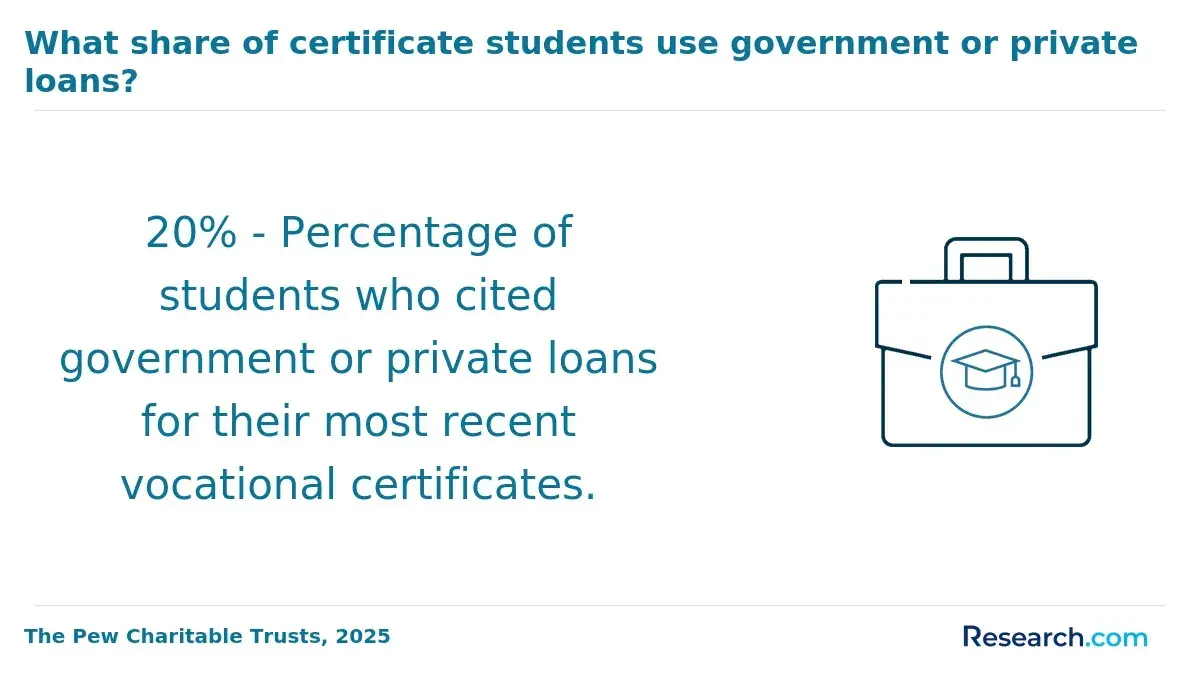
Federal student aid may be available for eligible students in qualifying, accredited academic programs, but many short noncredit courses and third-party certifications are not eligible. Check the provider's financial-aid office, employer tuition assistance, workforce-agency support, and payment terms before borrowing.
What coursework and skills are covered in leading professional certifications?
Leading professional certifications and career certificates teach a defined set of job-relevant capabilities, but the depth varies. A credible program should state what learners will be able to do, how performance is assessed, and whether the content maps to a recognized examination, licensing standard, or employer need.
Technology pathways often cover networking, cloud fundamentals, operating systems, cybersecurity controls, scripting, data analysis, and troubleshooting. Project-management credentials emphasize scope, scheduling, risk, stakeholder communication, and agile or predictive methods. Trade programs prioritize technical calculations, blueprint reading, tool use, safety, codes, diagnostics, and supervised practice. Healthcare pathways combine anatomy, procedures, documentation, patient privacy, infection control, and clinical communication.
When reviewing curriculum, distinguish exposure from competence. Watching demonstrations or completing multiple-choice modules is not equivalent to troubleshooting equipment, documenting a simulated case, building a portfolio, or working under supervision. Ask how much of the program involves assessed hands-on work and whether instructors have current field experience.
For digital fields, seek training that includes responsible use of AI tools, data privacy, source verification, and the ability to explain your work. Employers may value automation skills, but they also need people who can recognize errors and protect confidential information.
What jobs, industries, and career paths can these certifications unlock?
Credentials can open doors to interviews, internships, apprenticeships, or entry-level roles, but the outcome depends on the occupation and local market. A certificate is most valuable when it corresponds to a specific hiring requirement, licensing pathway, or demonstrable skill set - not simply because it is short.
Typical routes include technical support or junior cybersecurity roles after foundational IT training; HVAC, welding, electrical, and solar roles after hands-on training plus employer development; medical assisting, pharmacy support, or phlebotomy after approved healthcare preparation; and junior design work after a portfolio-based program. Advancement may require experience, a higher credential, a license, or a degree. For roles where bachelor's education is the norm, compare credentials with highest paying degrees before treating a short program as a substitute.
This career-path comparison shows where a credential is usually a starting point versus an advancement tool.
| Career area | Credential's likely role | Common next step |
| IT and cybersecurity | Validates foundations or a vendor-specific skill | Build projects, gain support experience, pursue advanced certification |
| Skilled trades | Builds technical and safety foundations | Apprenticeship, supervised work, and state licensing where required |
| Healthcare support | Prepares for entry-level clinical support work or an exam | Certification, employer onboarding, or further nursing/allied-health study |
| Design and media | Develops tools and portfolio pieces | Portfolio refinement, freelance work, internship, or degree completion |
Ask local employers which credentials they recognize and review actual job descriptions before enrolling. This prevents a common mismatch: choosing a broadly named certificate when employers seek a license, portfolio, degree, or documented work experience instead.
What salary ranges and job outlook are typical for certified professionals?
Salary and outlook vary by occupation, location, experience, schedule, union status, and employer - not merely by whether someone holds a certificate or certification. Use occupational data as a market benchmark, then compare it with the actual entry requirements in local job postings.
BLS 2024 wage data reports a median annual wage of $124,910 for information security analysts, while the occupation is projected to grow 29% from 2024 to 2034. That combination makes cybersecurity attractive, but BLS also lists a bachelor's degree as the typical entry-level education; an entry-level certification alone may not meet employer requirements.
In contrast, some skilled trades and healthcare support careers have shorter formal education routes but may require lower initial pay, shift work, physical labor, or licensing steps. A practical return-on-investment review compares your total educational cost, time away from earnings, realistic local starting opportunities, renewal costs, and the credential needed for the next promotion.
Do not rely on a provider's highest salary claim. Request methodology for any reported outcomes, including job title, location, sample size, timeframe, whether employment was full time, and whether graduates were already employed in the field before training.
Other Things You Should Know About
The best option depends on your target role. IT certifications can support technology careers, while healthcare and trade careers may require approved training, hands-on hours, state licensure, or an apprenticeship. Start with job postings and licensing rules rather than choosing by credential popularity.
Sometimes, particularly in certain skilled trades and technical roles, but a certificate alone does not guarantee pay or employment. Higher-paying occupations may require experience, a professional certification, a license, or a degree in addition to training.
They can be, especially when issued by a recognized certifying organization or when they demonstrate specific skills. For hands-on and regulated careers, employers may also expect supervised labs, clinical practice, licensure eligibility, or verifiable field experience.
Identify the issuing organization, review employer job postings, verify accreditation or licensing eligibility when relevant, and obtain complete cost and completion information in writing. Be cautious of providers that guarantee jobs, avoid naming their accreditor, or blur the difference between course completion and professional certification.
References
- IT Certifications Raise Salary $10K-$25K (2026 Data) https://certstud.com/blog/do-it-certifications-increase-salary-data-studies
- Internationally and Globally Recognized IT Certifications- ONLC https://www.onlc.com/blog/internationally-recognized-certifications/
- Has your salary increased with new certifications? - IT & Tech Careers - Spiceworks Community https://community.spiceworks.com/t/has-your-salary-increased-with-new-certifications/783313
- Certifications That Matter in 2025: How They Impact Your Hiring Potential https://burnettspecialists.com/blog/certifications-that-matter-in-2025-how-they-impact-your-hiring-potential/
- 20 Necessary IT Certifications + Salaries I Skillsoft - Skillsoft https://www.skillsoft.com/blog/top-paying-it-certifications
- Certification Renewal Requirements - Alkademy Blog https://alkademy.com/blog/glossary/certification-renewal-requirements/
- How Do Certifications Influence Salary Increases? https://certiprof.com/blogs/news/how-do-certifications-influence-salary-increases
- How to Build a Certification Program: A Step-by-Step Guide for 2025 https://www.kryterion.com/how-to-build-a-certification-program-a-step-by-step-guide-for-2025/
- Eligibility Pathways for Professional Certification https://assess.com/eligibility-pathways-certification/
- What are the fastest-growing industries to consider for a career change? - MSU Denver https://www.msudenver.edu/innovative-lifelong-learning/blog/what-are-the-fastest-growing-industries-to-consider-for-a-career-change/