2027 Best Online Microcredentials That Pay Well

Co-Founder and Chief Data Scientist
Choosing a short online credential is difficult when providers promise career results but use different standards. Online microcredentials can build targeted, job-relevant skills without committing to a degree, especially in technology, healthcare administration, business, and design.
U.S. Bureau of Labor Statistics (BLS) data for May 2024 reports a $124,910 median annual wage for information security analysts, illustrating why technical specializations attract career changers. This guide explains which credentials may pay well, what they cost, how long they take, and how to screen programs before enrolling.
Key Things You Should Know
- High-paying microcredentials usually support roles in cybersecurity, data, cloud computing, project management, and healthcare operations; they are not automatic substitutes for a degree, license, or work experience.
- BLS reported a May 2024 median annual wage of $124,910 for information security analysts, but this occupation commonly requires related experience and employers may prefer a bachelor's degree alongside certifications.
- Prioritize a credential with verifiable skills, assessed projects, transparent total costs, and recognition from an employer, accredited college, or established industry organization.
Top 10 Best Online Microcredentials That Pay Well
Popular Trade School Programs
Online trade training works best for classroom-based theory, safety content, estimating, code preparation, or business skills; hands-on trades still require labs, supervised practice, apprenticeships, or employer training. Common options include HVAC technician certificates, electrical technology certificates, plumbing coursework, welding theory, construction management certificates, and automotive service training. Choose a hybrid pathway if state licensing, apprenticeship hours, or equipment practice is required. A short online certificate can strengthen entry-level readiness, but it generally does not replace the documented field hours needed for licensure.
Healthcare Programs
Online healthcare microcredentials commonly focus on medical billing and coding, electronic health records, pharmacy technician exam preparation, medical terminology, healthcare administration, and health information support. They suit learners seeking administrative or allied-health entry points, not those pursuing clinical roles requiring in-person training and state approval. Confirm whether the program prepares you for a separate certification examination, such as coding certification, and whether employers in your area recognize it. Clinical programs for nursing, imaging, and similar fields require supervised clinical education and have separate licensing rules.
Criminal Justice / Law Programs
Online certificates in criminal justice, legal studies, paralegal fundamentals, compliance, and cybersecurity law can help learners understand procedures, records, ethics, and regulation. They may be useful for administrative support, compliance coordination, or further education. They do not by themselves qualify a person to practice law, become a police officer, or meet every employer's paralegal expectations. Before enrolling, check the job description you want, because some paralegal employers prefer an approved education route or a degree, while public-safety roles can require academy training, background checks, and physical standards.
Arts & Design Programs
Digital design microcredentials can cover UX design, graphic design, motion graphics, web design, digital marketing creative, and portfolio development. Their value depends heavily on demonstrable work: employers often evaluate a portfolio, software fluency, and problem-solving ability alongside the credential. Online study is a practical fit for software-based design because projects can be reviewed remotely. Choose programs that include instructor feedback, realistic briefs, accessibility basics, and a finished portfolio. Learners seeking art-direction or advanced product-design roles may eventually need deeper experience or a degree-level design foundation.
What are online microcredentials and how do they help careers?
An online microcredential is a focused, short-form learning credential that verifies completion of a defined set of skills or competencies. Colleges, universities, professional associations, technology companies, and training providers may issue them. They can be credit-bearing or noncredit, so learners should not assume they transfer into a degree.
Microcredentials help careers when they close a specific skills gap, produce evidence of ability, or prepare a learner for a separate industry certification exam. They are often most useful for working adults, career changers with relevant transferable experience, and degree holders updating technical knowledge. They are less suitable when a target job legally requires a license, extensive clinical training, or a degree.
The comparison below distinguishes common options so you can select the credential type that matches your goal rather than buying the shortest program available.
| Credential type | What it usually verifies | Best use case |
| Academic microcredential | Completion of a short college-based sequence; may carry credit | Building toward a certificate or degree when written stacking rules exist |
| Professional certificate | Completion of provider-designed career training and assessments | Learning applied tools, workflows, and portfolio skills |
| Industry certification | Meeting an external certifying body's standards, often through an exam | Showing proficiency in a recognized platform, method, or occupation |
| Bootcamp or career training | Completion of intensive skills instruction | Accelerated career exploration when projects and employer relevance are strong |
Which online microcredentials lead to the highest salaries?
The online microcredentials with the strongest earning potential generally target specialized technical work rather than broad introductory topics. Cybersecurity, cloud administration, data analytics, software development, enterprise systems, and project management can be valuable because they map to employer tools and measurable business needs.
Use occupational wages as labor-market context, not as a promised result of finishing a short program. BLS reported a $133,080 median annual wage for software developers in May 2024, but many software roles require a bachelor's degree or substantial experience; a microcredential may help demonstrate a specialization rather than qualify a beginner on its own. Readers comparing degree routes with credential-first routes can also explore highest paying careers.
This comparison shows where a microcredential can be useful and where it has important limits.
| Focus area | Potential credential content | Career-entry reality |
| Cybersecurity | Networking, security operations, cloud security, incident response | Often strongest with IT support or networking experience and an industry certification |
| Data analytics | SQL, spreadsheets, visualization, statistics, dashboards | Entry-level candidates need a portfolio that explains business decisions, not only dashboards |
| Cloud computing | Cloud architecture, identity access management, deployment, monitoring | Can support IT advancement; hands-on labs and platform credentials matter |
| Project management | Scheduling, budgeting, Agile methods, risk, stakeholder communication | Useful across industries, but senior roles usually require documented experience |
Are online microcredentials accredited and employer-recognized?
Online microcredentials are not all "accredited" in the same way. Institutional accreditation applies to an eligible college or university, not necessarily to each individual noncredit microcredential. A college-issued, credit-bearing microcredential may have more predictable academic oversight, but transfer acceptance remains the receiving institution's decision.
Employer recognition is different from accreditation. A technology-provider credential may carry strong value for a specific software ecosystem, while a university certificate may be more useful for structured academic progression. Ask employers in your target field which credentials they recognize, then compare that answer with actual job postings.
Watch for red flags: vague curriculum, no instructor or assessment information, claims of guaranteed employment, unclear refund terms, and a credential name that resembles a regulated certification without being issued by its certifying organization.
Which online microcredentials have the strongest job outlook?
Microcredentials have the strongest job-outlook connection when they teach skills used in growing occupations and can be paired with experience. BLS employment projections for 2024-2034 show information security analysts growing 29%, reflecting continued demand for security, risk, and systems protection skills. That outlook supports cybersecurity training, but it does not mean every certificate holder will qualify for an analyst role immediately.
Good near-term options are programs tied to technology operations, data literacy, healthcare information, and project coordination. AI adoption is also changing entry-level expectations: employers increasingly value people who can validate outputs, protect data, document processes, and apply domain judgment, not simply use a single AI tool.
Choose based on the gap between your current experience and the job's requirements. An introductory credential is sensible for exploration; an advanced credential is more credible when you already have related coursework or work history.
How long do online microcredentials take to finish?
Completion time ranges from a few hours for a single digital badge to several months for a sequenced professional certificate. A realistic schedule depends on required projects, exams, live sessions, and whether you study part time. Self-paced programs can be faster, but their flexibility requires consistent weekly time and may offer less feedback.
Before paying, request the expected workload and calendar. The following ranges help distinguish a quick skills module from a deeper career-training commitment.
| Format | Typical pace | What to verify |
| Single-course badge | Hours to several weeks | Whether a graded assessment verifies the skill |
| Multi-course microcredential | Several weeks to several months | Course sequence, projects, and any prerequisite knowledge |
| Professional certificate program | Several months, usually part time | Mentoring, portfolio review, exam preparation, and career services |
| Credit-bearing college certificate | Often one or more terms | Credit count, course availability, stacking, and transfer policies |
How much do online microcredentials cost?
Cost can range from free introductory learning to several thousand dollars for instructor-led career training. Compare total cost rather than advertised monthly pricing: include platform subscriptions, exam vouchers, software, equipment, textbooks, retake fees, proctoring, and any required in-person component.
Typical cost structures vary widely by provider and level of support.
- Self-paced course subscriptions may charge monthly fees and can become expensive if completion takes longer than planned.
- College microcredentials may charge per credit or a flat noncredit program fee; credit-bearing study can cost more but may offer a clearer academic record.
- Industry certification pathways can add separate training, exam, renewal, and continuing-education costs.
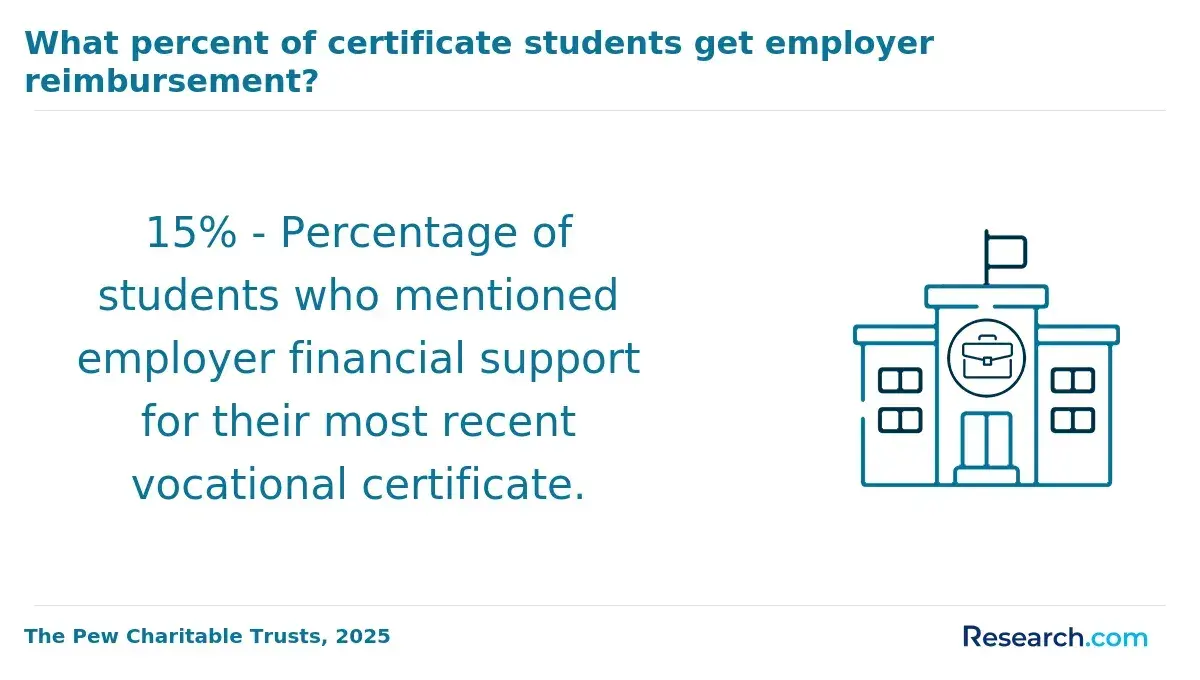
- Employer tuition assistance may reduce out-of-pocket costs when the credential directly supports your current role.
Federal student aid generally applies to eligible programs at eligible institutions and does not automatically cover short noncredit training. If longer-term advancement requires graduate study, compare flexible options such as easy masters degrees online only after confirming that the degree - not another short credential - is actually required for your target role.
What jobs can you get with online microcredentials?
Microcredentials can support jobs such as IT support specialist, junior data analyst, cybersecurity support technician, cloud support associate, project coordinator, medical billing specialist, compliance assistant, digital marketing coordinator, and UX design assistant. Actual titles vary by employer, region, and your prior experience.
For many learners, the most realistic result is not an immediate leap into a high-paying title; it is a better interview story, a portfolio, a promotion pathway, or eligibility for an entry-level adjacent role. Pair the credential with projects, volunteer work, internships, freelance assignments, or internal workplace assignments whenever possible.
Degree requirements remain common in some fields. Learners considering a college-based pathway should evaluate accredited institutions and student support at non profit universities in USA, especially when academic credit or a future degree matters.
What skills and courses do high-paying microcredentials include?
High-value microcredentials teach skills that can be assessed and shown to an employer. The best programs combine technical practice with communication, documentation, ethics, and problem solving. A credential consisting only of videos or attendance is usually weaker than one requiring projects, feedback, and an applied assessment.
Look for course content that aligns with the work you want to perform.
- Data and analytics programs should include SQL, data cleaning, visualization, basic statistics, and a portfolio-ready analysis.
- Cybersecurity programs should include networking fundamentals, identity management, security controls, incident response, and ethical handling of data.
- Cloud programs should include hands-on labs for deployment, permissions, monitoring, cost awareness, and troubleshooting.
- Project management programs should include scope, scheduling, risk, stakeholder communication, and a recognized delivery method such as Agile.
- Healthcare administration programs should include privacy, documentation, claims workflows, coding fundamentals, and software practice where applicable.
Competency-based learning can be especially useful for experienced learners because progress is tied to demonstrated mastery rather than seat time. Learn more about what is a competency based masters degree if you are considering how competency models may fit a longer academic pathway.
How do you choose a reputable online microcredential program?
A reputable online microcredential should make its outcomes, assessment methods, instructor support, pricing, and credential issuer easy to verify. Start with the job you want, not the program's marketing language. Then compare several providers against the same requirements.
Use these steps to reduce the risk of paying for a credential that does not move you toward your goal.
- Collect 10 to 20 current job postings for your target role and note recurring tools, degree requirements, certifications, and experience expectations.
- Match the curriculum to those requirements and confirm that the program teaches skills through graded work, labs, or reviewed projects.
- Identify the issuer, determine whether the credential is credit-bearing or noncredit, and verify any stated accreditation or industry relationship directly.
- Calculate the full cost, including exams and materials, and compare it with the time needed to finish at your available weekly study pace.
- Ask whether the credential stacks into a larger certificate or degree, whether credits transfer, and what written policies apply.
- Review refund terms, student support, accessibility, career services, and independent feedback before enrolling.
Avoid choosing solely on a low introductory price, a short completion claim, or a vague "job-ready" label. The right investment is the one that supplies an employer-relevant skill you can prove and fits the education level your target occupation actually requires.
Other Things You Should Know About
Usually not. A microcredential can validate a focused skill and strengthen an application, but occupations with degree, licensing, or extensive experience requirements still require those qualifications. It is most effective as a supplement, an entry point, or a way to update existing skills.
They can be worthwhile when the employer or technology platform is widely used in your target field and the program includes meaningful assessments. Check local job postings to see whether employers mention that platform, certification, or skill.
It depends on the provider and program. Many short noncredit programs are not eligible for federal student aid. Ask the institution about payment plans, employer assistance, scholarships, and whether the program is credit-bearing before enrolling.
List the credential issuer, completion date, relevant skills, and one or two measurable projects. Link to a portfolio only when it is polished and appropriate for the role. Explain how the work relates to the employer's needs rather than presenting the credential as a guaranteed qualification.
References
- "Microcredentials" gain new momentum due to urgency to get back to work http://hechingerreport.org/more-students-start-earning-stackable-credentials-on-their-way-to-degrees/
- 7 Powerful Ways Microcredentials Are Reshaping How Employers Hire - Lloyd Staffing https://www.lloydstaffing.com/7-powerful-ways-microcredentials-are-reshaping-how-employers-hire/
- Millennial Traits: Micro Credentials E-Learning Rise https://www.quickstart.com/blog/learning/why-millennials-are-ditching-school-tuition-for-online-education/
- Online Certificates for Job-Ready Skills | Grow with Google https://grow.google/certificates
- How to Issue Micro-Credentials: A Step-by-Step Guide https://www.trueoriginal.com/insights/how-to-issue-micro-credentials
- DIGITALEUROPE's recommendations for a European approach to micro-credentials - DIGITALEUROPE https://www.digitaleurope.org/resources/digitaleuropes-recommendations-for-a-european-approach-to-micro-credentials/
- How Microcredentials Are Revolutionizing the Higher-Education Business Model https://manhattan.institute/article/how-microcredentials-are-revolutionizing-the-higher-education-business-model
- Explore Microcredentials for Career Growth | HirePaths https://hirepaths.com/blog/2024/09/02/explore-microcredentials-career-growth
- How to choose the right micro-credential platform https://www.bcdiploma.com/en/blog/how-to-choose-the-right-micro-credential-platform
- Microcredentials: Empowering Modern Learners & Employers https://evolllution.com/microcredentials-empowering-modern-learners-employers