2027 Best Professional Certificates for Low Student Debt

Co-Founder and Chief Data Scientist
A short credential can be a lower-debt route into a new field, but only when its curriculum matches a real hiring or licensing requirement. The U.S. Bureau of Labor Statistics projects about 6.7 million occupational openings per year from 2023 to 2033, creating opportunities for workers with targeted skills.
This guide helps career changers, recent graduates, and budget-conscious learners compare professional certificates, college certificates, and associate-level options by cost, length, recognition, and likely career fit before they borrow.
Key Things You Should Know
- Low-debt choices usually start at public community colleges, employer-supported training, apprenticeships, or short noncredit programs - but low tuition is not useful if the credential does not meet employer, certification, or state licensing requirements.
- A certificate is education completed through a school or training provider; a certification is a professional credential typically earned from a certifying organization through an exam, experience, or both.
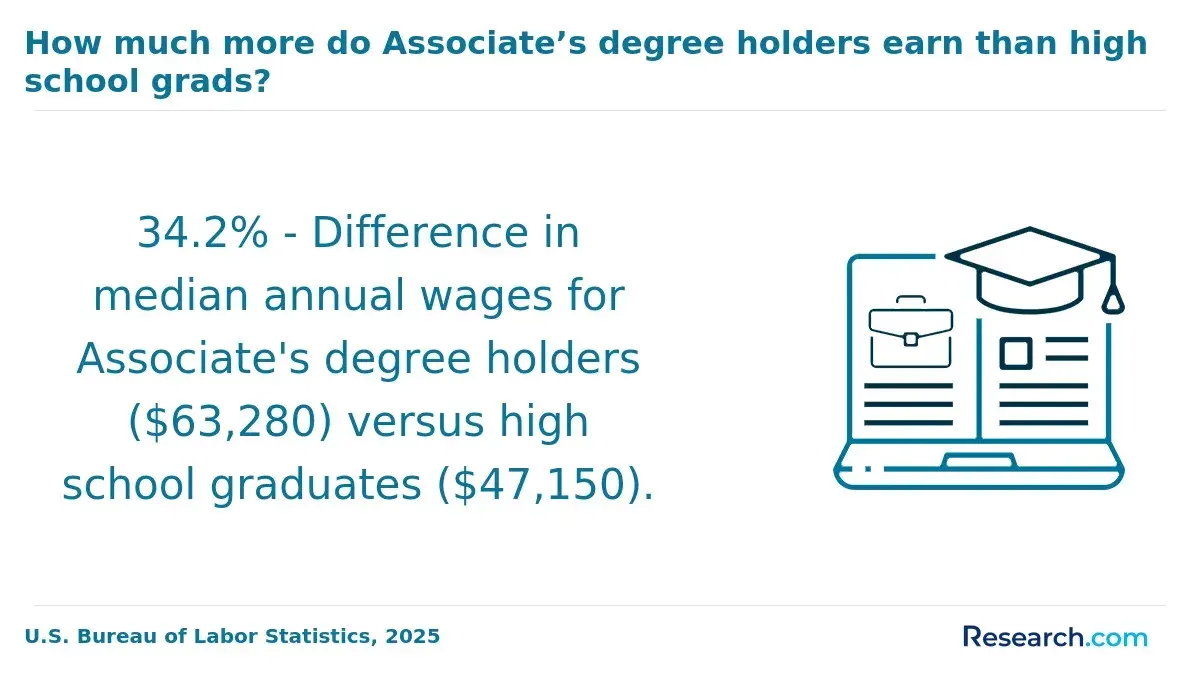
- For 2024-25, average published tuition and fees at public two-year colleges were $4,050, according to the College Board; compare this benchmark with total program charges, tools, exams, transport, and lost work time.
Top 10 Best Professional Certificates for Low Student Debt
Popular Trade School Programs
Trade certificates commonly prepare learners for HVAC, welding, electrical work, plumbing, automotive service, machining, or commercial driving. Programs often last months to two years and combine classroom instruction with hands-on labs. Apprenticeships may be the stronger low-debt option for electrical, plumbing, and some construction careers because participants can earn wages while training. Check whether a certificate satisfies local apprenticeship entry requirements or prepares you for an industry exam. Avoid paying for a program that offers only general safety training when employers in your area expect documented shop hours or a commercial driver's license.
Healthcare Programs
Healthcare certificates include medical assisting, practical nursing, phlebotomy, dental assisting, pharmacy technician, surgical technology, and coding. They can be efficient for entry-level roles, but clinical placements, background checks, immunizations, uniforms, and certification exams can add substantial costs. Practical nursing and many technical clinical roles require state approval and a licensing examination; a school certificate alone is not the license. For diagnostic sonography, dental hygiene, and respiratory therapy, an associate degree is commonly the entry credential. Prioritize programs with confirmed clinical partners and published first-time exam eligibility.
Criminal Justice / Law Programs
Legal studies, paralegal, court reporting, corrections, security, and forensic-support certificates can build job-relevant knowledge without a four-year degree. A paralegal certificate is most useful when it includes legal research, writing, litigation technology, and supervised practical work; it does not authorize someone to practice law. Security roles may require separate state registration, fingerprinting, or training. Court reporting generally requires specialized skill development and may involve certification exams. Learners seeking police officer positions should check local agency standards, which may require an academy, physical screening, and additional education beyond a certificate.
Arts & Design Programs
Certificates in graphic design, UX design, digital marketing, video production, web design, and photography can help learners build a portfolio quickly. Their value depends less on course completion alone than on demonstrable work, current software skills, and client or internship experience. A credit-bearing college certificate may stack into an associate degree; a noncredit professional certificate usually does not. Before enrolling, ask to see student portfolios, the software included in tuition, and career outcomes for comparable beginners. For creative careers, avoid debt for a program that does not provide portfolio feedback or project-based work.
Which certificate programs lead to the highest-paying jobs?
The highest-paying occupations connected to short postsecondary training are often regulated healthcare or skilled technical roles. However, occupational pay data describes workers in the occupation, not what certificate completers automatically earn; employers may require licensure, experience, or an associate degree.
This comparison shows why readers should verify the minimum education and legal requirements before treating a short program as a direct route to a high-paying role. Median annual wages are U.S. Bureau of Labor Statistics May 2024 figures.
| Occupation | Median annual wage | Typical entry preparation | Certificate-alone limitation |
| Radiation therapist | $101,990 | Associate degree and licensure in many states | A certificate may be advanced training, not initial entry preparation. |
| Dental hygienist | $94,260 | Accredited associate degree and licensure | Dental assisting certificates do not qualify a learner as a hygienist. |
| Diagnostic medical sonographer | $89,340 | Associate degree or postsecondary certificate for qualified applicants | Employers may prefer accredited education and professional certification. |
| Respiratory therapist | $80,450 | Associate degree and state licensure | A short certificate generally does not meet entry requirements. |
For learners without prior college or clinical education, practical nursing, HVAC, welding, and commercial driving can be more realistic short-program targets. Compare local job postings and required credentials rather than choosing based on a national wage figure alone.
Which certificates have the strongest job outlook?
Strong outlook does not automatically mean easy entry: growing occupations can still require licensure, physical ability, a clean driving record, or local clinical placement capacity. Use growth data to identify fields worth researching, then confirm openings and wage ranges in the city where you plan to work.
The following BLS 2023-33 projections, published in 2024, highlight certificate-adjacent fields with different barriers to entry.
| Field | Projected employment change | Why demand may matter | Key decision point |
| Wind turbine service technicians | 60% | Renewable-energy installation and maintenance demand | Work can involve heights, travel, and employer-specific safety training. |
| Solar photovoltaic installers | 48% | Expanding solar installation activity | Programs should include electrical and jobsite safety fundamentals. |
| Medical assistants | 15% | Healthcare offices need clinical and administrative support | Certification may improve competitiveness but is not universally required. |
| HVAC mechanics and installers | 9% | Replacement demand and climate-control equipment needs | EPA Section 608 certification is required for certain refrigerant work. |
AI is also changing entry-level office, design, and coding work. Choose a program that teaches verification, client communication, workflow tools, and supervised projects rather than relying only on software features that automation can replicate.
What accreditation should certificate programs have?
Accreditation matters most when a program leads to licensure, federal aid eligibility, transfer credit, or a regulated clinical occupation. Institutional accreditation evaluates the college as a whole; programmatic accreditation evaluates a specific discipline. Neither is automatically necessary for every employer-focused noncredit certificate, but absence of the relevant approval is a serious risk for regulated fields.
For credit-bearing college programs, confirm the institution is recognized by the U.S. Department of Education and that the credential appears on an official transcript. Learners considering longer-term education can compare certificate stackability with the top 10 best majors for the future before choosing a narrow path.
For healthcare, verify the exact programmatic accreditor or state approval required for your intended license. Examples may include CAAHEP for certain allied-health programs, CODA for dental programs, JRCERT for radiography, or ACEN for nursing, depending on the profession. Ask the licensing board - not only the school - whether graduates are eligible to apply.
Are online certificates better than campus programs?
Online certificates are better when the target job is digital, the provider is reputable, and the learner needs schedule flexibility. Campus or hybrid programs are usually better when training requires labs, equipment, clinical rotations, shop time, or direct performance assessment. Delivery mode is less important than whether the format provides the experiences employers and regulators expect.
Use this comparison to match format to the work you will actually need to perform.
| Format | Best fit | Main advantage | Main caution |
| Fully online | IT, project management, design, bookkeeping, marketing | Flexible scheduling and no commute | May offer limited networking and no hands-on practice. |
| Hybrid | Healthcare theory, technical fields, business software | Balances flexibility with applied instruction | Required campus sessions can affect work schedules. |
| Campus-based | Welding, HVAC, nursing, imaging, automotive work | Access to labs, equipment, and instructor observation | Transport and scheduling can raise total cost. |
If flexibility is your priority, compare the support, transfer policies, and workload of online degrees with a short certificate. A degree can make more sense when you need broad advancement options, while a certificate can be the leaner choice for a clearly defined skill gap.
How much do professional certificates cost?
Professional certificate costs range from low-cost exam-preparation courses to multi-semester clinical or technical programs. Public two-year colleges can be a useful baseline: the College Board reported average published tuition and fees of $4,050 for in-district public two-year students in 2024-25. Your actual bill can be lower or higher based on residency, program length, and required equipment.
Build a total-cost estimate before applying. Include these common expenses rather than comparing tuition alone:
- Tuition, mandatory institutional fees, and registration charges
- Books, software licenses, tools, uniforms, safety gear, and equipment deposits
- Exam, background-check, immunization, drug-screen, and licensing costs when applicable
- Transportation, parking, childcare, unpaid clinical hours, and reduced work hours
Credit-bearing certificates at eligible institutions may qualify for federal aid when the program meets federal rules, while noncredit programs often do not. Ask about employer tuition assistance, workforce grants, payment plans, and apprenticeships before using private loans. Service members and veterans should also compare good online colleges for military if education benefits and flexible attendance are central to the decision.
What admission requirements do certificate programs have?
Admission requirements depend on the provider and credential type. A noncredit professional certificate may require only payment and basic computer access. A college certificate may require an application, placement process, proof of high school completion, and prerequisites. Selective healthcare programs may add entrance testing, immunization records, background checks, drug screening, CPR training, or minimum grades in science courses.
Before paying an application fee, ask the school whether admission to the college differs from admission to the program. Also ask whether prerequisite coursework is included in the quoted length and price. This distinction prevents a common surprise: being admitted to a school but having to wait for a limited-seat clinical cohort.
How long do professional certificate programs take?
Completion time ranges from a few weeks for focused software or exam-preparation certificates to roughly one year for many college certificates and longer for programs with clinical sequencing. Part-time enrollment, prerequisite courses, waitlists, and required externships can extend the calendar time substantially.
Use the published schedule as a planning tool, not a promise. Ask for the next available start date, required in-person days, maximum time allowed to finish, and whether classes are offered every term. A slightly longer program with predictable evening classes and a clinical placement may create less financial strain than a faster option that forces you to leave work.
Which certificates require state licensing or exams?
State licensing or separate examinations are common in practical nursing, radiologic technology, dental hygiene, respiratory therapy, cosmetology, commercial driving, real estate, and many skilled trades. Requirements vary by state and can change, so a school's marketing claim is not enough evidence of eligibility.
Some occupations use certification instead of government licensure. For example, pharmacy technicians, medical assistants, HVAC technicians, project managers, and IT professionals may seek certifications from industry bodies or employers. The training certificate may prepare you for an exam, but it is not the same credential as passing it. Confirm the exam's education, work-experience, and renewal requirements before selecting a prep program.
How do you choose a reputable certificate program?
A reputable program makes its credential, total cost, delivery format, instructor qualifications, and outcomes understandable before you enroll. The strongest low-debt choice is the least expensive option that genuinely meets your career requirement - not simply the shortest or most heavily advertised one.
Use these steps to compare finalists consistently:
- Write down the exact job title, local employers, and any required license, certification, or degree.
- Confirm with the relevant state board, employer, or certifying organization that the program meets the required education standard.
- Request a written estimate of tuition, fees, tools, exams, transportation, and clinical or externship expenses.
- Ask whether the credential is credit-bearing, transferable, stackable, and recorded on an official transcript.
- Review outcomes carefully, including how the school defines placement, the reporting period, and whether jobs are related to the field.
- Compare the curriculum with actual local job postings and speak with at least one employer or recent graduate.
Red flags include pressure to borrow quickly, vague accreditation claims, unverified salary promises, missing clinical-placement details, and refusal to provide a catalog or refund policy. If your goal is a location-flexible career, compare training requirements with degrees for work from home jobs; many hands-on certificates are valuable but are not designed for remote work.
Other Things You Should Know About
They can be worth it when they teach a skill tied to a specific job requirement, industry certification, or licensure pathway at a manageable total cost. They are less compelling when employers expect a degree, an apprenticeship, or extensive experience instead.
Possibly. Eligible credit-bearing programs at qualifying schools may offer federal aid, but many noncredit certificates do not. Ask the financial-aid office about program eligibility before enrolling or borrowing.
The best option depends on your local labor market and required credentials. Public community-college certificates, registered apprenticeships, employer-sponsored training, and short programs with clear exam eligibility are often the first places to compare.
Employers may accept one when the provider is credible and the credential demonstrates relevant skills. For regulated or hands-on work, confirm that online instruction includes required labs, clinical training, supervised practice, or licensing eligibility.
References
- Executive Search and Outplacement Services for the Engineering, Architecture, Construction, and Manufacturing Industries https://www.davron.net/the-shift-from-degrees-to-skills-why-employers-are-prioritizing-competency-over-credentials/
- Certificate vs. degree programs: What's the difference? | edX https://www.edx.org/resources/what-is-the-difference-between-a-certificate-and-a-degree
- High-Paying IT Certifications: Which Ones Offer the Best ROI? https://www.examcollection.com/blog/high-paying-it-certifications-which-ones-offer-the-best-roi/
- How does a college degree improve graduates' employment and earnings potential? - APLU https://www.aplu.org/our-work/publicuvalues/employment-earnings/
- College is still worth it, even with student debt, but we can do better | Brookings https://www.brookings.edu/articles/college-is-still-worth-it-even-with-student-debt-but-we-can-do-better/
- Average Student Loan Debt [2025]: by Year, Age & More https://educationdata.org/average-student-loan-debt
- The Value of Certificates vs. Degrees: What's Right for You? https://www.calmu.edu/the-value-of-certificates-vs.-degrees-whats-right-for-you
- CourseCareers https://coursecareers.com/blog-posts/best-certifications-start-a-career
- Trade School vs College: What Finance Experts Have to Say - CET https://cetweb.edu/blog/trade-school-vs-college-what-finance-experts-have-to-say
- 20 Necessary IT Certifications + Salaries I Skillsoft - Skillsoft https://www.skillsoft.com/blog/top-paying-it-certifications