2027 Best Online Non-Degree Programs With Credit for Military Experience

Co-Founder and Chief Data Scientist
Military training can shorten an online certificate or associate-level pathway, but only when a school evaluates your Joint Services Transcript (JST) and applies credit to the exact program. This matters as veterans and service members weigh flexible education against time, tuition, and career requirements.
The Bureau of Labor Statistics projects healthcare occupations to grow much faster than average from 2023 to 2033. This guide explains which online non-degree options fit military experience, how credit works, what to verify, and when a degree or license is the better choice.
Key Things You Should Know
- Military credit is not automatic: schools decide whether ACE-recommended JST learning matches a course, certificate requirement, or elective, so request an official evaluation before enrolling.
- Credit-bearing certificates can stack into associate degrees, while noncredit workforce training usually cannot; choose the format based on whether you need a quick skill upgrade or a longer academic path.
- BLS projects healthcare occupations to grow much faster than average from 2023 to 2033, but regulated roles may still require state licensure, clinical training, and separate exams beyond an online certificate.
Top 10 Best Online Non-Degree Programs With Credit for Military Experience
Popular Trade School Programs
Online trade-oriented certificates commonly cover construction management, industrial safety, logistics, HVAC fundamentals, electrical theory, welding inspection, and project coordination. Military maintenance, supply, engineering, and safety training may satisfy electives or introductory coursework after review. Choose a credit-bearing college certificate if you may later pursue an associate degree; choose hands-on campus or hybrid training for welding, HVAC labs, or electrical work. Many skilled-trade licenses require documented supervised field hours, so an online credential alone is rarely enough for licensure.
Healthcare Programs
Military learners may find online certificates in medical billing and coding, health information technology, healthcare administration, pharmacy-support coursework, or patient navigation. Medic or corpsman experience can be valuable, but colleges and state boards determine whether it meets individual course, clinical, or licensure requirements. Fully online study fits administrative healthcare pathways best. Nursing, dental hygiene, radiologic technology, and similar patient-care fields require in-person clinical education. Confirm that a program prepares students for any relevant certification examination rather than assuming its completion grants a license.
Criminal Justice / Law Programs
Credit-bearing online certificates may focus on criminal justice, homeland security, emergency management, intelligence analysis, paralegal studies, or legal research. Prior military police, security, intelligence, and emergency-response training can support JST credit decisions. These programs suit learners seeking civilian public-safety knowledge or advancement in related support roles. They do not automatically qualify someone as a police officer, attorney, or licensed private investigator; agencies and states set separate hiring, background, academy, examination, and licensing rules.
Arts & Design Programs
Online certificates in graphic design, digital media, user experience fundamentals, photography, web content, and video production can help military learners translate communications or public-affairs experience into a portfolio. JST credit is more likely for general education or documented technical learning than for portfolio-based studio requirements. A short certificate is useful for building targeted software and design skills; an associate degree may be stronger for learners who need a broader portfolio, critique experience, and transferable college credit.
How do online non-degree programs grant college credit for military experience?
Online non-degree programs grant college credit for military experience through a prior-learning assessment process. A credit-bearing certificate is an academic program offered by a college; it differs from a professional certification, which is awarded by an independent certifying body after meeting its standards, often including an exam.
Most colleges begin with an official JST for Army, Marine Corps, Navy, and Coast Guard learners, or a Community College of the Air Force transcript for Air Force and Space Force learners. Faculty or registrars compare documented learning with course outcomes, using American Council on Education (ACE) recommendations as guidance rather than a guarantee.
The usual review sequence helps avoid enrolling in coursework you may not need.
- Send official military and prior-college transcripts before registering.
- Request a written transfer-credit evaluation showing course equivalents, electives, and remaining requirements.
- Confirm whether awarded credits apply directly to the certificate rather than only as unused electives.
- Ask whether the certificate credits stack into an associate or bachelor's degree.
Common mistake: treating an ACE recommendation as an automatic award. A school may accept the transcript but apply fewer credits because of program residency rules, course age limits, or a mismatch with required competencies.
Which accredited schools offer online certificates recognizing JST and military training?
Accredited public colleges, community colleges, and universities may offer online certificates that evaluate JST learning. Institutional accreditation matters most when you need federal aid eligibility, transferability, or confidence that credits are broadly recognized. Programmatic accreditation may also matter in regulated fields such as health information, nursing, or emergency management.
Start by comparing certificate programs online with each institution's military-transfer policy. The better option is not necessarily the one advertising the most military credit; it is the one that applies the most relevant credit to your intended credential and has a clear route to your goal.
This comparison highlights questions that separate a military-friendly policy from useful program-level credit.
| What to verify | Why it matters |
| Institutional accreditation | Supports credit recognition and may affect federal aid eligibility. |
| JST evaluation process | Shows whether trained evaluators review military learning before enrollment. |
| Program applicability | Determines whether credit reduces required certificate courses rather than becoming electives. |
| Residency requirement | Limits how many credits must be completed through that school. |
| Licensure alignment | Helps prevent enrolling in an online program that cannot meet clinical or state requirements. |
Ask for answers in writing, including the expiration date of the evaluation. Policies and equivalencies can change, and an admissions representative's general estimate is not the same as an official award.
How do online non-degree programs compare to campus options for military learners?
Online non-degree programs are usually the better fit for service members with variable schedules, veterans balancing work, and learners whose target role is administrative, technical, or management-focused. Campus or hybrid programs are often better for occupations requiring supervised labs, equipment practice, clinical placements, or intensive cohort networking.
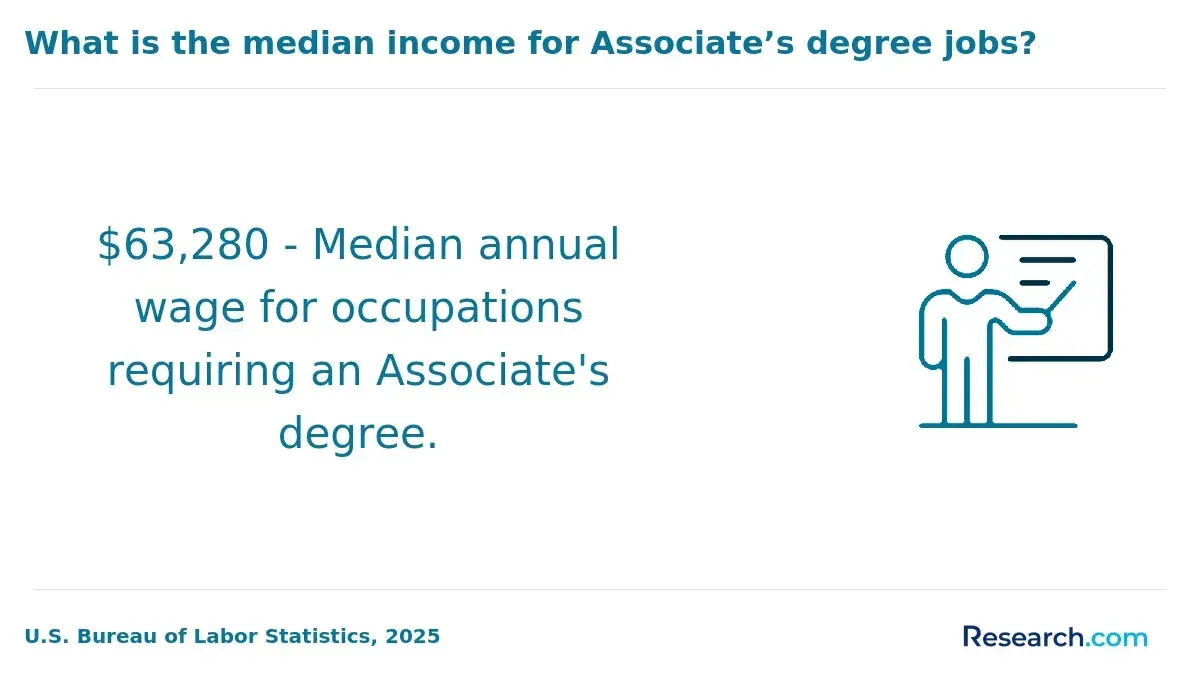
For learners who want a broader academic foundation, compare an online certificate with online associate degree programs. A certificate can be faster and more focused, while an associate degree generally includes general education and may offer a stronger transfer path.
The format decision should follow the occupation's training requirements, not convenience alone.
| Factor | Online option | Campus or hybrid option |
| Scheduling | Often asynchronous, with deadlines that can suit shift work. | Usually fixed meeting times and location-based sessions. |
| Military-credit review | Available at many institutions; request it before enrollment. | Similar process, sometimes with local military advising. |
| Hands-on learning | Best for theory, administration, IT, and analysis. | Better for labs, clinicals, shop work, and equipment practice. |
| Networking | Requires intentional use of virtual office hours and career services. | May offer easier access to local employers and instructors. |
A red flag is a fully online promise for a career that normally requires practical training. Verify where required fieldwork occurs, who arranges it, and whether placement is guaranteed or merely supported.
What admission requirements apply to veterans and active-duty students in these programs?
Admission requirements depend on the provider and whether the program is college credit-bearing. Many undergraduate certificates require a high school diploma, GED, or equivalent and an application; some open-enrollment workforce programs require only registration. Active-duty learners may also need education-center approval for tuition assistance.
Veterans and service members should expect to provide official military transcripts if they want credit review. A GPA, placement test, or prerequisite course may apply when a certificate includes college-level math, writing, healthcare, or technology courses. Programs with clinical placements can add immunization records, background checks, drug screening, CPR training, or other site-specific requirements.
Before applying, assemble the documents schools most commonly use to make a timely decision.
- Official JST or other service transcript and prior college transcripts.
- High school completion evidence if required by the institution.
- Course descriptions or training records when the transcript alone does not explain specialized experience.
- Benefit documentation and, for active-duty students, any required command or education-center approval.
Do not confuse admission with program eligibility. Acceptance to a college does not ensure entry into a selective clinical, legal, or technical sequence.
How long do online non-degree programs with military credit typically take to complete?
Completion time depends less on the certificate label than on the number of required credits left after the military evaluation, course sequencing, and whether you study part time. A focused undergraduate certificate may take one or two academic terms when prerequisites are met; longer sequences can take more time, especially when a required course is offered only once per year.
Military credit can shorten the timeline when it replaces required introductory courses. It may not shorten a program if it applies only as electives, if the school requires a minimum number of credits in residence, or if licensure-related clinical requirements cannot be waived.
If speed is the priority, review associates degrees online carefully alongside certificates. Accelerated schedules can reduce calendar time, but they demand steady weekly study and may leave less room for deployments or family responsibilities.
Ask the school for a term-by-term completion map based on your evaluated credits. That document is more reliable than a marketing claim about the program's shortest possible duration.
What do curricula in military-friendly online certificate programs usually include?
Military-friendly online certificate curricula usually combine discipline-specific coursework with practical communication, technology, and workplace skills. The exact mix should match the credential level and career target. A college certificate may include academic assessments and graded credit hours; a noncredit career-training program may emphasize job tasks and completion milestones instead.
Common curriculum components include the following, though not every program includes each area.
- Foundational terminology, regulations, ethics, and documentation standards for the field.
- Applied software, data, cybersecurity, logistics, project, or case-management tools.
- Written communication, teamwork, leadership, and problem-solving activities.
- Capstone projects, simulations, portfolios, or supervised experiences when appropriate.
- Preparation for an optional industry certification examination when the curriculum is aligned to one.
Look for a curriculum map rather than relying on a broad program name. For example, a cybersecurity certificate may build job-relevant skills but still not meet an employer's preferred certification, clearance, degree, or experience requirement.
What careers can military learners pursue after completing these online certificates?
Career outcomes depend on the credential, your military occupational experience, local hiring, security-clearance status where relevant, and employer requirements. A certificate can help translate existing skills, fill a civilian terminology gap, or support advancement; it does not automatically qualify a learner for every role in a field.
Examples of realistic pathways include logistics coordinator or supply-chain support roles for learners with transportation experience; medical records, coding-support, or healthcare administration roles for those pursuing nonclinical healthcare; emergency-management support roles; junior IT support; and digital-content or communications work supported by a portfolio.
Some justice-involved veterans may need a program with transparent background-screening policies. Resources on degrees for felons can help them compare education paths, but licensing boards, employers, and agencies make their own eligibility decisions.
Choose a certificate when it closes a specific skills gap. Consider an associate or bachelor's degree when target job postings consistently require broader education, promotion potential depends on a degree, or you need a transferable academic base.
What salary ranges and job outlook can graduates expect in common career fields?
Occupational wage data describe workers in an occupation, not the earnings of certificate completers. Education, experience, location, industry, credentials, and military background can all affect pay. Use the figures below as labor-market context while reviewing local job postings.
| Occupation | Median annual pay | Projected growth, 2023-2033 | Certificate relevance |
| Medical records specialists | $48,780 | 9% | A health information or coding-related certificate may be relevant; employer requirements vary. |
| Computer support specialists | $60,810 | 6% | IT certificates can support entry preparation, but some roles prefer degrees or vendor certifications. |
| Logisticians | $80,880 | 19% | Many positions typically require a bachelor's degree; a short certificate may complement military logistics experience. |
| Paralegals and legal assistants | $60,970 | 1% | Certificate requirements vary; employers may prefer an approved paralegal education path. |
BLS 2024 Occupational Outlook Handbook wage and projection data show why role-level requirements matter. Strong growth does not mean every short program leads directly to an opening, and a higher-paying occupation may require education beyond a non-degree credential.
How can military students evaluate costs, aid, and GI Bill benefits for these programs?
Evaluate total cost after military credit, not advertised tuition alone. Tuition is commonly charged per credit or per term, so credits awarded for prior learning can reduce required coursework, but fees, books, software, exam fees, uniforms, background checks, and required travel may remain. GI Bill eligibility and payment rules vary by benefit chapter, enrollment level, program approval, and whether instruction is online, hybrid, or noncredit.
Use this checklist before committing benefits or personal funds.
- Obtain the official credit evaluation and calculate the remaining required credits.
- Request a written estimate covering tuition, institutional fees, course materials, and program-specific charges.
- Confirm with the school's certifying official whether the exact program is approved for your education benefit.
- Ask how online enrollment, accelerated terms, withdrawals, and repeats affect benefit use and housing allowances.
- Compare the program's remaining cost and time with the job requirement you are trying to meet.
Tuition assistance, GI Bill benefits, federal aid, scholarships, employer support, and installment plans are separate funding sources with different rules. Avoid signing up based only on a recruiter's estimate; the financial aid office and veterans certifying official should explain charges and benefit certification in writing.
Other Things You Should Know About
It can, but the college decides. Submit an official JST or service transcript early and ask whether credit applies to required certificate courses, not merely electives.
Some are, but approval depends on the school, program, benefit chapter, enrollment status, and delivery format. Confirm eligibility with the school's veterans certifying official before enrolling.
No. A certificate is earned by completing an educational program. A professional certification is issued by a certifying organization after meeting its requirements, which may include an examination and work experience.
Sometimes it is one step in the pathway, but many licensed occupations require in-person clinicals, lab work, supervised hours, examinations, and state approval. Check the relevant state board before choosing an online program.
References
- 2025 Best Military-Friendly Online Colleges https://www.onlineu.com/online-schools/military-friendly
- Military Credit Veterans Preference - New Jersey State Police Recruiting https://njsp.njoag.gov/recruiting/military-credit-veterans-preference/
- Turn Military Experience into College Credits & Earn Your Degree https://www.militaryeduadvisors.com/fast-track-your-degree-how-to-turn-military-experience-into-college-credits/
- College Credit for Work Experience and Military Training https://www.coloradotech.edu/admissions/registrar-evaluation-services/professional-training
- Veterans Students https://itransfer.org/veterans/
- Affordable College Options for Veterans: The Best Ways to Maximize Education Benefits and Save Money on Your Degree https://www.straighterline.com/blog/affordable-college-options-for-veterans-how-to-maximize-your-education-benefits-and-save-money-on-your-degree
- College Credit for Military Training & Experiences https://www.dantes.mil/credit4training/
- Veterans Without Degrees: Benefits and Opportunities of Certifications https://www.luminafoundation.org/resource/veterans-without-degrees/
- Non-Traditional Credits | Military Experience, Credit by Examination | TUW https://www.tuw.edu/admissions/transfer-students/non-traditional-credits/
- Top Online Degree Programs: Veterans U.S. Veterans Magazine https://usveteransmagazine.com/usvm/top-online-degree-programs-for-veterans/