2027 Best Online Certifications for Flexible Careers

Co-Founder and Chief Data Scientist
Choosing an online certificate is harder than simply finding the shortest program: the credential must fit the job, schedule, and any licensing rules. U.S. Bureau of Labor Statistics (BLS) projections show healthcare support, skilled trades, and technology-related roles continue to create openings, while some routine office roles are shrinking. This guide helps career changers, working adults, and recent graduates compare flexible online certificate paths, evaluate provider quality, estimate costs and timelines, and avoid credentials that do not lead toward their intended role.
Key Things You Should Know
- Online certificates can be credit-bearing academic programs, noncredit career-training programs, or preparation for an industry certification exam; confirm which one you are buying before enrolling.
- Flexible careers are not always fully remote: BLS projects 9% growth for medical records specialists from 2023 to 2033, while hands-on trades still require in-person labs, apprenticeships, or supervised fieldwork.
- Compare total cost, required equipment, exam fees, accreditation, state eligibility, and employer recognition - not tuition or completion speed alone - before choosing a program.
Top 10 Best Online Certifications for Flexible Careers
Popular Trade School Programs
Online trade certificates commonly cover HVAC fundamentals, electrical theory, welding safety, construction estimating, industrial maintenance, and logistics. They work best for people who need flexible theory instruction but can attend required labs or complete an employer-sponsored apprenticeship. An online certificate can build vocabulary and safety knowledge; it usually cannot replace supervised practice required for a journey-level trade license. Choose a credit-bearing community-college certificate when you may later pursue an associate degree, and choose focused industry training when an employer specifically recognizes it.
Healthcare Programs
Common options include medical billing and coding, medical assisting theory, pharmacy technician preparation, health information management, and patient-care support. Medical records and billing programs are among the most online-friendly because documentation and coding can be taught digitally. Clinical occupations, however, require approved placements, background checks, immunizations, and in-person competencies. A school certificate is not the same as professional certification from an industry body. Before enrolling, verify whether the curriculum prepares you for a recognized exam and whether your state or employer requires one.
Criminal Justice / Law Programs
Arts & Design Programs
Flexible online options include graphic design, UX/UI foundations, digital marketing design, video editing, animation, photography, and web content production. These programs are strongest when they produce a reviewable portfolio rather than only a completion certificate. A short noncredit program can help an experienced professional add a specific software or workflow skill; a credit-bearing certificate may make more sense for learners who want structured critique and possible academic progression. Review instructor feedback, portfolio requirements, software costs, and ownership rights for student work before paying.
What are the most in-demand flexible careers you can access with online certificates?
The best flexible path depends on whether "flexible" means remote-friendly work, asynchronous study, shift options, or a short route into a new field. Online learning is particularly practical for documentation, technology, business operations, and design roles. For regulated or hands-on jobs, online coursework is usually only one part of preparation.
This comparison separates careers where a certificate can be a reasonable entry point from careers where it is better viewed as skill development or exam preparation.
| Career area | Common online credential route | Flexibility reality | Important limitation |
| Medical records and coding | Certificate plus optional industry certification preparation | Often remote or hybrid after experience | Employers may prefer coding experience or certification |
| IT support | Noncredit certificate or vendor certification preparation | Online study; jobs may include shifts or onsite support | Hands-on troubleshooting practice matters |
| Bookkeeping | Accounting or bookkeeping certificate | Part-time, freelance, and hybrid options exist | Automation is reducing some routine work |
| Digital design | Portfolio-based certificate or professional certificate | Often project-based and remote-capable | Portfolio quality outweighs a completion credential alone |
| Project coordination | Project-management coursework or certification preparation | Online coursework and hybrid work are common | Many roles still favor relevant work experience |
For learners seeking a very short, focused route, compare curriculum depth and employer relevance with quick certifications rather than assuming every fast credential has equal labor-market value. A short program is most useful when it fills a clearly identified skill gap or supports a recognized examination.
How do online certification programs compare to campus options for flexibility and quality?
Online and campus programs can deliver comparable academic content when the provider has qualified instructors, clear assessments, student support, and credible oversight. The critical difference is not the video platform; it is whether the occupation requires equipment, clinical practice, supervised work, networking, or a physical portfolio review.
The following comparison helps match the delivery model to the work you expect to do after completion.
| Factor | Fully online certificate | Hybrid certificate | Campus-based option |
| Schedule control | Highest for asynchronous coursework | Moderate; labs or meetings are scheduled | Lowest; regular attendance is typical |
| Best fit | IT, billing, bookkeeping, design theory, business tools | Healthcare support and technical programs | Equipment-heavy and clinical training |
| Networking | Requires deliberate outreach | Some local peer and employer contact | Often easiest through labs and placements |
| Quality check | Assessments, instructor access, credential recognition | Also verify site and lab arrangements | Also compare facilities and class schedules |
An online certificate is a good fit when you can self-manage deadlines and the target role does not demand extensive onsite competency training. Campus or hybrid study is safer for learners who need structure, equipment access, clinical placement support, or local employer connections. If your longer-term goal includes college credit, compare the certificate's pathway to an associate's degree before choosing a noncredit provider.
How can you verify that an online certification program is properly accredited and recognized?
First, identify what is being offered. An academic certificate is awarded by a school after coursework; a professional certification is awarded by a certifying organization after candidates meet its standards, which may include an exam and work experience. A course completion badge may be useful, but it is not automatically either of those credentials.
Use these checks before submitting an application or payment:
- For a college-issued certificate, confirm that the institution appears in the U.S. Department of Education database and that the program is offered by that institution, not merely marketed through a partner.
- For a career-training provider, ask which employers, certification bodies, or licensing boards recognize the training and obtain the answer in writing.
- For healthcare, legal, technical, or trade programs, check the relevant state board or certifying organization to confirm exam and licensure eligibility.
- Review whether the credential is credit-bearing, whether credits can transfer, and whether completion requires a proctored assessment, practicum, or portfolio.
- Request the total-cost disclosure, refund policy, completion requirements, and career-services scope before enrolling.
Red flags include vague claims such as "nationally recognized" without naming the recognizing body, guaranteed job-placement language, pressure to enroll immediately, and refusal to explain whether graduates are eligible for a required exam. Accreditation applies to institutions and, in some fields, programs; it is not a blanket guarantee of employment.
What admission requirements and prior education do online certification programs typically expect?
Requirements vary widely because online certificates range from open-enrollment software training to graduate-level academic credentials. Many noncredit professional certificates require only payment and basic computer access. College certificates may require a high school diploma or equivalent, placement steps, or prerequisite courses. Graduate certificates generally require a bachelor's degree, while advanced professional certifications may require verified work experience before candidates can sit for an exam.
Ask admissions staff these questions to avoid enrolling in a program that does not match your starting point:
- Is this an open-enrollment course, a college certificate, or preparation for an external certification examination?
- Do I need a diploma, degree, GPA, prerequisite course, background check, or prior work experience?
- Will I need to attend labs, clinicals, internships, proctored exams, or scheduled online sessions?
- Can prior learning, military training, transfer credit, or employer experience reduce the coursework?
- Does the schedule accommodate my work hours, and what happens if I miss a required session?
Frequent start dates can improve scheduling convenience, but they do not make a program automatically self-paced. Learners who need a rapid enrollment cycle can compare online colleges with weekly start dates and still confirm prerequisite, financial-aid, and course-availability rules.
How long do online certificate programs take, and what do they usually cost?
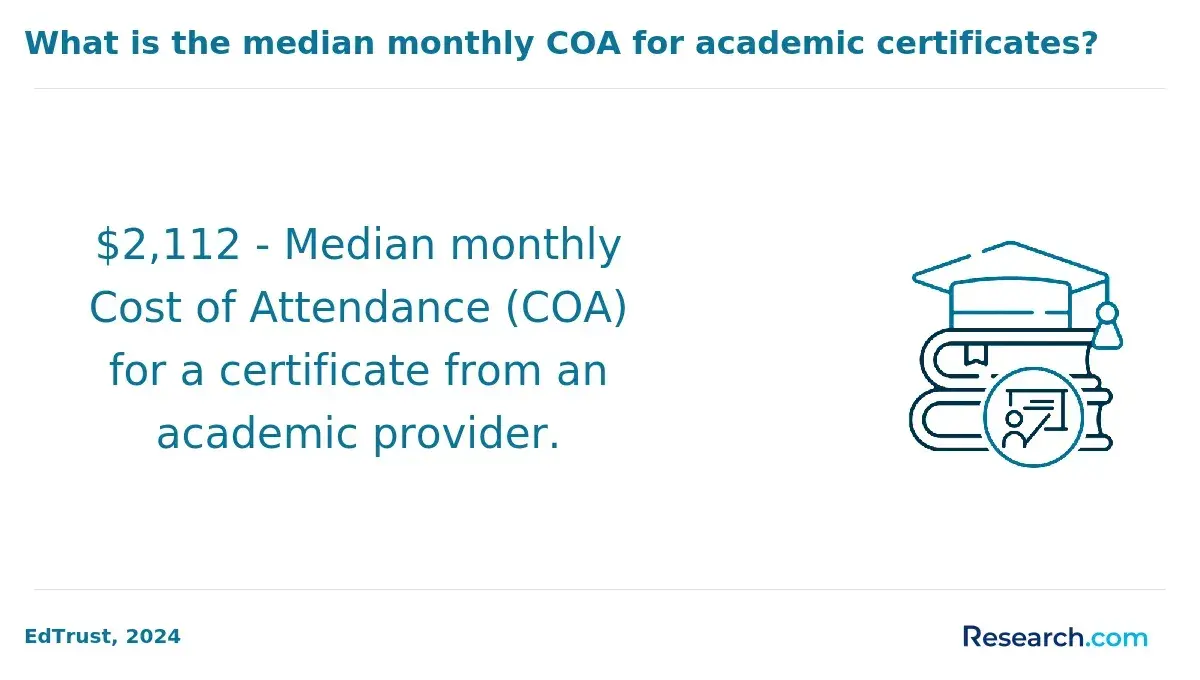
Completion time ranges from a few weeks for a narrowly focused noncredit course to about a year for many college certificates; programs with clinicals, labs, or apprenticeships can take longer. Cost is equally variable because a provider's tuition may exclude exam vouchers, books, software, equipment, background checks, travel, and required onsite training.
This cost framework is more useful than a single advertised tuition figure because it shows what changes the total investment.
| Program type | Typical timeline | Primary cost drivers | Best use case |
| Short noncredit course | Weeks to a few months | Course fee, subscription, software, exam voucher | Specific tool or introductory skill |
| Professional certificate | Several months | Provider fee, assessments, portfolio tools | Structured career-change exploration |
| College certificate | One or more academic terms | Per-credit tuition, fees, books, labs | Credit-bearing pathway or formal technical training |
| License-preparation program | Varies by state and required practice | Tuition, clinicals or labs, exam, application, travel | Regulated occupation with clear state rules |
Ask for a written estimate of every required expense and compare it with your likely use of the credential. Federal financial aid may be available for eligible certificate programs at qualifying institutions, but many short noncredit offerings do not qualify. Employer tuition assistance, workforce grants, payment plans, and exam reimbursement can reduce out-of-pocket cost, although eligibility varies.
What coursework and skills do top online certification programs in flexible fields cover?
Strong programs teach job tasks, not just terminology. They combine foundational concepts with applied assignments that show employers or certification reviewers what you can do. AI tools are changing workflows in administration, design, coding, and customer support, so a credible curriculum should address responsible use, verification of outputs, privacy, and documentation rather than treating automation as a substitute for core skills.
Look for coursework aligned with the work sample or assessment you will need after completion:
- Healthcare administration: medical terminology, coding systems, privacy practices, electronic records, and claims workflows.
- IT support: operating systems, networking basics, ticket documentation, security hygiene, and customer communication.
- Bookkeeping: accounting fundamentals, spreadsheets, reconciliations, payroll concepts, and accounting software.
- Digital design: visual hierarchy, user research, accessibility, prototyping, revision, and portfolio presentation.
- Project coordination: scope, schedules, risk logs, stakeholder communication, collaboration tools, and reporting.
Choose programs that include feedback on realistic projects, a transparent grading rubric, and current software access. Avoid offerings that promise mastery of an entire field through passive video viewing alone; a certificate has greater value when you can demonstrate the related skill in an interview, portfolio, assessment, or supervised setting.
What jobs can you get with online certifications, and what are the salary ranges?
An online certificate can support entry into some roles, strengthen an existing résumé, or prepare a learner for a separate certification exam. It does not independently determine pay. The BLS occupation figures below are U.S. median annual wages for all workers in each occupation as of May 2024, not earnings promises for certificate completers.
Use the salary context to judge the scale of a potential career, then compare local openings and actual employer requirements.
| Occupation | May 2024 U.S. median annual wage | How an online credential may help | Important qualification note |
| Medical records specialists | $50,250 | Supports coding, records, and billing skill development | Employers may prefer recognized certification or experience |
| Bookkeeping, accounting, and auditing clerks | $49,210 | Builds software and accounting-process skills | Some employers prefer an associate degree or experience |
| Computer user support specialists | $60,340 | Can support entry-level technical support preparation | Requirements vary from certifications to college coursework |
| Paralegals and legal assistants | $61,010 | May help degree holders gain legal-support training | Does not permit legal practice |
| Graphic designers | $61,300 | Can develop a portfolio and specialized digital skills | Portfolio and experience are central to hiring |
Compare job descriptions in your target area before paying for training. If your desired role requires advanced leadership, research, or faculty preparation rather than an entry-level credential, a certificate is likely the wrong endpoint; explore longer pathways such as the shortest doctoral programs only when the occupation actually requires doctoral study.
What is the job outlook for careers commonly pursued through online certifications?
Job outlook should guide your decision, but it should not replace local research. BLS national projections for 2023 to 2033 indicate 9% growth for medical records specialists, reflecting continued demand for health-data management. By contrast, BLS projects a 6% decline for bookkeeping, accounting, and auditing clerks, partly because software and automation are reshaping routine transaction work.
The implication is practical: healthcare documentation training may align with expanding demand, while bookkeeping learners should prioritize advisory, reconciliation, software, payroll, and client-service skills that are harder to automate. Technology certificates can remain useful, but employers increasingly expect proof that applicants can troubleshoot, communicate, protect data, and learn new tools.
Before choosing a field, search local job postings for the exact title you want. Note recurring requirements, whether roles are remote or onsite, expected schedules, requested software, and whether employers name a certification body. National projections describe broad direction, not guaranteed local openings or individual hiring outcomes.
How do licensing, professional exams, and continuing education work after earning a certificate?
Completion of a school certificate and eligibility for a license or professional certification are separate questions. Licenses are typically issued by state boards and are required for certain regulated occupations. Professional certifications are generally awarded by private or nonprofit certifying bodies after an exam and, in some cases, education or work-experience verification. Continuing education may be required to renew either credential.
Follow this sequence when your target occupation is regulated or certification-dependent:
- Identify the exact job title and the state where you intend to work.
- Check the state board or certifying organization's current eligibility rules before enrolling.
- Confirm that the program's curriculum, clinical hours, lab hours, or practicum meets those rules.
- Budget separately for applications, background checks, examinations, retakes, renewal, and continuing education.
- Keep transcripts, syllabi, completion records, and supervised-hour documentation for future applications.
Do not rely on a school representative's general statement that a program is "license-ready." State rules can change and may differ for online students, particularly when clinical placement or supervised practice is involved. For nonregulated fields such as design or general business operations, a portfolio, work sample, and current skills may matter more than a formal certification.
Other Things You Should Know About
They can be worthwhile when they teach a specific, employer-recognized skill and fit a realistic target role. They are less useful when the job requires a license, extensive supervised practice, or a degree that the certificate does not provide.
Some entry-level roles consider certificates, especially in support, administrative, technology, and creative fields. Hiring also depends on local demand, experience, portfolio quality, interview performance, and any required professional credential.
Employers generally focus on the provider's reputation, relevance of the curriculum, evidence of skill, and whether a recognized certification or license is involved. A college-issued certificate, industry certification, and course-completion badge are not interchangeable.
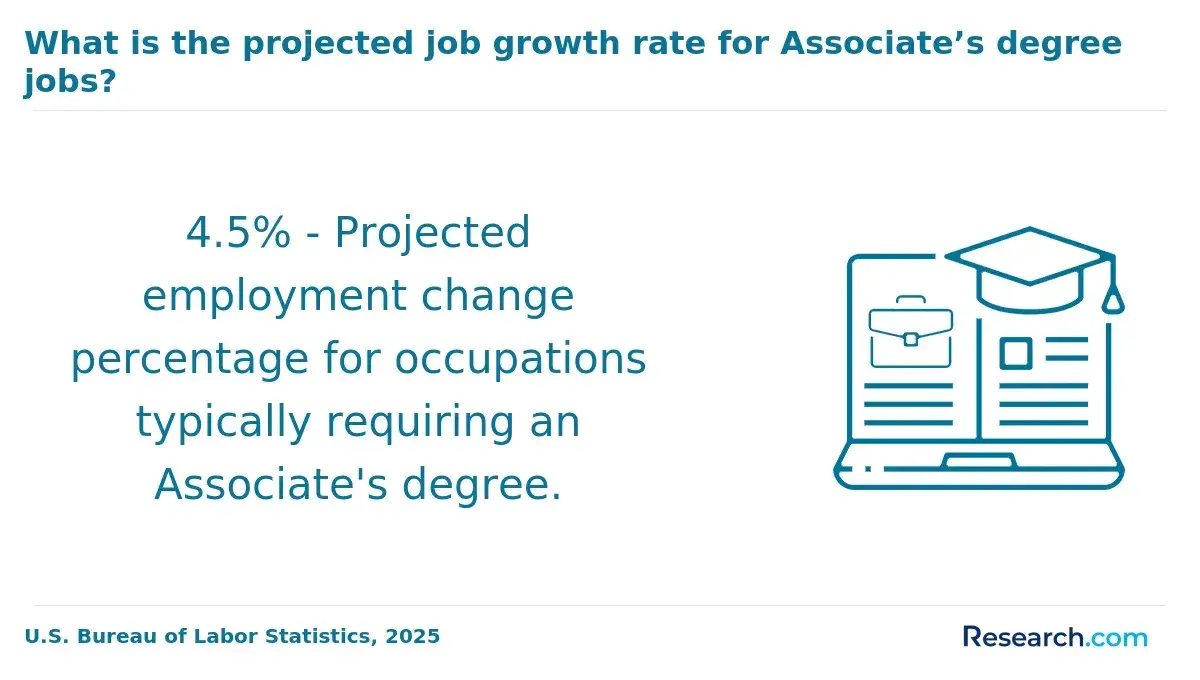
Choose a certificate for focused, shorter training or a targeted skill upgrade. Choose an associate degree when employers commonly request college credentials, you want broader coursework, or you may need a transferable pathway toward a bachelor's degree.
References
- 7 in-demand certifications in 2025 | edX https://www.edx.org/resources/in-demand-professional-certifications
- What Do Employers Think of Online Courses & Certificates? [2025] https://digitaldefynd.com/IQ/employers-think-of-online-course/
- Error https://www.creditkarma.com/income/i/most-flexible-jobs
- MSI vs. Competitors: The Choice Is Clear https://courses.msicertified.com/blog/msi-vs-competitors
- Online Certificates for Job-Ready Skills | Grow with Google https://grow.google/certificates
- Coursera vs Udemy https://upskillwise.com/udemy-vs-coursera/
- Top 10 Easy Certifications To Get Online https://www.collegevaluesonline.com/lists/best-paying-online-certifications/
- Udemy vs Coursera: Which Platform Will Actually Help Your Career in 2026? - The Interview Guys https://blog.theinterviewguys.com/udemy-vs-coursera/
- How Useful are Certificates from Coursera, edX, and Udemy? | HackerNoon https://hackernoon.com/how-useful-are-certificates-from-coursera-edx-and-udemy
- edX vs Coursera - Which Platform Actually Advances Your Career https://mentorcruise.com/blog/edx-vs-coursera-which-platform-actually-advances-your-career-0d647/