2027 MLIS Programs for First-Time Library Supervisors

Co-Founder and Chief Data Scientist
Moving from library work into supervision means taking responsibility for staff, services, budgets, and difficult decisions - not just collections or reference questions. U.S. employment of librarians and media collections specialists is projected to grow 2.6% from 2025 to 2035, so prospective supervisors should weigh the value of a graduate degree against its cost and the experience employers expect. This guide explains how to assess MLIS programs, choose useful coursework, and build evidence that you can lead a library team.
Key Things You Should Know
- Prioritize an ALA-accredited master's program with management coursework you can actually take and opportunities to practice supervision-related work.
- The May 2025 median annual wage for librarians and media collections specialists was $68,270; it is not a salary estimate for new supervisors or a measure of MLIS returns.
- Compare the full cost of required credits and fees with your target job's degree requirements; an MLIS alone does not qualify you for every supervisory or school library position.
What is an MLIS degree, and why is it valuable for first-time library supervisors?
A Master of Library and Information Science (MLIS) is a graduate degree covering how information is organized, accessed, evaluated, and managed. Related degrees may be called an MLS, a Master of Science in Library Science, or a Master of Information. The name matters less than the specific program's accreditation, curriculum, and fit with the jobs you want.
A first-time supervisor might assign desk coverage, coach employees, respond to patron complaints, help administer a budget, and maintain accessible, privacy-conscious services. An MLIS can provide the professional context for those decisions: why a circulation policy affects access, for example, or how a staffing choice affects reference service. It does not replace learning an employer's labor agreements, personnel rules, or budget procedures.
If your goal is to supervise librarians or manage a branch, examine postings for those jobs before enrolling. If you primarily want to lead an information-technology or records team, relevant experience or a different graduate degree may be a better investment.
Do first-time library supervisors need an ALA-accredited MLIS degree?
Not universally. Many professional librarian and library-management postings require or prefer a master's degree from a program accredited by the American Library Association (ALA). Other supervisory positions, particularly those centered on operations or paraprofessional staff, may accept experience or different qualifications. The deciding evidence is the requirement in the jobs and jurisdictions you are targeting.
Check the specific master's program in ALA's current directory before applying; a university's institutional accreditation is not the same thing as ALA program accreditation. Accreditation also does not establish that a particular management elective is offered, that it fits an online schedule, or that graduates meet state school librarian requirements.
Affordability matters, but it should not settle eligibility by itself. When reviewing a low tuition MLIS for professionals, verify its accreditation and compare it against actual supervisory job postings before treating the lower price as a saving.
Which MLIS programs best prepare graduates for library supervision?
No single program is best for every first-time supervisor. A strong choice combines eligibility for your intended roles with coursework and applied work relevant to the setting you hope to lead. Without verified, comparable evidence for individual schools, a feature-based comparison is more useful than a ranked list.
The table separates documented offerings from assumptions worth checking with a program adviser. Use the same questions for every school on your shortlist.
| Feature to compare | Evidence to seek | Why it matters |
| Management curriculum | Current catalog descriptions and degree requirements | A named concentration is different from one elective, and an elective may not be required. |
| Course availability | Recent schedules and an adviser's guidance on planned offerings | A catalog listing does not mean the course runs when you need it. |
| Applied learning | Published practicum, capstone, or project rules | Assignments involving budgets, assessment, or staff training can produce useful interview evidence. |
| Career fit | Required qualifications in local postings and relevant program coursework | Public, academic, and school libraries have different operating environments. |
| Attendance and cost | Credit requirements, tuition schedule, fees, and any in-person obligations | The least expensive credit rate may not yield the lowest total cost. |
Ask whether you can complete a management-focused project at your current workplace and who approves it. If speed and affordability are priorities, compare a budget accelerated library information science option against the time needed to gain credible leadership experience; finishing sooner is not automatically better preparation.
What do students learn in an MLIS program for library leadership?
Most valuable for a new supervisor is the ability to connect professional library decisions with people and resources. Core LIS study may cover information organization, reference, research methods, and ethics; management preparation depends on the courses and projects a student selects.
Look for opportunities to practice staff development, service assessment, budgeting, and policy analysis. For example, a project could assess service-desk demand, recommend a fair coverage plan, and explain how the plan protects access during busy periods. Another could create a staff-training guide for patron privacy or accessible digital services. These projects demonstrate judgment without suggesting that classroom work is equivalent to formal personnel authority.
Digital services also belong in a supervisor's toolkit. A manager may need to evaluate an AI-assisted discovery tool or a digital collection workflow for accuracy, accessibility, privacy, staff workload, and vendor obligations - not necessarily build the technology personally. Choose electives that match the systems your intended library uses rather than collecting technical course titles without a career purpose.
Are online MLIS programs as effective as campus-based programs?
An online MLIS can prepare a supervisor effectively when it offers the right curriculum, interaction, and applied opportunities. Delivery format alone does not establish educational quality or professional eligibility. Check the accreditation of the specific program and whether the courses you need are available in the format you plan to use.
Online does not always mean self-paced: live sessions, group projects, placement hours, or occasional campus activities may affect a working student's schedule. Ask for a sample course sequence and current attendance expectations. A campus program may make local networking and workplace partnerships easier; an online program may allow you to remain employed and apply assignments to your own library.
Readers considering a self directed online library masters should check how progress is assessed and whether they can reliably get feedback on management decisions, not just complete coursework independently.
What are the admission requirements for MLIS programs?
Applicants generally need a bachelor's degree and must meet the individual graduate program's admissions requirements. Schools may request transcripts, a statement of purpose, recommendations, a résumé, or other materials; testing and minimum-grade policies vary. Prior library employment can strengthen an application but should not be assumed to waive a published degree requirement.
Use the statement of purpose to connect your experience to a specific leadership goal. A circulation employee, for instance, could describe a service improvement they helped implement and the management skills they still need. Ask admissions staff how the program evaluates relevant work, whether graduate transfer credit is possible, and whether an employer-supported project can satisfy any applied requirement. Get program-specific answers before making enrollment plans.
How long do MLIS programs take, and how much do they cost?
Time to completion depends on required credits, course sequencing, enrollment pace, and any applied requirement. A working student taking fewer courses may need more terms than a full-time student; a faster advertised schedule is useful only if required classes are available in the needed order.
Calculate gross program cost using required credits multiplied by the tuition rate that applies to you, then add mandatory fees, books, technology, and any travel or placement expenses. Separately estimate your out-of-pocket cost after confirmed employer support or grants and the amount you would finance through borrowing. Published tuition is not the total cost, and online enrollment does not automatically qualify you for an in-state rate.
Compare an accelerated librarian degree online with a slower schedule that lets you keep earning and build supervisory experience. Confirm current tuition and aid eligibility with each institution before committing; neither a short timeline nor a lower sticker price establishes a better return.
What library jobs can graduates pursue after completing an MLIS?
An MLIS can support applications for professional librarian jobs and, with appropriate experience, positions overseeing staff or services. Titles do not consistently indicate the size of a team or the amount of authority involved, so read duties and qualifications closely.
The table shows plausible pathways rather than jobs guaranteed by a degree. It can help you identify which kind of experience to seek while studying.
| Target role | Typical focus | Preparation to prioritize |
| Branch or department supervisor | Schedules, coaching, patron issues, service quality | Public-service experience, staff training, and operations projects |
| Academic library unit supervisor | Team coordination, research support, service assessment | Academic-library experience and evidence of collaborative planning |
| Technical services supervisor | Cataloging or acquisitions workflows, systems, quality control | Metadata or collections knowledge plus workflow improvement |
| School library leader | Instruction, collections, and collaboration with school staff | State-specific credentials and school-based preparation |
Some graduates first work as librarians, coordinators, or lead workers before seeking direct reports. Adjacent archives, records, and information-management roles may accept an MLIS, but often value different specialized experience. If earnings are a major consideration, research highest paying MLIS specializations alongside actual local vacancies rather than assuming a specialization determines pay.
How much do library supervisors earn, and what is the job outlook?
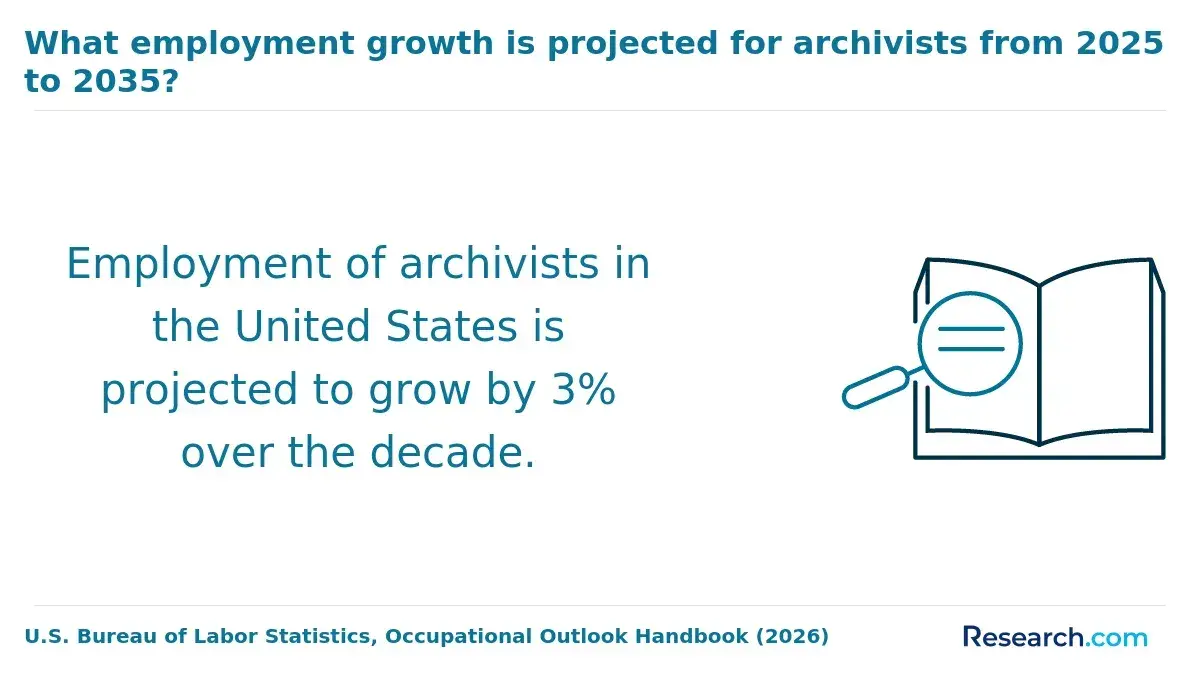
The U.S. Bureau of Labor Statistics reports a May 2025 median annual wage of $68,270 for librarians and media collections specialists and projects 2.6% employment growth from 2025 to 2035. These are occupation-wide figures, not pay or growth estimates specifically for first-time supervisors. Management scope, employer type, location, and experience can substantially change an individual offer.
For a personal return-on-investment decision, compare postings in your intended region with your current earnings, likely program cost, and the experience those postings require. A higher-paying supervisory title is not evidence that an MLIS by itself will produce that salary or an immediate promotion.
What licenses, certifications, and professional standards apply to library supervisors?
There is no single national license for supervising every U.S. library. Requirements depend on the position and jurisdiction. School librarian roles may require a state-issued license, certification, or endorsement; an ALA-accredited MLIS does not automatically satisfy those rules. Check the relevant state education authority before choosing a school library pathway.
Public and academic employers may specify an ALA-accredited degree, while specialized settings can ask for subject expertise or other qualifications. Professional standards also shape day-to-day decisions even when they are not licenses: supervisors must apply employer policies and applicable law while protecting patron privacy, supporting accessibility, and handling personnel matters fairly. Confirm the actual job posting's requirements rather than treating an optional credential as universally mandatory.
Other Things You Should Know About Library Science
Both involve training, clear expectations, and feedback. Employees may also be covered by formal evaluation procedures, labor agreements, and personnel policies. Ask what authority the position actually carries before describing volunteer coordination as staff supervision.
A supervisor may need to follow a collective bargaining agreement when assigning work, changing schedules, or addressing performance. Learn the agreement and consult the employer's human resources or labor-relations staff rather than assuming standard procedures apply.
Yes. Some positions combine direct patron service with scheduling, purchasing, and staff support. Review the job description for workload and decision-making authority so you understand how much time is available for management.
Follow the library's privacy and incident-response policies, limit unnecessary access to patron information, and escalate the matter to the appropriate administrator or privacy contact. A supervisor should not improvise a disclosure rule based only on the urgency of a request.
References
- In-Person, Remote, or Hybrid Instruction? A Quality... - PMC https://pmc.ncbi.nlm.nih.gov/articles/PMC9778165/
- The Value of School Libraries | The University of West Alabama https://online.uwa.edu/news/school-libraries-guide/
- Types of Libraries: 6 Categories and Their Roles | Syracuse University https://ischool.syracuse.edu/types-of-libraries/
- Library Science Master's Online - UW Information School https://ischool.uw.edu/programs/mlis/degree-options/online
- MLIS Career Outcomes | College of Information Science https://infosci.arizona.edu/ma-library-information-science/career-outcomes
- MSIS Frequently Asked Questions | Wayne State University https://sis.wayne.edu/msis/msis-faq
- MLIS Program Requirements and Curriculum | umd.edu https://info.umd.edu/academics/masters-programs/master-of-library-and-information-science/curriculum-specializations/
- Library and Information Science, MLIS (Online) | Southern Connecticut State University https://www.southernct.edu/academics/programs/library-and-information-science-mlis
- MLIS Curriculum | Southern Connecticut State University https://inside.southernct.edu/information-and-library-science/mlis-curriculum
- Accredited Programs | ALA https://www.ala.org/educationcareers/accreditedprograms