2027 MLIS Funding for Students Who Already Used Most of Their Federal Aid

Co-Founder and Chief Data Scientist
Using most of your federal aid does not necessarily rule out an MLIS, but it makes the funding plan more important than the tuition sticker price. The U.S. Bureau of Labor Statistics reports a May 2025 median salary of $68,270 for librarians and media collections specialists; that occupational figure is not a promise of what a new graduate will earn. If you are weighing library school against existing debt, this guide will help you check remaining eligibility, find nonfederal support, compare full program costs, and decide how much borrowing makes sense.
Key Things You Should Know
- Exhausting undergraduate Pell Grant eligibility does not, by itself, exhaust graduate loan eligibility; existing debt and the rules for your enrollment period still matter.
- Students who have reached a graduate borrowing limit should prioritize grants, employer assistance, paid assistantships, and lower-cost programs before considering private loans.
- BLS projects 2.6% employment growth for librarians and media collections specialists from 2025 to 2035, so compare likely job opportunities with the debt you would take on - not just with tuition.
What funding options are available for MLIS students who have exhausted federal aid?
First, identify which aid is exhausted. Pell Grants generally fund eligible undergraduate study, so having used your Pell eligibility does not establish whether you can borrow for a graduate degree. Reaching a federal loan limit is a different problem: new federal borrowing may be restricted even if a school admits you and you complete the FAFSA.
If federal loans will not cover the program, the main alternatives are school-funded scholarships or tuition discounts, external scholarships, paid graduate assistantships, employer education benefits, and earnings from work. Some students also use payment plans or private loans. These sources differ in reliability: an advertised scholarship is not an award, an assistantship may require specific work hours, and employer reimbursement may arrive only after you pass a course.
Ask each program for a written estimate of aid available to incoming MLIS students, including whether awards renew and whether part-time or online students qualify. That gives you a more useful funding picture than a university-wide financial aid page.
Can you get federal student loans for an MLIS after reaching borrowing limits?
Possibly, but the answer depends on your loan history and the rules that apply when you enroll. Graduate Direct Unsubsidized Loans have annual and aggregate borrowing limits; existing federal student loan balances can affect how much room remains. An undergraduate Pell Grant limit is separate from those loan limits. If you have already reached an applicable aggregate loan limit, filing the FAFSA alone will not create additional eligibility.
Timing matters for students entering in 2026. Federal graduate borrowing rules changed for loan periods beginning July 1, 2026. New Graduate PLUS borrowing is generally unavailable, while certain continuing borrowers may be covered by transition provisions. Do not build a budget around Graduate PLUS eligibility or a previously published graduate loan limit without having the school check your individual record and enrollment dates.
Send the financial aid office your intended start term and ask it to confirm your remaining Direct Loan eligibility, any transition provision that applies, and your options if the calculated amount is less than expected. Review your federal loan history for balances and borrowing status as well. Private loans may fill a gap, but their rates, credit requirements, protections, and repayment terms differ from federal loans.
How can you pay for an MLIS without remaining federal financial aid?
Build a plan around funding you can verify, rather than a scholarship you hope to win. Start with the amount your employer will actually pay, net of service commitments or grade requirements, and the amount you can cover from current income. Then compare part-time enrollment, a program payment plan, institutional awards, and paid library work before financing the remainder.
For working students, working adult library science tuition is only one part of affordability. A lower per-credit price may lose its advantage if required travel, fees, or a schedule that cuts your work hours raises your overall cost.
If a gap remains, compare private loan offers using the full repayment terms, not just the initial payment. Borrowing less by taking one course at a time can be sensible when it preserves employment, but ask whether slower enrollment affects scholarship eligibility, course sequencing, or the time allowed to finish the degree.
Does an ALA-accredited MLIS qualify for scholarships and employer assistance?
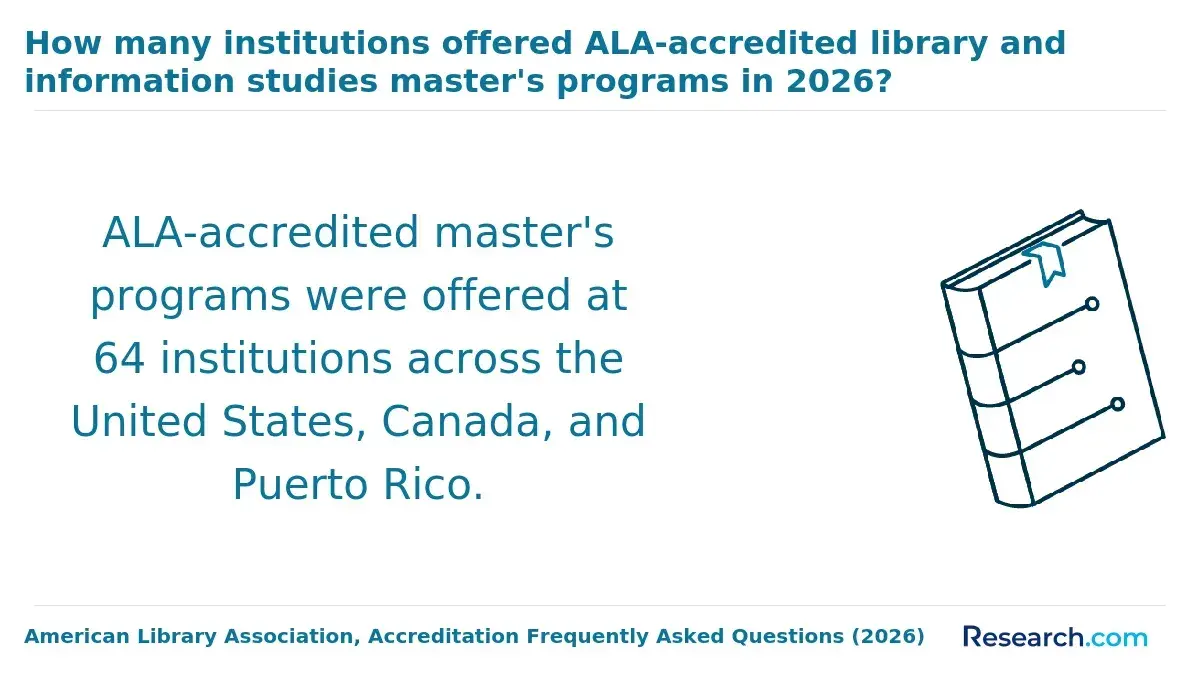
It can, but accreditation does not automatically produce funding. Some scholarships and employers specifically require a degree from an American Library Association (ALA)-accredited master's program; others accept a broader range of library and information science degrees or impose different conditions. Check the specific program in the current ALA accreditation directory. A university's institutional accreditation is not the same as ALA accreditation of its LIS master's program.
Ask your employer whether the proposed program and courses qualify, whether online study is covered, when reimbursement is paid, and whether you must remain employed afterward. Ask scholarship providers whether accreditation must be in place when you apply, enroll, or graduate. An ALA-accredited MLIS, MLS, or other appropriately named LIS master's may satisfy a stated degree requirement, but the award's own rules control.
If you intend to become a school librarian, check your state education authority separately. ALA accreditation does not replace state-specific licensure or endorsement requirements, and an online degree is not automatically a qualifying route in every state.
What scholarships and grants support MLIS students and library professionals?
Look for awards tied to your career goal and circumstances rather than applying only to general graduate scholarships. Potential sources include your MLIS department, its parent university, state library associations, professional associations such as ALA, and organizations serving a particular library specialty or community. Award amounts, eligibility, deadlines, and whether funds can cover part-time study change; verify each opportunity with the sponsoring organization.
Separate grants and scholarships, which ordinarily do not require repayment when their conditions are met, from assistantships, which exchange work for pay, a tuition benefit, or both. For each promising award, check whether it requires an accredited program, residency, professional association membership, financial need, an essay, or a commitment to a particular type of library work. Also ask whether an outside award would reduce other aid in your package.
How do online and campus MLIS programs differ in cost and financial support?
Online study may remove a move or regular commute, but it can carry technology charges, occasional campus travel, or local practicum expenses. Campus study may provide easier access to some on-site assistantships, though an assistantship is never assured. Neither format guarantees a lower tuition rate or equal access to every scholarship.
Compare the same items for each format: tuition for the credits you need, mandatory fees, travel, required in-person activities, and awards for which you are eligible. Also confirm whether courses meet live, run asynchronously, or require group work at set times. A competency based graduate library program may use a different pacing or pricing model, but you still need to verify its accreditation, assessment requirements, total cost, and aid eligibility.
What MLIS admission requirements affect funding and affordability?
Programs typically require a bachelor's degree and an application that may include transcripts, a statement of purpose, recommendations, and a résumé. Requirements vary, as do application fees, prerequisite policies, and rules for transferring prior graduate-level credit. Do not assume that undergraduate credits or library work experience will shorten the MLIS.
Admission status can affect funding. Some awards are reserved for newly admitted students, full-time students, residents, or students entering a particular term. If you need to keep working, ask admissions and financial aid staff together whether part-time enrollment changes scholarship eligibility and whether a later start term would improve your funding options. Request an individual review if you have prior graduate coursework or an unusual academic record; any credit accepted toward the degree must be confirmed by the program.
How long does an MLIS take, and what does the degree cost?
Length depends on required credits, the number of courses you take each term, and whether required courses run when you need them. Working part-time through the degree usually extends the calendar timeline, while an internship or course offered infrequently can delay completion even when you have room in your schedule. An online library masters schedule is worth examining term by term rather than judging by an advertised fastest completion time.
No single tuition figure describes the cost of an MLIS. The categories below distinguish the published program price from costs that may affect what you pay or borrow.
| Cost category | What it includes |
| Tuition | Applicable tuition rate multiplied by required credits, accounting for any rate differences across terms. |
| Mandatory fees | University, program, online, or technology charges that apply to your enrollment. |
| Study expenses | Books, materials, equipment, and software not supplied by the program. |
| Attendance expenses | Travel or lodging for campus requirements, plus any practicum-related costs. |
Ask for a program-specific estimate using your residency status and planned course load. Gross program cost is the total before aid; out-of-pocket cost is what you pay after grants and employer support; and amount financed is what you borrow. Keeping those figures separate prevents a manageable monthly tuition payment from obscuring a large eventual loan balance.
Which MLIS careers offer the strongest salary and employment prospects?
The strongest option depends on the jobs you can realistically pursue, not the highest occupational median. The BLS figures below describe U.S. occupations - not MLIS graduates, entry-level offers, or outcomes from a particular school.
| Occupation | Median annual salary, May 2025 | Projected job growth, 2025-2035 |
| Librarians and media collections specialists | $68,270 | 2.6% |
| Archivists | $64,550 | 3.4% |
| Library technicians | $44,580 | −6.4% |
Librarian positions often seek an ALA-accredited LIS master's, while technician roles commonly offer a way to gain experience without one. Archives employers may value archival experience and can accept different educational backgrounds. Related work in metadata, records management, and research data support may also consider an MLIS alongside other qualifications. Explore library information career paths against actual job postings in your target location before taking on debt.
If you already earn close to what your target roles pay locally, a costly degree may be difficult to justify on salary alone. Experience, advancement requirements, job availability, and whether your employer will help pay can change that calculation.
How can you choose an affordable, accredited MLIS program?
Shortlist programs by the credential your target employers expect, then compare the cost you would actually face. Start with the current ALA directory to confirm program accreditation, and use official program and tuition pages to check required credits, fees, residency pricing, and course delivery. Published budget friendly MLIS programs can help you identify candidates, but a listed tuition rate is not your final price.
Before accepting an offer, ask each school for the same information so the comparison is fair:
- What is my estimated total tuition and mandatory-fee cost at my planned pace, and can that rate change?
- Which scholarships, assistantships, or tuition benefits could I personally receive, and what conditions apply?
- What federal loan eligibility remains for my start term under the rules that apply to me?
- Which required courses, practica, or campus visits could add time or expense?
Choose the program whose verified costs and funding fit your borrowing limit and career goal. If none does, delaying enrollment to secure employer support, gaining relevant experience first, or considering a narrower credential may be safer than financing an unaffordable MLIS.
Other Things You Should Know About Library Science
Potentially. Eligible federal Direct Loans may qualify after you meet the program's requirements for qualifying employment and payments. Check your loan types and current program rules; taking a library job or enrolling in an MLIS does not itself provide forgiveness.
Eligible loans can generally receive an in-school deferment when you enroll at least half-time at an eligible school. Interest may continue to accrue, depending on the loan. Confirm your enrollment status and loan details with your servicer before changing payments.
Yes. Library assistant and technician roles can provide experience without an MLIS, although requirements vary by employer. They can also help you test whether the work and a future professional librarian role fit your goals.
It depends on how the funds are used and your tax circumstances. Scholarship amounts used for qualified educational expenses may be treated differently from amounts used for living costs, and assistantship pay is not the same as a scholarship. Consult current IRS guidance or a qualified tax professional.
References
- Public Service Loan Forgiveness | studentaid.gov https://studentaid.gov/manage-loans/forgiveness-cancellation/public-service
- NSLDS Financial Aid History | 2026-2027 Federal Student Aid Handbook https://fsapartners.ed.gov/knowledge-center/fsa-handbook/2026-2027/vol1/ch3-nslds-financial-aid-history
- Federal Direct Loan Limits | University of Arizona Office of Scholarships & Financial Aid https://financialaid.arizona.edu/types-of-aid/loans/federal-limits
- 2026-2027 Federal Financial Aid Updates | ucla.edu https://financialaid.ucla.edu/2026-2027-federal-financial-aid-updates
- MLIS Scholarship Opportunities - UW Information School https://ischool.uw.edu/programs/mlis/tuition-financial-aid/scholarships
- Graduate Financial Aid Is Changing in 2026 | DEN-EDU https://morgridgeonline.du.edu/online-mlis-program/tuition-financial-aid/federal-fin-aid-changes/
- Financial Aid Changes Effective 2026-2027 | Illinois https://www.osfa.illinois.edu/financial-aid-changes-obbb/
- Federal Direct Subsidized and Unsubsidized Loans | Dickinson College https://www.dickinson.edu/homepage/1819/federal_direct_subsidized_and_unsubsidized_loans
- Cost & Funding - Graduate School - University of Arkansas https://graduate-students.uark.edu/cost-and-funding/
- One Big Beautiful Bill Act: Graduate & Professional Students | pheaa.org https://www.pheaa.org/tools-resources/how-obbba-impacts-student-loans/graduates-and-professionals