
2027 MLIS Programs for Parents Returning to the Workforce Through Library Study

Co-Founder and Chief Data Scientist
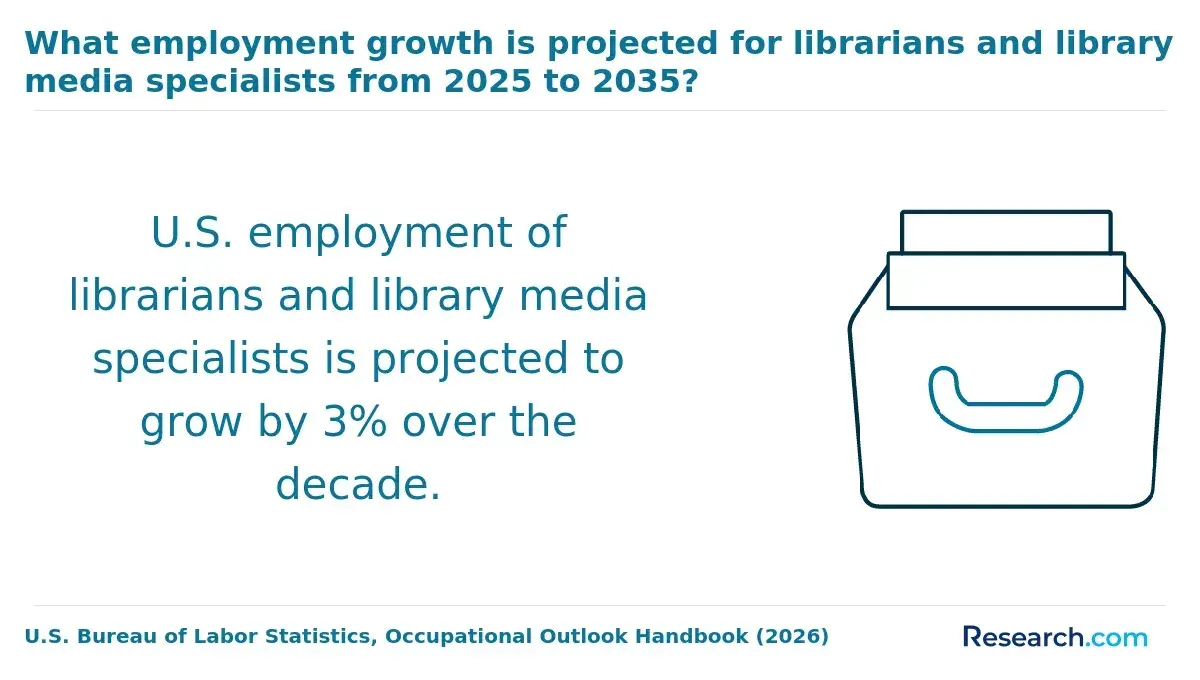
Returning to work while raising children makes an MLIS decision about more than choosing a degree: classes, childcare, field experience, and future job requirements all have to fit. The U.S. Bureau of Labor Statistics projects 2.6% employment growth for librarians and media collections specialists from 2025 to 2035, so a degree should be evaluated against a realistic career goal rather than an assumed job opening.
This guide helps parents compare program formats, identify costs and scheduling constraints, and decide whether library study is the right route back to work.
Key Things You Should Know
- An online MLIS can reduce travel, but required live classes, group work, and field placements may still require dependable childcare.
- Check the specific master's program in the American Library Association's accreditation directory; a university's institutional accreditation does not establish ALA accreditation.
- The May 2025 median annual wage for librarians and media collections specialists was $68,270, an occupation-wide figure - not a starting salary or a return on any particular MLIS.
What is an MLIS degree, and why is it useful for parents returning to work?
A Master of Library and Information Science prepares students to organize information, help people find and evaluate it, manage collections, and provide access to resources. Schools may use other degree names, including MLS or Master of Information. The name alone does not establish the curriculum or accreditation status; check the specific degree against the American Library Association (ALA) directory.
For a parent reentering paid work, the degree can provide current professional training and a way to turn earlier experience in teaching, customer service, technology, research, or community work toward librarianship. It is most useful when the jobs you want commonly require an ALA-accredited master's. Compare MLIS accreditation and career outcomes with local job postings before committing: a library assistant role may not require graduate study, while a professional librarian posting may.
Which accredited MLIS programs offer flexible options for working parents?
There is no single program that is most flexible for every family. An ALA-accredited degree offered online may still require scheduled meetings or an in-person placement, and a campus program may offer evening courses that fit a particular household better. Because delivery, course schedules, and accreditation can change, use the current ALA directory to identify eligible programs, then verify each option directly with its school.
Build a shortlist around the constraints that could prevent you from finishing: where you live, hours available for study, childcare coverage, tuition eligibility, and the type of library work you want. A regional online librarian degree comparison can help generate candidates, but confirm the current degree, accreditation, fees, and residency rules with each institution. Ask an adviser whether required courses can be taken in your preferred terms, whether electives run often enough for your timeline, and whether any fieldwork can be completed near home.
How do online and campus-based MLIS programs compare for adult learners?
The meaningful distinction is not simply where lectures happen. Parents need to know when participation is required and which obligations cannot move around a child's schedule. This table compares common format trade-offs; individual programs may combine them differently.
| Decision factor | Online study | Campus-based study |
| Travel | Usually less routine commuting; visits may still be required | Travel to scheduled classes is generally necessary |
| Class timing | May be asynchronous, live, or a mix | Typically tied to meeting times, sometimes including evenings |
| Access to classmates and faculty | Often through discussion tools and virtual meetings | Includes face-to-face contact around classes |
| Field experience | Placement location and supervision rules need confirmation | Placement may still require hours beyond class time |
Asynchronous means coursework can generally be completed within set deadlines rather than during a live class, not that it takes less time. Ask for a sample term schedule, the time zone used for live sessions, group-project expectations, and policies for interrupted enrollment. If a school advertises competency-based MLIS programs, verify how progress is assessed, how tuition is charged, and whether that model applies to the specific degree you are considering.
What courses do students complete in an MLIS program?
MLIS curricula commonly cover information organization, reference and research services, collection development, information technology, and the social responsibilities of libraries. Requirements differ by school. A parent aiming for public-library work might prioritize community services, youth services, and accessibility; someone interested in academic libraries might look for information literacy instruction and scholarly communication.
Read the catalog and recent course schedules together. A course in metadata - the description that helps people discover and manage resources - may be listed as an elective without being offered during your planned enrollment. Distinguish a formally named concentration from a group of relevant electives, and ask whether a practicum, capstone, or portfolio is required or optional. An applied project can help demonstrate recent skills after a career break, but it does not guarantee a job.
What are the admission requirements for MLIS programs?
Applicants generally need a bachelor's degree and must submit materials specified by the graduate program, such as transcripts, a statement of purpose, and references. Minimum grades, tests, prerequisites, deadlines, and policies for prior graduate credit vary. A break from paid employment does not by itself establish or rule out eligibility; explain your preparation and goals in terms of the program's published criteria.
If caregiving has made workplace references difficult to obtain, ask admissions whether a former instructor, volunteer supervisor, or recent project supervisor is acceptable before submitting an application. If you have previous graduate coursework, request an individual transfer-credit review rather than assuming it will shorten the degree. Neither professional experience nor parenting experience should be assumed to replace a stated degree requirement.
How long do MLIS programs take, and how much do they cost?
Completion time depends on required credits, how many courses you take each term, course sequencing, and any fieldwork. Part-time study may preserve family flexibility but extend the period in which you pay fees and balance school with caregiving. An advertised accelerated option is useful only if its actual course load fits your household; compare one-year online library science master's options against the published schedule and your available study hours.
No single tuition figure represents the cost of an MLIS. For each school, calculate published tuition for the credits you must complete, then add mandatory fees and likely expenses for materials, equipment, travel, and placements. Check whether online tuition depends on residency and whether taking fewer courses changes fees or financial-aid eligibility. Separate the program's gross cost from what scholarships or employer support may cover and from any amount you would borrow. Confirm current aid terms with the school's financial aid office before using a loan estimate to make an enrollment decision.
What library careers can parents pursue after earning an MLIS degree?
Public librarians help patrons find information, develop collections, and run community programs. Academic librarians may teach research skills and support students and faculty. Other paths include government and special libraries, archives, digital collections, and information-management roles. Job titles do not map neatly to degrees: some employers require an ALA-accredited master's for a professional librarian role, while archives or information-management positions may accept other education and experience.
Choose coursework and applied work to match postings in your intended area. A public-library applicant could document a community program or accessible resource guide; a digital-collections applicant could show how they described and organized a small collection. If immediate employment is the priority, consider library assistant, circulation, or related support positions while evaluating whether the MLIS is necessary for the next role you want. These positions are not interchangeable with professional librarian jobs, but they can help you learn how a workplace operates.
What salaries can MLIS graduates expect in library and information careers?
The Bureau of Labor Statistics reports a May 2025 median annual wage of $68,270 for librarians and media collections specialists. That is the midpoint for workers across the occupation, not a forecast for a new graduate or someone returning after a career break. Pay depends on the role, employer, location, experience, and hours worked.
For a useful personal comparison, review salary ranges in openings you could realistically apply for after graduation and compare them with your current or likely earnings without the degree. Include tuition, borrowing, childcare, and any reduction in paid work. A higher occupational median alone cannot show whether an MLIS will pay off for your household.
What is the job outlook for librarians and information professionals?
The Bureau of Labor Statistics projects 2.6% growth in employment for librarians and media collections specialists from 2025 to 2035. That national projection describes an occupation, not the number of openings available in your community or a guarantee of employment after graduation. Library systems, colleges, and specialized employers may have different hiring patterns.
Before enrolling, examine recent local postings for required credentials, schedules, and experience. Notice whether the work involves digital collections, accessible services, privacy, or helping patrons assess information: those responsibilities can guide course and project choices. If nearby opportunities are limited, decide in advance whether commuting, relocating, or pursuing adjacent information work is realistic for your family.
Do librarians need state licenses, certifications, or professional credentials?
Requirements depend on the job and state. Public and academic librarian employers may specify an ALA-accredited master's, while school librarian positions can require a state-issued educator license, certification, or endorsement in addition to graduate study. An online MLIS does not automatically qualify a graduate for school library work in every state.
If you want to work in a school, check your state education authority's current requirements and ask the university whether its preparation pathway meets them where you plan to work. For other roles, compare the qualifications in actual postings rather than assuming a specialized credential is universally mandatory. A guide to professional librarian eligibility requirements can help you identify questions to verify with employers and licensing authorities.
Other Things You Should Know About Library Science
Arrange an informational conversation with staff in the type of library that interests you. Ask what they do during a typical shift and what skills they use most. If possible, volunteer or attend a public program to observe the setting without treating that experience as a substitute for professional training.
Include relevant, concrete activities - such as coordinating volunteers or managing a community event - if you can describe the work and its results accurately. You do not need to present caregiving itself as paid library experience.
Start with local library events, classmates, former colleagues, and professional association activities relevant to your interests. A specific request for a short conversation about someone's role is often more useful than a general request for a job lead.
Agree on protected study times and a backup plan for deadlines when childcare falls through. Revisit that plan after you receive actual syllabi, because weekly workloads and required meeting times may differ from your expectations.
References
- How to Become a Librarian: Steps, Skills & Career Tips | Syracuse University https://ischool.syracuse.edu/how-to-become-a-librarian/
- online Master of Library and Information Science | DEN-EDU https://morgridgeonline.du.edu/online-mlis-program/
- Practicum Education FAQs - School of Social Work https://socialwork.charlotte.edu/practicum-education-faqs/
- How Many Hours a Week Does an Online College Take? | University of the People https://www.uopeople.edu/blog/how-many-hours-a-week-does-an-online-college-take/
- Cost of Attendance | Financial Aid and Scholarship Office https://www.sjsu.edu/faso/process/cost-of-attendance.php
- Career Services - UofM Global | The University of Memphis https://classic.memphis.edu/uofmglobal/students/careerservices.php
- MLIS Career Pathways: A Look at Academic Librarianship | SJSU https://ischool.sjsu.edu/istudent-blog/mlis-career-pathways-look-academic-librarianship
- Estimated Cost of Attendance | csueastbay.edu https://www.csueastbay.edu/financialaid/prospective-students1/cost-of-attendance.html
- Credit hours is not enough: Explaining undergraduate perceptions of course workload using LMS records - ScienceDirect https://www.sciencedirect.com/science/article/pii/S1096751622000380


