
2027 MLIS Programs for University Library Electronic Resources Management

Co-Founder and Chief Data Scientist
Choosing an MLIS for electronic resources work means looking beyond a program's degree title. University libraries need people who can manage database licenses, maintain access, interpret usage, and work with vendors and campus partners.
The U.S. Bureau of Labor Statistics reports a May 2025 median annual salary of $68,270 for librarians and media collections specialists, a broad occupation that includes many roles outside this specialty. This guide shows prospective students how to evaluate accreditation, coursework, practical experience, format, and cost before committing to a program.
Key Things You Should Know
- Look for an ALA-accredited master's program with relevant electives and applied work; a course on digital libraries alone does not establish an electronic resources specialization.
- Prioritize experience with licensing, access troubleshooting, usage assessment, and library systems, then confirm that relevant electives will run while you are enrolled.
- BLS projects 2.6% employment growth for librarians and media collections specialists from 2025 to 2035, that occupation-wide figure is not a forecast for electronic resources positions.
What Is Electronic Resources Management in Academic Libraries?
Electronic resources management is the work of acquiring, activating, maintaining, assessing, and renewing a university library's licensed digital content. It covers journal packages, ebooks, databases, and streaming collections. The work spans the resource's lifecycle: a favorable license is of little use if authorized readers cannot reach the content reliably.
These responsibilities show why a suitable MLIS should combine collections knowledge with systems, assessment, and communication skills.
| Responsibility | What the work involves | Preparation to seek |
| Licensing and renewal | Reviewing permitted uses, access terms, costs, and renewal dates with colleagues | Collection development, copyright, and vendor communication |
| Access and discovery | Maintaining links and holdings; investigating authentication or discovery failures | Library systems, metadata, and troubleshooting |
| Assessment | Interpreting usage alongside cost and community needs | Data analysis and collection assessment |
Electronic resources staff also work with accessibility and privacy requirements. AI-assisted discovery may change how users find licensed content, but staff still need to check whether results lead to authorized, usable resources and whether a tool handles patron information appropriately.
Which MLIS Accreditation Qualifies Graduates for University Library Careers?
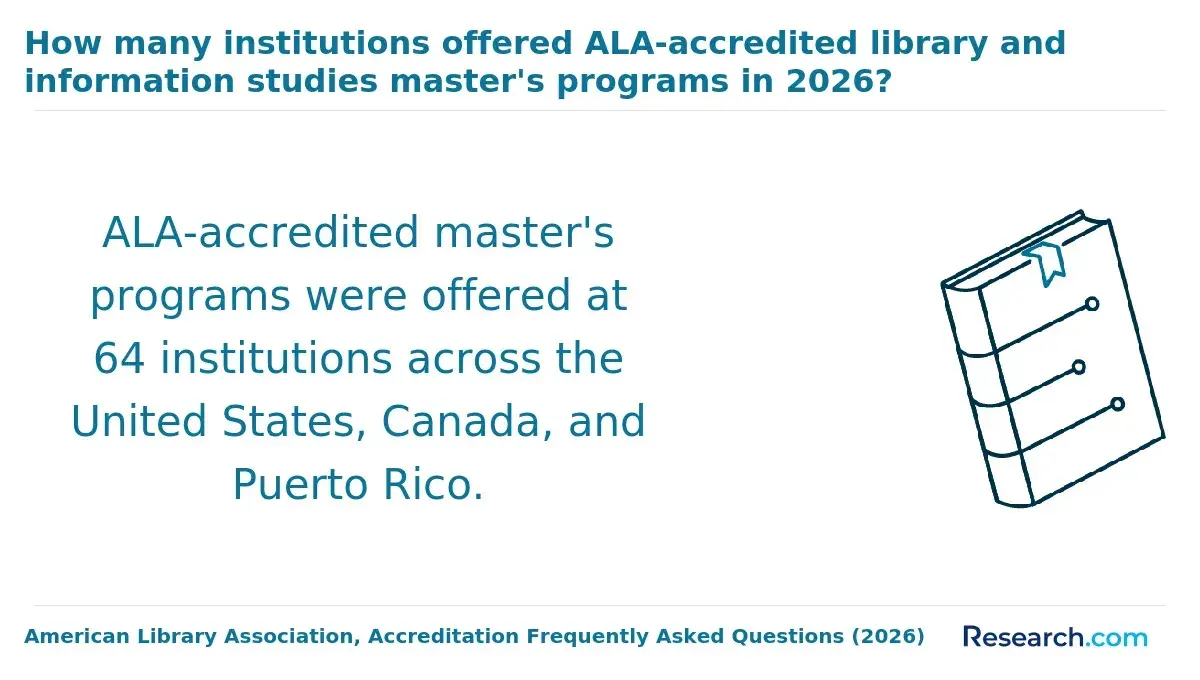
For U.S. academic librarian jobs, an ALA-accredited master's degree in library and information studies is a widely recognized qualification. The degree may be titled MLIS, MLS, Master of Science in Library Science, or Master of Information; the title alone does not establish its accreditation status. Check the specific master's program in the current ALA directory, not just the university's institutional accreditation.
ALA accreditation evaluates a program, not its suitability for every specialty. It does not confirm that an electronic resources elective, internship, online format, or concentration exists. Read the current catalog and ask the department which courses and applied opportunities are available on your intended schedule. Employers' requirements also vary: some professional postings specify an ALA-accredited degree, while others consider equivalent education or experience.
What MLIS Degree Pathways Prepare Students for Electronic Resources Management?
There is no single required MLIS track for this work. A documented concentration can offer a coherent pathway, but a general MLIS with carefully chosen electives and a relevant project can be just as pertinent to a particular job. Compare best online MLIS concentrations as a starting point, then confirm each program's current requirements directly.
The distinction between a named pathway and individual course choices matters when evaluating a school's claims.
| Pathway | What it establishes | What still needs checking |
| Formal concentration | The university documents a named set of requirements | Whether its courses address licensing, access, and assessment |
| General MLIS with electives | Students can build relevant knowledge through available courses | Course frequency, prerequisites, and scheduling conflicts |
| Applied project or practicum | A student can demonstrate work in a relevant setting if the opportunity is available | Placement eligibility, supervision, and whether remote work is permitted |
A strong portfolio project might document how you investigated failed links, analyzed a collection's usage, or mapped a renewal workflow. Protect vendor and patron information: use public or authorized sample data unless a supervisor approves other material.
Are Online or Campus-Based MLIS Programs Better for Electronic Resources Careers?
Neither format is inherently better. Online study may let a working student remain employed at a library and apply coursework immediately. Campus study may make local placements and in-person collaboration easier. In either format, the decisive question is whether you can take relevant courses and gain supervised experience with electronic resources.
Online does not necessarily mean asynchronous, and a remotely delivered degree does not establish that a practicum can be completed remotely. Ask about live meeting times, group work, required visits, placement support, and access to library systems for projects. Working student library degree options may help narrow formats, but confirm the actual schedule and requirements with each school.
What Courses Do MLIS Programs Offer in Electronic Resources Management?
Course titles differ, so read descriptions and assignments rather than searching only for "electronic resources management." Useful study areas include collection development and licensing; metadata and knowledge organization; integrated library systems and discovery; information technology; assessment; copyright; and accessibility. A course should help you explain not only how a system works but how a library makes decisions when access, cost, and user needs conflict.
Ask whether each relevant course is required or elective, how often it has recently run, and whether it has prerequisites. An intensive library science graduate program may shorten the overall schedule without making every specialized elective available when you need it. If electronic resources coursework is central to your goal, request a term-by-term plan that includes it.
What Are the Admission Requirements for MLIS Programs?
Programs generally ask applicants for a bachelor's degree and an application supported by academic records; statements, recommendations, résumé requirements, tests, and deadlines vary. A prior library science major is not necessarily required. Applicants with library employment should describe specific work - such as resolving access tickets or maintaining holdings, rather than assume experience substitutes for a published admission requirement.
If you are changing careers, ask admissions how the program evaluates relevant technical or customer-service experience and ask the financial aid office about aid eligibility and enrollment requirements. MLIS funding for career transition can identify possibilities, but neither admission nor an award should be assumed before receiving a school-specific decision.
How Long Do MLIS Programs Take and What Do They Cost?
Completion time depends on required credits, enrollment pace, course sequencing, and any practicum or capstone. A full-time plan may take roughly two years, but the school's published plan is more useful than a general estimate, especially if an electronic resources elective is offered infrequently. Ask how many terms your preferred sequence would require at the pace you can sustain.
For a comparable tuition estimate, multiply each program's required credits by the tuition rate that applies to you, then add mandatory fees. Online delivery does not automatically confer an in-state rate. Books, equipment, travel, and placement expenses may raise the total; borrowing adds financing costs. Use cheapest online MLIS tuition to begin a shortlist, not as a substitute for a current, individualized cost estimate from each school. Compare the gross cost, likely out-of-pocket cost after confirmed support, and amount you would need to borrow separately.
Which Careers Can MLIS Graduates Pursue in Electronic Resources Management?
Relevant titles include electronic resources librarian, electronic resources and serials librarian, continuing resources librarian, e-resources specialist, and access or discovery librarian. Duties overlap, but postings differ: one position may emphasize license negotiation and budgets, while another focuses on holdings, authentication, and troubleshooting. Read the responsibilities and qualifications rather than relying on the title.
An MLIS is commonly relevant to professional academic librarian posts, but specialist or technician roles may accept other education and substantial systems experience. An entry route can be a library access, acquisitions, or serials position that provides direct exposure to subscriptions and problem resolution. For applicants already working in libraries, targeted training and documented projects may be worth pursuing before taking on a graduate degree. Advancement can involve collection strategy, systems leadership, or management; it is not an automatic result of earning the MLIS.
How Much Do Electronic Resources Librarians Earn?
BLS does not provide a separate national wage figure for electronic resources librarians in the occupational figures used here. Its May 2025 median for the broader librarians and media collections specialists occupation was $68,270 annually. That is a useful benchmark, not an expected starting salary or an outcome attributable to a particular MLIS. Pay for an individual role depends on its responsibilities, employer, location, and experience requirements.
When judging whether graduate study is financially workable, compare actual job postings in locations where you would work with your current earnings, the program's full cost, and any borrowing you expect. A broad occupational median alone cannot establish a personal return on investment.
What Certifications and Skills Support Electronic Resources Management Careers?
No single certification is a universal requirement for electronic resources librarian jobs. Employers are more likely to look for evidence that you can investigate access failures, maintain accurate holdings, interpret usage reports, communicate with vendors, and explain problems to colleagues and users. Comfort with spreadsheets, library discovery systems, and the basics of licenses and authentication is valuable; the particular platforms in a posting depend on the employer.
Build evidence of those skills through supervised work or projects with a clear problem, method, and result. For example, explain how you traced a broken journal link from a discovery record to a holdings or access issue, then documented the resolution. That account shows judgment and communication as well as technical ability.
Other Things You Should Know About Library Science
COUNTER reports use standardized measures of how licensed online content is used. They help libraries assess resources, but usage alone cannot show a resource's value to every course or research group.
It depends on the cause. Electronic resources staff may investigate holdings or access settings and coordinate with systems staff, vendors, or publishers when the issue lies elsewhere.
Not automatically. License terms and university policies determine whether alumni access is permitted and which resources it covers. Check the library's published alumni access policy.
No. Electronic resources work often concerns access to licensed content from external providers. An institutional repository typically manages and provides access to works deposited by the university community, though some skills overlap.
References
- Guidelines for Prioritizing Transformative Open Access Agreements - Office of Scholarly Communication https://osc.universityofcalifornia.edu/uc-publisher-relationships/guidelines-for-evaluating-transformative-open-access-agreements/
- Full article: Integrating Usage Statistics into Collection Development Decisions | tandfonline.com https://www.tandfonline.com/doi/full/10.1080/0361526X.2011.556027
- Electronic Resource Licensing Principles | CARLI https://www.carli.illinois.edu/products-services/eres/licensing-principles
- Library and Information Science, MLIS (Online) | Southern Connecticut State University https://www.southernct.edu/academics/programs/library-and-information-science-mlis
- Library Acquisitions Guide: Non-COUNTER Use Statistics | uc.edu https://guides.libraries.uc.edu/c.php
- MLIS Master of Library and Information Studies - UA Online https://online.ua.edu/degrees/mlis-master-of-library-and-information-studies/
- Incorporating Library School Interns on Academic Library Subject Teams - ScienceDirect https://www.sciencedirect.com/science/article/abs/pii/S0099133310002557
- Library Science Careers - UW Information School https://ischool.uw.edu/programs/mlis/careers
- MLIS Curriculum, Specialties & Courses | University of Arizona College of Information Science https://infosci.arizona.edu/ma-library-information-science/curriculum-specialties-courses
- Licensing and Copyright | VCU Libraries https://pressbooks.library.vcu.edu/hscolldev/chapter/licensing-and-copyright/


