
2027 MLIS Programs for Library Technology Vendor Management

Co-Founder and Chief Data Scientist
Choosing an MLIS for library technology vendor management means looking beyond a program's general technology courses. Libraries need people who can evaluate systems, manage contracts, protect patron data, and make purchased tools work for staff and users.
The U.S. Bureau of Labor Statistics projects 2.6% employment growth for librarians and media collections specialists from 2025 to 2035 - a modest outlook that makes relevant experience especially valuable. This guide helps prospective students identify useful coursework, compare programs and costs, and decide whether an MLIS fits their intended role.
Key Things You Should Know
- Look for a combination of library systems coursework, budgeting or procurement skills, and an applied project; a technology elective alone does not establish a vendor-management specialization.
- Check the specific master's program in the ALA accreditation directory, then confirm that relevant electives and internships are actually available in your intended format.
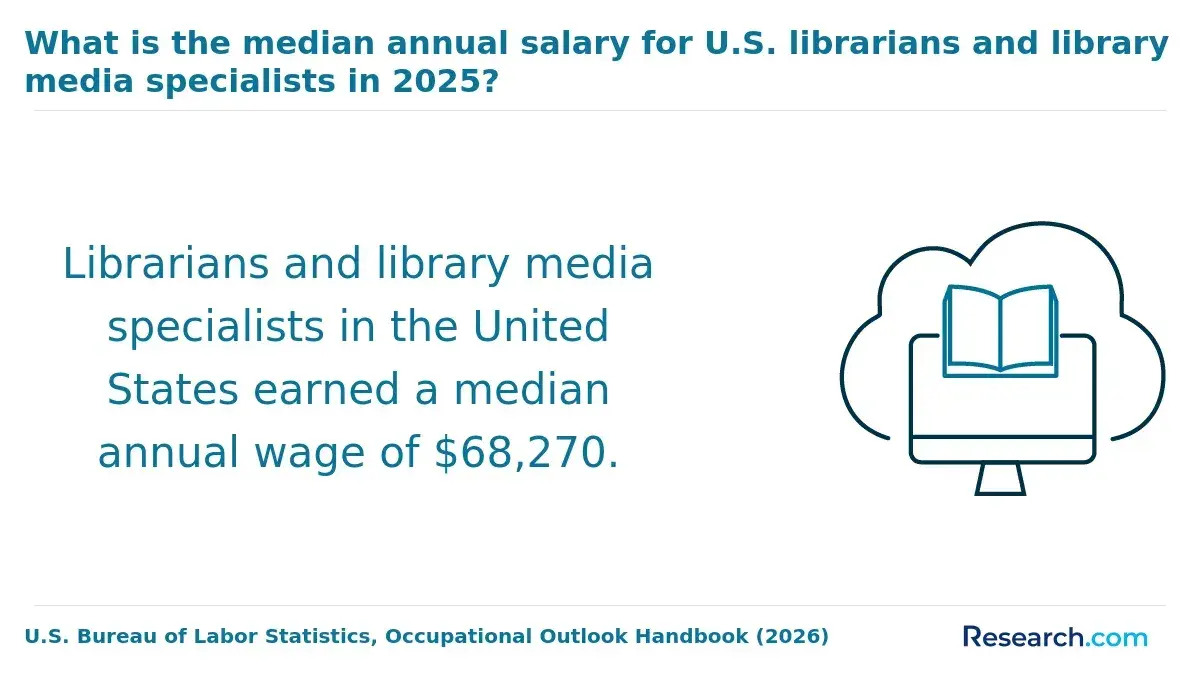
- The May 2025 median annual pay for librarians and media collections specialists was $68,270, but that broad occupation is not a salary estimate for vendor-management jobs or graduates of a particular MLIS program.
What is library technology vendor management in an MLIS career?
Library technology vendor management is the work of selecting, implementing, monitoring, and renewing products or services supplied by outside companies. Depending on the library, those products may include an integrated library system or library services platform, a discovery tool, an e-resource access system, or a digital collections platform.
The job combines library knowledge with operational judgment. A staff member might gather requirements from circulation and technical services, compare product demonstrations, coordinate a data migration, track service problems, or review renewal terms with purchasing and legal colleagues. Decisions also affect patron privacy, accessibility, interoperability between systems, and whether staff can export their data if they change providers.
Responsibilities vary by setting. A small public library may assign vendor relationships to a director or systems librarian; a large academic library may divide them among systems, electronic resources, acquisitions, and procurement teams. An MLIS can supply the library context, but successful vendor management also requires collaboration with people who hold technical, budgetary, and contracting authority.
Which MLIS programs best prepare students for library technology vendor management?
No single MLIS program is automatically best for this work, and a course about library technology is not the same as a formally named vendor-management concentration. The strongest fit is a program whose published curriculum lets you build both systems knowledge and management experience, at a cost and schedule you can sustain.
Start with the current ALA directory for program accreditation. Then inspect the catalog and recent schedules for courses in library systems, electronic resources, information policy, management, and assessment. Ask the program whether you can complete a practicum or capstone involving a system evaluation, implementation plan, or service assessment. A catalog listing establishes that a course exists; it does not establish that it will run before you graduate.
Compare programs on the same terms: required versus elective coursework, recent course availability, access to applied work, delivery requirements, and total estimated expense. A lower-cost general MLIS with a feasible systems project may serve this goal better than a more expensive program with a compelling concentration name but limited access to its relevant electives.
Do library technology vendor managers need an ALA-accredited MLIS degree?
Not universally. Some librarian and library leadership positions require or prefer an ALA-accredited master's degree; systems administration, procurement, and vendor-side roles may accept other degrees or substantial experience. Read actual postings for your target job titles rather than assuming one credential rule applies across employers.
ALA accredits specific master's programs, not every degree offered by an accredited university. An institutionally accredited university may therefore offer a program that is not ALA-accredited. Check the exact degree and program in the current ALA directory, particularly if you hope to move later into professional librarian roles where employers specify that credential.
If your goal is primarily enterprise software procurement or implementation outside libraries, an MLIS may be less direct than relevant work experience or training in information systems, project management, or contracts. If you want to lead technology decisions within a library while preserving access to librarian positions, an ALA-accredited MLIS is often the more versatile choice.
What courses should an MLIS program include for technology vendor management?
Useful coursework should connect product decisions to library service. The categories below describe what to look for in course descriptions; they are not a claim that every MLIS offers these courses or requires them.
| Course area | Connection to vendor-management work |
| Library systems and digital services | Explains how platforms support circulation, discovery, authentication, and staff workflows. |
| Electronic resources and acquisitions | Builds familiarity with licensing, renewals, usage evidence, and access problems. |
| Metadata and information organization | Helps staff assess record quality, data migration, and interoperability between products. |
| Management, budgeting, and assessment | Supports requirements gathering, spending decisions, service evaluation, and communication with stakeholders. |
| Privacy, accessibility, and information policy | Provides a basis for reviewing product risks and involving the appropriate institutional specialists. |
A particularly useful applied assignment produces something you could discuss in an interview: a requirements document, a weighted product comparison, a migration test plan, or a renewal recommendation based on documented service needs. If the program offers a project with an actual library, clarify what data you may use and whether any resulting work can be shared publicly.
Are online MLIS programs suitable for library technology vendor management careers?
Yes, if the online program provides access to the relevant courses and a workable way to gain applied experience. Online study can suit employed students, and vendor meetings, software demonstrations, and systems documentation often involve remote collaboration. Delivery format alone, however, does not tell you whether classes are asynchronous, whether electives fit your schedule, or whether a practicum can be completed locally.
Before enrolling, ask about live-session times, group projects, elective rotation, campus visits, and approval rules for placements at your current workplace. If speed matters, compare an affordable rapid library degree against the time needed to complete the courses and project most relevant to vendor work. The shortest advertised path may be a poor fit if those experiences cannot fit into it.
What are the admission requirements for technology-focused MLIS programs?
Requirements differ by institution, but applicants should expect to document a completed bachelor's degree and submit the materials specified by the individual program, which may include transcripts, a statement of purpose, recommendations, or a résumé. A prior library job or technical background may strengthen an application without automatically replacing a formal admission requirement. Check current policies rather than relying on general MLIS admissions advice.
Use the statement of purpose to connect your experience to a concrete goal - for example, improving e-resource renewals or coordinating a library system change. Applicants without library experience can describe relevant work in software support, purchasing, data quality, or customer service and identify the library-specific knowledge they need to acquire.
If you already have graduate coursework, ask which credits, if any, can transfer into the specific master's program and whether they can satisfy required courses. Undergraduate credits do not ordinarily substitute for graduate MLIS credits. An online librarian degree with prior credits is worth investigating only after you obtain a program-specific evaluation.
How long do MLIS programs cost for aspiring technology vendor managers?
Program length and price depend on required credits, enrollment pace, course sequencing, and whether you pay resident, nonresident, or program-specific online rates. Without a particular school's current tuition schedule and degree requirements, a responsible total-cost figure is not possible. Ask each school for a written estimate covering tuition for all required credits, mandatory fees, materials, and any travel or practicum expenses.
Compare best value MLIS programs using the same assumptions about enrollment and fees. Also distinguish the published program cost from your out-of-pocket cost after confirmed employer support or aid, and from the amount you would borrow. Scholarships and assistantships should count in your plan only when you know you qualify and have received an award.
For return on investment, weigh the expense against jobs you could realistically pursue, what you already earn, and whether employers in your area require an MLIS. Avoid calculating a payback period from a national occupational median: it cannot predict your first offer, promotion, or local hiring prospects.
What jobs can MLIS graduates pursue in library technology vendor management?
Vendor management is often a responsibility within a broader job rather than a standalone title. These roles differ in how much authority they have over purchasing, technical configuration, and service decisions.
| Potential role | Typical vendor-related focus | Credential consideration |
| Systems librarian | Platform configuration, integrations, implementation, and support escalation. | May require an MLIS for a librarian-classified position. |
| Electronic resources librarian | Licenses, access issues, usage review, and renewals. | Often combines librarian qualifications with e-resource experience. |
| Library technology manager | Product planning, budgets, staff coordination, and vendor performance. | Requirements vary with employer and management scope. |
| Vendor implementation or customer success specialist | Helps libraries adopt and maintain a supplier's product. | May value library experience without requiring an MLIS. |
Entry points include e-resources assistance, systems support, acquisitions, and implementation work. Build evidence of what you contributed: a resolved access issue, documented workflow improvement, testing plan, or assessment of a product against user needs. For location-specific decisions, compare postings with guidance on Illinois library jobs with an MLIS; requirements elsewhere, and for nonlibrarian roles, may differ.
How much do library technology vendor management professionals earn?
There is no single U.S. Bureau of Labor Statistics pay category for library technology vendor managers. The closest broad benchmark depends on the position: librarians and media collections specialists had a median annual salary of $68,270 in May 2025. That figure combines many specialties and employers; it is not an MLIS graduate salary or a vendor-management premium.
The same occupation is projected to grow 2.6% from 2025 to 2035. Use that outlook as broad career context, not as a forecast for systems or e-resources openings in your area. Compare actual postings by title, employer type, location, supervisory responsibility, and required technical skills. A guide to library science specializations and pay can provide additional context, but a posted salary range is more useful when evaluating a specific opportunity.
Which certifications and skills improve library technology vendor management prospects?
No single certification is universally required for this work. Evidence that you can manage a product across its life cycle - from requirements and selection through implementation and renewal - is usually more informative than a credential unrelated to the role.
Develop skills in requirements gathering, spreadsheet-based cost comparison, project coordination, accessibility and privacy review, and clear documentation. Technical fluency matters too: understand how library platforms exchange records and how authentication or discovery failures affect users, even if another team manages the underlying infrastructure. For AI-enabled vendor features, learn to ask what patron or staff data the feature uses and how its outputs will be evaluated.
A relevant project-management or procurement credential may help when job postings call for those skills, but check whether employers actually request it before paying for training. In interviews, be ready to explain a decision process, including how you handled conflicting staff needs, uncertainty about a product, and the limits of your authority.
Other Things You Should Know About Library Science
It may, depending on the consortium's agreements and the participating libraries' purchasing rules. Ask which terms are negotiated centrally and which decisions, payments, or local configurations remain each library's responsibility.
No. Treat the statement as evidence to examine, then involve your institution's accessibility specialists and test important tasks where feasible. Accessibility can change as the product changes.
Not without permission. Contracts, prices, security details, or negotiations may be restricted. A fictionalized comparison or a redacted work sample approved by the organization is safer.
That depends on institutional policy and the contract. Library leadership may need to consult IT, privacy, accessibility, legal, and procurement teams before enabling a feature, particularly if it processes patron data.
References
- Part 5 - Publicizing Contract Actions | Acquisition. GOV https://www.acquisition.gov/far/part-5
- Procurement Policy Drafting 101: Guidance for LSC Grantees https://www.lsc.gov/i-am-grantee/grantee-guidance/procurement-policy-drafting-101-guidance-lsc-grantees
- DOJ Guide to Procurement Procedures | ojp.gov https://www.ojp.gov/doj-guide-to-procurement-procedures
- 1.14 Develop Acquisition Strategy - Federal Shared Services https://ussm.gsa.gov/1.14/
- Artificial Intelligence and Privacy - Issues and Challenges | Office of the Victorian Information Commissioner https://ovic.vic.gov.au/privacy/resources-for-organisations/artificial-intelligence-and-privacy-issues-and-challenges/
- Integrated Library System (ILS) | ky.gov https://kdla.ky.gov/Library-Support/directors-toolkit/Pages/IntegratedLibrarySystem.aspx
- MLIS Curriculum, Specialties & Courses | University of Arizona College of Information Science https://infosci.arizona.edu/ma-library-information-science/curriculum-specialties-courses
- Library Science Careers - UW Information School https://ischool.uw.edu/programs/mlis/careers
- MLIS Program Core Competencies - My CIC | University of South Carolina https://sc.edu/study/colleges_schools/cic/internal/graduate/slis/mlis/competencies.php
- Program: Library and Information Science, MLIS - Pitt Catalog https://catalog.upp.pitt.edu/preview_program.php


