
2027 MLIS Programs for Information Services in Financial Companies

Co-Founder and Chief Data Scientist
Choosing an MLIS for a career in finance means looking beyond a program's library courses: you need preparation for business research, licensed information resources, and confidential records. The U.S. Bureau of Labor Statistics reports a May 2025 median annual wage of $68,270 for librarians and media collections specialists, though that figure does not describe finance-specific jobs. This guide helps prospective students and career changers identify useful coursework, evaluate programs and costs, and decide whether an MLIS fits the role they want.
Key Things You Should Know
- Look for documented courses and applied projects in business research, database searching, metadata, and information governance; a relevant elective is not necessarily a formal finance concentration.
- Verify the specific master's program in the ALA directory. BLS projects 2.6% growth for the broader librarians and media collections specialists occupation from 2025 to 2035, not for finance-specific roles.
- Compare required credits, fees, scheduling, and access to relevant experience before enrolling; some financial-information jobs accept credentials other than an MLIS.
What are MLIS programs for information services in financial companies?
These are library and information science master's programs that students use to prepare for research, knowledge-management, records, or information-resource work at banks, insurers, investment firms, and other financial companies. "Financial information services" describes a career goal, not a standard MLIS degree title or a concentration that every school offers.
The work might involve finding reliable company and industry information, helping colleagues use licensed databases, organizing internal knowledge, or managing records under company policies. An MLIS emphasizes finding, evaluating, organizing, and delivering information. A Master of Information or another institution-specific LIS degree may cover similar ground, but its curriculum and accreditation must be checked individually.
Why does ALA accreditation matter for financial information services careers?
American Library Association (ALA) accreditation applies to a qualifying master's program, not automatically to every degree offered by an institution. It is especially worth checking if you want to preserve eligibility for professional librarian positions that specify an ALA-accredited degree. A finance employer hiring for research operations or information governance may instead consider several types of graduate education and experience.
Check the current ALA directory for the specific program and degree you plan to enter. Accreditation does not establish that a school offers finance electives, an internship with a bank, or an online format. Compare those features separately when reviewing online librarian programs with strong outcomes.
What career paths can an MLIS degree open in financial companies?
An MLIS is most directly relevant where a job combines research support, information organization, and service to internal users. The table distinguishes those paths from adjacent roles for which employers may value other qualifications just as much.
| Path | Typical work | How an MLIS fits |
| Business research or information services | Answer research requests; assess sources; teach staff to search licensed resources | Directly relevant, especially with business-research experience |
| Knowledge management | Improve internal search, taxonomies, and access to reusable expertise | Relevant alongside systems and change-management skills |
| Records and information governance | Support retention, retrieval, and controlled access to records | Relevant; legal, compliance, or records experience may also be important |
| Data or product-focused information roles | Define data, improve metadata, or support information products | One possible route; technical or domain-specific degrees may be preferred |
If your target is investment analysis, accounting, or quantitative modeling rather than information services, compare the MLIS with a finance-focused qualification. For information-centered goals, a career focused library information degree is most valuable when its coursework and projects match the work you want to do.
Which MLIS courses prepare students for financial information services?
Start with information retrieval and reference: these develop the ability to turn a colleague's request into a search strategy, evaluate results, and explain limitations. Business information or competitive-intelligence electives, where offered, can add practice with company, industry, and market sources. Database licensing and collection management are useful when the role includes selecting resources or helping staff use them appropriately.
For knowledge-management roles, seek metadata, taxonomy, information architecture, and user-research coursework. For records roles, examine records management, retention, privacy, and information-governance options. Catalog descriptions show what a school has approved, but not whether an elective will run while you are enrolled. Ask about recent offerings, prerequisites, and whether an independent project could address a financial-information problem using public or otherwise authorized data.
Are online or campus-based MLIS programs better for finance careers?
Neither format is inherently better. An online program may let an employed student continue gaining finance experience, while a campus program may make local networking and on-site projects easier. The deciding factor is whether you can complete the relevant courses and applied work within your schedule and budget.
Check whether online classes meet live, whether required courses are offered often enough to support your planned pace, and whether a practicum can be completed near your home or workplace. Online delivery does not, by itself, mean fully asynchronous study or a remote internship. Compare the actual scheduling and expense assumptions behind each MLIS program format and cost before treating flexibility as a benefit.
What are the admission requirements for financial services MLIS programs?
Applicants should expect each university to publish its own graduate admission rules. Common application materials include evidence of a completed bachelor's degree, transcripts, a statement of purpose, and recommendations; test, GPA, language-proficiency, and experience requirements vary. A finance background can strengthen an application, but it does not automatically replace a formal degree requirement.
Use the statement of purpose to connect a specific information-services goal with the program's documented courses or project opportunities. If you have worked in finance, explain the research, records, client-service, or systems problems you handled rather than assuming an admissions committee will recognize the relevance of your job title. Ask the program directly how it evaluates unusual academic histories or prior graduate coursework.
How long do MLIS programs cost and take to complete?
Time to completion depends on required credits, course sequencing, enrollment pace, and any project or practicum. Without a verified school-specific tuition schedule, there is no responsible single price for a finance-oriented MLIS. Compare the published requirements for each program you are considering rather than applying one school's timeline or per-credit rate to another.
For a workable budget, multiply the tuition rate that applies to you by required credits, then add mandatory fees, materials, and any travel or practicum expenses. Ask whether delayed electives could require another term and whether employer support applies to the degree. Scholarships for nontraditional MLIS students may be worth investigating, but eligibility and awards must be confirmed. Keep the full program cost separate from what you would pay out of pocket or finance through borrowing.
What jobs can MLIS graduates pursue in financial companies?
Search beyond "librarian." Relevant postings may use titles such as research specialist, information specialist, knowledge manager, taxonomy specialist, or records analyst. Read the duties before judging fit: the same title can describe anything from answering complex research requests to administering an internal content system.
For entry-level searches, a strong application pairs the job's stated requirements with evidence: a source-evaluation brief, a public-data research guide, a sample taxonomy, or a records-workflow project. Use only information you are authorized to share. If postings consistently require substantial compliance, software, or financial-analysis experience, an MLIS alone is unlikely to close that gap; targeted work experience or a different credential may be the better next step.
How much can financial information professionals with MLIS degrees earn?
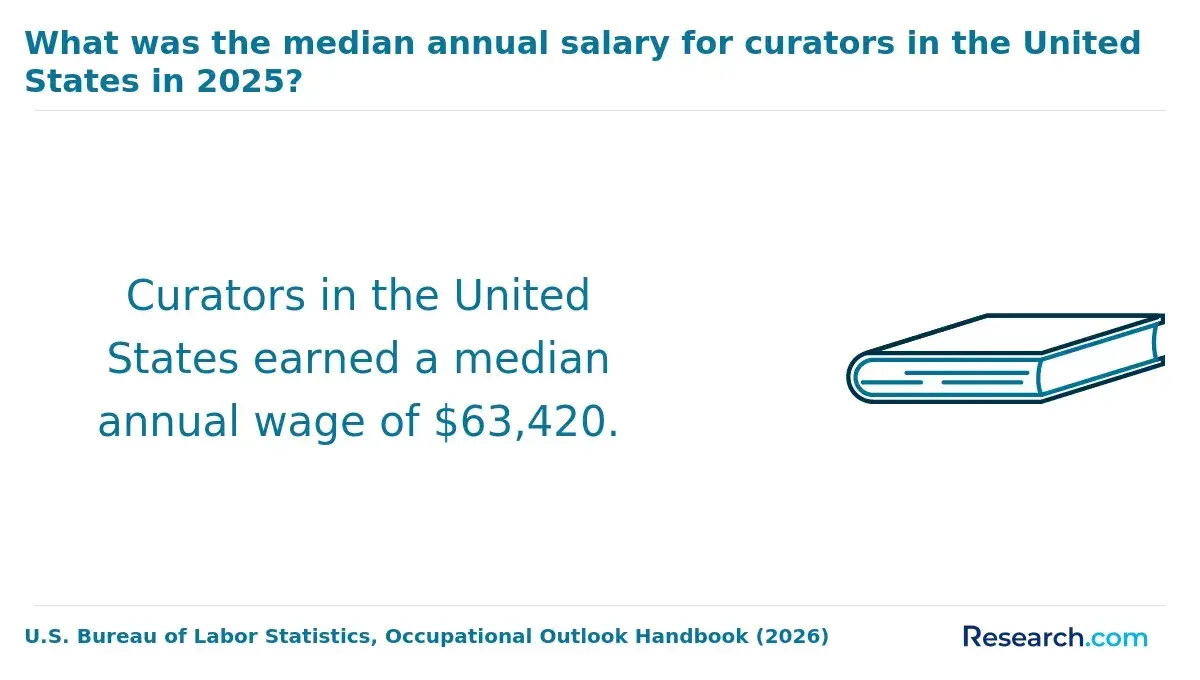
BLS reports a May 2025 median annual wage of $68,270 for U.S. librarians and media collections specialists. It is a useful benchmark for librarian-type work, not a salary estimate for MLIS graduates at financial companies. Research, knowledge-management, and records jobs may fall under different occupational categories, and pay depends on duties, location, employer, and experience.
For a realistic earnings comparison, collect current postings for the exact roles and locations you would pursue, note any disclosed pay ranges, and compare them with your present compensation and projected education costs. An online library degree earnings comparison can provide context, but broad occupational medians cannot establish an individual program's return on investment.
Do financial information specialists need certifications or licenses?
There is no single license required for all financial information-services jobs. An employer may prefer an ALA-accredited MLIS for a librarian role or value records, compliance, technology, or finance credentials for other positions. Those are position-specific preferences or requirements, not interchangeable credentials.
Before paying for an additional certification, review several target job postings and ask whether the credential is required, preferred, or absent. Confirm its prerequisites and renewal obligations with the issuing organization. If the work involves regulated records or confidential client information, expect to follow the employer's policies and applicable rules; an MLIS or optional certification does not authorize someone to provide financial or legal advice.
Other Things You Should Know About Library Science
Only with permission. Confidential findings, client details, internal documents, and licensed database content may be restricted. A project built from public sources is usually easier to share and discuss.
Not necessarily. Search strategy, source evaluation, and clear communication are transferable skills. Ask prospective programs which research tools students can use and whether access continues during applied projects.
No. Records management addresses operational records and retention requirements; archiving focuses on materials selected for long-term preservation and access. Some jobs combine elements of both, so check the duties.
Read publicly available company filings and industry explanations, then practice summarizing unfamiliar terms and checking their meaning against reliable sources. This builds context without assuming that terminology alone qualifies you for an analyst role.
References
- FTC Safeguards Rule: What Your Business Needs to Know https://www.ftc.gov/business-guidance/resources/ftc-safeguards-rule-what-your-business-needs-know
- Privacy Laws, Policies and Guidance - Commerce.gov https://www.commerce.gov/opog/privacy/privacy-laws-policies-and-guidance
- Subscription Databases - Fintech: Financial Technology Research Guide - Research Guides at Library of Congress https://guides.loc.gov/fintech/subscription-databases
- What Can You Do With a Library Science Degree? | Syracuse University Online Master's Programs https://onlinegrad.syracuse.edu/information-science/mslis/library-science-careers/
- Business Databases: By Name | hawaii.edu https://guides.library.manoa.hawaii.edu/business-databases
- Library Science Careers - UW Information School https://ischool.uw.edu/programs/mlis/careers
- online Master of Library and Information Science | DEN-EDU https://morgridgeonline.du.edu/online-mlis-program/
- Master of Library and Information Science (MLIS) | umd.edu https://info.umd.edu/academics/masters-programs/master-of-library-and-information-science/
- Top 9 Business Information Sources - Research Guides https://guides.lib.calpoly.edu/top9businessinformationresources
- Yale University Library Research Guides: Business & Management Research Guide: Databases and Sources by Title https://guides.library.yale.edu/business/list


