2027 MLIS Programs With Alternative Evidence of Quantitative Preparation

Co-Founder and Chief Data Scientist
A statistics prerequisite can complicate an MLIS application if your quantitative skills came from work, research, or independent study rather than a transcript. That distinction matters when choosing a program, admissions flexibility is useful only if the degree also fits your career and budget.
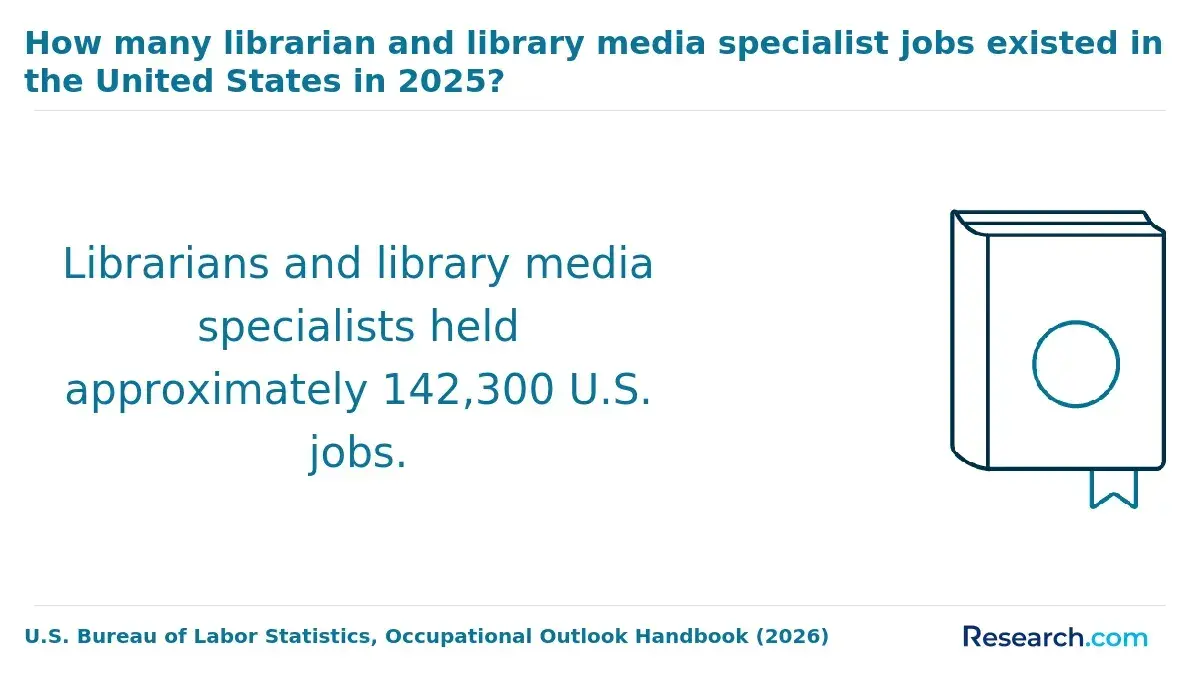
The U.S. Bureau of Labor Statistics projects 2.6% employment growth for librarians and media collections specialists from 2025 to 2035, so applicants should evaluate preparation alongside realistic job prospects. This guide explains how to document your skills, verify school-specific policies, and compare programs without mistaking flexibility for guaranteed admission.
Key Things You Should Know
- An MLIS program without a published statistics prerequisite is not necessarily a program that grants prerequisite waivers; ask admissions to confirm which policy applies to you.
- Work projects, research methods, and prior coursework can demonstrate quantitative readiness, but acceptance of that evidence is school-specific and does not replace a required bachelor's degree.
- Compare the full cost and career fit, not just admission flexibility, the May 2025 median annual wage for librarians and media collections specialists was $68,270, a national occupational figure rather than a graduate salary guarantee.
What are MLIS programs that accept alternative evidence of quantitative preparation?
These are graduate library and information science programs whose admissions process permits applicants to show relevant quantitative ability through evidence other than a designated statistics course. That might mean the program has no statistics prerequisite, allows an equivalent course, or considers an individual waiver request. Those are different policies: having no prerequisite requires no substitution, while accepting alternative evidence requires a decision about your particular record.
Quantitative preparation can matter for evaluating library services, interpreting research, managing collection data, or supporting research data projects. It does not follow that every MLIS applicant needs advanced mathematics. A flexible library information degree may offer different ways to develop skills, but its learning format alone does not establish an admissions waiver or award credit for work experience.
No named program should be treated as a confirmed alternative-evidence option without its current admissions policy or an individual written response. Search program requirements for the exact degree offered - MLIS, MLS, Master of Science in Library Science, or another LIS degree - then distinguish a published policy from a discretionary exception.
Which MLIS programs are accredited and recognize nontraditional quantitative experience?
ALA accreditation applies to specific master's programs, not automatically to every degree at an accredited university. Recognition of professional or nontraditional quantitative experience is a separate admissions question. Without current, program-specific confirmation of both, it would be misleading to name a school as meeting both conditions.
Use the current American Library Association directory to confirm the exact master's program and its accreditation status. Then ask that program's admissions office whether it evaluates work-based analysis, research projects, professional training, or other prior learning in place of any stated quantitative prerequisite. Request the answer in writing and ask whether it applies to your intended entry term. Accreditation does not establish a particular waiver policy, elective, internship, or online format.
If school librarianship is your goal, check certification or endorsement rules with the state education authority as well. ALA program accreditation and eligibility for a state school librarian credential answer different questions.
What are the admission requirements for MLIS programs without standard statistics prerequisites?
Requirements vary by institution, but applicants commonly need a completed bachelor's degree, transcripts, an application, and materials such as a statement of purpose, résumé, or recommendations. A program may have no stand-alone statistics prerequisite yet still expect evidence that you can interpret research or complete its graduate coursework. An undergraduate major outside library science is not, by itself, evidence of inadequate preparation.
The policy distinction below helps applicants avoid relying on an exception a program has never offered.
| Published approach | What it establishes | What remains uncertain |
| No quantitative prerequisite listed | No specified course is identified as an admission condition | Whether particular courses expect prior quantitative skills |
| Equivalent coursework accepted | A different academic course may satisfy a stated requirement | Whether your course content and grade qualify |
| Waiver or individual review available | Applicants may request an exception or assessment | Whether your evidence will be approved |
| Prerequisite must be completed | The course remains an admission or enrollment condition | Whether conditional admission is available |
Before paying an application fee, send admissions the relevant requirement, a short description of your background, and a direct question: "Would this evidence satisfy the quantitative prerequisite for my intended entry term, or must I complete a course?" Ask when any decision will be made and whether it will be recorded in your application file. Professional experience should not be assumed to substitute for a required bachelor's degree.
How can applicants demonstrate quantitative readiness through work or prior learning?
Strong evidence shows what you did, which methods you used, and how you interpreted the results. A job title such as "analyst" is less informative than a documented project that explains your role. Choose examples relevant to library work where possible, without implying that experience automatically earns academic credit.
A compact evidence packet can give an admissions reviewer enough detail to assess your preparation without requiring confidential employer data:
- A résumé entry describing your responsibility for a survey, budget, dataset, or performance report.
- A brief project summary identifying the question, data source, analytical method, and decision informed by the findings.
- Transcripts or syllabi for research-methods, economics, data-analysis, or other potentially equivalent courses.
- Certificates or training records accompanied by an explanation of the assessed work, if any.
For example, an applicant who analyzed library program attendance could describe how they cleaned records, compared participation across periods, and communicated the limits of the data. Remove patron identifiers and proprietary information from any sample. If your evidence is thin, completing a suitable course before applying may be more reliable than seeking a discretionary waiver.
What do students study in an MLIS program with flexible quantitative requirements?
Flexible admission does not mean avoiding evidence-based work in the degree. MLIS curricula commonly address information organization, reference and research services, information access, and professional issues. Depending on the program and electives, students may also study assessment, research methods, digital collections, metadata, or data management. A catalog listing shows that a course exists, not that it will be offered when you need it.
Match coursework to your intended role. For public library assessment, look for opportunities to evaluate services and explain findings to stakeholders. For digital collections, investigate metadata and preservation coursework; metadata is structured information used to describe and help people find resources. For research data support, seek relevant methods instruction and an applied project. Confirm whether each opportunity is required, elective, or available only through an individually arranged project.
Applicants concerned about quantitative coursework should request a recent syllabus for any required research-methods or assessment class. That gives a clearer picture of expected skills than either the admissions policy or a course title alone.
Are online MLIS programs suitable for students seeking flexible quantitative preparation options?
They can be, particularly when commuting would limit your choices. Online delivery, however, says nothing by itself about prerequisite waivers. It also does not guarantee self-paced study: classes may meet live, group projects may require coordination, and internships may need an approved local site.
Ask whether required courses are asynchronous or scheduled, how frequently they run, and whether a quantitative skills course can be completed before or during enrollment. Students considering an accelerated one year library degree should pay particular attention to course sequencing: a missing prerequisite or infrequently offered requirement can disrupt a compressed schedule. If you work full time, a longer part-time route may provide more room to build skills and complete applied projects.
How long do these MLIS programs take, and how much do they cost?
Time to completion depends on required credits, course load, course availability, and any practicum or prerequisite you must finish. Published tuition cannot be compared fairly without those details. No single price or duration applies to programs with flexible quantitative admissions, and admission flexibility does not imply lower tuition.
For a usable cost comparison, request the same components from each institution. The categories below distinguish the advertised price from expenses that may affect what you pay.
| Cost component | Why it matters |
| Tuition per credit and required credits | Together they determine the base tuition estimate for your enrollment status |
| Mandatory and online fees | These can add costs beyond advertised tuition |
| Materials, equipment, and travel | These vary with course requirements and any in-person activities |
| Additional terms or prerequisite courses | Course sequencing can increase both elapsed time and expense |
| Grants and employer support | Eligibility affects personal cost but is not guaranteed |
Calculate gross program cost first, then subtract aid or employer support you are eligible to receive; track borrowing separately because financed cost can exceed the amount initially billed. Do not assume online students receive resident tuition. For an affordable part time MLIS, compare the total price across all required terms, not just the charge for one semester. Confirm current aid eligibility and loan terms with each financial aid office before relying on borrowed funds.
What careers can graduates pursue after completing an MLIS program?
Graduates may pursue professional librarian roles in public, academic, special, government, medical, or law libraries. Work can involve reference assistance, teaching information literacy, developing collections, organizing resources, or assessing services. Archives, records management, metadata, digital preservation, and research data support are additional pathways, but job qualifications vary; an MLIS is not required for every information-management position.
Choose applied work that matches the job you want rather than treating admission flexibility as a career specialization. A service-assessment project can demonstrate quantitative communication for library management; a documented metadata project can support applications for digital collections work. Archives employers may value hands-on arrangement and description experience, while some specialized library positions may prefer subject expertise or additional credentials. School librarian roles can require state-specific certification.
If you are comparing high earning library information careers, examine actual job descriptions for required experience before choosing electives. A certificate, targeted training, or relevant work experience may be a better investment than an MLIS when your desired role does not call for the degree.
What salaries and job prospects can MLIS graduates expect?
The U.S. Bureau of Labor Statistics reports a May 2025 median annual wage of $68,270 for librarians and media collections specialists and projects 2.6% employment growth for that occupation from 2025 to 2035. Those figures describe a national occupation, not starting pay, a specific library setting, or outcomes for any MLIS program. They are most useful as context when compared with local openings, your existing earnings, and the cost of the degree.
Related jobs can have different pay and qualification patterns. For example, the May 2025 median for library technicians was $44,580; technician positions are generally distinct from professional librarian roles. Do not use a technician salary to estimate the return on an MLIS, or assume a professional position will be available immediately after graduation. Relevant experience, location, employer budgets, and the type of role all affect an individual job search.
How should students choose a reputable MLIS program with flexible admissions policies?
Start with your intended job and the admissions obstacle you need resolved. Shortlist programs whose exact degrees meet your credential needs, verify ALA accreditation where relevant, and obtain a written answer about your quantitative evidence. Then compare required coursework, access to relevant electives, applied learning, scheduling, and full cost on the same basis.
A lower advertised price is valuable only if the program also meets your goals. A regional search for affordable library information science South options can help generate candidates, but confirm current tuition, residency rules, accreditation, and admissions policies directly with each school. Ask how often your needed courses have run recently and whether an internship can be completed where you live; neither a catalog entry nor online delivery guarantees those arrangements.
If several programs satisfy your career requirements, favor the one whose admissions decision is clear, schedule is workable, and total cost is manageable. If none will accept your current evidence, a prerequisite course or another targeted credential may be a more practical next step than applying on the assumption that experience will be waived.
Other Things You Should Know About Library Science
GRE policies vary by program and entry term. Check the current admissions page for your exact degree; a quantitative prerequisite policy does not tell you whether standardized test scores are required.
Not generally. Applicants enter LIS graduate study from many academic backgrounds, though each school sets its own degree and transcript requirements.
Possibly, subject to the program's graduate transfer-credit rules, course equivalency review, and limits. Prior work experience and undergraduate credits are not automatically graduate transfer credits.
Some programs may offer conditional admission, while others require completion before enrollment or application review. Ask for the deadline and conditions in writing before making plans.
References
- online Master of Library and Information Science | DEN-EDU https://morgridgeonline.du.edu/online-mlis-program/
- Program: Library and Information Science, MLIS - Pitt Catalog https://catalog.upp.pitt.edu/preview_program.php
- MBA Test Waivers and GMAT Quant Flexibility | Duke's Fuqua School of Business https://www.fuqua.duke.edu/mba-test-waivers-gmat-quant-readiness
- On-Campus Graduate Program Admissions | UC Berkeley Public Health https://publichealth.berkeley.edu/admissions/on-campus
- Library Science Master's Online - UW Information School https://ischool.uw.edu/programs/mlis/degree-options/online
- Test Waiver & Quantitative Readiness Course | umich.edu https://michiganross.umich.edu/graduate/online-mba/admissions/application-requirements/test-alternatives
- Graduate Admission Requirements | maryville.edu https://catalog.maryville.edu/content.php
- Accreditation Frequently Asked Questions | ALA https://www.ala.org/educationcareers/accreditedprograms/faq