
2027 MLIS Programs for Research Data Publishing Support

Co-Founder and Chief Data Scientist
Choosing an MLIS for research data publishing means looking beyond a program's degree title. You need coursework and hands-on experience that prepare you to help researchers describe, share, preserve, and cite datasets. The U.S. Bureau of Labor Statistics reports a May 2025 median salary of $68,270 for librarians and media collections specialists, but that broad figure is not a salary estimate for data specialists. This guide helps prospective students and career changers assess curricula, accreditation, cost, and career fit before committing to a program.
Key Things You Should Know
- Look for documented research data coursework and an applied project; a relevant elective is not the same as a formal concentration.
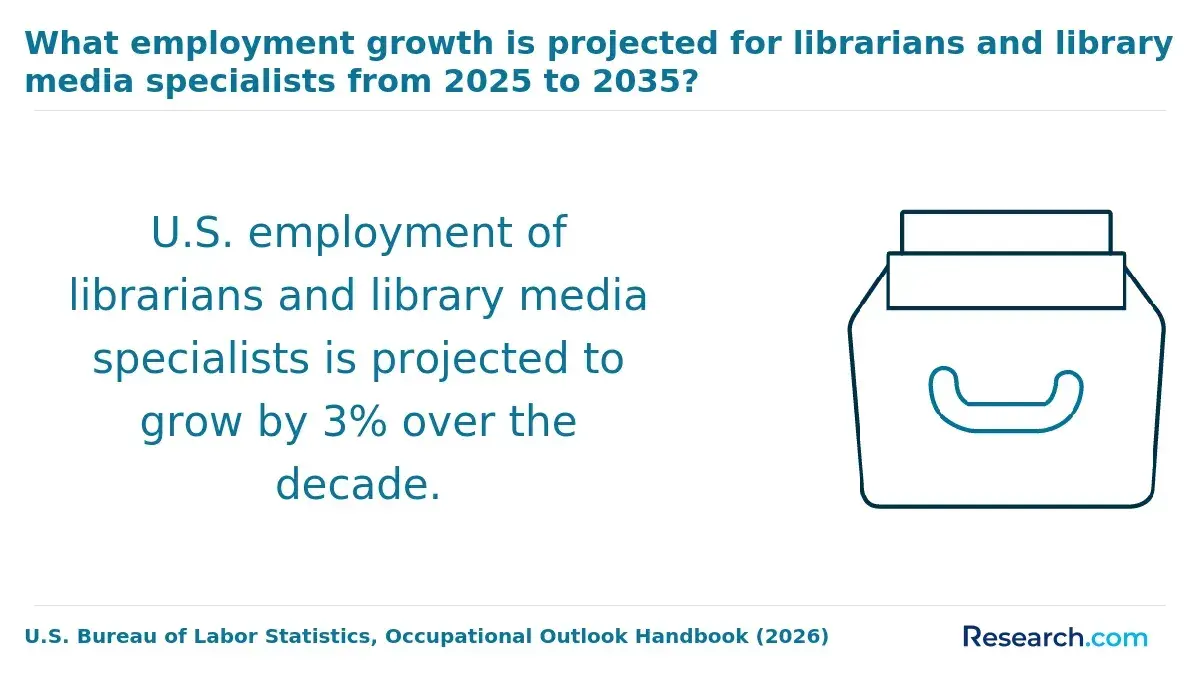
- Verify accreditation for the specific master's program and ask when specialized electives run. The broader librarian occupation is projected to grow 2.6% from 2025 to 2035, not uniformly across data-support roles.
- Compare the full degree cost with the qualifications in jobs you want; repository and data-management positions may also accept experience or degrees outside LIS.
What are MLIS programs for research data publishing support?
These are library and information science master's programs that can prepare students to help researchers make datasets discoverable, reusable, and responsibly available. The work can include advising on data management plans, selecting repositories, creating metadata, assigning or checking persistent identifiers, documenting reuse conditions, and planning for preservation.
"Research data publishing support" usually describes a career focus, not a standard MLIS concentration name. Schools may award an MLIS, MLS, Master of Information, or another institution-specific degree. What matters is the verified curriculum and applied preparation - not whether the degree title contains a particular phrase. The role also differs from conducting the research or performing advanced statistical analysis, although familiarity with researchers' methods helps.
Which MLIS programs offer research data management and publishing coursework?
Without checking a current catalog and schedule for each school, no named program should be treated as having a guaranteed research data pathway. Start with programs you can afford and attend, then compare their published evidence at the same level. This distinction helps prevent a course title from being mistaken for a complete specialization.
The table shows what different kinds of program evidence establish - and what they do not.
| Published evidence | What it establishes | What to verify next |
| Named concentration or track | The school formally identifies a pathway | Its requirements and whether relevant courses are scheduled |
| Research data or scholarly communication elective | A relevant course appears in the curriculum | When it last ran and whether MLIS students can enroll |
| Practicum, capstone, or independent study | A possible route to applied work | Whether a data-focused project and suitable supervisor are available |
| General metadata or digital libraries coursework | Foundational alignment | Whether students can apply those skills to research datasets |
Ask a program director for a recent course schedule, sample project options, and any enrollment restrictions. If price narrows your shortlist, a fast affordable information science degree is worth investigating - but only after confirming that its timeline leaves room for the electives and experience you need.
How important is ALA accreditation for research data support careers?
ALA accreditation can matter substantially when applying for academic librarian positions: some employers specify a master's degree from an ALA-accredited program. It is not a universal requirement for every repository, research administration, or data-management job, where employers may accept other graduate training and relevant experience.
Check the specific master's program in the current American Library Association accreditation directory. A university's institutional accreditation does not establish ALA accreditation for its LIS degree. Conversely, ALA accreditation does not verify that a research data elective runs regularly, an internship is available, or an online student can complete every desired activity remotely. Read postings for your target roles before deciding how heavily to weigh the credential.
What do students learn in research data publishing support programs?
Strong preparation combines service skills with an understanding of the data lifecycle. Students should be able to translate a researcher's needs into practical guidance, while recognizing when legal, security, or disciplinary questions require another specialist.
The most useful curriculum connects these skills rather than treating dataset publication as simply uploading a file:
- Data management: organize files, document methods, plan storage and retention, and advise on data management plans.
- Metadata and discovery: describe datasets consistently and explain how identifiers and repository records help others find and cite them.
- Publishing and access: assess repository fit, licensing, versioning, accessibility, and limits on sharing sensitive information.
- Preservation and support: consider sustainable formats and documentation, then teach researchers workable practices.
A useful portfolio project might pair a sample dataset with a README, metadata record, repository selection rationale, and access decision. Anonymize or obtain permission for any real research materials; a polished example is more persuasive when you can explain the decisions behind it.
Are online MLIS programs effective for research data publishing careers?
Online study can be effective if it provides access to the relevant courses, instructor feedback, and an applied project. Data documentation, metadata creation, and researcher consultations can all be practiced remotely. Delivery format alone, however, says little about the depth of that experience.
For a library science program for working adults, check whether classes are asynchronous or require live attendance, whether desired electives overlap, and how often they are offered. Ask whether you can arrange a project with a local research library or repository and whether supervision can be remote. Do not assume "online" means no campus visits or that an internship can be completed from anywhere; confirm the current requirements in writing.
What are the admission requirements for research data-focused MLIS programs?
Applicants should expect each university to publish its own graduate admission requirements, including the required prior degree, transcripts, application materials, and any language-proficiency rules that apply. Research experience may strengthen an application, but it should not be assumed to replace a formal eligibility requirement.
A focused statement of purpose can connect prior work - such as lab documentation, repository assistance, metadata, or researcher training - to specific courses and projects. Applicants considering a one year information science degree should also ask whether the intended electives fit its course sequence. A faster general degree is not necessarily a faster route to specialized preparation.
How long do MLIS programs for research data support take and cost?
Time and price depend on a program's required credits, course sequence, enrollment pace, and published tuition and fees. There is no reliable specialization-wide price: even programs with similar per-credit tuition can differ in required credits or charges. A needed elective offered infrequently can also extend a student's timeline.
Build a comparison using required credits × applicable tuition per credit, then add mandatory fees, books or software, and any travel or practicum costs. Confirm whether online tuition differs by residency and whether a project adds a term. An affordable library degree completion plan should account for those costs, not just the advertised tuition rate.
Keep gross program cost separate from what you personally pay after confirmed employer support or awards, and from what you would borrow. Ask each financial aid office about eligibility and loan terms for your expected enrollment period. Compare that financial commitment with actual qualifications in roles you would pursue, rather than assuming the degree will produce a particular salary increase.
What careers can an MLIS graduate pursue in research data publishing?
Potential titles include research data librarian, data services librarian, scholarly communication librarian, repository specialist, and data curator. Responsibilities differ: one position may emphasize consultations and teaching; another may focus on ingesting datasets, improving metadata, or coordinating preservation and access. Universities and research libraries are relevant settings, but research organizations and repositories may use different titles and qualification rules.
For librarian postings, an ALA-accredited master's may be required or preferred. Repository and adjacent information-management roles may accept another degree paired with technical or disciplinary experience. If the roles you want are among information science jobs with high qualifications, compare several actual postings before choosing coursework. Note which requirements are essential, which are preferred, and whether employers value consultation experience, repository systems, scripting, or a research background.
An entry point can be a graduate assistantship, supervised repository project, or existing library or research-support job with data-related responsibilities. If postings in your preferred area prioritize computational analysis over librarian services, a different graduate degree or targeted technical training may be a better fit than an MLIS.
How much do research data and scholarly communication professionals earn?
There is no single federal salary category for "research data publishing professional." The Bureau of Labor Statistics occupations below offer U.S. context, but each covers jobs beyond this specialty. They should not be read as MLIS graduate outcomes or offers for particular job titles.
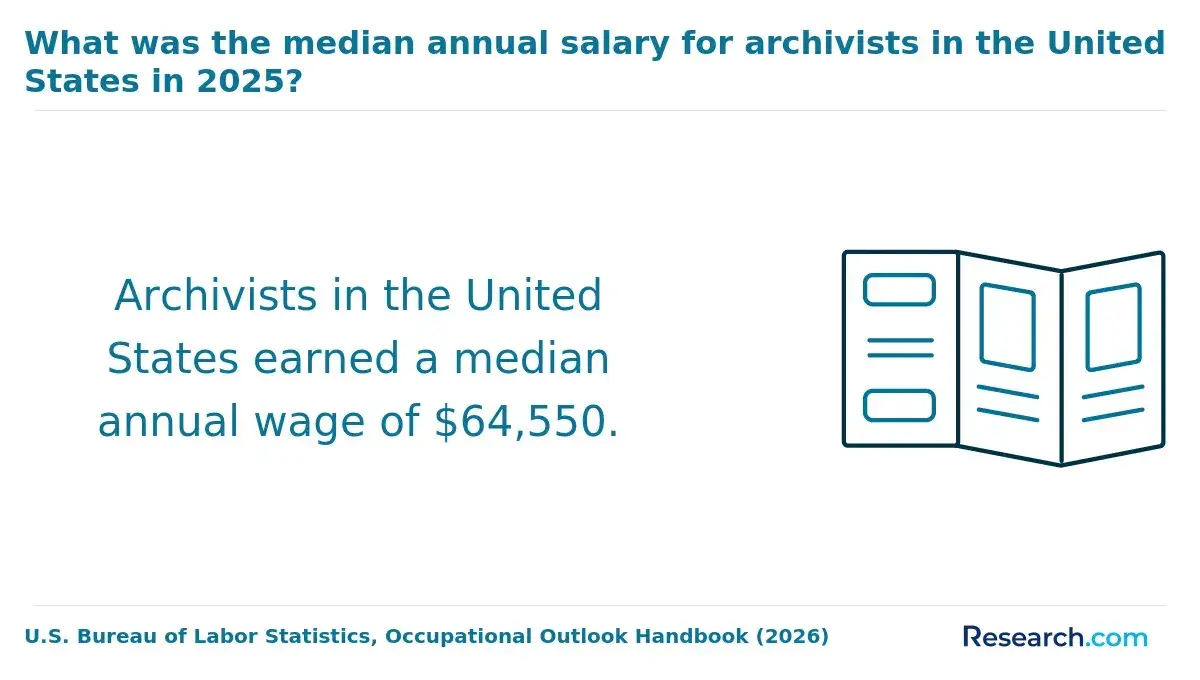
| BLS occupation | Median annual salary, May 2025 | Projected employment change, 2025-2035 |
| Librarians and media collections specialists | $68,270 | +2.6% |
| Archivists | $64,550 | +3.4% |
The librarian figure is the closer broad benchmark for a data services librarian; the archivist figure may help contextualize preservation-oriented work. Neither isolates research data jobs. For a useful personal estimate, review current postings in your target location and setting, noting salary ranges, required credentials, and whether the position is primarily service, technical, or managerial.
What certifications and professional standards support research data publishing careers?
No single optional certification substitutes for the degree or experience a particular employer requires. Standards and community practices are often more immediately useful: data citation and persistent identifiers help connect datasets to publications; appropriate metadata improves discovery; and repository policies shape access and preservation decisions.
Learn the standards used by repositories and research communities you hope to support, then demonstrate them in a project. You should be able to explain, for example, why a dataset needs a clear README, how a persistent identifier differs from a descriptive title, and when sensitive data cannot be made openly downloadable. Evaluate short courses or certificates by their practical exercises and employer relevance rather than assuming a credential is universally recognized.
Other Things You Should Know About Library Science
No. A dataset can have a discoverable description while access to its files is restricted. Sharing must account for consent, privacy, agreements, and applicable institutional policies.
A dataset DOI identifies a research output so it can be found and cited. A researcher identifier, such as an ORCID iD, identifies a person and helps connect that person to their work.
Yes, if the dataset's terms permit your intended use. Publicly available does not always mean unrestricted; check the license, cite the source, and avoid presenting others' work as your own.
No. A disciplinary repository may provide more suitable metadata, community visibility, or deposit guidance. Repository choice should reflect the data type, funder or publisher requirements, access controls, and preservation arrangements.
References
- IES Releases a New Public Access Plan for Publications and Data Sharing: What You Need to Know | IES https://ies.ed.gov/learn/blog/ies-releases-new-public-access-plan-publications-and-data-sharing-what-you-need-know
- Practices of research data curation in institutional repositories | nih.gov https://pmc.ncbi.nlm.nih.gov/articles/PMC5354423/
- Understanding Metadata: A Key to Data Sharing and Reuse | nih.gov https://www.niaid.nih.gov/research/understanding-metadata-key-data-sharing-and-reuse
- Selecting a Data Repository | Grants & Funding https://grants.nih.gov/policy-and-compliance/policy-topics/sharing-policies/dms/selecting-a-data-repository
- Data Management Planning | National Agricultural Library https://www.nal.usda.gov/services/data-management-planning
- Master of Library and Information Science (MLIS) | du.edu https://morgridge.du.edu/academics-advising/programs-gr/mlis-library-and-information-science
- RDMC Data Management Guide: Metadata Rules - Help - UNC https://tdx.unc.edu/TDClient/33/Portal/KB/ArticleDet
- The FAIR Guiding Principles for scientific data management and stewardship | Scientific Data | Nature Index https://www.nature.com/articles/sdata201618
- Master of Library & Information Science (MLIS) | UCLA School of Education & Information Studies https://seis.ucla.edu/academics/department-of-information-studies/master-of-library-information-science-mlis/
- Open Access: Sharing Works in a Repository - Library Guides https://guides.library.sc.edu/openaccessresources/repositories


