
2027 Research Funding Analysis Capstones: What to Look for in a Data Science Master's

Co-Founder and Chief Data Scientist
A research funding analysis capstone can turn a data science master's into a portfolio project for work in universities, funding agencies, and research organizations. But a program's promise of "real-world projects" does not tell you whether you can access suitable funding data, work with a relevant advisor, or complete a defensible analysis. This guide helps prospective students distinguish a viable capstone opportunity from a topic they may have to pursue on their own - and weigh that opportunity against program cost, format, and career goals.
Key Things You Should Know
- Prioritize programs that allow a student-proposed capstone and can confirm access to an advisor, suitable data, and a clear approval process; a required capstone alone does not guarantee this topic is available.
- A strong project separates funding applications from awards, accounts for changes over time, tests its methods on appropriate data, and states what the results cannot establish.
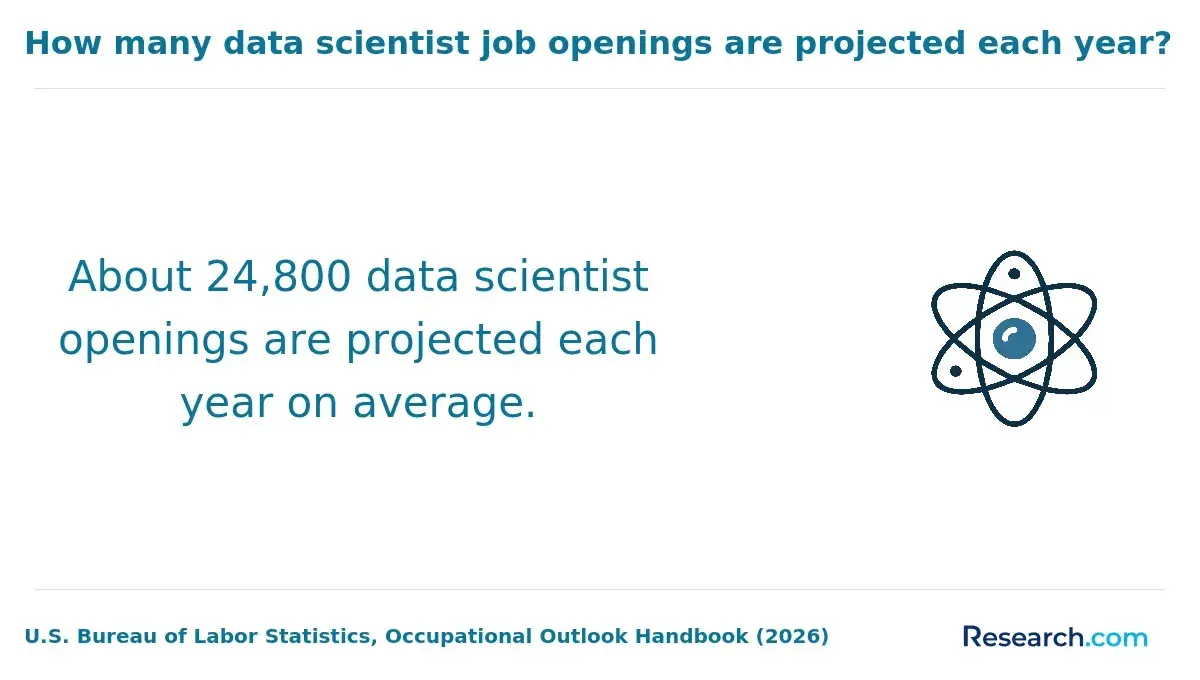
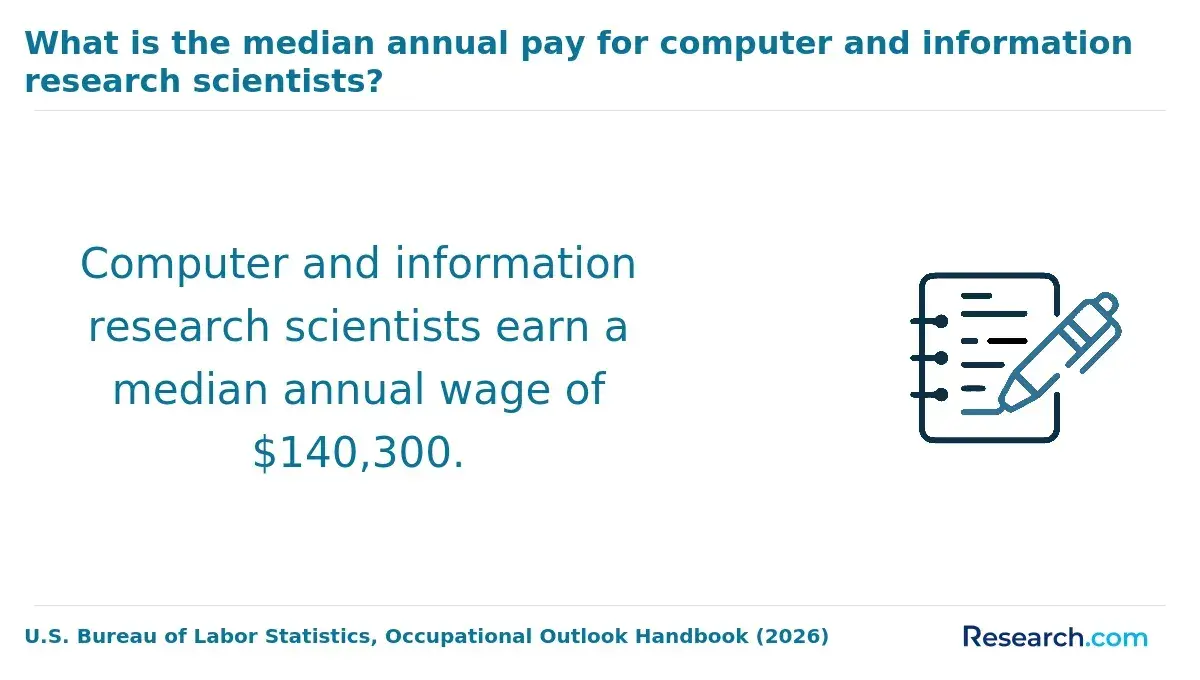
- The U.S. Bureau of Labor Statistics reports a $120,230 median annual wage for data scientists in May 2025, but that occupation-wide figure is not a salary forecast for research funding analysts or program graduates.
What is a research funding analysis capstone in a data science master's program?
It is a supervised project that uses data science methods to answer a specific question about how research money is sought, awarded, distributed, or used. A student might examine changes in awards across research fields, forecast an institution's funding pipeline, or build a dashboard that helps administrators spot gaps in their award records. The deliverable should be an analysis someone can assess and use - not simply a collection of charts.
The distinction between applications and awards is fundamental. Award records can show who received funding; without application records, they generally cannot show who applied or calculate an award success rate. Likewise, a pattern in historical awards does not establish why a funder made a decision.
A credible capstone connects several components into one answer:
- Question and stakeholder: Identify the decision the analysis informs, such as where a research office should investigate changes in its funding portfolio.
- Data and permission: Document the source, coverage, missing records, and any restrictions on proposals, applicant details, or internal financial information.
- Method and evaluation: Choose a method suited to the question and test it against a relevant baseline or withheld data, rather than selecting a complex model for its own sake.
- Usable output: Provide reproducible code, a data dictionary, and a report or dashboard that explains limitations to a nontechnical stakeholder.
Public award records may support a project without a formal partner. Questions involving unsuccessful applications, proposal text, or internal budgets are more likely to require institutional cooperation and approval. That difference can determine whether a proposed topic is feasible within a capstone term.
How do data science master's programs prepare students for research funding analysis?
The best preparation combines statistical reasoning, data management, and a project process that permits domain-specific questions. Students need to join inconsistent records, define meaningful measures, handle time periods carefully, and explain findings to people who manage research rather than build models. Faculty supervision or a research-office partner can help students recognize when an apparently straightforward funding metric is misleading.
Before enrolling, ask for the capstone handbook or project approval criteria. Find out whether students can propose their own topic, whether external or university partners are required, who approves data use, and what happens if a partner withdraws. Ask to see anonymized examples of completed projects and their evaluation criteria. A program that offers only assigned sponsor projects may be excellent, but it is a weaker fit if completing this specific topic is your main reason for enrolling.
A promising sign is a capstone process that allows time for data acquisition and revision before final modeling. A warning sign is an expectation that students will secure restricted institutional records independently after the project has begun.
What skills do students develop through a data science research funding capstone?
A well-scoped project can demonstrate skills beyond model building: translating an administrative question into measurable outcomes, reconciling records, evaluating uncertainty, and communicating results responsibly. The portfolio value lies in showing how decisions were made when the data were incomplete or the question could not support a causal answer.
The examples below connect common analytical work to the evidence a completed capstone could produce. Not every project needs every method.
| Analytical work | Possible capstone evidence | Important limitation |
| Record linkage and data cleaning | Documented joins among awards, investigators, institutions, and research categories | Name changes and inconsistent identifiers can produce false matches. |
| Trend analysis and visualization | A reproducible report showing changes by year or field | Changing categories or award values can distort comparisons. |
| Prediction or classification | A model compared with a simple baseline on later, withheld records | Historical performance may not hold when funding priorities change. |
| Stakeholder communication | A dashboard or briefing that defines metrics and uncertainty | An appealing display can still encourage unsupported conclusions. |
Where applications or applicant characteristics are involved, privacy and fairness become part of technical quality. A model trained on historical awards could reproduce past disparities; it should not be presented as an objective measure of which proposals deserve funding. Students interested in the infrastructure behind such analyses can also compare graduate AI study with data pipeline coursework, while checking whether a program still permits a funding-focused final project.
Which courses support research funding analysis in data science master's programs?
Look for a combination of database systems or data engineering, applied statistics, machine learning, and data visualization. Research funding records often require substantial preparation before analysis, so a program focused mainly on algorithms may leave a student to learn record linkage and data quality practices alone.
Course titles are a starting point, not proof of depth. A database course is more useful for this topic if students design repeatable data pipelines or work with messy records. A statistics course should address uncertainty and study design, not just software commands. For projects that compare funding across years, coursework in longitudinal analysis or forecasting may be valuable; for proposal text, natural language processing may be useful only if text can legally be accessed and analyzed.
Compare syllabi and assignments with the capstone requirements. If the program offers electives, check that the relevant courses run often enough to take before the project begins. An advanced elective scheduled after the capstone will not solve a preparation gap.
How do online and campus-based programs differ for capstone research?
Neither format inherently provides better funding data or supervision. The consequential differences are how students meet advisors, obtain partner introductions, access university systems, and coordinate project reviews. An online program can work well for a student using public records or an approved dataset from an employer. Campus access may matter more when the project depends on a local research office or in-person collaboration.
Ask whether online students may propose the same topics as campus students, use the same data resources, and meet with faculty at workable times. Confirm any synchronous presentations, group-work requirements, or campus visits before assuming the project can be completed remotely. For working students, data science master's timelines and cost trade-offs matter because a faster schedule may leave less time to obtain permissions and revise an analysis.
Choose the format that gives you reliable project support within your schedule. A convenient delivery mode is less valuable if its capstone process does not accommodate a student-proposed research funding question.
What admission requirements apply to data science master's programs?
Requirements vary by institution. Programs may assess a bachelor's degree, quantitative coursework, programming experience, academic records, recommendations, or a statement of purpose. A background in research administration can strengthen an applicant's proposed project, but it does not automatically satisfy a program's mathematics or coding prerequisites.
Applicants should separate admission requirements from preparation for the capstone. Someone comfortable with grant workflows but new to Python or statistics may need preparatory study; someone with strong technical skills may need to learn how funding records are defined and governed. Ask admissions staff which prerequisites are formal conditions, which can be completed after admission, and whether prior coursework or professional work counts. For applicants comparing adjacent technical degrees, AI master's routes with additional preparation offer another way to examine foundation-course options, though capstone flexibility still needs separate verification.
How long do data science master's programs take and what do they cost?
Program length and price depend on credit requirements, enrollment pace, tuition policy, and fees; there is no responsible single estimate for programs that might support this capstone. Compare each school's current published requirements and tuition schedule using the same intended enrollment pace. Then check whether the capstone must be completed in a particular term and whether an unfinished project could require additional enrollment.
Build a budget that separates tuition from mandatory fees, software or equipment, possible travel, and income forgone if you reduce work hours. If a project needs access to restricted data, confirm that any required training or on-site work fits your budget and schedule. Financial aid and employer support may change the amount you pay, but eligibility and funding are not guaranteed; understanding aid for data science graduate programs can help frame those questions.
The common mistake is comparing advertised tuition alone. For this topic, a less expensive program without a workable approval process could be a poorer value than a program where the project is feasible - though that advantage should be confirmed before paying a deposit.
How should students evaluate accreditation and academic quality?
Confirm the institution's current accreditation through the accreditor and an official U.S. Department of Education or Council for Higher Education Accreditation listing. Accreditation concerns institutional or program quality assurance; it does not certify that a particular research funding capstone, dataset, or advisor will be available. If a school makes a separate claim about specialized accreditation, verify exactly which program it covers.
For this decision, examine capstone rules and evidence of supervision alongside accreditation. Useful questions include who evaluates the final project, whether methods and reproducibility are assessed, and how students handle confidential partner data. Rankings or polished project summaries cannot substitute for those details. If a program cannot provide clear project requirements, treat its capstone marketing as unverified rather than assuming the topic will be supported.
What careers can research funding analysis capstones help prepare graduates for?
The project may be relevant to research analytics, institutional research, research administration analytics, grant portfolio analysis, and broader data scientist roles. Its strongest career signal is evidence that the graduate can work with administrative data and explain useful, bounded findings. Job titles and technical expectations vary by employer, so compare postings with the project's actual methods rather than assuming the capstone qualifies you for a particular role.
For someone already working in research administration, the capstone can connect existing knowledge of grants to stronger analytical evidence. For a technical student new to research organizations, a partner-informed project can demonstrate domain understanding. If your primary goal is building AI systems rather than analyzing funding decisions, affordable paths to an artificial intelligence degree may be worth comparing before choosing a research-focused capstone.
A master's degree is not the only way to create a relevant portfolio project. If you already have the necessary technical skills and lawful access to suitable data, a smaller independent analysis may be enough to test your interest before committing to graduate study.
What are the salary expectations and job outlook for data science graduates?
The U.S. Bureau of Labor Statistics reports that data scientists had a median annual wage of $120,230 in May 2025 and projects 35% employment growth from 2025 to 2035. These figures describe the national data scientist occupation, not research funding analysts, new master's graduates, or the return from any particular capstone. They indicate a substantial broader market for data science skills, but they cannot establish what a graduate will earn.
For a personal career decision, compare job descriptions in your target sector and location, including required experience and technical tools. If a program publishes graduate salaries, check the cohort, response rate, prior work experience, and whether the figure describes salary level or salary increase. Do not treat an occupation-wide median - or an unqualified alumni average - as a promise that the degree will pay for itself.
Other Things You Should Know About Data Science
Yes, if the question can be answered with public records and the program accepts the project. Check coverage and documentation early; public award data may not include unsuccessful applications or internal spending details.
Not automatically. Data-use agreements, university policies, partner review, and any applicable research oversight can limit what may be shared. Agree on a publishable version of the work before starting.
That depends on the program's standards. A dashboard is stronger when accompanied by documented data preparation, justified metrics, validation, and an explanation of what viewers should not infer.
Ask whether the program permits a revised question or a public-data fallback, and obtain approval for that plan early. A backup dataset should still support the project's central decision question.
References
- 8.4.1 Reporting | nih.gov https://grants.nih.gov/grants/policy/nihgps/HTML5/section_8/8.4.1_reporting.htm
- MCC Guidelines for Transparent, Reproducible, and Ethical Data and Documentation (TREDD) https://www.mcc.gov/resources/doc/guidance-mcc-guidelines-tredd/
- Data ownership | ORI - The Office of Research Integrity https://ori.hhs.gov/content/Chapter-6-Data-Management-Practices-Data-ownership
- Partnering with Students to Develop a Capstone for a... - PMC https://pmc.ncbi.nlm.nih.gov/articles/PMC11732519/
- Independent Research Project as Capstone - Data Science https://datasciencemajor.stanford.edu/research-impact/independent-research-project-capstone
- Guidance: Data Security and Privacy | lehigh.edu https://research.lehigh.edu/policies-guidance-forms/guidance-data-security-and-privacy
- How do I know what project type to select in SAGE and why is it important? - UW Research https://research.washington.edu/research/faq/what-project-type-to-select-on-an-egc1-why-is-it-important/
- Data Science Archives - UW Online Collaboratives https://uwex.wisconsin.edu/uwex_capstones_program/data-science/
- Capstone Requirement - Data Science in Biomedicine MS https://datasciencebiomedicine.ucla.edu/academics/requirement
- MS in Data Science | gwu.edu https://datasci.columbian.gwu.edu/ms-data-science


